

Remote jobs in India have transformed from a rare work option into a mainstream career trend driven by digital innovation and flexible work culture. Simply put, a remote job means working online from any location whether it’s your home, a co-working space, or while traveling without needing to be physically present in an office.
India’s rapid digital growth and increasing internet accessibility have accelerated the shift toward remote and hybrid work models. According to recent industry data, remote job listings have surged from less than 1% in 2020 to nearly 20% today, highlighting a major shift in how professionals and companies operate.
From IT, marketing, and design to teaching, writing, and customer support, remote work opportunities now span almost every sector and skill level.
This guide explains what remote jobs truly mean, explores their top benefits and challenges, and uncovers how this flexible model is reshaping the future of work in India.
Understanding the remote job meaning is key to navigating today’s modern work culture. Whether you’re exploring work from home jobs or searching for remote jobs for freshers, this flexible work model offers a world of opportunities. Here’s what you need to know:

100% remote jobs are jobs where a worker does not have to visit the office. Such jobs are available in any field, such as Information Technology, content writing, or graphic design. Fully Remote means that you can work from home or any location, provided you do so efficiently and punctually. This model suits those who prefer/desire independence at work.
Hybrid remote jobs combine remote work with some on-site work. Employees can spend a few days in their workplace and the others at home. This option provides flexibility while using the Real-time interaction option. For example, in Hybrid jobs, you may have to visit the office for three days in a week and work remotely for the remaining days.
Part-time remote jobs offer flexible working hours, making them ideal for students, homemakers, or side hustlers. These roles allow individuals to earn income while managing other responsibilities, often involving tasks like tutoring, virtual assistance, or freelance work.
Remote jobs for freshers are entry-level roles requiring minimal experience, perfect for recent graduates. Common positions include data entry, customer support, content writing, and digital marketing, offering a great way to gain experience and start a remote career.
Here are 10 common types of remote jobs:
1. Software Developer
Designs, codes, and tests software applications or systems to solve specific user or business needs.
2. Digital Marketer
Plans and executes online marketing strategies, including SEO, social media, and paid campaigns to boost brand visibility.
3. Graphic Designer
Creates visual content such as logos, banners, and social media graphics to communicate brand messages effectively.
4. Customer Service Representative
Assists customers via phone, email, or chat by resolving queries, handling complaints, and providing support.
5. Content Writer/Editor
Writes and edits engaging content like blogs, articles, and website copy to inform or promote products and services.
6. Online Tutor/Teacher
Delivers lessons and academic support to students virtually using video conferencing and educational tools.
7. Project Manager
Coordinates remote teams, manages tasks, and ensures timely completion of projects within scope and budget.
8. Data Analyst
Collects, organizes, and analyzes data to generate actionable insights for decision-making and business improvement.
9. Business Analyst
(Assuming you meant Business Analyst, not repeated Project Manager)
Evaluates business processes, identifies gaps, and suggests tech-driven solutions to enhance efficiency and performance.
10. Web Developer
Builds, maintains, and updates websites and web applications to ensure functionality, speed, and user experience.
Read More: 20 High-Paying Freelance Jobs for Students to Start Earning Today!
1. Computer & IT Jobs
Remote roles like IT Support Specialist or Systems Administrator focus on resolving technical issues, managing network infrastructure, and strengthening cybersecurity. These jobs usually require specialized certifications and strong knowledge of both hardware and software systems.
2. Project Management Jobs
Project Managers and Scrum Masters oversee planning and execution to ensure timely and budget-friendly project delivery. They use tools like Trello, Asana, and Monday.com to coordinate remote teams and manage project timelines across multiple locations.
3. Business Development Jobs
Titles such as Business Development Manager or Sales Development Representative involve identifying new business opportunities, forming strategic partnerships, and driving revenue. These roles require excellent communication skills, strategic thinking, and a goal-oriented mindset.
4. Operations Jobs
Operations Managers and Process Improvement Specialists work to optimize internal processes, manage logistics, and improve efficiency. In remote settings, they focus on implementing streamlined systems and aligning cross-functional teams.
5. Software Development Jobs
Roles like Software Engineer or Front-End Developer allow professionals to build, test, and maintain digital applications. These jobs rely on programming languages like JavaScript, Python, and Java and are among the most common and in-demand remote opportunities.
6. Accounting & Finance Jobs
Remote finance roles such as Accountant or Financial Analyst focus on budgeting, financial reporting, and ensuring compliance. Professionals in this field use cloud-based accounting platforms to manage and analyze financial data securely from home.
7. Medical & Health Jobs
Positions such as Telehealth Nurse or Medical Coder allow healthcare professionals to work remotely by providing virtual consultations, reviewing patient records, or handling admin tasks. The rise of telemedicine has significantly expanded work-from-home options in healthcare.
8. Sales Jobs
Roles like Sales Representative or Account Executive are centered around lead generation, client outreach, and closing deals. Remote sales professionals rely on CRM tools and video conferencing platforms to maintain and grow customer relationships.
9. Client Services Jobs
Client Success Managers and Account Managers ensure ongoing customer satisfaction, resolve client issues, and support long-term business relationships. These remote roles demand excellent problem-solving skills and a client-focused mindset.
10. Customer Service Jobs
Customer Service Representatives and Support Specialists handle customer inquiries through phone, email, or chat. These remote roles focus on resolving issues, processing transactions, and maintaining high levels of customer satisfaction.
11. Human Resources (HR) Jobs
Remote HR professionals manage recruitment, employee onboarding, payroll, and performance reviews through digital tools. Roles like Remote HR Manager or Talent Acquisition Specialist involve coordinating hiring processes, maintaining employee records, and ensuring compliance all virtually. Tools like BambooHR and Zoho People make remote HR management seamless.
12. Translation & Transcription Jobs
These roles involve converting written or spoken content from one language to another or transcribing audio files into text. Translators and Transcriptionists often work with clients across different industries including legal, medical, and media. Popular platforms like Rev, GoTranscript, and Freelancer offer steady remote gigs for multilingual professionals.
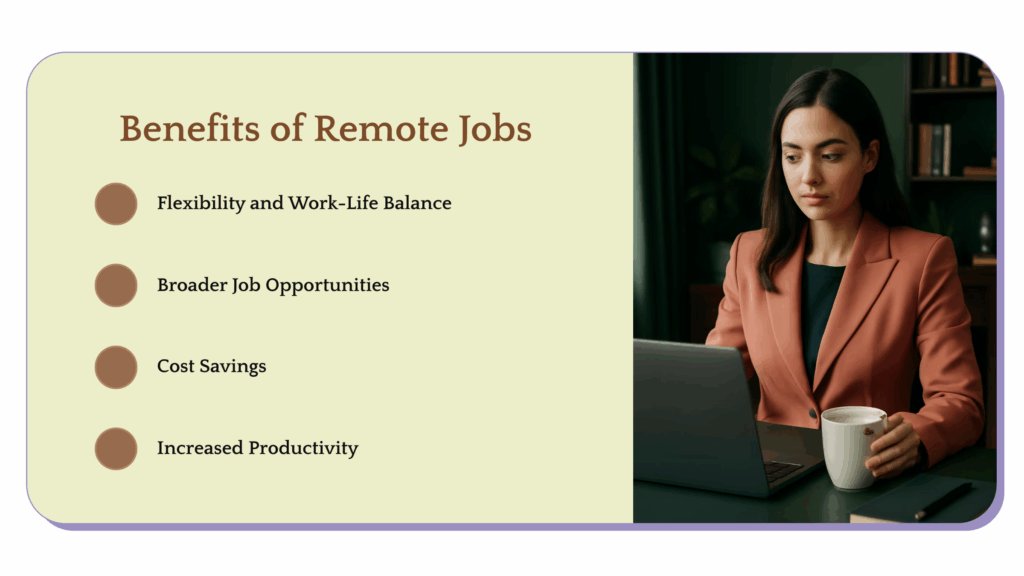
The next question is, what is remote job benefits, and how to excel in them? Remote jobs have several advantages, like flexibility, no travel, and working from home. Remote workers find the absence of face-to-face connections alienating, and burnout can arise as working life merges with personal life.
Read More: Top Captcha Typing Jobs in 2025
Two ways of doing remote work are hybrid and fully remote jobs. Hybrid remote job meaning is that it combines in office with remote work, and employees have to split time between a workplace and a working space from home. A fully remote job means the employees don’t need to visit the office. Some of the key differences in both types of jobs are summarised in the table below:
| Aspect | Hybrid Jobs | Fully Remote Jobs |
| Work Location | A mix of in-office and remote work (part-time office, part-time remote). | Work entirely from home or any location of your choice. |
| Flexibility | Moderate with some fixed office days, others flexible. | High with complete flexibility in work location and hours. |
| Work-Life Balance | Moderate as there is limited commute, but the in-office time required. | High with no commute, complete control over the environment. |
| Team Interaction | Frequent in-person collaboration with colleagues. | Virtual communication, more reliance on technology. |
| Networking Opportunities | Easier to network in person during office days. | More difficult, but virtual networking options exist. |
| Office Equipment/Space | Provided by the company for office days, might need home office setup. | Must set up own home office, often with a stipend or allowance. |
| Commute | Required on designated office days. | None, unless occasional travel is needed for meetings. |
| Company Culture | Easier to build an in-person culture. | Company culture relies on virtual engagement and communication. |
| Management Style | Usually, it follows a fixed schedule with some flexibility. | Entirely virtual management may require more self-discipline. |
| Job Roles | Suitable for roles that require occasional office presence or teamwork. | Suitable for roles that can be done independently without office collaboration. |
| Work Hours | Usually follows a fixed schedule with some flexibility. | Often flexible depending on role and company policy. |
The future of remote work in India looks promising, driven by rapid digital transformation, affordable high-speed internet, and the rise of hybrid work models. Since the pandemic, companies across sectors especially IT, finance, design, and marketing have embraced flexible work setups to attract and retain talent. By 2025, experts predict that 10–15% of India’s workforce (roughly 60–90 million workers) will be engaged in remote or hybrid jobs. This shift not only reduces operational costs for businesses but also creates opportunities for professionals in smaller towns and rural areas to access high-paying jobs without relocating.
Additionally, the future of remote work will be shaped by emerging technologies like AI, AR/VR collaboration tools, and stronger cybersecurity systems. Companies are investing in digital infrastructure, virtual wellness programs, and advanced communication platforms to enhance productivity and employee well-being. The gig economy is also expanding rapidly, with more Indians turning to freelancing and flexible online work. While remote work offers greater inclusion and work-life balance, it will require individuals to upskill continuously and organizations to rethink traditional office spaces and urban planning.
As technology continues to shape the modern workplace, more businesses especially startups are embracing remote and hybrid work models to boost flexibility and productivity. For freshers and professionals alike, understanding what a remote job truly means is key to thriving in this new digital era.
Remote work offers greater independence, time freedom, and a healthier work-life balance, along with the chance to collaborate with global employers. While challenges like isolation and distractions exist, the growing acceptance of remote jobs is reshaping India’s work culture, unlocking new paths for career growth, innovation, and meaningful opportunities.
“Looking for the best remote job platforms? Check out our list of top websites for remote work in India!”
Recommended Read:
A remote job is a position where an employee performs their work tasks from a location outside the company’s main office, such as their home, a coworking space, or a coffee shop, relying on digital tools for communication and collaboration.
A hybrid remote job is dual-natured. Employees can divide their time between working from home and office work. For example, some companies allow three days of remote work and one day of office work. This highly adaptable plan offers the benefits of working from home, including less commute, more productivity, work-life balance, and team collaboration.
Remote work means you can be flexible with your working hours and location, which helps with commuting expenses and maintaining a good work-life balance. It boosts output, freedom, and job satisfaction. Companies eliminate office space and tap into a global talent pool, giving employees a better working environment and an improved quality of life.
The best tools for remote work include those that improve communication, collaboration, and productivity. Communicating tools such as Slack and Microsoft Teams for instant messaging and group chats, Zoom, and Google Meet are essential for video conferencing and virtual meetings.
Many employees find that they can be even more productive when working remotely. By creating a personalized workspace that minimizes distractions and enhances comfort, individuals can focus better on their tasks.
To earn ₹2 lakhs per month from home, you can become a freelancer in high-demand skills like web/app development, digital marketing, or video editing, or create and sell products through online stores or by starting a YouTube channel.
Remote jobs are positions where employees perform their work duties from a location outside of a traditional office, such as their home, a coffee shop, or a coworking space.