

India’s women entrepreneurs are transforming the business landscape with innovation, resilience, and leadership. Backed by powerful government and private schemes, women-led startups now have access to funding, mentorship, skill development, and growth opportunities like never before.

From flagship programs such as Stand-Up India and PM Vishwakarma to specialized state initiatives, these schemes empower women to build sustainable and scalable ventures. In this guide, you’ll explore the top government schemes for women entrepreneurs in India, learn how to apply, check eligibility, and make the most of resources designed to help you succeed in 2025.
Schemes for women entrepreneurs are special initiatives designed to empower women by offering financial aid, business development support, mentorship, and training. These schemes are essential for fostering a business-friendly environment where women can thrive and contribute to the nation’s economic growth.
India has launched several government initiatives to empower women entrepreneurs by providing them with financial support, business assistance, and growth opportunities. Let’s explore these government schemes for female entrepreneurs in India in detail:
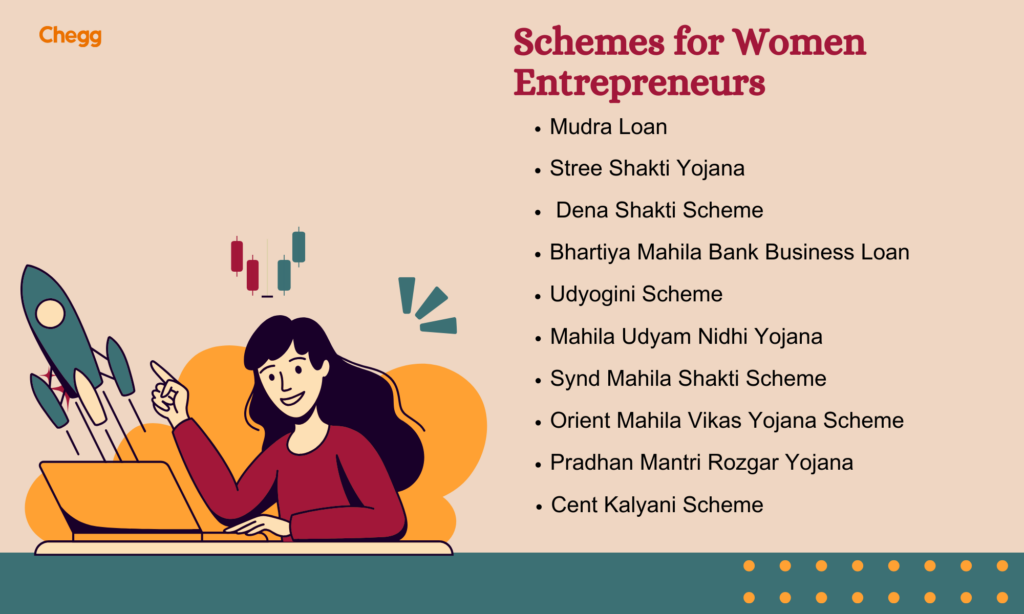
Supports micro and small women-led businesses. Includes Tarun+ category for loans up to ₹20 lakh. Collateral-free loans up to ₹10 lakh with interest ~12%. Eligible for any Indian citizen with a non-farm income-generating business.
Promotes women entrepreneurship with discounted loans. Women must own ≥51% of the business. Loans up to ₹25 lakh with 0.5% interest concession for loans above ₹2 lakh. Open to trade, manufacturing, and service businesses.
Assists women in starting or expanding small businesses. Loans up to ₹10 lakh with competitive interest rates. Open to women-managed businesses in manufacturing and services.
Supports women in small and medium enterprises. Loans up to ₹1 crore without collateral. Interest rates competitive.
Empowers women from weaker economic backgrounds. Loans up to ₹2 lakh with subsidized interest for SC/ST, widows, and differently-abled women. Open to women 18+ years, especially in rural areas.
Supports self-employment and micro-enterprises. Loans up to ₹25 lakh (manufacturing) and ₹10 lakh (services). Includes 15–35% subsidy. Eligible for women entrepreneurs 18+ years, preference to rural applicants.
Assists women in food catering businesses. Loans up to ₹50,000. Interest as per bank norms; repayment up to 3 years.
Supports women entrepreneurs in agriculture, retail, and small enterprises. Loans up to ₹20 lakh with 0.25% interest concession. Eligible for women owning >50% of the business.
MSME program providing 30% grant + 70% loan via financial institutions. Supports training, credit, and development for women entrepreneurs through NGOs.
Encourages women and SC/ST entrepreneurs to start new ventures. Loans ₹10 lakh–₹1 crore under Credit Guarantee Fund Scheme. Women must hold ≥51% ownership.
Focuses on financial literacy, business skills, and credit awareness. Provides CIBIL score education and personalized mentorship. No age or income restrictions. Open to early-stage women entrepreneurs or small business owners.
Empowers self-employed women artisans and craftswomen. Offers a free toolkit worth ₹15,000, ₹500 daily stipend during training, and ₹1 lakh collateral-free loan (expandable). Open to women in 18+ traditional vocations.
These schemes for women entrepreneurs are designed to provide the necessary support and encouragement for women to achieve financial independence and establish successful ventures. By leveraging these initiatives, women can play a transformative role in the growth and development of the Indian economy.
| Scheme | Key Benefits |
|---|---|
| Mudra Loan (PMMY) | Collateral-free loans up to ₹10 lakh, multiple loan categories (Shishu, Kishore, Tarun, Tarun+), financial support for non-farm businesses, promotes women entrepreneurship. |
| Stree Shakti Scheme (SBI) | Discounted interest rates (0.5% for loans > ₹2 lakh), loans up to ₹25 lakh, supports trade, manufacturing, and service businesses, women must own ≥51% of the business. |
| Mahila Udyam Nidhi Yojana (PNB) | Loans up to ₹10 lakh, competitive interest rates, supports new and existing small-scale businesses, exclusive to women-managed enterprises. |
| Cent Kalyani Scheme (Central Bank of India) | Loans up to ₹1 crore, no collateral required, supports small and medium enterprises, interest rates competitive. |
| Udyogini Scheme | Loans up to ₹2 lakh with subsidized interest, prioritizes low-income, rural, SC/ST, widows, and differently-abled women, encourages small business startups. |
| PMEGP | Loans up to ₹25 lakh (manufacturing) and ₹10 lakh (services), 15–35% subsidy, promotes self-employment and micro-enterprises, preference for rural applicants. |
| Annapurna Scheme | Loans up to ₹50,000, flexible repayment (up to 3 years), supports women in food catering and small-scale food businesses. |
| Dena Shakti Scheme (Bank of Baroda) | Loans up to ₹20 lakh, 0.25% interest concession, supports agriculture, retail, and small enterprises, women must own >50% of business. |
| TREAD Scheme | 30% grant + 70% loan via financial institutions, training and credit support, promotes entrepreneurship via NGOs. |
| Stand-Up India Scheme | Loans ₹10 lakh–₹1 crore under Credit Guarantee Fund, supports women and SC/ST entrepreneurs, first-time enterprise financing. |
| SEHER Program (WEP–CIBIL) | Financial literacy, credit awareness, personalized mentorship, accessible to early-stage women entrepreneurs and small business owners. |
| PM Vishwakarma Scheme | Free toolkit worth ₹15,000, ₹500 daily stipend during training, ₹1 lakh collateral-free loan, supports women artisans in 18+ traditional vocations. |
Click Here to Download:- Government Schemes for Female Entrepreneurs in India pdf / Schemes for Women Entrepreneurs pdf

| Scheme Name | Loan Amount (₹) | Eligibility | Application Method |
|---|---|---|---|
| Mudra Yojana | Up to 10 lakh | Small businesses | Bank visit |
| Stand-Up India | 10 lakh – 1 cr | Greenfield biz | Online or bank visit |
| Annapurna | Up to 50,000 | Food business | Bank visit |
| Mahila Udyam | Up to 10 lakh | Small businesses | SIDBI or partner banks |
| Dena Shakti | Up to 25 lakh | Various sectors | Dena Bank branch |
Read More: Top Online Data Entry Jobs Without Investment in India
Applying for government schemes can seem daunting, but it’s a straightforward process if you follow these steps:
Start by carefully analyzing your business needs and future goals. Ask yourself:
Explore various government schemes for women entrepreneurs, such as Mudra Yojana, Stand-Up India, or Annapurna Scheme, and choose the one that aligns with your business requirements.
Once you’ve identified a suitable scheme, prepare all the required documents. Some commonly needed documents include:
Ensure all documents are up-to-date and neatly organized to avoid delays in processing your application.
Depending on the scheme, you can either apply by visiting a physical bank branch or through an official government website:
After submitting your application, stay in touch with the bank or check the status online.
By following these steps diligently, women entrepreneurs can take full advantage of the government schemes designed to support their entrepreneurial journeys.
Government programs such as skill training, financial inclusion schemes, and startup support, like the Pradhan Mantri Mudra Yojana and Stand Up India, help women gain economic independence, encouraging entrepreneurship and workforce participation.
Initiatives like Beti Bachao Beti Padhao and schemes for maternal healthcare ensure girls have access to quality education and better health services, which are fundamental to long-term empowerment and equality.
Governments implement laws and schemes to protect women from violence, harassment, and discrimination (e.g., One Stop Centres, Ujjawala scheme). These initiatives promote safety, dignity, and equal rights for women in public and private spheres.
Various challenges which women face aren’t talked about much. Examples are:

Women entrepreneurs struggle a lot. They are often torn between caring for the family, and their businesses. Women entrepreneurs face the challenge of juggling work and family responsibilities, a delicate balance that demands effective time management. Running a business while attending to household duties and caring for children can be overwhelming.
Things are getting better but it isn’t true for most women. This is especially true for those who live in rural areas, to receive a standard education.
It’s hard for women entrepreneurs to start a business. Banks and other traditional lenders often ask for something valuable as a guarantee when they give out loans. It can be a problem for many women who may still have to provide collateral to borrow money.
Sometimes, the way society thinks about women is problematic. Women who start their businesses often require encouragement. They are often unsure of their abilities to run a successful company Another factor that poses a hindrance to women entrepreneurs is stereotypes. Stereotypes regarding women’s leadership abilities and risk-taking can result in investor bias and difficulty accessing funding.
Making connections is essential for growing a business. However, women often need more opportunities to join networks for entrepreneurs. Women entrepreneurs often face the challenge of limited networking opportunities. In male-dominated industries, access to influential networks can be restricted, making it harder to gain support, mentorship, and crucial business connections. This lack of networking avenues can hinder their professional growth and potential partnerships, creating a barrier to success.
India’s economic growth and development depend on women who start their businesses. But they have to deal with many problems. These include taking care of their families, and not having enough money. This is compounded by people not treating them fairly. The government has started programs to help women start their businesses. These programs are:
We are still working to give women entrepreneurs in India more power. Each step we take towards this goal brings us closer to a fair and forward-thinking society.
These stories show how the right support is unlocking potential for women across India. Stay tuned for more inspiring journeys and government updates that support women-led ventures.
Government and private schemes for women entrepreneurs are driving India’s transformation toward gender equality and economic empowerment. Through financial aid, mentorship, training, and digital access, these initiatives help women overcome barriers, scale businesses, and create lasting social impact. As more women turn their ideas into enterprises, they fuel innovation, job creation, and inclusive growth across the nation.
In 2025 and beyond, continued awareness, digital literacy, and access to these women entrepreneurship schemes will be key to building a stronger, more resilient economy. If you’re a woman with a vision, now is the time to explore these opportunities and turn your entrepreneurial goals into reality.
Innovative, low-investment ideas for the hidden entrepreneur in you! Explore our guide on Business Ideas.
Recommended Read:
1. Mudra Yojana: Provides financial support to micro and small enterprises, with a special focus on women entrepreneurs.
2. Stand-Up India Scheme: Promotes entrepreneurship among women and marginalized communities by providing bank loans for greenfield businesses.
3. Mahila Coir Yojana: Offers training and financial assistance to women artisans in the coir industry.
4. Udyogini Scheme: Provides loans up to Rs 3 lakhs for women to start small ventures in various industries.
5. Annapurna Scheme: Offers loans up to Rs 50,000 for women interested in starting a food catering business.
The National Bank for Agriculture and Rural Development (NABARD) supports women entrepreneurs through various schemes, including:
• Self-Help Groups (SHGs): Facilitate, Provide financial inclusion and entrepreneurship among rural women.
• Micro Enterprise Development Programmes: Provides financial assistance for small businesses.
• Livelihood Enterprise Development Programmes: Support rural women in establishing sustainable livelihoods.
The Mahila Vikas Yojana aims to empower women from backward and poor backgrounds by providing micro-finance loans through Self-Help Groups (SHGs). It targets women from economically and socially backward classes, helping them achieve financial independence.
The Prime Minister’s Employment Generation Programme (PMEGP) provides financial assistance to women entrepreneurs for setting up micro-enterprises. The scheme offers loans at subsidized interest rates and aims to generate sustainable employment opportunities.
The government supports women’s entrepreneurship through schemes like Udyogini (business loans), Stand-Up India (₹10L–₹1Cr loans for new ventures), and TREAD (credit and training via NGOs).
Under the Pradhan Mantri Rozgar Yojana (PMRY), women entrepreneurs are eligible for a 15% subsidy on the project cost, subject to a maximum limit of ₹7,500. This initiative aims to encourage women to start their own businesses by making financial support more accessible.
Some of the best schemes for women empowerment are:
1. Mahila Samriddhi Yojana
2. Nari Shakti Puraskars
3. Women Entrepreneurship Platform (WEP
4. BIRAC-TiE WInER Awards
5. Credit Guarantee Scheme for Micro and Small Enterprises
SC/ST Women Entrepreneurs Scheme: Announced in the Union Budget 2025, this scheme aims to empower first-time women entrepreneurs from Scheduled Castes (SC) and Scheduled Tribes (ST) by providing term loans of up to ₹2 crore. The government plans to support 5 lakh such entrepreneurs over the next five years.
The Ministry of Micro, Small, and Medium Enterprises (MSME) offers several schemes to support women entrepreneurs, aiming to empower them through access to credit, capacity building, and market development. These schemes include Stand-Up India, Mudra Yojana, TREAD (Trade Related Entrepreneurship Assistance and Development), and various skill development programs.
The Mahila Udyam Nidhi Scheme, offered by Small Industries Development Bank of India (SIDBI), supports women entrepreneurs in setting up new ventures or expanding existing businesses. The scheme provides financial assistance of up to ₹10 lakh with flexible repayment options.


