

Career development is the ongoing process of managing your career by gaining new skills, knowledge, and experience to reach your long-term professional goals. It requires making thoughtful decisions, setting goals, and taking action through activities such as training, mentorship, and new job experiences to move forward in your chosen career path.
This guide will explain what career development means, why it matters, and how you can take control of your own path. From self-assessment and building skills to exploring new roles and adjusting to industry trends, you’ll find practical steps to shape a career that matches your passions and strengths. With a focus on career progression, let’s unlock your potential and set you on the path to long-term success and satisfaction.
Career Development is an abiding journey in which an individual systematically manages throughout life. Self-evaluation, skill development, objective setting, continuous educational advancement, and career path and planning are all integral to career development so that one may achieve sustained growth, job satisfaction, and the advancement of one’s career.
Career development comes in many forms. These may be self-directed efforts by employees or supported employee endeavors. Upskilling staff and keeping them inspired to boost their development should, therefore, be in your best interest.
Below are the definitions for each career development method listed:
You need to ensure that you are equally up-to-date with information via a mix of formal and informal methods for your career journey, which may include pursuing graduate school for more advanced leadership skills.
| Career Development Stages | Age | Description |
|---|---|---|
| Stage 1: Growth | Age 0-14 | Development of self-concept, attitudes, needs, and general world of work. |
| Stage 2: Exploration | Age 15-24 | Trying out through classes, work experience, hobbies, tentative choice, and skill development. |
| Stage 3: Establishment | Age 25-44 | Entry-level skill building and stabilization through work experience. |
| Stage 4: Maintenance | Age 45-64 | Continual adjustment process to improve position. |
| Stage 5: Decline | Age 65+ | Reduced output, prepare for retirement. |

Career development is vital as it enhances skills, boosts motivation, and creates opportunities for professional growth. The following are the importance of career development:
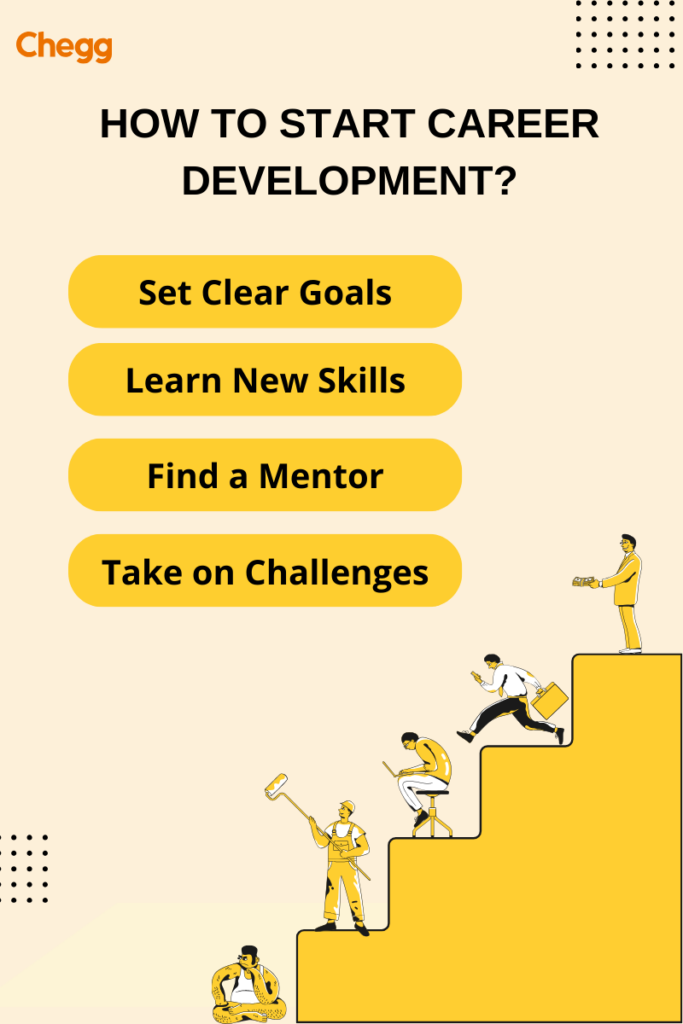
Starting your journey is easy. You don’t have to make big changes all at once. Small steps can lead to significant results. Here are some simple steps to help you get started:
Think about what you want to achieve in your career. Do you want a promotion? Do you want to learn new skills? Setting clear goals is the first step. When you know what you want, it’s easier to plan how to get there.
Learning new skills is crucial for development. You can take courses, attend workshops, or even learn from your co-workers. The more skills you have, the more valuable you are at work. For example, if you are good at computers, learn more about software or tools that can help you in your job.
A mentor is someone who has more experience and can guide you in your career growth. They can give you advice, help you avoid mistakes, and show you the right path. Having a mentor makes your journey smoother and faster by supporting your career growth meaning, the process of developing your skills and advancing in your professional life.
Don’t be afraid to take on new challenges at work. When you step out of your comfort zone, you grow. Taking on new tasks or projects is a great way to show your boss that you are serious about career growth. It also helps you learn and gain more experience.
Career growth doesn’t happen by itself. You have to be proactive at work to see results. Here are some ways you can focus on career development in the workplace:
Staying organized helps you manage your tasks better. When you are organized, you can focus more on career development. Create a to-do list, set deadlines, and stick to your plan. This will help you stay on track and reach your goals faster.
Good communication is key to career development. Talk to your boss about your career goals. Let them know that you are interested in taking on more responsibility. Also, communicate well with your co-workers. When people see that you are a team player, it boosts your career development.
Feedback is important for career development. Ask your boss or co-workers for feedback on your work. It will help you understand your strengths and areas where you can improve. Positive feedback boosts your confidence, while constructive feedback helps you grow.
Learning should never stop when it comes to career development. Take every opportunity to learn new things. Attend training sessions, read books, or watch online tutorials. The more you learn, the more you grow in your career.
Career development brings many benefits. When you focus on career development, you can expect:
Never at any time consider denying up-to-date information or views in career development pathways. Those bright tips for successful career development include:
This is all that would prepare you towards successfully attaining career development.
Career development is not difficult when you take small, simple steps. You can see big results by setting clear goals, learning new skills, finding a mentor, and staying proactive at work. Career development helps you grow, opens up new opportunities, and makes you more confident in your abilities. Remember, career development is a journey, and every step you take brings you closer to success.
Take the first step today and start your career development journey. It’s the key to a brighter and more successful future!
Embracing career development as an ongoing process allows you to take control of your professional journey. By regularly setting goals, learning new skills, and looking for new opportunities, you can adjust to changes and attain lasting success in your field.
Remember, your career is uniquely yours. It reflects your interests, strengths, and ambitions. Invest in your growth and stay open to new possibilities. This way, you’ll create a rewarding career that grows with you over time. Your dedication to career development is the key to unlocking your full potential and achieving your long-term goals.
Evaluate numerous career choices to choose the right career path for yourself. Dive into our guide on Career Advice.
Self-Assessment
– Know your strengths, interests, and values.
Career Exploration
– Research careers that match your skills and goals.
Goal Setting
– Set short- and long-term career goals.
Skill Building
– Gain education, training, or experience needed.
Job Search & Career Management
– Apply for jobs, grow in your role, and keep improving.
Tip: Review these steps regularly, career growth is a continuous process!
Career development is important because it helps you:
Grow skills and stay relevant in your field.
Find fulfilling work that matches your goals.
Increase job satisfaction and confidence.
Advance in your career with better opportunities and pay.
Adjust to changes in the job market or industry.
Tip: Investing in your career development is investing in your future success!
Assess Yourself: You love cars and are good at math.
Research: Learn about automotive engineering jobs.
Set Goals: Short-term: Complete a diploma in automobile engineering. Long-term: Work as a car designer.
Build Skills: Take courses in CAD software and internships at car companies.
Take Action: Apply for internships and entry-level jobs.
Review: Every 6 months, check progress and update your goals.
Tip: Keep learning and adjusting as you go!
Career Awareness
– Understanding different jobs and industries.
Career Exploration
– Researching and trying out career options.
Career Preparation
– Gaining education, skills, and experience.
Career Development
– Growing and managing your career over time.
Explore, discover your interests, strengths, and career options.
Experience, gain skills through education, training, and work.
Evaluate, reflect on your progress and adjust your goals.
Tip: Keep going through these steps to grow your career!