

Do you or anyone you know feel pressured, anxious, or singled out at work? Mental harassment at the workplace is a serious matter–it breaks down productivity, affects your mental health, and diminishes your job satisfaction. In 2025, as workplaces become increasingly aware of employee rights and well-being, understanding what mental harassment is and what steps you can take is more critical than ever. The signs may be subtle and complex to detect, whether through bullying, unreasonable scrutiny, exclusion, or intimidation; they can be challenging to detect but have a long-standing impact.
This guide provides up-to-date, clear information and guidance on how to identify mental harassment, what your rights are, and what you can do to protect yourself and others. Whether you are an employee, manager, or HR practitioner, you will find realistic and practical ideas, real-life examples, and trustworthy resources to help you create a safer, more supportive workplace for everyone.

Mental harassment at workplace refers to any form of emotional, psychological, or verbal abuse that creates an intimidating environment for an employee. It involves behaviors that undermine/weaken a person’s dignity, self-worth, and mental well-being, impacting their ability to perform their job effectively.
It includes various actions, such as verbal abuse, humiliation, intimidation, threats, isolation, and manipulation. These activities can lead to a hostile work environment, impacting the victim’s self-esteem, mental health, and job performance.
Below are the five different types of mental harassment that are often faced by employees at workplace:
We define verbal abuse as using abusive words, slurs, or insulting statements to denigrate or humiliate another person. It can happen in one-on-one interactions or in front of others, causing embarrassment and emotional distress. Examples:
Intimidation is behavior that creates fear or distress by using aggressive body language, shouting, or threatening. It is often used to assert dominance or control over others. Examples:
Bullying involves persistent and repetitive negative behaviour aimed at harming an individual emotionally, socially, or professionally. It can emerge in various ways, with negative consequences for the victim’s well-being. Examples of workplace bullying include:
Discrimination is the unfair or disparate treatment of persons based on gender, race, religion, or other protected characteristics. It can create a hostile work environment and lead to feelings of marginalization and distress. Examples of workplace discrimination include:
Cyberbullying has become a common type of mental abuse as technology has advanced. It entails harassing, threatening, or intimidating individuals via Internet channels. Examples:
Repeated, unreasonable behavior directed at an employee that creates a risk to their health and safety.
Example: A manager constantly ridicules an employee’s performance in front of others despite meeting targets.
Collective bullying by a group of co-workers or management to isolate or force an employee out.
Example: A team systematically excludes colleagues from meetings and communication, making them feel unwanted.
Persistent actions that mentally or emotionally destabilize a person are often subtle or indirect.
Example: An employee is subjected to silent treatment, sarcasm, and gaslighting by a supervisor daily.
Harassment occurs when someone in a position of authority misuses their power to intimidate or demean subordinates.
Example: A senior official threatens to ruin a junior’s career unless they work overtime without pay.

Workers need to know some typical indications of harassment in the workplace, such as:
These can apply in cases where mental harassment includes threats, intimidation, verbal abuse, or public humiliation.
While primarily aimed at sexual harassment, this Act also includes forms of mental and emotional harassment arising from hostile work environments, repeated unwelcome behavior, or intimidation.
In cases where mental harassment is part of unfair labor practices or employer victimization, this Act allows employees (particularly in the industrial sector) to file grievances.
Though still awaiting full implementation, this Code aims to ensure employees’ physical and mental well-being, which could provide scope for addressing psychological harm or stress.
Indian courts, including the Supreme Court and High Courts, have increasingly acknowledged mental harassment in the workplace as a serious issue, particularly in cases involving prolonged bullying, caste-based discrimination, and toxic work culture. In some cases, courts have awarded compensation for mental trauma under tort law or constitutional remedies.
Explanation: Victims of prolonged workplace harassment can develop PTSD, a mental health condition triggered by repeated trauma. Symptoms include flashbacks, hypervigilance, anxiety, and avoidance behavior.
Evidence: A 2018 study in the Journal of Occupational Health Psychology found that employees subjected to sustained bullying showed PTSD-like symptoms similar to those experienced in combat or abuse situations.
Explanation: Burnout is a state of emotional, physical, and mental exhaustion caused by prolonged stress and lack of support at work. It’s marked by cynicism, detachment, and reduced job performance.
Evidence: WHO recognizes burnout as an occupational phenomenon. Research links bullying and high-pressure environments to increased cortisol levels and emotional exhaustion.
Explanation: Workplace harassment can lead to major depressive episodes, generalized anxiety disorder, and even suicidal ideation.
Evidence: According to the National Mental Health Survey of India, over 60% of affected employees reported clinical levels of anxiety and depression, especially in toxic workplaces with no grievance redressal mechanisms.
Explanation: Chronic stress from harassment increases the risk of hypertension, heart attacks, and other cardiac issues.
Evidence: Studies in The Lancet and European Heart Journal link high workplace stress and bullying to increased risk of heart disease.
Explanation: Victims often suffer from insomnia, nightmares, and chronic fatigue, leading to poor cognitive function and overall health decline.
Evidence: Research in occupational health journals finds that even mild verbal harassment significantly disrupts sleep cycles.
Explanation: Psychological distress impacts the digestive and immune systems, causing ulcers, IBS, and frequent illness.
Evidence: Psychosomatic studies show increased gastrointestinal complaints and weakened immunity in harassed employees.
Explanation: Victims often leave toxic workplaces, which can lead to costly turnover, loss of talent, and reputational damage.
Evidence: Gallup surveys show that 50% of employees quit due to poor management and hostile culture, not workload.
Explanation: Harassed employees show poor concentration, absenteeism, and disengagement, reducing team performance.
Evidence: A Deloitte study found that toxic behavior leads to a 40% drop in productivity and 30% rise in sick leaves.
Explanation: Organizations that fail to prevent or address harassment face lawsuits, fines, and damage to employer branding.
Evidence: Under India’s Sexual Harassment Act, 2013, non-compliance can result in penalties up to ₹50,000 and potential license revocation.
Experiencing mental harassment at workplace can be emotionally challenging and psychologically distressing. Individuals who find themselves in such situations must know how to deal with mental harassment at workplace, seek support, and utilize available resources to navigate these difficult circumstances. Here are some support options and resources that can provide assistance and guidance.
Many companies offer Employee Assistance Programs to support their employees’ mental well-being. EAPs typically provide confidential counselling services, referrals to mental health professionals, and resources to help individuals cope with workplace issues, including mental harassment.
Professional counselling services can play a vital role in helping individuals cope with the emotional impact of mental harassment in the workplace. Licensed therapists or counsellors trained in workplace issues can provide a safe and supportive environment to discuss experiences, process emotions, and develop effective coping strategies.
Several organizations and helplines specialize in providing legal advice and support to individuals facing workplace harassment, including mental harassment. These resources can help individuals understand their legal rights and offer guidance on filing a mental harassment case. Organizations like the National Commission for Women (NCW) and local labour authorities can assist in India.
Joining support groups or connecting with others who have experienced similar workplace challenges can provide a sense of validation, solidarity, and many connections may be facilitated online. Online forums, social media groups, or local community connections.
Employees facing mental harassment should consider contacting their organization’s human resources (HR) department. HR professionals are trained to handle workplace issues, including complaints of harassment. They can provide guidance on the company’s policies and procedures, initiate internal investigations, and take appropriate actions to address the situation.
Read More:
If you are a victim of mental harassment, taking appropriate steps to address the issue is crucial. Here are some essential actions to consider while filing a complaint against mental harassment at the workplace:
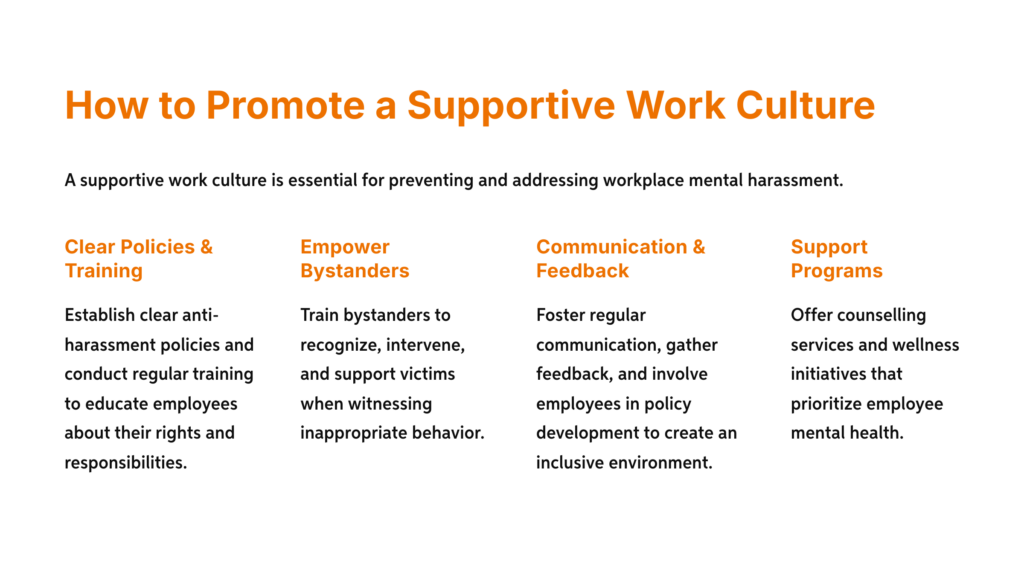
Addressing mental harassment in the workplace is critical to creating a healthy, productive, and respectful environment. Knowing your rights, identifying the indicators, and taking steps to protect your mental health (including documenting the incidents and involving HR or a trusted colleague) will assist you in your own well-being and in building a positive workplace culture. In 2025, it is everyone’s role to work toward promoting a zero-tolerance policy toward harassment and supporting those who are affected by experiencing mental harassment at work.
No one should tolerate working in a situation where they are experiencing mental harassment. If you or someone you know is being mentally harassed, reach out for help; use your existing spaces to access the available resources. Together, we can build workplaces that feel safe, valued, and empowered to do their best.
Evaluate numerous career choices to choose the right career path for yourself. Dive into our guide on Career Advice.

Indeed, you can file an FIR if the mental harassment involved threats, intimidation, or severe emotional distress.
For example, if you have a co-worker who keeps threatening you at work and it is causing you mental stress, you should report the matter to the police.
Tip: Before filing an FIR, you should have a record of incidents and any evidence you have.
Speak confidently, keep documentation of encounters, inform human resources or a manager you trust, and enlist legal assistance if warranted.
Example: If a colleague says things you don’t like, you should let them know to stop, note the dates they said it, and report it to HR.
Tip: If you are facing harassment, do not ignore it. It is better to address it sooner rather than later, and it will protect you.
Evidence may be any combination of written messages, emails, audio/video recordings, witness statements, or documented incidents that indicate harassment behavior.
For example, you might save threatening texts or emails from a colleague for evidence.
Tip: Always document everything in detail and try to obtain any possible evidence to support your complaint.
Harassment includes unwanted comments, threats, bullying, intimidation, offensive jokes, or any other behavior that creates a hostile/negative work environment.
Example: Consistently making rude or inappropriate comments to a co-worker.
Tip: If something makes you uncomfortable or stressed, it’s always a good idea to report it.
Psychological harassment is a form of repeated conduct-like bullying, shame, or intimidation that negatively affects an employee’s mental health and their workplace.
Example: A manager who continually belittles an employee publicly.
Tip: Document and report these events to an HR professional or counselor as soon as possible.
Consequences vary, but they can include fines, incarceration (up to 3 years or more), or both, depending on the nature and severity of the harassment under the law.
For instance, a person found guilty of sexual harassment in the workplace may receive a term of imprisonment plus a fine.
Tip: Take harassment seriously and report it immediately to get what you deserve.