

If you’ve ever wondered how to overcome procrastination, you’re not alone. Many people struggle with procrastination. You’re not alone if you’ve ever wondered how to beat procrastination. Many people struggle with delaying essential tasks. This often leads to feeling overwhelmed as deadlines approach. Procrastination can harm your productivity, increase stress, and stop you from reaching your goals, whether you’re a student, a professional, or anyone in between.
To tackle procrastination, you first need to understand why it happens. Is it fear of failure, low motivation, or not knowing where to start? Figuring out your triggers is the first step to breaking the cycle and regaining control of your time.
The good news is that overcoming procrastination is possible with the right mindset and strategies. In this article, you’ll find tested tips and practical steps to help you stay focused, increase your motivation, and turn your plans into action. Get ready to leave procrastination behind and reach your full potential!
Procrastination is putting off tasks even when you know it can lead to adverse outcomes. People often choose short-term comfort or distractions instead of focusing on crucial work.
Key features of procrastination include:

Procrastination is a common behavior, and the reasons behind it can differ from person to person. Understanding the root causes can help you address this habit and improve productivity. Some of the common reasons for procrastination include:
1. Inadequate Reward for Work – When there is little immediate reward or incentive for completing a task, it’s easy to delay it. The lack of recognition or personal fulfillment can contribute to procrastination.
2. Task Complexity – If a task feels overwhelming or too complicated, the brain may resist starting it. The thought of tackling something complex can create feelings of anxiety or dread.
3. Lack of Resources – When the necessary tools, information, or skills are not readily available, it can cause delays. This feeling of being unprepared often leads to putting off the task.
4. Stressful or Lengthy Work Environment – A long or high-pressure task can create mental fatigue and stress. As a result, you might delay it as a form of avoidance or to reduce feelings of anxiety.
5. Monotonous or Boring Tasks – Engaging in repetitive or tedious work can make it hard to stay motivated. The lack of excitement or challenge in these tasks often results in procrastination.
6. Disorganization – An unorganized workspace or chaotic way of life can lead to procrastination. When everything feels out of place, it becomes harder to focus and get started on tasks.
7. Distractions – External distractions, such as social media, news, or gossip, can pull your attention away from work. These distractions serve as a quick escape, leading to delays in accomplishing your goals.
8. Poor Concentration – A lack of focus or mental clarity can contribute to procrastination. When concentration is poor, it becomes easier to delay tasks in favor of short-term pleasures or distractions.
By identifying the specific causes of your procrastination, you can take targeted actions to overcome it, boosting your productivity and helping you achieve your goals.
Procrastination can take many forms, each with its unique patterns. Understanding the various types can help you identify why you delay tasks and how to combat it.
Here are three distinct types of procrastination –
1. Classic Procrastination: The Last-Minute Rush – The very classical procrastination type is called delaying last minute the performance of tasks even if a deadline looms just around the corner. These habitual works generate rush, hurried work, missed deadlines, as well as building a kind of continued anxiety with regret.
2. Creative Procrastination: The Illusion of Productivity – Creative procrastination entails prioritizing tasks that come across as productive yet unimportant. Instead of sitting down to do work that matters, you get caught up in activities like organizing your desk or noting down wild ideas. These would-be accomplishments are pure distractions that help you avoid the harder tasks sitting at the top of your priority list. Beat procrastination by focusing on meaningful work.
3. Priority Dilution: The Task Juggler’s Trap – Dilution of priority happens when you divert your energies to lesser critical tasks and ignore high-priority tasks. It’s just like studying only easy chapters and ignoring difficult ones, with wasted attention and energy. This ends up being half-finished projects and missed opportunities because of misallocated priorities.
The difference between procrastinators and non-procrastinators is evident from the level of contentment and success in their lives, These are the major differences between one who procrastinates and one who is a doer:
| Procrastinator | Non-Procrastinator |
| 1 Worried about the outcome of the task. | 1 Believes in completing the task without worrying about the output. |
| 4. Struggle to achieve a mediocre level of success. | 2. Overthink and overprepare before initiating work. |
| 3 Take the burden of their work. | 2 Initiates work with adequate planning but do not delay it with overpreparation in want of perfection. |
| 5. Take up multiple tasks together and lack concentration and pending work. | 4 Goal achievers and outperformers. |
| 5. Act realistically and complete tasks one by one with full focus. | 5 Take up multiple tasks together and lack concentration and pending work. |
1. Acknowledge You’re Procrastinating – The first step in overcoming procrastination is realizing when it happens. If you know that a task needs to be done but keep putting it off, you’re procrastinating. Recognizing this is essential to making the change.
2. Understand the Root Cause – Dig deeper into why you’re procrastinating. Is the task boring, overwhelming, or unclear? Identifying the specific reason for your procrastination can help you find targeted solutions to tackle the task effectively.
3. Implement Anti-Procrastination Strategies – Once you understand why you’re procrastinating, it’s time to take action. Focus on strategies such as:
4. Schedule Your Work Consistently – The best way to overcome procrastination is to make a schedule or to-do list for your work commitments. Scheduling your work gives your brain a defined mind map to act continuously. It stimulates your mind to take action and complete the task as per the schedule.
5. Create A System for Starting New Tasks – The toughest thing for procrastinators is to get started. A good start can result in the efficient and timely completion of the work. Hence, before starting a new task, you should do effective planning, gather all required resources, prepare a chronology of steps to be taken for completing the work and then take action to initiate a new task.
6. Use Time-Management Techniques – Adopt techniques like the Pomodoro Method, where you work in focused intervals followed by short breaks. This helps maintain concentration while avoiding burnout.
7. Stay Accountable – Tell someone about your goals or use productivity apps to track your progress. Accountability can give you the motivation to stay on track and complete tasks on time.
8. Eliminate Distractions – Social media, email, and other distractions can lead to procrastination. During focused work periods, consider turning off notifications or using apps to block distractions.
9. Reward Yourself for Progress – Celebrate small wins along the way. Reward yourself when you complete a part of the task or hit a milestone. This helps create a positive reinforcement loop that encourages continued progress. All these steps will help your personality grow and, in turn, help your career in the long run.
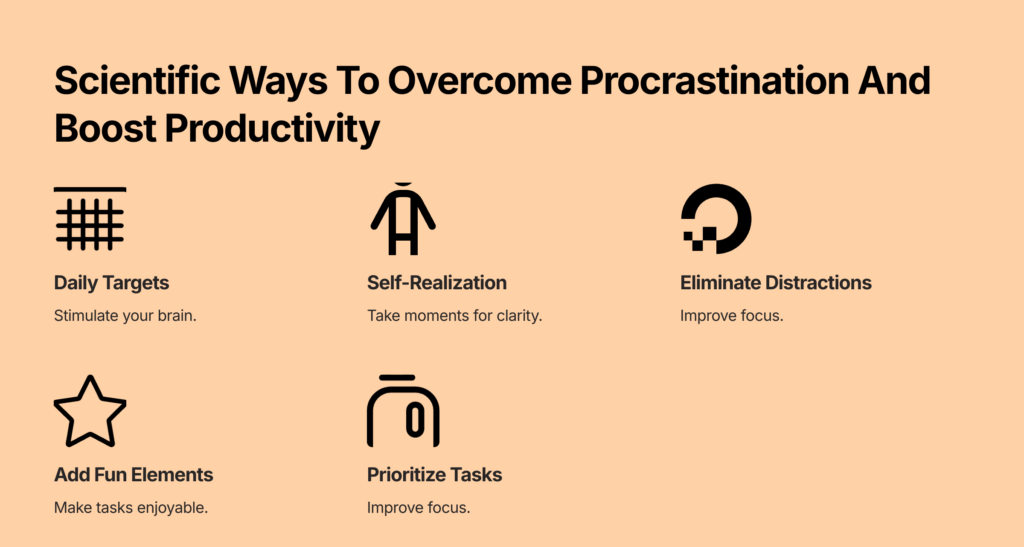
Procrastination may feel like a habit you can’t break, but there are proven ways to change it. Scientific research provides strategies on how to overcome procrastination and improve productivity. By training your brain to take action, you can develop better habits.
Here are some proven methods to help you stop procrastinating:
1. Set Daily Targets to Stimulate Your Brain – Research has indicated that establishing very clear and achievable goals activates the brain’s reward system. Write a to-do list that comes with an associated deadline every morning, and chunk tasks into small parts to prevent overwhelming them. Completing the tasks triggers the release of dopamine in the brain, which creates a feeling of accomplishment and motivation to keep on going.
2. Take Moments of Self-Realization – Using procrastination as an advantage with self-reflection becomes a tool in itself. Understanding the consequences—lost opportunities, stress, unrealized potentials, and so on—will awaken in you the desire to make things right and start acting on them.
3. Eliminate Distractions for Better Focus – Distractions lessen focus, productivity, and even work quality. Once interrupted, the brain takes much longer to regain concentration. To ward off procrastination, an environment devoid of distractions should be created: shut off notifications, close unnecessary tabs, and work in a quiet area.
4. Add Fun and Enjoyable Elements to Your Tasks – Monotony and boredom often trigger procrastination. To counter this, add elements of fun or gamify tasks. Take short breaks after completing work or reward yourself for reaching specific goals to maintain momentum and reduce delays.
5. Prioritize Tasks to Improve Focus – Disorganization and procrastination can result from having too many tasks. The prioritization of tasks either as urgent or important, high-priority task listing followed by work completion, or such structured approaches cuts down the mental clutter and creates motivation as one checks off completed tasks.
By applying these scientifically-backed strategies, you can overcome procrastination and improve both your productivity and focus. Each method targets different aspects of your cognitive process, helping you break free from the cycle of delay and stay on track toward your goals.
Procrastination is a major problem for students, leading to missed deadlines and low productivity. If you are a student facing this issue, learning how to overcome procrastination is important. Start by managing your time well and setting clear goals. Avoid distractions and stay focused on your tasks. By practicing discipline daily, you can master how to overcome procrastination and improve your academic performance.
Here are a few tips to overcome procrastination as a student:
1. Stop Thinking and Start Immediately – The best way for students to overcome procrastination is to stop thinking and start acting. Thinking a lot about your problem and doing nothing will take you nowhere.
2. Follow the Pomodoro Technique – This technique has proven to be quite helpful for students who procrastinate. The thought of long study hours scares every student and is a major cause of procrastination. As per the Pomodoro technique, you only study for twenty-five minutes and then take a five-minute break. Then, resume studies for twenty-five minutes and again take a five-minute break.
After completing three slots of 25 minutes each, you can take a long break of thirty minutes. Studying in small slots will eliminate the fear of long hours and help you overcome procrastination.
3. Reward Yourself – Reward yourself with your favorite thing after achieving each target. For example, eat your favorite chocolate, listen to music, talk to your friend, or do anything fun and interesting. This will make you excited to complete the task with dedication, rather than getting bored.
4. Communicate Your Goals – If you are among those students who set goals daily but keep on postponing them without any reason, then you must try this. Talk about your daily goals with your friends, parents, or teachers. This will create a sense of accountability, and you will try to meet your targets without procrastination.

Here are a few ways to overcome procrastination in your daily life.
1. Maintain A Healthy Lifestyle – An unhealthy lifestyle, poor sleep quality, disturbed routine, and eating unhealthy food are some of the factors that lead to laziness. With a lethargic and lazy mind, you are likely to procrastinate your tasks for no reason. Hence, to overcome procrastination and laziness, you must follow a healthy routine and live a healthy lifestyle.
2. Refrain from Overburdening Yourself – You should not try to work beyond your capacity. If you take on multiple tasks and are not able to complete them on time, you are likely to get demotivated. To avoid this, you must accept that you cannot work beyond your capacity.
3. Stay Organized – If you keep your work or study area organized, you can complete your tasks more efficiently. An unorganized and messy environment can prevent you from initiating your tasks.
4. Maintain Continuity of Work – Working for a short while and taking long breaks can disturb your rhythm of work. It might overburden you with incomplete tasks. It is better to take short breaks while working and maintain continuity to avoid laziness and procrastination.
Overthinking and overpreparation often lead to procrastination. The best way to break this habit is by taking action. Instead of getting stuck in endless planning, focus on starting immediately. Learning how to overcome procrastination begins with taking that first step, no matter how small. Once you start, momentum will push you forward.
Whenever you feel the urge to delay, remind yourself to begin right away. The key to overcoming procrastination is action, not perfection. Completing even a small part of a task gives a sense of accomplishment. This small success builds motivation, making it easier to continue working.
By managing yourself better, you can master how to overcome procrastination. Developing a habit of immediate action leads to greater efficiency and satisfaction. When you take control of your time, you achieve goals faster. With discipline and self-management, you can successfully turn procrastination into productivity and learn how to overcome procrastination in everyday life.
Overcoming procrastination isn’t just about working harder. It’s about working smarter and understanding your habits. By identifying what holds you back and using simple, effective strategies, you can turn even the toughest tasks into manageable steps.
Remember, progress starts with small, consistent actions. Celebrate each win, no matter how minor, and keep building momentum. With determination and the right mindset, you’ll achieve more, stress less, and make the most of every day.

To overcome procrastination, set clear goals. Break tasks into smaller steps. Prioritize important work. Limit distractions. Use time management techniques. Start right away with a simple action to build momentum.
The 80/20 rule in procrastination means that 80% of results come from 20% of focused effort. Prioritizing high-impact tasks first can reduce procrastination and improve productivity.
To overcome procrastination, clarify your goals. Break tasks into small actions. Remove distractions. Set short deadlines. Start with an easy step to build momentum.
The 2-minute rule for studying means you start your study session with just two minutes of focused effort. This helps you overcome resistance, which often leads to studying for a longer time.
You can train your brain to stop procrastinating by breaking tasks into small steps, setting clear deadlines, using time-blocking, minimizing distractions, and rewarding yourself for progress. This will help you build consistent productivity habits.
The 2-minute rule in Atomic Habits suggests starting any new habit by doing it for just two minutes. This approach makes starting easy and lowers the resistance to taking action.
Procrastination isn’t depression itself, but it can be a sign of it. It often connects to low motivation, tiredness, or feelings of hopelessness.
Procrastination is not the same as ADHD, but it can often occur with ADHD. This happens because of difficulty focusing, managing time, and starting tasks.