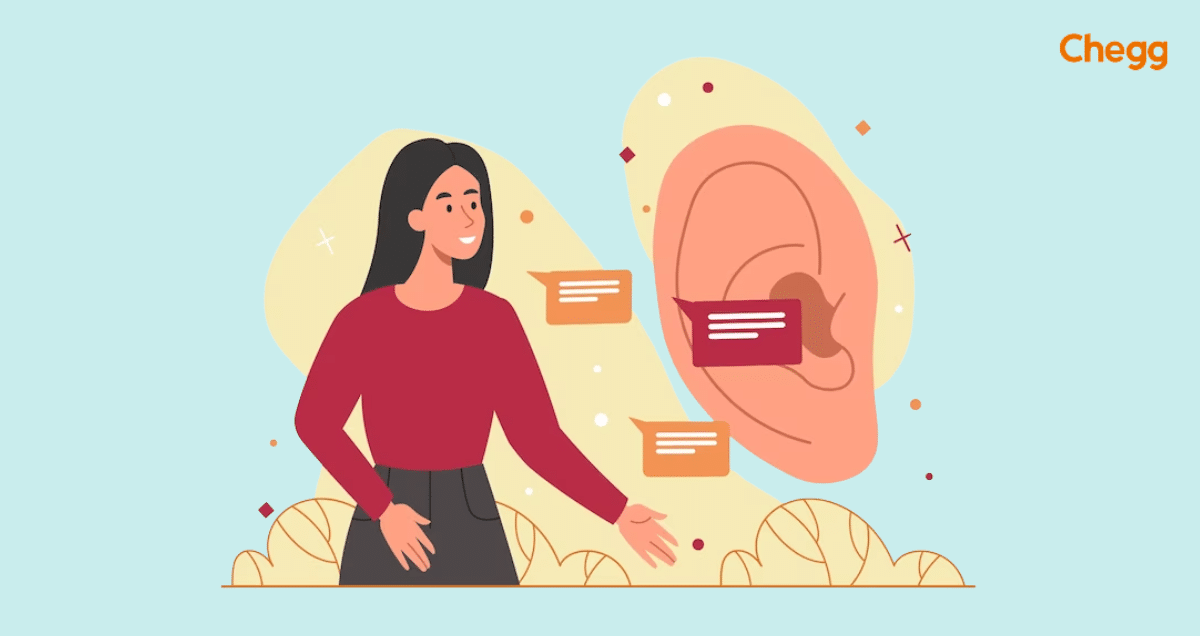
Active listening improves understanding, trust, and collaboration in both work and life.
Key techniques include minimizing distractions, keeping eye contact, and asking clarifying questions.
Strong listening skills boost communication, relationships, and career prospects in 2025.
Table of Contents
Are you struggling to remember details from meetings or feeling misunderstood in conversations? How to improve listening skills so that we can change how you connect, learn, and succeed in your personal and professional life. In 2025’s fast-paced, digital-first world, active listening is crucial. It helps you build stronger relationships, avoid misunderstandings, and make informed decisions.
This guide provides proven techniques, practical exercises, and expert insights on how to improve listening skills. Whether you’re a student, professional, or leader, mastering this essential skill will enhance your credibility, empathy, and effectiveness in any setting.
What Is Listening?
Listening is, in fact, an active process of receiving, constructing meaning from, and responding to spoken or non-verbal messages. Listening is much more than merely hearing; it requires attention, understanding, interpretation, and a reaction. Very good listening, therefore, is a matter of focus and effort through decoding both verbal and non-verbal cues related to the message.
Types of Listening Skills Styles
Active ListeningSkills mean fully engaging with the speaker by giving undivided attention, appropriately responding, and providing verbal or non-verbal feedback. This helps with understanding and enhances effective communication.
Passive ListeningSkills mean that a person is hearing sounds/words but doesn’t fully engage or understand the message given. There is little to no feedback, and the listener may not retain all the information.
Critical ListeningSkills One analyses, evaluates, and assesses the validity, reliability, or logic of the message that he or she receives. This is usually put to use in debates, decision-making, and problem-solving activities.
Empathetic ListeningSkills Centers around understanding the speaker’s emotions and feelings. It helps build trust and affords support. In this respect, it is vital in counseling, mentorship, and personal relationships.
Selective ListeningSkills Involves paying attention to only some portions of a conversation and leaving the rest out of consideration. This may be utilized appropriately to filter information but could also lead to misunderstanding or miscommunication.
Appreciative ListeningSkills When one listens to derive pleasure from music, storytelling, or a speech, one is said to be involved in appreciative listening. Appreciative listening does not informatively stem from any analysis or critique of the content but rather is connected with experiencing it.
Why Are Listening Skills Important?
Listening has always been an integral part of communication. So, improving your listening skills is important. So, let’s look at some reasons why effective listening skills are important.
It improves your ability to effectively motivate, influence, and develop relationships with people, which is crucial when considering how to improve listening skills
It reflects your quality of paying attention to the feelings and behavior of individuals
It improves basic human interaction. It helps to build professional and personal relationships.
It helps the organization to work efficiently with the provided information that would help them to adapt to the latest market trends or the customer’s needs.
Some important business roles played by effective listening skills are
There are several barriers to effective listening that lead to misunderstandings and communication breakdowns. The obstacles include, among others:
Distractions – External distractions like noise, phone notifications, or background activities, or internal distractions such as thoughts, stress, or fatigue divert the attention from the speaker.
Preconceived Notions – Personal biases, stereotypes, or assumptions about the speaker or the topic lead to selective listening, which knocks out an open-third approach.
Emotional Reactions – Rather high emotional states of arousal, for example, rage or excitement, will usually Ensure some bias and hamper the listener from focusing his/her concentration on the Systematic reasoning invoked by the speaker.
Information Overload – Receiving too much information at once can overwhelm the listener, leading him to have difficulty processing and remembering the key points.
Lack of Interest – When the topic itself is seen as not relevant or interesting enough, the listener may really struggle to stay focused and will disengage mentally.
Defensive Listening – A listener that hears any kind of criticism or personal attack can become defensive, focusing more on reacting instead of comprehending.
Speaking too fast or too slow – If a speaker speaks too fast, the listener may find it hard to catch up; if the speaker talks too slow, one may subsequently become uninterested or be so involved in other things that they lose track of the conversation.
Language barriers – Vocabularies, slang, accents, or some specific and complex terminologies make it hard for one to understand a language.
Interruption – Various interruptions, whether due to the listener or external forces, break the flow of conversation and, in turn, hinder mutual understanding.
Failure to clarify – This means not asking questions or not trying to clarify anything, which can lead to misunderstandings and incorrect assumptions.
Overcoming these obstacles would require conscious effort, such as minimal distractions, practicing patience, being open-minded, and actively engaging the speaker.
HURIER Model of Listening
The HURIER Model is a listening framework that slices the process into six interconnected components. It was developed by Judi Brownell and works on emphasizing the essential skills required for good and thorough listening. The six components are:
Hearing comprises of the physiological processes of perceiving sound. It serves to build the foundation of listening but it, in itself, cannot guarantee understanding. At this stage, distractions must be overcome, and concentration must be maintained.
Understanding means to have some comprehension of what the speaker means. This basically implies the process of getting the speaker’s words, understanding its meaning, and interpreting information accurately.
Remembering involves keeping the main points of a discussion in mind for the future. Good listeners may employ reiteration, summarizing, or note-taking to embed things into memory.
Interpreting refers to being able to read emotions, tone, and non-verbal signals from the speaker’s transmission. It requires the application of sensitivity and empathy in understanding the underlying feelings attached to a message.
Evaluating consists of checking the trustworthiness, logic, and relevance of the information taken in. This is where critical thought processes are applied to check the validity and worth of a message.
Responding refers to any sort of verbal or non-verbal feedback that indicates that one has understood what has been communicated and is subsequently engaged with the subject. Some good responses may be nodding, paraphrasing, asking questions, or appropriate verbal affirmations.
Attentive listening is viewed as a method of performance; through this, it is also possible to engage in, work through, and respond to communication better. This is especially useful for professional, academic, and interpersonal interactions.
How To Improve Listening Skills?
To be a good speaker, you have to be an effective listener. Here are some strategies on how to improve listening skills. Active Listening Strategies
Active listening skills can be developed with regular practice. It is a difficult skill, but it can be mastered with practice.
Practice active listening skills like
Non-verbal signs.
Eye contact.
Smile.
Attentive posture.
Mirroring your expression with the speaker.
Avoiding distractions
Paying attention to non-verbal cues.
A lot of information can be collected by analyzing the language and tone of the speaker. So, paying attention to different non-verbal cues while listening to someone is important.
You can identify enthusiasm, irritation, and boredom by paying attention to body language. These signs would be visible in their mouth, eyes, and the position of their shoulders.
This would help you to make assumptions regarding what the person is talking about.
Asking clarifying questions
Asking questions regarding the discussion would keep the flow of the conversation. A good listener would ask questions regarding the topic of the speaker.
Asking clarifying questions indicates your interest and attention regarding the discussion and that you look forward to taking it forward.
Preparing to listen
Develop listening skills by practicing listening and being aware of someone talking to you. One effect way to do this is by writing down what you have heard and acknowledging the person afterward. This is a great method on how to improve listening skills.
Another way to prepare to listen is listening to podcasts and audiobooks without reading the transcripts. This would help to improve your listening skills. Try to listen to a minimum of a four-minute clip and try recollecting all the information.
These listening skills would help increase communication skills and alert you while listening.
Creating a positive listening environment
There can be several distractions while someone is speaking. This would discourage the speaker. Some examples of distractions are.
Checking the watch.
Checking Smartphone notifications.
Showing disinterest while listening.
So, having a positive and clear environment helps provide attention to the speaker, which is always important.
You need to avoid all distractions while listening. This would look hard initially, but it would be easy with practice.
Clearing your mind during listening
It would not be easy to understand when your mind is cluttered. Your listening skills would go for a toss as your attention would be lost because of other issues.
So, always have a clear mind when you start listening to someone. This would require a lot of practice, but with time, you would get a hold of it.
Minimizing distractions
It is impossible to remove all distractions while having a conversation. However, minimizing distractions as much as possible should be practiced.
Giving your 100% attention by not getting distracted by mobiles or looking at some other stuff while talking are some distractions that can be practiced over time.
This would help increase your listening strategies and help gain the speaker’s confidence.
Focusing on the speaker
Putting your focus on while the speaker is speaking would help to retain all the information broadcasted in the conversation.
Prepare mental images of the conversations to help store the information easily.
A visual memory of the speaker would prepare you for what to say next. The visual memory would be stored as keywords and phrases that would be easy to recollect.
Losing focus is very easy. Practice staying focused and improving your listening concentration.
Reflecting on what was said
Take your time to analyze what you have heard from the speaker. Never be in a hurry to answer. You may lose the essence and skip some important parts.
Effective listening skills allow you to recollect and analyze the discussion and prepare your answer accordingly. Implementing techniques on how to improve listening skills can enhance this process even further
The practice of patient listening has to be developed over time. Your recollection and analyzing skills improve as you enhance your listening skills.
Providing feedback
Feedback is of two types: verbal and non-verbal.
Some examples of verbal feedback are, ‘Ok, I understand’, ‘I understand that must be difficult’, and ‘I agree with you on it.’
Some examples of non-verbal feedback are nodding the head, smiling, or using your eyes to express yourself.
Your feedback during or after the conversation indicates your attentiveness towards the discussion. So, always be prepared to provide feedback.
The aim of providing feedback is to send the speaker a message that you are actively listening. Writing down the points also reflects the attentiveness of the listener, which is a valuable strategy on how to improve listening skills.
Following up on what was said
It is a good practice to repeat the instructions. This would clarify any confusion and indicate that you were an active listener.
With this practice, you will slowly learn effective listening skills.
Make your routine to your specific needs. Here’s a sample plan:
Day
Activity
Material
Time
Mon
Ted Talk + Notes
Ted.com
30 min
Tue
Podcast Listening + Notes
Search for any podcast according to your niche.
20 min
Wed
Peer Discussion
language exchange
20 min
Thurs
Speak back what you heard
Record on phone
30 min
Fri
Rewatch and notes the key phrases
YouTube
30 min
Sat
Audiobook listening
Audiobook
15 min
Sun
Review + self test
journal
20 min
Ways to Improve Your Listening Skills
Improved personal and professional relationships.
When you develop listening skills, you will gain trust and confidence in your personal and professional circle. Learning how to improve listening skills is key to fostering these valuable relationships.
People like to talk about various subjects and appreciate someone who would love to listen to them. So, this would give you a healthy chance to improve your relationships.
Increased empathy
When you develop listening skills, you display increased empathy towards the speaker. Your presence would give a sense of trust in the speaker.
This makes the speaker feel more valued, and it helps to grow more trust in you.
Better decision-making
When you are a better listener, you can make informed decisions. As you would be aware of all the discussion, you would be in a situation to make a better decision.
In the professional world, earning the trust of people around you is difficult. This would lead to people putting their trust in you for decisions.
You can do that by being an effective listener while becoming a good decision-maker.
Improved self-awareness
When you have effective listening skills, your self-awareness towards your surroundings and the people around you will increase.
You would be alert, and your response would always be around the discussion. This would increase your confidence around people.
10 Best Ways to Develop Listening Skills
Effective listening is one of the communication skills that can be improved through deliberate practice. The following list gives ten of the best ways to develop strong listening:
Maintain Eye Contact and Be Present – Make sure to keep firm eye contact on the speaker and listen to them attentively. Keep distractors like your phone away from you or do not stare out.
Put Into Practice Active Listening – Show the speaker you are engaged by nodding, facially expressing, or saying any verbal cue like “I see” or “That makes sense,” thus showing you are most attentive.
Avoid Interrupting – Let the speaker finish their thought before you respond. Interrupting puts one at an advantage in the talk and is not good for communication.
Minimize Distractions – Always ensure that there is a quiet background when you are talking on important matters. Less background noise should be ensured and avoid any multitasking to fully concentrate.
Ask Clarifying Questions – Ask better open-ended, relevant questions to understand the speaker’s message when something does not sound clear.
Paraphrase and Summarize – To make sure you got what the speaker was saying, restate it in your own words. For e.x. “So, what you’re saying is …”
Be Open-Minded and Avoid Judging – Listen without forming opinions too quickly. Try to understand the speaker’s perspective before making any judgments or responding.
Pay Attention to Non-Verbal Cues – Pay attention to the body language, tone of voice, and facial expressions to read their emotions and the actual meaning behind their words.
Improve Concentration and Patience – Give your attention through mindfulness: don’t rush the conversation, and don’t think about responding while the speaker is still speaking.
Engage in Regular Listening Practice – Listening to audiobooks, podcasts, or having deep conversations will help you improve your listening skills. Different ways of listening help comprehension and retention.
Hence, by using these strategies consistently, one can build active listening skills that improve communication, strengthen relationships, and improve professional and personal relations.
Enhancing Your Professional Success
Having good listening skills is essential. It would help to motivate, influence, and develop relations with people. There are several ways to develop listening skills, including activities that demonstrate how to improve listening skills. Some activities to improve listening skills are building non-verbal cues, asking clarifying questions, being a patient listener, and reducing distractions
Good listening skills would improve your empathy towards people, help you make better decisions, and improve your personal and professional relationships. Therefore, learning how to improve listening skills is crucial, as effective listening is an important part of communication and must be practiced by all.
Seek Constructive Feedback:
Listening gets easier when you know the parts that you struggled with:
Use sites like italki, Tandem, or HelloTalk
Record yourself speaking after you have listened
Share the recordings with tutors, classmates or native speakers and get the feedbacks.
Make use of AI tools (like a language-learning chatbot) that makes suggestions for grammar and pronunciation.
Use Tools to Track Progress:
Increase your motivation to act by tracking your growth:
Daily logs: Log what you listened to and what you learned and Apps with progress statistics: e.g. ELSA Speak, FluentU.
Weekly check-ins: Assess yourself on vocabulary or comprehension.
Self recording: Record weekly voice notes and compare.
Conclusion
Great listeners are made, not born. By practicing active listening, reducing distractions, and asking thoughtful questions, you will become more engaged and responsive in every interaction. Improved listening skills not only help you absorb information; they also show respect, build trust, and encourage open communication.
In 2025, employers and colleagues appreciate those who listen, making it an essential asset for career growth and teamwork. Refine your listening habits, seek feedback, and use these techniques daily. With patience and dedication, you will open new opportunities, strengthen your relationships, and become a better communicator in all areas of life.
For more career tips and helpful information, view our blogs on Life Skills.
Frequently Asked Questions(FAQ’s)
How can listening skills be improved in daily life?
You can improve your listening skills by giving full attention, avoiding interruptions, and summarizing the other person’s words. Example: A student repeats the instructions to confirm understanding. Tip: Put your phone away during conversations to stay focused.
How can listening skills in the workplace be improved?
Listen carefully during meetings, take notes, and ask questions to ensure you understand. Example: An employee repeats the manager’s request in their own words to confirm tasks. Tip: Keep eye contact to show you are paying attention.
How to improve listening skills for students?
Students can listen better by focusing in class, avoiding distractions, and reviewing notes afterward. Example: A student highlights key points while the teacher explains a topic. Tip: Sit in the front row to cut down on distractions.
How to improve listening skills in communication?
Good communication requires listening completely before responding and understanding the speaker’s feelings. Example: A friend listens without interrupting before offering advice. Tip: Pause for 2 to 3 seconds before replying; it shows you are thoughtful.
How to improve listening skills in interviews?
Listen closely to interview questions, don’t interrupt, and answer clearly. Example: A candidate asks, “May I clarify the question?” before responding. Tip: Nod slightly to show that you’re engaged and paying attention.
How to improve listening skills in relationships?
Strong relationships need empathetic listening. This means you focus on both feelings and words. Example: A partner listens patiently rather than jumping to conclusions during a disagreement. Tip: Say things like “I understand how you feel” to show empathy.
How can listening skills for public speaking be improved?
Public speakers get better by paying attention to audience reactions and feedback, adjusting their delivery during the speech. For example, a speaker might slow down if the audience looks confused. Tip: Record practice sessions to identify moments when you miss audience cues.
Mansi crafts content that makes learning engaging and accessible. For her, writing is more than just a profession—it’s a way to transform complex ideas into meaningful, relatable stories. She has written extensively on topics such as education, online teaching tools, and productivity. Whether she’s reading, observing, or striking up a conversation while waiting in line, she’s constantly discovering new narratives hidden in everyday moments.