
To strengthen your ability to communicate well with others and learn how to improve communication skills, actively listening to others is crucial, giving your full attention to the speaker, being clear and concise in your message, noting nonverbal cues, and using empathy and emotional intelligence to connect with your audience. Seeking constructive feedback and actionable steps, preparing your message, and practicing in different situations can also help you improve as a communicator.
It is the ability to convey ideas, thoughts, and emotions clearly and efficiently, ensuring the message is understood. What is effective communication? It involves verbal and non-verbal elements, including tone, body language, and active listening. What is effective communication if not the ability to not only speak but also understand the perspectives of others and respond appropriately? People with good communication skills can express themselves confidently, build strong relationships, and prevent misunderstandings in personal and professional settings. The importance of communication skills lies in their ability to foster teamwork, resolve conflicts, and enhance productivity in any environment.
Good communication skills mean adapting to different audiences and situations while maintaining clarity and engagement. What is effective communication without active listening and empathy? It requires attentiveness, emotional intelligence, and constructively giving and receiving feedback. The importance of communication skills extends beyond verbal exchanges; it also includes written, digital, and interpersonal communication that shapes how individuals connect and collaborate. Whether in the workplace, social interactions, or leadership roles, mastering what is effective communication enhances collaboration, decision-making, and overall success.

How to Improve Communication Skills is essential for building strong personal and professional relationships. Whether in the workplace, social settings, or leadership roles, expressing ideas clearly and confidently makes a lasting impact. By exploring different communication skills examples, such as active listening, verbal and nonverbal cues, and digital communication, individuals can learn to collaborate more effectively and grow in their careers. In this article, we’ll cover the top 15 strong communication skills to improve and how they can positively influence all areas of life.
Active listening is more than just hearing words; it involves fully engaging with the speaker, understanding their message, and responding appropriately. This skill improves relationships, reduces misunderstandings, and fosters trust in conversations.
Emotional intelligence (EQ) is the ability to recognize, understand, and manage one’s emotions while being sensitive to others’ feelings. High EQ leads to better relationships and conflict resolution.
Non-verbal communication, including facial expressions, gestures, posture, and tone of voice, is crucial in how messages are perceived.
| Nonverbal Cue | Meaning |
| Eye contact | Engagement, interest, attentiveness |
| Facial expressions | Emotions, attitudes, reactions |
| Body posture | Confidence, openness, attentiveness |
| Gestures | Emphasis, clarity, emphasis on key points |
| Handshakes | Professionalism, trust, confidence |
| Personal space | Comfort level, boundaries |
| Tone of voice | Emotions, intent, level of authority |
| Nodding | Agreement, understanding |
| Smiling | Friendliness, approachability |
| Mirroring | Rapport, connection |
| Fidgeting | Nervousness, restlessness |
| Crossing arms | Defensiveness, resistance |
Being direct and to the point ensures your message is understood without confusion.
Confident communicators inspire trust and credibility. Speaking with assurance helps convey your message more effectively.
Empathy allows you to connect with others by understanding their feelings and perspectives.
Open-minded communicators are willing to consider different perspectives, making discussions more productive and inclusive.
Providing and receiving feedback effectively promotes growth and improvement.
Different situations require different communication approaches.
Public speaking is a valuable skill for career growth and leadership roles.
Effective written communication ensures messages are precise, professional, and persuasive.
Good questioning techniques lead to better understanding and engagement in conversations.
Effective communication is key to resolving conflicts peacefully.
Networking requires effective communication to build and maintain professional relationships.
One of the most practical ways to improve communication skills in English is through collaboration. Working cooperatively with others, sharing ideas, listening actively, and fostering a team-oriented mindset helps individuals achieve common goals. Effective collaborators respect diverse perspectives, communicate openly, and encourage participation. By leveraging each team member’s strengths, teams can create an inclusive environment that drives innovative solutions and improves overall productivity.
Read more: Barrier of Communication
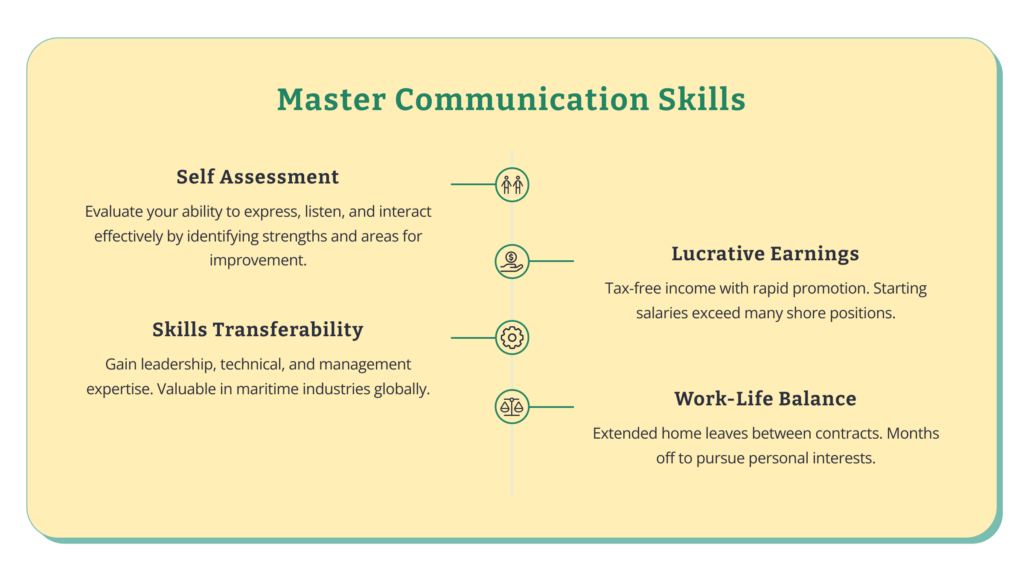
Take the time to evaluate your communication skills by recognizing your strengths and areas for improvement. This self-reflection provides a foundation for your learning journey and helps you focus on specific areas that require attention.
To help you understand your abilities, here are a few questions you can ask yourself, and understand where you stand:
| How comfortable am I in expressing my thoughts and ideas clearly? |
| Do I actively listen to others or find myself interrupting frequently? |
| Am I aware of my nonverbal cues, such as body language and facial expressions, and how they impact communication? |
| How well do I adapt my communication style to different audiences and situations? |
| Do I effectively manage conflicts and disagreements through communication? |
| Am I able to convey empathy and understanding when interacting with others? |
| How confident am I in public speaking or presenting information to a group? |
| Do I actively seek feedback and incorporate it to improve my communication skill? |
| Do I actively seek feedback and incorporate it to improve my communication skills? |
| Do I communicate assertively and assert my boundaries when necessary? |
Another effective way to master how to improve communication skills in English is by seeking the proper training and resources. Platforms like Coursera, LinkedIn Learning, and Chegg Skills offer structured courses covering verbal, non-verbal, and written communication techniques. Participating in workshops, attending public speaking sessions, or joining groups like Toastmasters can provide hands-on practice and constructive feedback. According to LinkedIn Learning’s 2024 Skills Report, communication remains among the top three areas professionals aim to improve through online learning. By investing in these resources, individuals can refine their ability to express ideas clearly, listen actively, and strengthen interpersonal relationships.
Active listening is a key component of good communication skills. It involves giving your full attention to the speaker, focusing on their words, tone, and nonverbal cues. Regularly practicing this skill improves understanding, fosters meaningful connections, and refines your communication interactions. The importance of communication skills in active listening cannot be overstated, as it helps build trust and reduces misunderstandings in both personal and professional settings.
Engage in role-playing exercises to simulate real-life communication scenarios. This method allows you to practice different communication techniques and receive constructive feedback from others. Role-playing improves adaptability, confidence, and clarity in various interactions. Seeking feedback helps you gain valuable insights into your strengths and areas for improvement, enabling you to further refine your good communication skills.
The importance of communication skills extends to continuous learning and improvement. Effective communication skills develop over time, requiring consistent effort and practice. Engage in conversations, presentations, and writing exercises to refine your skills. Reflect on your experiences, identify areas for improvement, and make necessary adjustments to enhance your abilities. The more you practice, the more natural and impactful your communication will become.
Effective communication is one of the most crucial skills determining success in job hunting. From writing a compelling resume to acing interviews and networking with industry professionals, good communication skills are vital in every stage of the job search process. Employers seek candidates who can express themselves clearly, collaborate effectively, and build strong relationships within the workplace. Below are key reasons why the importance of communication skills cannot be overlooked in job hunting:
Your resume and cover letter serve as your first impression on potential employers. Strong communication skills help you present your qualifications, experience, and achievements concisely and persuasively. Using clear and compelling language ensures that your application stands out from the competition.
Interviews are the most critical stage of job hunting, and good communication skills can make a lasting impact on recruiters. The ability to articulate thoughts, answer questions confidently, and actively listen to interviewers helps establish a strong rapport. Employers look for candidates who can express their ideas effectively and demonstrate professionalism in their speech and body language.
Networking is a powerful tool in job hunting, and the importance of communication skills in professional networking cannot be overstated. Whether attending job fairs, reaching out on LinkedIn, or conversing at industry events, strong communication helps you build meaningful connections that can lead to job referrals and career opportunities.
Once you secure a job offer, negotiation becomes a crucial step. The ability to clearly communicate your value, justify salary expectations, and negotiate terms professionally ensures that you get the best possible offer. Good communication skills allow you to express your worth without hesitation, helping you secure a favorable deal.
In today’s competitive job market, technical skills alone are not enough. Employers prioritize candidates who can collaborate, present ideas clearly, and contribute to a positive work environment. The importance of communication skills in job hunting lies in the ability to differentiate yourself by demonstrating confidence, adaptability, and professionalism.
Understanding how to improve communication skills is crucial for personal and professional success. The ability to communicate clearly, verbally and nonverbally, significantly influences relationships, teamwork, leadership, and career advancement. By actively listening, fostering empathy, and refining communication techniques, individuals can build stronger connections, resolve conflicts efficiently, and inspire those around them. Investing in continuous learning and leveraging resources such as Chegg Skills can provide valuable insights into developing practical and impactful communication abilities.
Communication is a lifelong learning process, and consistent improvement is key. By honing our skills, we enhance our relationships, increase self-confidence, and navigate the complexities of the modern world with clarity and ease. Embracing the principles of what is effective communication ensures long-term success in both personal interactions and professional environments.

By working for Chegg, you may also use these skills to earn extra money to cover your expenditures. Chegg allows for independent work for Q&A. The best aspect of this opportunity is the freedom to work whenever and wherever you choose. You can become a subject matter expert with Chegg.
Improving your communication skills is a lifelong investment that benefits every aspect of your life, from building stronger relationships to advancing your career. By practicing active listening, honing your speaking and writing, and being open to feedback, you’ll become a more confident and effective communicator. In 2025’s connected world, those who excel in communication stand out in job interviews, team projects, or leadership roles.
Remember, progress comes with practice. Embrace chances to communicate in different situations, learn from great communicators, and don’t hesitate to step out of your comfort zone. With dedication and the right strategies, you’ll unlock new opportunities, build trust, and make a lasting impact wherever you go. Start today and watch your communication skills transform your personal and professional journey.
To become a better communicator, practice listening to others more than you share your own opinions, and respond with thoughtfulness.
For example, if you participate in a group chat, refrain from blurting out your opinion, and instead say, ‘That’s a good thought. Can you tell me more about what you were thinking?’ This demonstrates your interest.
Tip: speak slowly and clearly. This will make you sound more confident.
To improve communication, consider trying these five simple strategies: actively listen, be clear in your speaking, pay attention to your body language, ask mindful questions, and tailor your message to your audience.
Tip: Altering your tone or making minor adjustments to your body language can create greater proximity in your communication and interaction.
The 7 keys to strong communication skills are: clarity, confidence, empathy, active listening, open body language, feedback, and adaptability.
Tip: Communicate with empathy, it helps build trust and makes your message more impactful.
To improve your conversation skills, focus on listening more, asking open-ended questions, and showing genuine interest.
For example, instead of asking, “Did you have a good weekend?” try, “What did you get up to this weekend?” This invites a longer response.
Tip: Avoid thinking about your next reply while the other person is talking; just be present.
The 4 types of effective communication are verbal (speaking), non-verbal (body language), written (emails, texts), and visual (charts, images).