
The development of one’s personality is a continual process in which an individual can improve and develop their own unique behavior, way of thinking, and attitudinal patterns, through self-reflection, experience, and learning, while interacting with one’s environment.
The process involves expanding self-awareness, developing a positive attitude, and gaining future interpersonal communication and social skills to develop self-confidence for personal growth. Genetic factors, family environment, and social factors all affect a person’s personality development.
Personality development is like giving your inner self a makeover. It’s about improving who you are, how you behave, and how you interact with others. As we care for our physical health, personality development is about our mental and emotional health.
In simple words, personality development means:
Understanding the importance of personality development helps individuals unlock their true potential, improve social interactions, and adapt to challenging situations effectively. For Indians, personality development is super important because it helps us balance our rich cultural values with the demands of the modern world.
Several factors can shape and influence personality development and communication:
This is the starting point. Children observe parents and those around them. They imitate activities, soak in language, and begin to develop initial habits. Love and support help influence confidence and behaviors from the start.
The teenage years mean change. You begin to reflect on questions like “Who am I?” or “What do I stand for?” Pressures from peers, relationships, friendships, and daily experiences shape your identity. This is a time when many people start to develop values.
Personality development continues in adulthood. Work experiences, coupled with life challenges, promote maturity. You learn about personal responsibility and self-control. Most people start serious development of their attributes here.
Your personality affects how you are perceived and how you navigate life experiences. Developing your personality leads to an expanded sense of clarity and purpose to grow with intention.
When you focus on your personality development, you learn about yourself first. This, in turn, creates confidence and the ability to communicate and behave without fear or hesitation.
It teaches you how to communicate your thoughts clearly and be trusted, as well as troubleshoot in personal and professional relationships (work counterparts, coworkers, or leaders).
Being confident in your personality helps you stand out among your peers. This improves other qualities intrinsic to personality development, such as leadership, teamwork, and problem-solving, all employers are looking for in quality employees.
Character and strengths help ensure good decision-making. This also enables you to keep calm and think through a scenario rather than emotional responses that will alter your thoughts.
Balancing awareness of another person’s emotional state, valuing respect for others, and listening actively all improve relationships over time, both personally and professionally.
Personality development theories reveal how genetics, experiences, and social interactions shape who we are. From biological traits to life experiences and thoughts, these theories show personality evolves through a mix of nature and nurture. Understanding them helps us see how personality grows and changes over time.
Below are some of the most prominent theories of personality development:
Sigmund Freud‘s psychoanalytic theory is one of the earliest and most influential theories of personality development. According to Freud, personality is shaped by unconscious motives and conflicts, which are rooted in childhood experiences.
While some aspects of Freud’s theory are considered outdated, the idea that early childhood experiences impact personality development remains widely accepted in modern psychology.
Erik Erikson expanded on Freud’s work by focusing on the social and psychological aspects of personality development. Erikson proposed eight stages of psychosocial development, each characterized by a specific conflict that must be resolved for healthy personality development.
Erikson’s theory is widely respected for its emphasis on social and cultural influences and its application to the entire human lifespan.
Trait theory, pioneered by Gordon Allport, focuses on identifying and measuring individual personality characteristics, known as traits. Allport believed that personality is composed of a unique combination of traits that define how a person behaves.
Trait theory remains influential, particularly in the development of personality assessments like the Big Five personality traits, which include openness, conscientiousness, extraversion, agreeableness, and neuroticism.
Albert Bandura’s social cognitive theory emphasizes the role of observational learning, social experiences, and cognitive processes in the development of personality. According to Bandura, people learn behaviors by observing others and imitating them.
Social cognitive theory is widely applied in educational and therapeutic settings, highlighting the importance of social environments in shaping personality.
Humanistic theories focus on the inherent goodness of people and their natural tendency toward self-actualization. Carl Rogers and Abraham Maslow are two of the most prominent figures in this area.
Humanistic theories are foundational in positive psychology and counseling, emphasizing personal growth and self-improvement.
Behaviorist theories, led by B.F. Skinner focuses on observable behaviors rather than internal mental states. Skinner believed that personality development is a result of environmental influences and learning.
Behaviorist principles are widely used in behavior modification programs, educational settings, and therapies for changing specific behaviors.
Each of these theories helps us understand different parts of personality development. Some focus on early childhood, some on lifelong growth, and some on how we learn from others. By learning about these theories, students can better understand themselves and others, helping them in their studies and future careers.
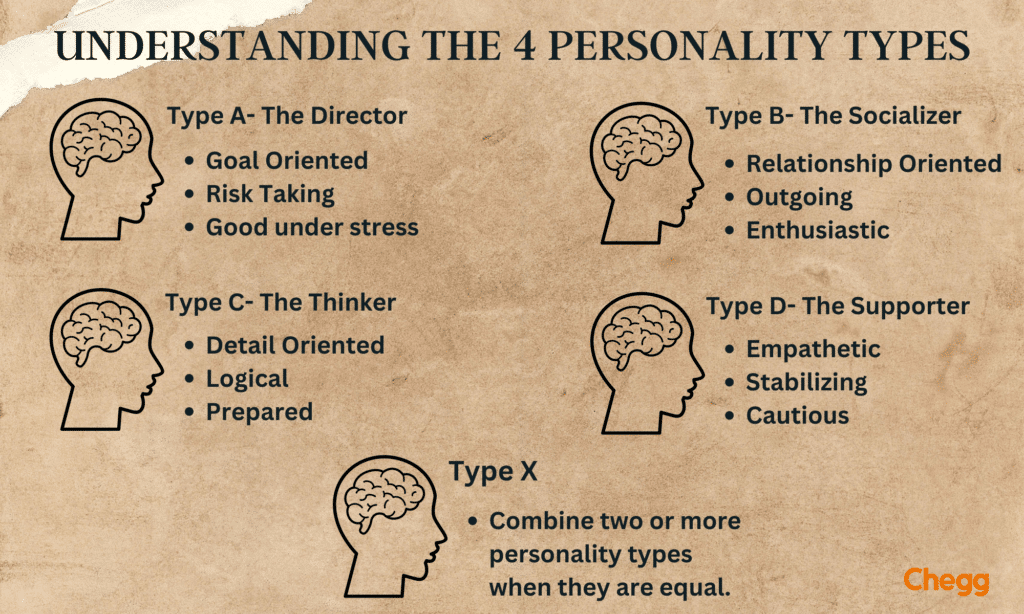
There are many different types of personalities, and they can vary drastically between individuals. Some of the more common types include introverts, extroverts, optimists, pessimists, logical thinkers, emotional thinkers, and loyalists.
Each of these types of personalities has its unique strengths and weaknesses, and can help people understand their behavior and motivations. Understanding personality types can be very helpful in finding suitable career paths, forming meaningful relationships, and creating successful teams. Let’s understand through the 4 broad categories:
Here are some of the main benefits of personality development that you can experience in your everyday life:
| Benefit | Description |
|---|---|
| Boosts Confidence | Personality development helps you become more confident in yourself, making you better prepared for various life challenges. |
| Improves Communication Skills | It enhances your ability to communicate effectively, both verbally and non-verbally, which is essential for building relationships and working in teams. |
| Strengthens Leadership Skills | You develop qualities such as decision-making, problem-solving, and the ability to inspire others, which are important traits of good leaders. |
| Develops Emotional Intelligence | It helps you understand and manage your own emotions while empathizing with others, making your interactions more positive and meaningful. |
| Encourages a Positive Attitude | A positive attitude can transform the way you view and respond to challenges, improving your mental health and relationships. |
Personality development and communication improve these areas, ensuring that you not only grow as an individual but also excel in your personal, academic, and professional life.
Personality development is a journey, not a destination. Follow these simple steps to start working on your personality:
Before developing your personality, you need to understand your current strengths and weaknesses. Self-assessment helps you identify areas that need improvement. Here’s how to perform a self-assessment:
Once you know your strengths and weaknesses, set specific goals for improvement. Your goals should be:
Your habits shape your personality over time. Cultivating good habits can make a big difference in your personal growth. Some habits to develop include:
Interacting with others is a vital part of personality development. Developing good social skills helps you build better relationships. You can:
Never stop learning! Personal growth is a continuous process, and you should always look for opportunities to learn something new. Here are some ways to keep learning:
Now that we understand personality development and why it matters, it’s time to look at some personality development tips. Personality development is not a one-time task but an ongoing process that involves refining different aspects of ourselves. Focusing on self-awareness can help us identify growth areas and make positive changes. Regular reflection on our strengths and weaknesses helps us take steps toward improvement.
To develop your personality, build self-confidence, improve communication skills, and adopt a positive attitude. Being open to learning and embracing new experiences is vital to growth. Setting goals and staying consistent with personal development will help you move forward. Remember, personality development requires patience and persistence, but with continuous effort, you can unlock your full potential and become the best version of yourself.
Here are some practical tips:
The first step in personality development is understanding yourself. Reflect on your strengths, weaknesses, values, and goals. You can:
Once you know yourself better, set specific goals for your personality development. These could include:
Reading is a powerful tool for personality development. It:
Communication skills and personality development go hand in hand, as effective communication enhances personal growth, confidence, and success.
Embrace challenges and see them as opportunities for growth. Remember that personality development is a journey, not a destination.
Your physical well-being impacts your personality. Make sure to:
Continuously learning new skills not only enhances your abilities but also boosts your confidence. Consider:
Developing strong interpersonal skills is a crucial part of personality development. Make an effort to:
Good time management is essential for everyone, but especially for students. Try:
Find a mentor who can guide you in your personality development journey. This could be a teacher, a family friend, or even a professional in a field you’re interested in.
Personality development can vary based on your situation. Here’s how it applies to different groups:

Here are the best personality development books for you:
Workshops, mentorship, and reading self-help books are excellent ways to understand how to develop personality effectively. You can embark on a successful personality development journey with minimal cost by exploring these courses, workshops, books, YouTube channels, and free resources. Whether you’re looking to boost your confidence or improve your communication skills, these resources are a great starting point.
Personality development is a lifelong process. It shapes how others see you and how you see yourself. Focusing on continuous learning and self-improvement opens doors to new opportunities and deeper connections. Remember, small, consistent efforts like practicing gratitude, setting goals, and seeking feedback can lead to remarkable changes over time. As you grow, you will notice increased confidence, better decision-making, and greater fulfillment.
In the changing world of 2025 and beyond, those who prioritize personal growth will stand out and thrive. Commit today to invest in your personality development. Watch it transform your career, relationships, and overall happiness. Your journey to becoming your best self starts now. Embrace it wholeheartedly.
Need guidance to grow in life, then worry not & click the following link to get the best Career Guidance from Chegg India Experts.
Personality development is improving communication, behavior, confidence, and personal growth to succeed in life and work.
Example: A student joins a public speaking course to feel more confident during presentations.
Tip: Start small. Practice self-awareness every day to identify areas for improvement.
You can improve by reading, practicing communication, learning leadership, staying positive, and seeking feedback.
Example: Someone who reads daily and applies new knowledge develops better conversation skills.
Tip: Surround yourself with mentors or peers who encourage growth.
The main aspects include self-confidence, communication, emotional intelligence, time management, and leadership.
Example: A manager with emotional intelligence resolves conflicts smoothly within a team.
Tip: Focus on one skill at a time instead of trying to change everything all at once.
It boosts your professional image, improves networking, and makes you more flexible in competitive workplaces.
Example: An employee with strong personality traits stands out and is selected for international assignments.
Tip: Emphasize personality strengths like leadership or teamwork on your resume.
Yes, there are many online courses, workshops, and webinars on communication, leadership, and self-growth.
For example, a learner attends an online body language course and uses it during interviews.
Tip: Choose interactive courses with practical exercises instead of those that focus only on theory.
It boosts confidence in decision-making, communication in relationships, and managing stress effectively.
Example: A person with good time management balances studies, hobbies, and family.
Tip: Practice mindfulness every day to improve focus and control over emotions.