
Mental strength is the ability to manage your emotions, thoughts, and behaviors in a way that sets you up for success in life. When it comes to how to be mentally strong, It’s not about being emotionless or ignoring challenges—it’s about facing them head-on with resilience, clarity, and purpose. Mentally strong individuals maintain control under pressure, bounce back from setbacks, and stay focused on long-term goals despite short-term obstacles. It involves self-awareness, discipline, emotional intelligence, and the courage to make difficult decisions, even when they’re uncomfortable or unpopular.
In today’s fast-paced and often unpredictable world, being mentally strong is more important than ever. Whether you’re navigating career transitions, managing personal relationships, or dealing with unexpected setbacks, mental strength acts as your internal compass. It helps you remain grounded during stress, maintain a positive outlook in adversity, and take intentional action rather than react impulsively. By cultivating this inner strength, you not only improve your own quality of life, but also become a source of stability and inspiration for those around you.
Mental strength is the capacity to stay focused, resilient, and emotionally balanced in the face of stress, challenges, or adversity. It involves managing your thoughts effectively, regulating your emotions, and taking constructive action even when situations are difficult or uncertain. Rather than avoiding discomfort or failure, mentally strong individuals embrace these experiences as opportunities for growth. They practice self-discipline, maintain a clear sense of purpose, and consistently align their actions with their values. In essence, mental strength is not about being tough all the time—it’s about being flexible, self-aware, and committed to personal growth, no matter what life throws your way.
Emotional regulation is the ability to manage and respond to your emotions in a healthy, constructive way. It means staying calm under pressure, not allowing emotions to dictate your decisions, and being able to express feelings appropriately. Mentally strong individuals recognize their emotions without being overwhelmed by them.
Resilience is the capacity to recover quickly from setbacks, failures, or disappointments. It doesn’t mean avoiding hardship—it means learning from it and bouncing back stronger. Resilient people view challenges as temporary and surmountable rather than permanent roadblocks.
Self-discipline is the practice of staying committed to your goals even when motivation fades. It involves resisting short-term temptations in favor of long-term outcomes, staying consistent with routines, and holding yourself accountable. This trait helps build confidence and reliability in yourself over time.
Positive thinking isn’t about ignoring problems—it’s about approaching them with a mindset that looks for solutions, growth, and hope. Mentally strong individuals train themselves to reframe negative thoughts, focus on what they can control, and maintain a hopeful outlook even in tough situations.
Confidence is the trust in your ability to handle life’s challenges, while self-belief fuels persistence and courage. It allows you to take risks, face fears, and pursue goals despite uncertainty. Mentally strong people believe in their worth and potential, even when external validation is lacking.
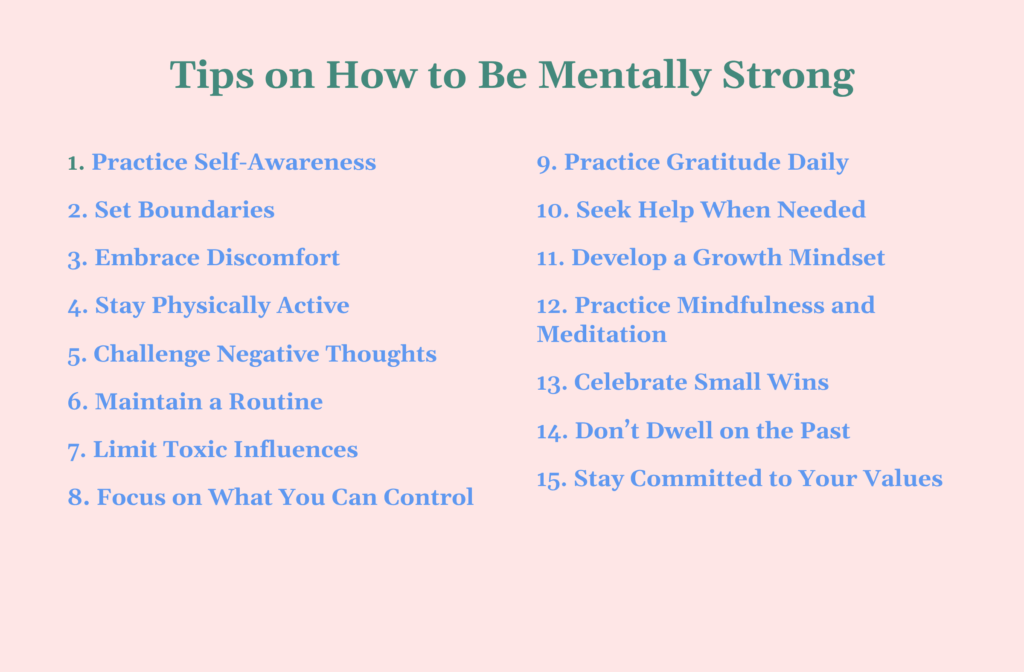
Take time to reflect on your thoughts, emotions, and reactions. Understanding your inner patterns is the first step toward building mental strength. Journaling or mindfulness can help you stay in tune with your mental health.
Learn to say no without guilt. Setting healthy boundaries protects your energy, boosts your self-respect, and supports your mental well-being. Mentally strong individuals know that people-pleasing can drain their mental health.
Growth often comes from stepping outside your comfort zone. Face challenges head-on, whether it’s public speaking or making a tough decision. Each act of courage strengthens your resilience and mental strength.
Regular exercise boosts endorphins, reduces stress, and improves focus. A strong body supports a strong mind, enhancing both mental health and emotional stability.
Reframe negative self-talk with realistic and empowering alternatives. Mentally strong people don’t let fear or doubt control their narrative—they take charge of their mental health by shifting their mindset.
Having a consistent daily routine builds structure and stability. It creates a sense of control and helps mentally strong individuals stay grounded, especially during uncertain times.
Surround yourself with positive, supportive people. Limit exposure to negativity—whether it’s unhealthy relationships, social media, or draining environments—to preserve your mental strength.
Let go of what’s beyond your influence and direct your energy toward actions you can take. Mentally strong individuals accept reality without becoming victims of it, which strengthens their mental health.
Take time each day to acknowledge what’s going well. Gratitude shifts focus from scarcity to abundance and helps you build a more positive and mentally strong mindset.
Asking for support is not weakness—it’s a sign of strength. Whether it’s therapy, coaching, or talking to a trusted friend, mentally strong people know when to reach out to protect their mental health.
See failures and setbacks as opportunities to learn rather than signs of defeat. Mentally strong individuals focus on progress, not perfection, and view challenges as essential parts of personal development and mental strength.
Incorporating mindfulness or meditation into your routine helps calm the mind, reduce stress, and enhance focus. This consistent practice strengthens your mental health by increasing emotional awareness and mental clarity.
Acknowledge your progress, no matter how small. Recognizing achievements builds confidence and reinforces the habits that support mental strength. It also keeps motivation high during long-term goals.
Learn from the past, but don’t live in it. Mentally strong people accept what they can’t change and focus on building a better future, which helps maintain emotional balance and overall mental health.
Make decisions based on what truly matters to you, not based on external pressure or trends. Aligning your actions with your core values builds integrity, clarity, and long-term mental strength.
Mentally strong individuals handle stress more effectively. They stay calm under pressure and use healthy coping strategies to navigate challenging situations without feeling overwhelmed.
With greater emotional control and clarity of thought, mentally strong people make thoughtful, confident decisions—even in high-stakes or emotionally charged situations.
Mental strength builds the ability to bounce back from setbacks, failures, and disappointments. This resilience helps you stay focused on long-term goals despite short-term obstacles.
Being mentally strong supports overall mental well-being by reducing anxiety, improving mood, and preventing emotional burnout. It leads to a more balanced and grounded life.
Mentally strong individuals believe in their ability to face challenges and overcome adversity. This self-assurance boosts performance in both personal and professional areas.
Emotional regulation and self-awareness—key components of mental strength—lead to more respectful, honest, and supportive relationships with others.
Mental strength enables you to avoid distractions, maintain discipline, and stay committed to your goals, increasing both your efficiency and output.
Mentally strong people live with intention and align their actions with their values, leading to a deeper sense of meaning and fulfillment in life.
Strong mental health often encourages better lifestyle choices—such as regular exercise, balanced eating, and good sleep habits—which contribute to overall well-being.
Life is unpredictable, and mentally strong individuals are more flexible and open to change. They view transitions as opportunities for growth rather than threats to stability.
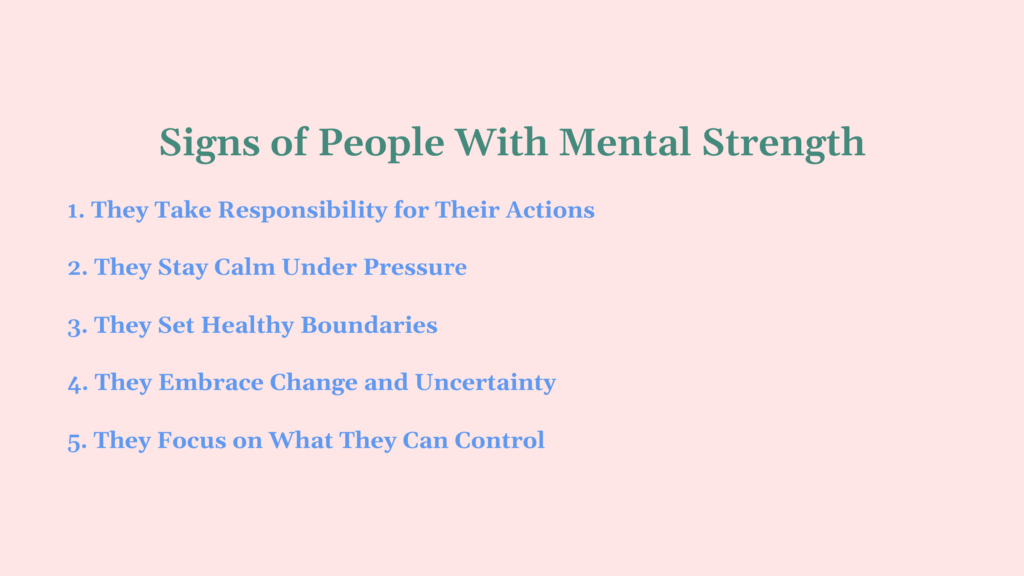
Mentally strong people don’t make excuses or blame others. They own their decisions, learn from mistakes, and take accountability, knowing that growth comes from self-awareness and responsibility.
In stressful or unpredictable situations, mentally strong individuals maintain composure. They manage their emotions effectively and think clearly, which allows them to respond rather than react.
Whether it’s saying no to toxic people or prioritizing self-care, mentally strong people know how to protect their energy. They value their time and emotional well-being without guilt.
Mentally strong individuals view change as an opportunity, not a threat. They’re adaptable, open-minded, and willing to pivot when needed, without becoming overwhelmed by fear or doubt.
Instead of worrying about the uncontrollable, mentally strong people direct their energy toward actions and choices within their influence. This mindset builds resilience and reduces unnecessary stress.
Read More: How to Control Emotions
| Aspect | Mentally Strong | Strong Minded |
| Definition | Resilient and emotionally balanced under stress. | Firm and unwavering in opinions or beliefs. |
| Approach to Emotions | Acknowledges and manages emotions healthily. | May suppress or ignore emotions to maintain stance. |
| Flexibility | Open to change and adapts when necessary. | Often rigid and resistant to changing views. |
| Conflict Handling | Listens, seeks understanding, and resolves calmly. | Stands firm, sometimes stubborn in disagreements. |
| Focus | Focuses on growth, learning, and self-improvement. | Focuses on asserting their viewpoint or authority. |
| Aspect | Mentally Strong | Emotionally Strong |
| Definition | Ability to manage thoughts, behaviors, and stress effectively. | Ability to understand, express, and regulate emotions. |
| Focus Area | Cognitive control, resilience, and decision-making. | Emotional awareness, empathy, and emotional regulation. |
| Response to Challenges | Uses logic and problem-solving to navigate difficulties. | Processes feelings healthily without being overwhelmed. |
| Emotional Expression | May keep emotions in check to stay focused and clear. | Freely acknowledges and expresses emotions appropriately. |
| Goal | Maintaining mental clarity and discipline. | Achieving emotional balance and well-being. |
When it comes to how to be mentally strong, it is a journey that involves cultivating resilience, emotional awareness, and self-discipline. It requires consistent effort to manage your thoughts and emotions in a way that empowers you rather than holds you back. By embracing challenges, setting healthy boundaries, and focusing on what you can control, you build a foundation that helps you navigate life’s uncertainties with confidence and calm. Developing mental strength doesn’t mean eliminating struggles—it means learning to face them with courage and the belief that you can grow stronger through adversity.
Ultimately, mental strength enriches every aspect of your life, from your relationships and career to your overall well-being. It allows you to respond thoughtfully rather than react impulsively, making choices aligned with your values and long-term goals. By prioritizing your mental health and practicing habits that foster resilience, you create a powerful internal compass that guides you through setbacks and fuels personal growth. In this way, becoming mentally strong is not just about surviving challenges—it’s about thriving despite them and unlocking your fullest potential.
For more career tips and useful information, view our blogs on Life Skills.
Read More: Importance of Soft Skills

Mentally strong people identify unhelpful thought patterns—like catastrophizing or harsh self-criticism—and consciously replace them with balanced, realistic, or positive reframes. Techniques from cognitive-behavioral therapy such as thought records and positive affirmations support this process.
A growth mindset means believing your abilities can develop through effort and learning. This empowers you to embrace challenges, persist in adversity, and view failures as stepping stones rather than roadblocks.
Ans. Mental strength is important in every aspect of our lives, but especially in our professional lives. It helps us to stay focused and motivated, achieve our goals every day, and persevere through difficult times. It also helps us to manage stress and to make better decisions.
Practicing gratitude—whether through journaling or daily rituals—shifts your focus from what’s lacking to what’s good. This habit nurtures a positive outlook and strengthens your ability to bounce back from setbacks.
Regular mindfulness or meditation boosts self-awareness, calms the mind, reduces stress, and enhances emotional regulation. These practices help you stay grounded and respond to challenges with clarity and resilience.
Being around positive, like-minded individuals offers emotional encouragement, new perspectives, and resilience-building influence. Social support systems make hurdles more manageable and reinforce long-term mental well-being.