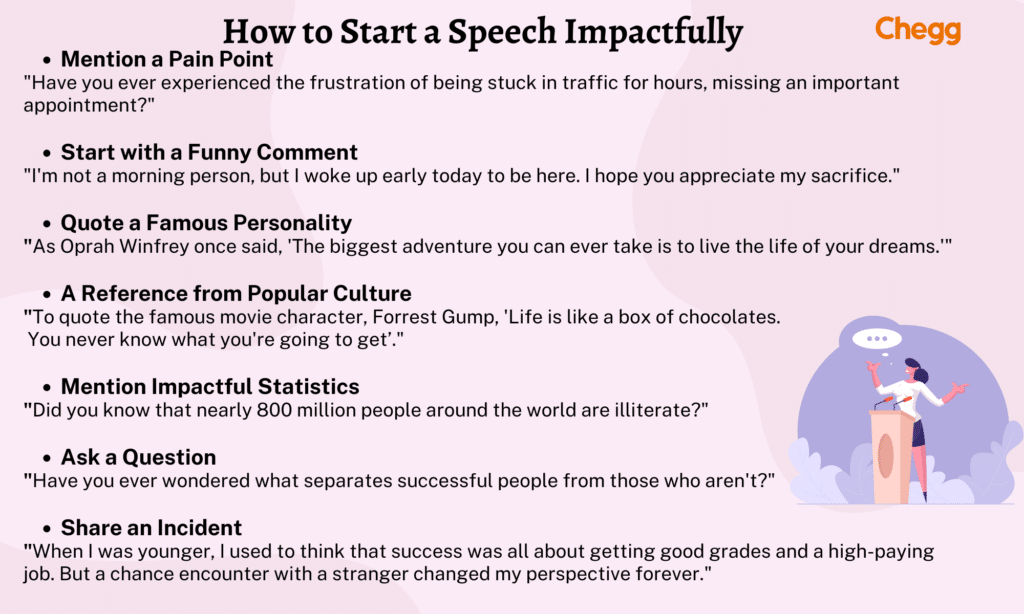
A strong opening helps build credibility and makes the audience interested in your message.
Learning how to start a speech effectively is key to a successful presentation.
It creates a lasting first impression that keeps people engaged throughout.
Table of Contents
As you prepare for your speech, you would like to know the best ways to open a speech to create an immediate tie to the attention of your audience. At a time when the average attention span falls to about eight seconds, even shorter time than that of a goldfish, traditionally suited introductions for a speech cannot serve the purpose any longer. Strategies are to be devised to draw listeners in and clear them from incessant distractions to start the speech. This guide offers seven creative methods through which an impactful speech can be started.
These techniques also enable you to gain confidence and relate to an audience from the very start of your speech. By learning how to start a speech that creates a connection and absorbs attention, you prepare the ground for presenting a strong, persuasive message. Use these methods to deliver a powerful speech that resonates, emboldens, and lasts.
How to Start a Speech
How to start a speech means beginning your talk in a way that immediately grabs your audience’s attention and sets the tone for what’s to come. It involves choosing an engaging opening—such as a quote, question, story, or statistic—that connects with listeners. The start should clearly introduce the topic and purpose of your speech.
How to Start a Speech – Best Ways
1. Begin With a Powerful Quote
A great way to start a speech is by using a quote from a well-known figure.
Make sure the quote is relevant to your topic and sets the tone for the rest of your talk.
Especially effective when quoting someone influential in the same field.
2. Use Appropriate Humour
Starting with a light, relevant joke can ease tension and grab attention.
It helps connect with the audience and makes them more receptive.
Ensure the humour is professional and linked to your speech theme.
3. Make a Strong Self-Introduction
When considering how to start a speech in English, simply introducing yourself clearly and confidently can be impactful.
Share your purpose or a bold vision to establish credibility from the start.
Works well in business or professional settings.
4. Ask a Thought-Provoking Question
Pose a question to get the audience thinking or interacting.
Can be literal (yes/no or raise of hands) or imaginative (“what if” scenarios).
Promotes engagement and curiosity from the outset.
5. Start With a Surprising Statistic
Using a compelling statistic is a great way to start a speech in English.
Choose figures that are relevant, surprising, or even shocking.
Always cite credible sources to establish trust.
6. Present a Real-World Problem
Explain a current issue your topic addresses.
This approach sets up your speech as a solution or guide.
Useful in persuasive, informative, or motivational speeches.
7. Share a Short Personal Story or Anecdote
Telling a short, relevant story adds a human touch to your speech.
Make it relatable, authentic, and linked to your message.
Helps create an emotional connection with the audience.
8. Tell Your Journey
If you’re wondering how to start a speech meaningfully, begin with your own story or background.
Connect your life experience to the topic for authenticity.
Especially effective for motivational or educational speeches.
9. Demonstrate a Product or Concept
Start with a hands-on demo or visual example.
This is especially impactful in technical or product-focused presentations.
Can also include audience participation for greater engagement.
10. Show a Compelling Image or Visual
A striking image or infographic can instantly capture attention.
Great option when using a visual presentation format.
Use visuals that evoke curiosity or highlight a problem.
11. Get the Audience to Imagine
Invite your audience to picture a scenario, realistic or imaginative.
This technique makes them mentally involved from the beginning.
Works well for speeches about innovation, change, or personal growth.
12. Use the Power of Silence
One unique way to start a speech is with a deliberate pause.
Walk to the stage and stay silent for a few seconds.
This unexpected move quiets the audience and makes them focus.
How to Start a Speech – Impactfully
How to start a speech: Tips for Impact
1. Understand Your Audience
Research your audience’s age group, interests, and expectations.
Use language, examples, and tone that resonate with them.
Knowing your audience helps you decide how to start a speech effectively.
2. Choose a Compelling Topic for Speech
Pick a subject you’re passionate about and knowledgeable in.
Ensure it’s relevant to your audience’s interests or current issues.
A strong topic for speech keeps listeners engaged from beginning to end.
3. Start With Impact
Learn how to start a speech with a hook—quote, story, question, or stat.
Make your opening short, clear, and exciting.
First impressions matter—grab their attention within 30 seconds.
4. Structure Your Content Well
Divide your speech into a clear beginning, middle, and conclusion.
Use smooth transitions to guide the audience through your ideas.
A logical flow makes your message easier to follow and remember.
5. Be Clear and Concise
Avoid jargon unless necessary, and explain any complex terms.
Use short sentences and simple words for better clarity.
Focus on 2–3 key points rather than overloading your audience.
6. Use Stories and Examples
Real-life stories make your content relatable and emotional.
Add examples to support your main arguments or ideas.
Stories also work well when figuring out how to start a speech with impact.
7. Use Your Voice Effectively
Vary your tone, pitch, and speed to maintain interest.
Use pauses for emphasis and to let important points sink in.
Avoid monotony, which can cause listeners to tune out.
8. Make Eye Contact and Use Body Language
Eye contact builds trust and connection with your audience.
Use hand gestures and posture to reinforce your message.
Confident body language boosts your credibility.
9. Include a Strong Conclusion
Summarise your main points clearly and powerfully.
End with a call to action, a question, or a memorable quote.
Your ending should tie back to how you started the speech for a complete message.
10. Rehearse and Get Feedback
Practice your speech multiple times out loud.
Record yourself or present to a friend for feedback.
The more you rehearse, the more confident and impactful you’ll be.
How to Start a Speech: Examples for Opening
Here are 10 effective examples of speech openings, each using a different attention-grabbing method. These examples can help you understand how to start a speech in an engaging and impactful way:
1. Quote Opening
“As Nelson Mandela once said, ‘Education is the most powerful weapon which you can use to change the world.’ Today, I want to talk about why education is the key to a better future.”
2. Rhetorical Question
“Have you ever imagined what the world would look like if we ran out of clean water tomorrow?”
3. Surprising Statistic
“Did you know that over 1 million plastic bottles are purchased every minute worldwide? Let’s talk about what that means for our planet.”
4. Personal Story
“Three years ago, I stood exactly where you are now—confused, nervous, and unsure if I could make it through college. But here’s what I learned…”
5. Humour or Light Joke
“I was told to ‘break a leg’ before coming up here. I just hope it doesn’t happen literally—I’m not wearing insurance!”
6. Startling Statement
“Every two seconds, someone in the world loses their life to a preventable disease. Let’s discuss why this is still happening in 2025.”
7. Imaginative Scenario
“Imagine waking up one morning and finding that every digital device has stopped working. No phones, no internet—nothing. Could you survive the day?”
8. Dramatic Pause or Silence
(Walks up to the stage, looks around, stays silent for 10 seconds) “That silence you just heard? That’s the sound of overthinking before we speak up—and today, I want to talk about why your voice matters.”
9. Quirky Fact
“Octopuses have three hearts and blue blood. Now, what does that have to do with leadership? You’ll find out in just a moment.”
10. Strong Declaration
“Climate change is not coming—it’s already here. And unless we act now, the consequences will be irreversible.”
How to Choose a Topic for Speech
1. Know Your Audience
Understanding your audience is crucial when selecting a speech topic. A great topic for speech is one that resonates with the people listening.
Why it matters: What interests a group of business professionals may not engage high school students. Tailoring your topic helps ensure relevance and impact.
Consider their:
Age group
Educational background
Occupation or profession
Cultural and social context
Example: If you’re speaking to young students, a topic like “How Social Media Shapes Our Thinking” may work better than “Corporate SustainabilityStrategies.”
2. Select a Topic You’re Passionate About
Choosing something you care about makes your delivery more authentic and enthusiastic.
Why it matters: Audiences respond well to speakers who seem genuinely interested in what they’re saying. Passion makes your speech memorable.
Tip: Think of causes, hobbies, or personal experiences that have shaped your views.
Example: If you’re passionate about mental health, a topic like “Why We Need to Normalize Talking About Anxiety” can be both personal and powerful.
3. Ensure the Topic Is Relevant
Pick a topic that is timely and relates to current issues, challenges, or conversations.
Why it matters: A relevant topic for speech sparks curiosity and invites discussion. It shows you’re aware of what’s happening in the world.
How to do it:
Stay updated with news and trends.
Use themes like climate change, AI, digital transformation, mental health, etc.
Example: Instead of a generic topic like “Technology in Daily Life,” you could choose “Is AI a Threat or a Tool for Future Jobs?”
4. Consider the Purpose of the Speech
Your topic should match the goal of your speech—what you want your audience to think, feel, or do after hearing you.
Speech purposes:
Informative: Share knowledge or explain a concept (e.g. “The Science Behind Vaccines”)
Persuasive: Change a viewpoint or motivate action (e.g. “Why Voting Should Be Mandatory”)
Inspirational: Uplift and encourage (e.g. “Turning Failure Into Fuel”)
Entertaining: Engage through humor or storytelling (e.g. “Funniest Travel Mistakes I’ve Made”)
Why it matters: Matching the topic to your speech’s purpose ensures clarity and direction.
5. Check if There’s Enough Content
A good speech topic is neither too broad nor too narrow, and allows you to provide clear points, supporting data, and real-life examples.
Why it matters: A topic without enough depth can feel shallow. One that’s too broad may overwhelm both you and your audience.
What to check:
Can you find reliable facts or stories to support your ideas?
Can the topic fit within the time limit without rushing or dragging?
Example:
Too broad: “Technology”
Too narrow: “The Role of Bluetooth 5.0 in Smartwatches”
Balanced: “How Smart Devices Are Changing Health and Fitness Habits”
Tips on the Importance of a Strong Speech Opening
1. How to Start a Speech: Capture Immediate Attention
Your opening sets the tone and hooks your audience right away. Knowing how to start a speech with an engaging element—like a quote, question, or story—makes listeners want to hear more.
2. How to Start a Speech: Establish Credibility
A strong start helps you build trust. When you introduce yourself clearly or share relevant credentials early, your audience is more likely to believe and value your message.
3. How to Start a Speech: Set Clear Expectations
How you begin frames what your speech will cover. Learning how to start a speech effectively means giving a roadmap so the audience knows what to expect and why it matters.
4. How to Start a Speech: Create Emotional Connection
Starting with a personal story or relatable example helps the audience connect with you emotionally. Understanding how to start a speech in a way that evokes feelings increases engagement.
5. How to Start a Speech: Build Confidence
A well-prepared, impactful opening boosts your confidence as a speaker. Knowing how to start a speech can reduce anxiety and make you feel in control.
6. Engage the Audience Early
A strong opening encourages participation, whether through raising hands, nodding, or mentally reflecting. Early engagement keeps energy levels high.
7. Make Your Message Memorable
People tend to remember how a speech begins. A powerful start ensures your core message sticks in their minds long after you finish.
8. Establish Your Unique Voice
Your opening is a chance to showcase your style and personality. A distinctive start differentiates you from other speakers and makes your speech stand out.
9. Prevent Distractions
By grabbing attention immediately, you minimize audience distractions like side conversations or phone use. A strong opening keeps the room focused on you.
10. Set the Pace for the Entire Speech
The energy and tone you establish at the beginning influence the rest of your presentation. A strong start helps maintain momentum and audience interest.
The closure of any speech underscores the importance of starting in a manner that grabs the audience’s attention and establishes a compelling atmosphere. An opening that is animated by using an appropriate story, an incredible statistic, or a remarkable quote will connect with the listeners from the very first word. When you kick off a speech, think clarity, brevity, and connecting to the audience. Early emphasis on your central thesis generates eagerness and enhances trust. The beginning of any speech evokes confidence and is a prerequisite for an effective and memorable presentation. With this careful preparation, the speaker thereafter ensures that each point is delivered with clarity for starting a speech.
How to start a speech to capture my audience’s attention?
To engage your audience from the outset, consider opening with a compelling story, a surprising statistic, or a thought-provoking question. For instance, starting with a personal anecdote can humanize you and build a connection with your listeners. Alternatively, presenting a shocking fact can immediately pique interest.
What is a good greeting for a speech?
A good greeting for a speech should be friendly and professional but also personalized to the audience. It’s important to thank the audience for coming, introduce yourself, and briefly overview what the speech will cover. You could also connect with the audience by mentioning a shared experience or interest or acknowledging a special occasion.
How do I choose a topic for speech that will engage my audience?
Selecting a relevant and engaging topic is crucial. Consider your audience’s interests, current events, or universal themes that resonate broadly. For example, topics like “The Impact of Social Media on Society” or “Climate Change: A Global Challenge” are timely and relatable. Ensure the topic aligns with your purpose, whether to inform, persuade, or entertain.
What are the key elements to include in the opening of a speech?
A strong speech opening should include: Hook: An engaging element like a story, quote, or question to grab attention. Introduction: Briefly introduce yourself and your credentials. Purpose: Clearly state the purpose of your speech and what you aim to achieve. Overview: Provide a brief outline of the main points you will cover.
What is a powerful opening?
The key to a compelling speech opening is to capture your audience’s attention by sparking their curiosity, interest, or emotions. You can achieve this through a surprising fact, a thought-provoking question, a personal story, a meaningful quote, or a funny anecdote.
Authored by, Mansi Rawat Career Guidance Expert
Mansi crafts content that makes learning engaging and accessible. For her, writing is more than just a profession—it’s a way to transform complex ideas into meaningful, relatable stories. She has written extensively on topics such as education, online teaching tools, and productivity. Whether she’s reading, observing, or striking up a conversation while waiting in line, she’s constantly discovering new narratives hidden in everyday moments.