The importance of business communication in 2025 lies in improving clarity, efficiency, and decision-making.
Effective workplace communication strategies for 2025 foster stronger teams, customer trust, and productivity.
In India, the role of business communication in diverse workplaces 2025 is vital for bridging language and cultural barriers.
Table of Contents
The importance of business communication cannot be overstated in today’s fast-paced world. From the role of communication in business to the need for business communication in building trust and efficiency, it shapes every successful organization. The importance of effective communication in the workplace enhances teamwork, while the importance of body language in business communication influences understanding and connection. Especially in diverse regions, the importance of business communication in India is vital for bridging cultural and language gaps. Understanding the importance of business communication equips professionals to lead better, collaborate smarter, and grow sustainably through clear, strategic business communication.
What Is Business Communication?
Business communication refers to exchanging information between individuals or groups within an organization (internal communication) and with people outside the organization, such as clients, suppliers, or partners (external communication). The goal is to share ideas, instructions, feedback, and updates that help achieve specific objectives.
Types of Business Communication
1. Internal communication
Internal communication refers to the exchange of information within an organization. It includes how employees, departments, and leadership communicate with each other. Internal communication aims to keep everyone informed, aligned with company goals, and working efficiently as a team.
Examples include:
Emails and instant messages between team members
Internal meetings and video calls
Memos, newsletters, and internal reports
Company-wide announcements
2. External Communication
External communication involves interactions with individuals or entities outside the organization. It is essential for building and maintaining relationships with clients, customers, suppliers, investors, regulators, and the general public.
Examples include:
Emails, calls, or messages to clients and vendors
Advertising and marketing campaigns
Press releases and public statements
Investor briefings and customer service interactions
3. Formal Communication
Formal communication is structured, official, and often documented. It follows predefined channels and is used for essential or professional matters. This type of communication is typically hierarchical flowing from management to employees or between departments.
Examples include:
Business reports and official memos
Presentations and company policy documents
Training manuals and performance appraisals
Meeting minutes and project updates
4. Informal Communication
Informal or “grapevine communication” happens casually among employees without following official structures or hierarchy. It’s spontaneous, friendly, and often personal. While not officially tracked, informal communication can significantly influence workplace dynamics.
Examples include:
Casual conversations during breaks
Friendly chats over messaging platforms
Team bonding activities
Personal discussions or peer support
Why is Business Communication Important?
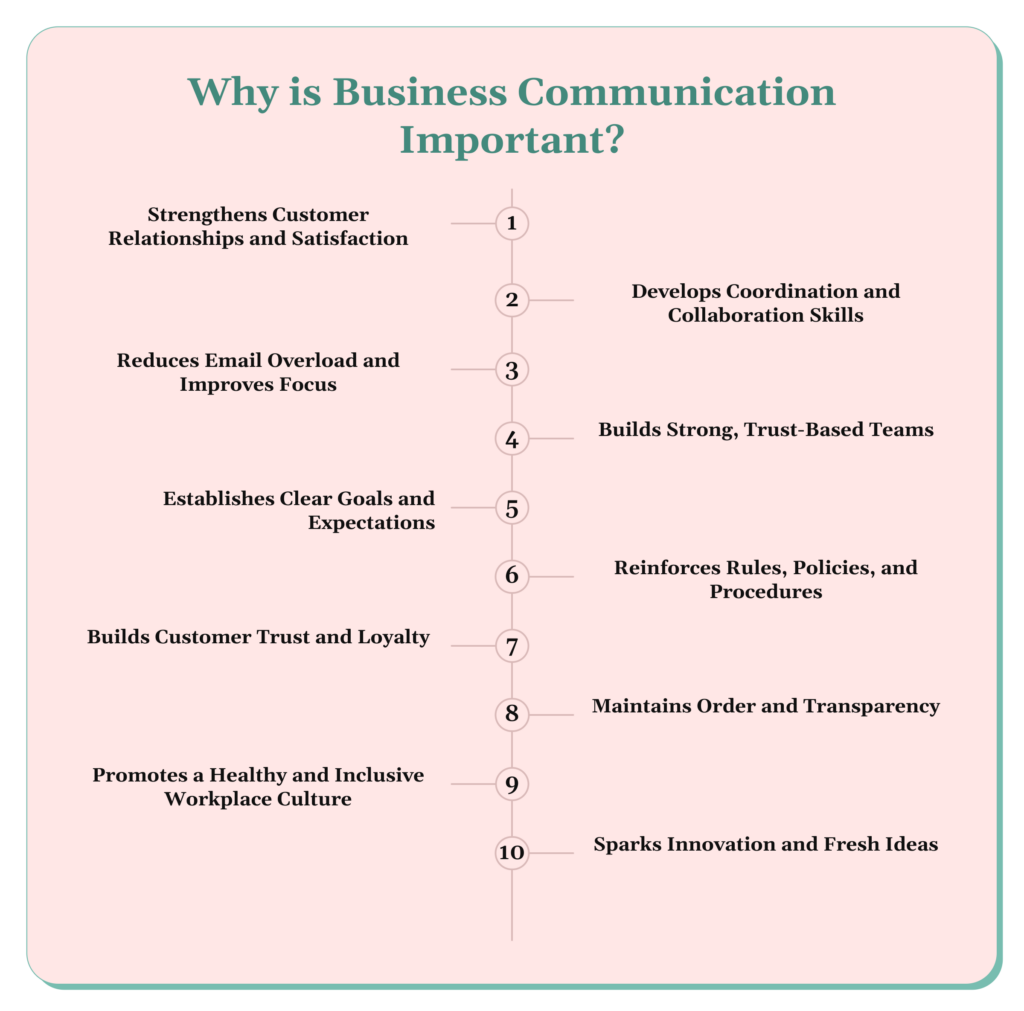
Now that we know a business statement let’s explore why it matters. Here are ten reasons why the importance of business communication in India cannot be ignored:
1. Strengthens Customer Relationships and Satisfaction
Excellent business communication directly impacts customer satisfaction. When teams communicate effectively, customers receive timely, accurate information, leading to better service experiences. In contrast, poor communication often confuses, missed expectations, and dissatisfaction.
A major study suggests that employee attitude shaped by internal communication significantly influences customer satisfaction and revenue. Thus, building strong customer relationships is vital, not just for sales but for long-term brand loyalty. The role of communication in business extends far beyond transactions; it’s about creating lasting, value-driven relationships with clients.
A proactive Customer Relationship Management (CRM) strategy supported by clear and frequent communication ensures continued engagement and trust.
2. Develops Coordination and Collaboration Skills
Efficient organizations rely on seamless coordination between departments. Good communication fosters teamwork, streamlines processes, and encourages idea-sharing. When different departments marketing, sales, and operations work in sync, the entire organization moves forward more efficiently.
Effective communication in the workplace is important because it unifies efforts. It ensures everyone understands their roles and responsibilities and how they contribute to the overall objectives. Proper planning, execution, and implementation depend on effective, coordinated communication.
3. Reduces Email Overload and Improves Focus
Email remains the most used communication tool in many organizations, but overuse can lead to inefficiencies. From client updates to internal memos and HR announcements, employees are bombarded with information.
Effective business communication strategies help reduce this overload. Clear guidelines on email usage, along with collaboration tools and filters, allow employees to focus on what matters most. Streamlining communication through defined channels minimizes distractions and boosts productivity.
4. Builds Strong, Trust-Based Teams
A supportive workplace begins with open dialogue. Employees who feel heard and valued are more engaged, creative, and willing to collaborate. Verbal and non-verbal cues play a key role, especially in face-to-face communication.
The importance of body language in business communication cannot be overstated. Facial expressions, gestures, and posture convey confidence, empathy, and trustworthiness. Combined with verbal communication, they help create a positive and respectful environment where teams thrive.
Effective communication fosters trust, transparency, and mutual respect build strong team dynamics.
5. Establishes Clear Goals and Expectations
Every organization aims for growth, but achieving it requires clear, actionable goals. Without effective communication, even the best strategies can fail.
Employees must understand the organization’s mission, responsibilities, and how their contributions affect the bottom line. This clarity aligns efforts and drives motivation. The role of communication in business is especially evident when leaders share both material (profit) and intellectual (purpose-driven) goals with the team.
Frequent communication of expectations helps keep everyone aligned and accountable.
6. Reinforces Rules, Policies, and Procedures
Policies only work when people understand them. Employees must know what is expected, whether compliance regulations, performance standards, or customer service protocols.
Transparent business communication ensures everyone knows and follows the guidelines. Written communication, such as emails, manuals, or digital notices, provides consistent reference points, reducing ambiguity and fostering a culture of accountability.
Explaining the “why” behind a policy also increases acceptance and compliance, highlighting the importance of effective communication in the workplace.
7. Builds Customer Trust and Loyalty
Trust is the foundation of any successful customer relationship. Beyond the initial sale, companies must continue to engage clients, listen to their concerns, and provide consistent value.
Proactive communication through newsletters, feedback surveys, social media, or direct follow-ups helps build credibility. Customers want to know that your company is transparent, responsive, and cares about their experience.
Frequent updates on orders, new offers, and company news keep clients connected to your brand. This emphasizes the importance of business communication for both retention and acquisition.
8. Maintains Order and Transparency
Dissatisfied customers often won’t complain they simply leave. That’s why it’s crucial to maintain transparency and proactively address issues before they escalate.
Similarly, internally, employees must feel safe sharing concerns. Open communication builds trust and prevents negativity from affecting morale. The role of communication in business includes ensuring operational clarity and promoting a feedback-friendly culture.
When employees and customers trust your communication channels, the organization becomes more agile, accountable, and resilient.
9. Promotes a Healthy and Inclusive Workplace Culture
An inclusive work culture values diverse voices and encourages open dialogue. Respectful communication reduces conflicts, promotes equality, and creates a safe space for everyone to contribute.
In multicultural and multilingual workplaces like India, the importance of business communication in promoting tolerance and understanding becomes even more critical. Encouraging inclusivity through regular discussions, team-building, and flexible communication channels fosters loyalty and engagement.
Flexible policies like allowing personalized work hours or casual team activities also support a positive atmosphere, where effective communication is the norm, not the exception.
10. Sparks Innovation and Fresh Ideas
Innovation thrives where communication flows freely. When employees are encouraged to share their ideas and perspectives, they are able to create, solve problems, and continuously improve.
Frequent brainstorming sessions, idea-sharing platforms, and collaborative tools empower teams to voice suggestions without fear of judgment. This highlights the importance of effective communication in the workplace for business growth and innovation.
The importance of body language in business communication also plays a role here. Non-verbal cues like nods, eye contact, and active listening show encouragement and build the confidence needed for idea generation.
Key Components of Effective Business Communication
To ensure smooth communication, businesses should focus on the following key components:
Clarity and Conciseness: Keep messages clear and to the point.
Active Listening: Pay attention to others and respond appropriately.
Feedback Mechanism: Encourage feedback to ensure mutual understanding.
Non-Verbal Communication: Body language and facial expressions matter.
Use of Technology: Digital tools help streamline communication.
Benefits of Business Communication
Good communication is the backbone of every business. It helps share ideas, connect with customers, and ensure everyone in the company works well together. When employees understand the company’s goals and communicate smoothly, it improves teamwork, customer service, and overall success. Here’s how good communication helps:
1. Building Strong Teams
The need for business communication is essential for creating positive relationships among employees. Clear and friendly communication makes it easier for people to work together without stress. If problems arise, good communicators solve them quickly, helping to build a positive and comfortable work environment.
2. Avoiding Confusion and Conflicts
The need for communication also plays a key role in preventing misunderstandings. Good communication isn’t just about talking—it involves careful listening too. This helps avoid confusion and resolves disagreements before they get worse. Employees who communicate well focus on solutions rather than assigning blame.
3. Improving Customer Service
Effective communication is necessary to understand customers’ needs and build trust. Whether through phone calls, emails, or social media, clear and friendly messages help customers feel valued. The need for communication ensures that businesses maintain a positive reputation by responding quickly to questions and concerns.
4. Reaching Business Goals
The need for business communication ensures that employees clearly understand company goals. When effectively communicating objectives, employees can align their efforts with the company’s vision. Regular reminders about goals keep everyone motivated and show how each person’s role helps the business succeed, reducing employee turnover.
5. Encouraging New Ideas
Open business communication fosters creativity and innovation. The need for communication ensures employees feel comfortable sharing ideas without fear of being judged. This trust helps teams collaborate effectively and find unique solutions that benefit customers and the organization.
6. Growing Your Career
The role of communication in business is vital for personal career growth. Strong communication skills like being honest, clear, and proactive build trust and demonstrate leadership potential. This helps employees earn promotions or new career opportunities, opening doors for growth.
The importance of business communication in business is essential for smooth operations, solving problems, building trust, encouraging teamwork, and fostering innovation. A business with effective communication is more likely to succeed and grow!
Strategies to Improve Business Communication
Improving communication doesn’t have to be complicated. Here are some practical tips to enhance the importance of effective communication in the workplace:
Use Simple and Clear Language
Avoid using complex words or jargon. Keep messages easy to understand.
Encourage Open Communication
Create an environment where employees feel comfortable sharing ideas and feedback.
Train Employees on Communication Skills
Providing training on communication can improve the effectiveness of workplace interactions.
Utilize Digital Tools
Use emails, chat applications, and video conferencing to ensure smooth communication.
Schedule Regular Meetings
Frequent meetings help teams stay aligned and address concerns early.
Document Important Information
Maintain records of key discussions and decisions to avoid miscommunication.
Implementing these strategies will highlight the importance of business communication and set your organization apart from competitors.
Business Communication in Indian Organizations
Indian businesses have a unique cultural and professional environment. Effective communication plays a crucial role in ensuring efficiency.
Challenges in Business Communication in India
Diverse Languages: India has multiple languages, so businesses must adopt a common communication approach.
Hierarchy in Work Culture: Seniority-based communication can sometimes hinder open discussions.
Technological Barriers: Not all employees may be comfortable using digital communication tools.
How to Overcome These Challenges?
Use English as a standard business language.
Encourage two-way communication between managers and employees.
Provide digital literacy training to employees.
How can one develop stronger business communication abilities?
Improving business communication skills is crucial for career growth. Here are some practical tips to boost them:
Listen Actively – Give your full attention to the speaker without interrupting.
Be Clear and Direct – Communicate using simple and straightforward language.
Improve Non-Verbal Signals – Maintain eye contact, use suitable gestures, and be mindful of your body language.
Request Feedback – Regularly seek input to refine your communication approach.
Know Your Audience – Customize your message according to who you’re addressing.
Use Digital Tools Effectively – Make the best use of emails, messaging, and video conferencing.
Join Training Sessions – Participate in workshops or courses to enhance your communication skills.
Consistent effort and self-reflection are vital for mastering effective business communication.
Conclusion
In conclusion, the importance of business communication extends far beyond simple information exchange. It shapes workplace culture, enhances productivity, and builds lasting relationships. Whether it’s the role of communication in business or the importance of effective communication in the workplace, strong communication skills are vital. The importance of body language in business communication further strengthens trust and understanding. Especially in a diverse country, the importance of business communication in India is crucial for unifying teams. Recognizing the need for business communication helps leaders drive success by prioritizing business communication at every level. Never overlook the importance of business communication.
Effective business communication ensures clear understanding, enhances collaboration, boosts productivity, and builds strong relationships within and outside the organization.
What are the 10 objectives of business communication?
The 10 objectives of business communication include:
1. Information sharing 2. Decision making 3. Persuasion 4. Motivation 5. Building relationships 6. Managing conflict 7. Providing feedback 8. Facilitating innovation 9. Enhancing reputation 10. Ensuring compliance
What are the 5 importances of communication in an organization?
The 5 key importances of communication in an organization are:
1. Improved teamwork and collaboration 2. Enhanced employee engagement and satisfaction 3. Effective problem-solving and decision-making 4. Clear understanding of roles and responsibilities 5. Strengthened organizational culture
What is the importance of communication?
Communication is essential for expressing ideas, building relationships, resolving conflicts, and fostering a sense of community. It enables individuals to connect, collaborate, and achieve common goals.
What is communication and its significance for business?
Communication is the process of exchanging information and ideas. In business, it is significant as it ensures smooth operations, enhances team collaboration, facilitates decision-making, and builds strong relationships with stakeholders.
What are the 7Cs of Business Communication?
The 7 Cs of business communication are clarity, conciseness, consideration, concreteness, correctness, courtesy, and completeness. These principles ensure messages are clear, respectful, accurate, and effective for professional and impactful communication.
What are some best practices and common mistakes to avoid in business communication?
In business communication, use clear, respectful language, listen actively, and stay professional. Avoid jargon, emotional responses, and interrupting others. Focus on clarity, empathy, and purpose to ensure effective and respectful interactions.
How does the indirect method work in business communication?
The indirect approach presents supporting details before the main message, often used for delivering bad news. It helps prepare the reader, soften negative impact, and maintain professionalism and goodwill in sensitive situations.
What are the primary roles of business communication?
Business communication serves three key functions: to inform, by sharing relevant data; to persuade, by influencing decisions; and to build relationships, fostering collaboration and trust within and outside the organization.
Authored by, Samiksha Samra Digital Content Writer
Samiksha is a writer with a passion for sharing ideas and a knack for detail. She loves turning concepts into meaningful, engaging content. With a strong background in research and content strategy, she crafts clear, easy-to-understand narratives that resonate with readers. Her curiosity drives her to explore new subjects, ensuring every piece she creates is both insightful and impactful.