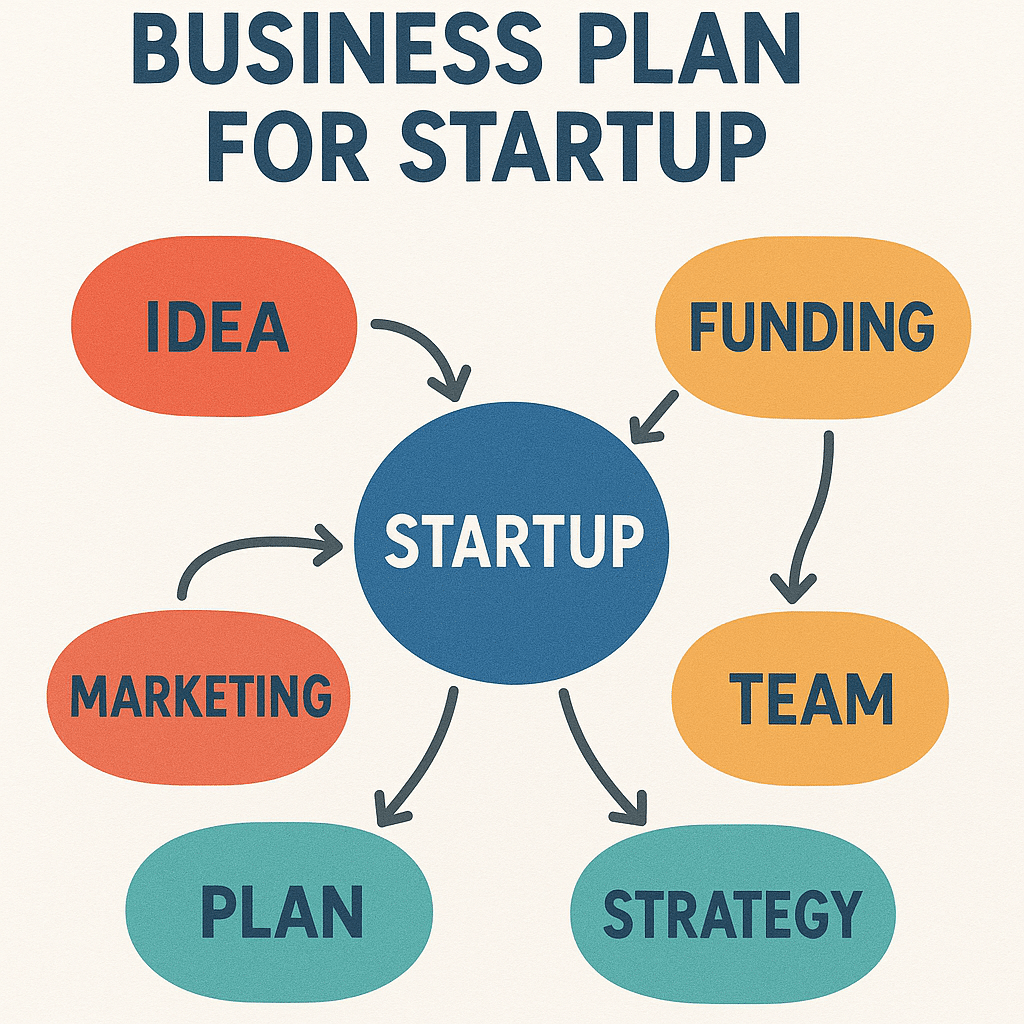
Step-by-step business plan guide – Learn how to structure a startup plan using an easy-to-follow format.
Key startup sections explained – Market analysis, financial projections, marketing strategies tailored for India.
Investor-ready tools & templates – Practical resources to attract investors and build a strong business foundation.
Table of Contents
Launching a startup in India in 2025 demands more than a great idea—it requires a solid business plan for startup success. From crafting a step-by-step roadmap to using an easy business plan format for startups, mastering this process helps you attract investors, secure funding, and avoid common pitfalls. With 60% of startups failing due to poor planning, this guide reveals expert strategies, practical templates, and actionable tips to build a strong foundation, grow your startup, and thrive in India’s competitive business landscape.
What is a Business Plan?
A business plan for startup is a written document that outlines your business idea, goals, strategies, and financial projections. Think of it as a blueprint for your business. It helps you clarify your vision and communicate it effectively to others, such as investors, partners, or employees.
Why Do Startups Need a Business Plan?
Attract Investors: Investors want to see a clear plan before they invest money in your startup.
Stay Organized: A business plan keeps you focused on your goals and helps you track progress.
Identify Challenges: Writing a business plan for startup forces you to think about potential problems and find solutions.
Secure Loans: Banks and financial institutions often require a business plan before approving loans.
For Indian startups, having a solid business plan for startup is especially important because it can help you access government schemes, funding programs, and other resources designed to support entrepreneurship.
Types of Business Plans Explained
Although business plans generally include the same key sections, the format and purpose vary based on how you plan to use the document. To maximize its effectiveness, it’s important to choose a structure that aligns with your goals. Here are some popular business plan types to consider.
Traditional business plan
The classic traditional business plan is a formal document designed for external use. This type of plan is often required when seeking funding or presenting to investors. It can also be valuable for training employees, hiring staff, collaborating with vendors, or in any scenario where it’s essential for others to fully grasp the details of your business.
Business model canvas
The Business Model Canvas is a simplified, one-page tool that streamlines the business planning process. Instead of relying on a lengthy, traditional business plan, it offers a concise outline that helps you and external stakeholders better understand your business concept.
This approach moves away from a linear structure and uses a cell-based format. It encourages you to make connections between all aspects of your business, making it quicker to create and update. It’s also easier for you, your team, and others to visualize and grasp your business operations.
One-page business plan
The one-page business plan strikes a balance between the business model canvas and a traditional business plan. It simplifies the traditional format by concentrating on the key elements of your business.
Starting with a one-page plan provides you with a concise foundation to build upon. Using bullet points and short sentences makes it easier to expand or elaborate on specific sections when transitioning to a more detailed business plan.
Growth planning
Growth planning isn’t just a type of business plan; it’s a strategic approach. It builds on the simplicity and structure of the one-page business plan, transforming it into an ongoing process where you consistently plan, forecast, evaluate, and adjust based on your results.
Key Components of a Business Plan for Startup
Every business plan for startup should include the following sections:
1. Executive Summary
The executive summary is a brief overview of your entire business plan. It should be concise yet compelling enough to grab the reader’s attention.
What to Include :
Mission statement (e.g., “Our mission is to provide affordable education solutions to rural India.”)
Description of your product or service
Target market
Financial highlights (e.g., expected revenue in the first year)
For example, if you’re starting an e-commerce platform for handmade goods, your executive summary might say: “Our business plan for startup focuses on connecting artisans from rural India with global customers through an online marketplace.”
2. Company Description
This section provides more details about your company. Explain what makes your business plan for startup unique.
What to Include :
Business name and location
Legal structure (e.g., sole proprietorship, partnership, private limited company)
Vision and values
Industry and target audience
For instance, if you’re launching a food delivery app in Mumbai, mention how your business plan for startup addresses gaps in the current market.
3. Market Analysis
Conduct research to understand your industry, competitors, and target customers. This is crucial for any business plan for startup.
What to Include :
Industry trends
Competitor analysis
Customer demographics
Market size and growth potential
In India, consider factors like population density, urban vs. rural markets, and cultural preferences when analyzing your target audience.
4. Organization & Management
Describe your team and organizational structure. Investors want to know who’s running the show.
What to Include :
Founders’ backgrounds
Key team members and their roles
Advisory board (if applicable)
For example, highlight how your team’s expertise aligns with the goals of your business plan for startup.
5. Products or Services
Explain what you’re selling and why it’s valuable. Be specific about how your product or service solves a problem.
What to Include :
Features and benefits
Unique selling proposition (USP)
Pricing strategy
If you’re offering eco-friendly packaging solutions, emphasize how your business plan for startup supports sustainability.
6. Marketing & Sales Strategy
Outline how you’ll attract and retain customers. This is where you explain how your business plan for startup will generate revenue.
What to Include :
Advertising channels (e.g., social media, Google Ads) Sales process Customer retention strategies For Indian startups, leveraging platforms like WhatsApp and Instagram can be highly effective due to their widespread use.
7. Financial Projections
Provide a detailed forecast of your finances. This section is critical for securing funding.
What to Include :
Revenue projections
Expense breakdown
Break-even analysis
Funding requirements
Use tables to present financial data clearly. For example:
YEAR
REVENUE (₹)
EXPENSES (₹)
PROFIT/LOSS (₹)
1
5,00,000
4,00,000
1,00,000
2
8,00,000
6,00,000
2,00,000
Download:- Sample Business Plan– Use this free business plan template for startup to get started quickly with your own plan.
Step-by-Step Guide to Writing a Business Plan for Startup
Creating a solid business plan is essential for the success of any startup. It not only helps you stay focused but also serves as a blueprint for attracting investors and guiding your operations. Here’s a detailed, easy-to-follow guide to writing an effective business plan for startup ventures. If you’re unsure how to begin, consider using a ready-made business plan template for startup ventures to save time and effort.
Step 1: Define Your Vision
To get started, clearly articulate what you want to achieve with your business. Ask yourself important questions:
What problem does my business solve? Define the specific issue your product or service addresses.
Who are my customers? Identify the target audience or market segment that will benefit from your offering.
What impact do I want to make? Think about your long-term goals and the value you aim to deliver.
Example: If you’re launching an eco-friendly packaging startup, your vision might be to reduce plastic waste in the food delivery industry by 50% over the next five years.
A well-defined vision provides clarity and direction, serving as the foundation for your entire business plan for startup.
Step 2: Research the Market
Understanding your market landscape is crucial for creating a competitive strategy. Conduct thorough research on your industry, competitors, and target audience.
Industry Data: Use online resources like Google Trends, Statista, and government reports to identify current market trends.
Competitor Analysis: Study your direct and indirect competitors. What are their strengths and weaknesses? How can you differentiate your offering?
Target Audience: Identify the preferences, pain points, and buying behavior of your potential customers. Conduct surveys, interviews, and focus groups if possible.
Tip: Include your research findings in the market analysis section of your business plan for startup to demonstrate your understanding of the market.
Step 3: Outline Your Plan
Before diving into the writing process, create a rough outline of each section of your business plan. This step helps you organize your thoughts and ensures you cover all essential components.
Key sections to include are:
Executive Summary
Business Description
Market Analysis
Products or Services
Marketing and Sales Strategy
Financial Plan
Milestones and Goals
Pro Tip: Focus on structure rather than perfection at this stage. The goal is to get your ideas down on paper.
Step 4: Write Clearly and Concisely
Avoid jargon and technical terms when writing your business plan for startup. Use simple, straightforward language that anyone, even those unfamiliar with your industry, can understand.
Writing Tips:
Keep sentences short and impactful.
Explain complex ideas with real-world examples.
Use bullet points to break down information.
Example: Instead of writing “Our innovative SaaS platform leverages cutting-edge AI algorithms for workflow optimization,” try saying, “Our software uses AI to help businesses complete tasks faster and more efficiently.”
Step 5: Add Visuals
Visual elements make your business plan more engaging and easier to comprehend. They can help investors quickly grasp key information.
Useful visuals include:
Charts: Display your sales projections or market share breakdown using bar charts.
Graphs: Show trends or financial growth projections through line graphs.
Infographics: Summarize key points visually for quick understanding.
Example: Use a pie chart to illustrate your target market segments, such as “40% B2B clients, 60% B2C customers.”
Step 6: Review and Revise
Proofreading is essential to ensure clarity and professionalism in your business plan. Small errors can leave a negative impression on readers.
Steps to Review Effectively:
Read Aloud: Reading your business plan aloud can help identify awkward sentences or inconsistencies.
Get Feedback: Share your draft with trusted friends, mentors, or business professionals for constructive criticism.
Make Necessary Revisions: Incorporate feedback and polish the final document.
Tip: Reviewing ensures that your business plan for startup is accurate, well-structured, and investor-ready.
By following these steps, you’ll be well on your way to creating a comprehensive and compelling business plan for startup, setting your business up for success.
A business plan for startup is a dynamic document that should evolve as your business grows. The following are the benefits of regularly updating the business plan:
Adapt to Market Changes The business environment constantly evolves, with trends emerging, competitors entering the market, and customer preferences shifting. By regularly updating your business plan, you can respond to these changes effectively. For instance, staying informed about new industry trends allows you to tweak your marketing strategies or product offerings to meet customer needs. Adapting your plan to reflect these changes ensures your business stays competitive and relevant in a fast-paced market.
Re-evaluate Financial Projections Financial stability is crucial for any startup, and accurate projections are the foundation of sound financial management. Periodic reviews of your business plan allow you to assess your budget and funding needs in light of actual performance. Whether it’s adjusting for unforeseen expenses, accounting for new revenue streams, or planning for expansion, regular updates help ensure your financial goals remain attainable.
Refine Goals and Strategies Startups grow and evolve, and their goals and strategies should follow suit. Whether you’re expanding into new markets, diversifying your product line, or pivoting to address a different audience, updating your business plan ensures it reflects your current objectives and vision. A well-maintained plan helps you stay focused on what matters most while allowing you to adapt when necessary.
Improve Investor Confidence An up-to-date business plan is a powerful tool for securing and maintaining investor trust. It demonstrates that you are proactive, organized, and fully engaged in your business’s growth. Investors are more likely to back a startup that can communicate its evolving strategies and address potential challenges.
Common Mistakes to Avoid in a Business Plan for Startup
Even experienced entrepreneurs make mistakes when writing a business plan for startup . Here are some common pitfalls to avoid:
Overcomplicating the Language: Keep it simple so everyone can understand.
Ignoring Financial Details: Investors need accurate numbers to trust your plan.
Skipping Market Research: Without proper research, your business plan for startup may lack credibility.
Unclear Value Proposition: If your business plan doesn’t clearly articulate what sets your product or service apart from the competition, it can be challenging to attract investors and customers.
Overly Optimistic Financial Projections: While optimism is good, unrealistic financial forecasts can be a red flag for investors. Base your projections on solid data and realistic assumptions.
Underestimating the Competition: Ignoring your competitors or underestimating their strengths can be a costly mistake. Know your competition and plan how to differentiate yourself.
Weak Management Team: Investors look for strong, experienced management teams. Highlight the strengths and qualifications of your team members.
Being Unrealistic: Set achievable goals and timelines.
By avoiding these common pitfalls, you’ll create a more robust and compelling business plan for your startup.
Free Downloadable Templates for Indian Startups
To help you get started, we’ve created free downloadable templates specifically designed for Indian startups. These templates include:
A ready-to-use format for your business plan for startup
Pre-filled sections for legal requirements in India
Creating a business plan for startup is one of the most important steps toward building a successful business. By following the guidelines in this article, you’ll be able to craft a comprehensive and compelling plan that resonates with both your audience and potential investors. Remember, your business plan for startup is not just a document—it’s a living tool that evolves with your business. So, take the time to create it carefully, and watch your startup thrive!
If you found this guide helpful, don’t forget to share it with fellow entrepreneurs. And if you need further assistance, follow the Chegg India Earn Online Page to get new Ideas of Earning, feel free to reach out—we’re here to help!
How do I write a business plan for a small startup?
To write a business plan for a small startup, start by defining your vision and mission. Then, outline key sections like your executive summary, market analysis, and financial projections. Make sure to include details about your product or service, target audience, and marketing strategy. For Indian startups, it’s also important to consider local regulations and funding options. You can use free templates to simplify the process and ensure your business plan is professional and clear.
What are the 7 steps of a business plan?
The 7 steps are:
1. Executive Summary, 2. Company Description, 3. Market Analysis, 4. Organization and Management, 5. Products/Services, 6. Marketing and Sales Strategy, 7. Financial Projections.
How do I start a beginner business plan?
To start a beginner’s business plan, begin with a simple executive summary that explains your business idea. Next, describe your target audience and the problem your product or service solves. Include basic financials like startup costs and expected revenue. For beginners, it’s helpful to use free downloadable templates designed for startups. These templates guide you through each section and make the process easier to follow.
How long should a startup business plan be?
Your business plan’s length depends on your business’s complexity, but it’s typically between 20 to 40 pages. You must also ensure that other factors are taken care of. For example, the document should be easy to read, well-formatted, well-spaced, with proper punctuation marks, business charts, and financial tables.
Can I use a business plan template for my startup?
Yes, templates can help structure your plan, but you should customize it to fit your business needs. A simple business plan template will include a framework to start from, specifying business goals, a comprehensive description of the business, and a product description. A business plan template is a reference point towards excellence if you are new to the domain.
What are the common mistakes to avoid in a startup business plan?
Common mistakes include vague goals, unrealistic financial projections, lack of market research, and not adapting to feedback. Furthermore, you should not forget to define the target audience clearly. Knowing your product, proper market research, distribution channels, and consistency come from knowing your product.
How do I make financial projections for my startup?
Financial projections are based on your market research and expected sales. You should start with your business KPIs and project your spending and sales. You can use the actual results from the initial business days to increase accuracy. Using industry standards and seeking professional help is also helpful in creating accurate projections.
What are some business plan for startup examples?
Some examples of business plans for startups include e-commerce platforms connecting artisans to customers, mobile apps offering educational resources, or food delivery services targeting urban areas. A good business plan clearly outlines the problem being solved, the target audience, and how the business will generate revenue. You can find real-world examples online or use free templates to create your own customized plan.
Lifestyle startups. Small business startups. Scalable startups. Buyable startups. Large company Startups. Social startups.
What home-based businesses are most profitable?
Examples include digital marketing services, affiliate marketing, freelance writing, online tutoring, e‑commerce/web development, and graphic design. These have high demand and scalability.
Why is having a business plan crucial for startups?
Having a business plan is crucial for startups because it provides clear direction and attracts investors. Learning how to write a business plan for startup step-by-step using an easy business plan format for startups ensures you create a strong, focused strategy for success.
How does effective planning boost a startup’s success?
Effective planning helps startups set clear goals, manage resources wisely, and anticipate challenges, increasing their chances of success and growth in a competitive market.
What key areas should a startup business plan emphasize?
A startup business plan should focus on the business idea, target market, marketing strategy, financial projections, and team structure to guide growth and attract investors effectively.
What are the three primary goals of a business plan?
A business plan’s main purposes are to clarify the business vision, attract investors or secure funding, and serve as a roadmap for managing and growing the company successfully.
Authored by, Samiksha Samra Digital Content Writer
Samiksha is a writer with a passion for sharing ideas and a knack for detail. She loves turning concepts into meaningful, engaging content. With a strong background in research and content strategy, she crafts clear, easy-to-understand narratives that resonate with readers. Her curiosity drives her to explore new subjects, ensuring every piece she creates is both insightful and impactful.