
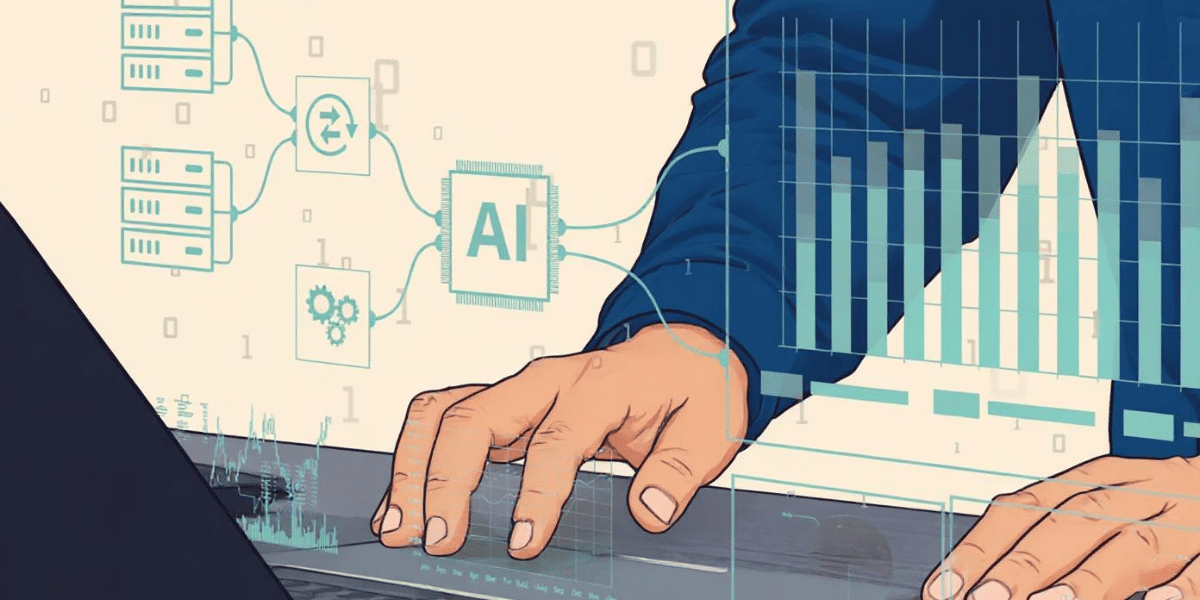

AI in business is transforming how companies operate, compete, and grow. The uses of AI span automation, personalized experiences, and data-driven decision-making. Artificial Intelligence enhances efficiency, reduces costs, and boosts productivity across industries. With AI tools like predictive analytics, chatbots, and CRM automation, businesses are gaining a significant edge. By leveraging the benefits of AI, such as real-time insights and improved customer service, companies can scale faster and smarter. As artificial intelligence trends continue to evolve, adopting AI is no longer optional but essential for staying competitive and future-ready in today’s digital economy.

AI’s presence in business has evolved dramatically from basic automation to sophisticated, self-learning systems capable of adapting and improving with each interaction. Initially, in the 1980s, businesses began using rule-based expert systems to support decision-making processes. By the 2000s, the rise of big data and real-time dashboards allowed organizations to monitor and respond to operational metrics more efficiently. The 2010s brought the emergence of cloud-based AI and mobile integration, enabling smarter, more scalable business solutions.
In the 2020s, AI has become a catalyst for digital transformation, not just supporting operations but redefining them. Today, tools like ChatGPT, Jasper, and Salesforce Einstein are embedded into everyday workflows automating customer support, generating content, and enhancing CRM capabilities. AI no longer sits in the background; it now drives frontline innovation across industries.
Platforms such as gig marketplaces, affiliate marketing networks, and digital subscription services rely heavily on AI to deliver personalized experiences, automate interactions, and optimize decision-making. Through predictive analytics, businesses can now forecast consumer behavior, anticipate market trends, and make proactive strategic moves. This level of foresight and agility is empowering small and mid-sized enterprises to compete with and in many cases outperform—traditional industry giants. As AI continues to evolve, it will remain central to business innovation, growth, and competitive differentiation in the digital age.
Artificial Intelligence (AI) is revolutionizing the way businesses function by improving efficiency, supporting smarter decision-making, and creating personalized experiences for customers. Here’s how:
a) Business Automation & Efficiency
One of the most immediate advantages of AI is the automation of repetitive and time-consuming tasks. Functions like data entry, invoice generation, customer query handling, and email replies can now be done instantly using AI-powered systems. For example, an AI-based invoice processing system can extract details from thousands of invoices and process payments automatically, reducing the processing time by up to 70%. This allows employees to focus on more strategic and creative tasks, improving overall productivity.
b) Enhanced Decision-Making
AI tools analyze massive volumes of structured and unstructured data from spreadsheets to emails, customer feedback, and social media content. These insights help managers and business owners identify trends, measure performance, and make data-backed decisions quickly. Predictive analytics can even forecast customer behavior or market demand, reducing guesswork in business planning.
c) Cost Reduction & Productivity
By automating workflows and minimizing manual errors, AI significantly cuts down operational costs. It reduces the need for repetitive manual oversight, allowing businesses to do more with fewer resources. Studies show that AI can lower operational costs by up to 30% while simultaneously improving accuracy and speed.
d) Real-Time Customer Personalization
AI enables businesses to deliver highly personalized experiences. Based on user behavior, location, and preferences, AI can modify website content, product recommendations, and email campaigns in real time. This increases engagement, drives more conversions, and boosts customer retention.
Overall, businesses leveraging online business AI solutions can adjust marketing campaigns, respond to customer needs, and optimize supply chains instantly and intelligently giving them a sharp edge in today’s competitive environment.
AI is transforming how companies operate across various departments offering smarter, faster, and more personalized services. Let’s break down the real-world impact of AI across different business functions:
In online retail, AI plays a pivotal role in driving sales and improving customer satisfaction. Product recommendation engines analyze user behavior such as search history, purchases, and time spent on product pages to suggest relevant items, boosting conversion rates. AI-powered chatbots operate round-the-clock, managing FAQs, handling returns, and resolving complaints without human intervention. Inventory forecasting tools use past sales trends and seasonality data to predict demand, helping retailers maintain optimal stock levels while minimizing wastage.
AI is revolutionizing digital marketing through precision and personalization. Ad targeting algorithms assess demographics, browsing behavior, and user intent to deliver personalized ads with higher click-through rates and ROI. AI-based SEO and content tools analyze competitor websites, suggest high-performing keywords, and even generate optimized blog content. In email marketing, AI helps automate campaigns by customizing subject lines, send times, and offers to each recipient based on their past interactions.
The finance sector uses AI to improve accuracy and reduce fraud. Fraud detection systems analyze millions of transactions in real time to detect anomalies and unauthorized activities, providing proactive alerts. AI-driven budgeting tools help businesses and individuals forecast income, expenses, and cash flow needs more effectively by using predictive analytics.
In human resources, AI streamlines hiring and employee management. Resume screening software filters candidates by matching resumes to job descriptions, reducing the time-to-hire. Employee sentiment analysis tools scan emails, chat logs, and surveys to assess morale and workplace satisfaction helping HR identify potential issues early.
AI enhances support efficiency through virtual assistants that handle routine inquiries and escalate complex cases to human agents. Sentiment analysis tools gauge public perception by analyzing reviews, comments, and social media mentions offering valuable insights into brand health.
Across industries, these applications demonstrate how AI creates seamless, data-driven, and personalized experiences delivering real value at every customer and operational touchpoint.
For online entrepreneurs, integrating the right AI tools can be a game-changer in boosting productivity, improving user engagement, and streamlining operations. Whether you’re building a content business, managing clients, or running an e-commerce store, there are AI platforms tailored to meet your unique needs.
Integrating the right AI tools can dramatically enhance efficiency, engagement, and growth for online businesses. Here are some of the most popular and impactful AI tools available today:
Selecting an AI tool depends on your business goals:
When it comes to integrating AI tools into your business, one of the key decisions involves choosing between subscription-based platforms and API-based solutions. Both models offer unique advantages, and your choice should depend on your technical capabilities, business goals, and preferred level of customization.
Regardless of which model you choose, it’s essential to align the use of AI tools with your revenue streams whether you’re in affiliate marketing, content creation, digital consulting, or e-commerce. With the right mix of tools, businesses can automate up to 60% of daily tasks, reducing manual labor while increasing productivity and innovation. Staying informed about Artificial Intelligence trends helps ensure that you’re adopting the most effective tools and strategies to stay ahead in a rapidly evolving digital economy.
Successfully integrating Artificial Intelligence into your small business requires a thoughtful, step-by-step strategy. Rushing into adoption without a plan can lead to wasted resources and ineffective implementation. Instead, a smart AI adoption strategy ensures a smooth transition and measurable outcomes.
Budget is a major concern for small businesses. Begin with free or freemium tools like:
Once you see ROI such as time saved or leads generated invest in premium SaaS AI tools like HubSpot AI or Grammarly Business. These tools often offer scalability and customer support, making them ideal for growing teams.
Key Performance Indicators (KPIs) to Track
a) Data Privacy & Compliance:
Businesses must comply with GDPR, CCPA, and data governance norms to avoid penalties.
b) AI Bias & Ethics:
Algorithms may reflect biases in training data, leading to skewed decisions especially in hiring and lending.
c) Implementation Complexity:
AI requires a learning curve. Many businesses struggle with system integration and team training.
d) Dependency on Data Quality:
AI models rely on clean, updated data. Inaccuracies can derail predictions and decisions.
Smart deployment includes human oversight and continuous training of AI systems to reduce these risks.
Artificial Intelligence is transforming every industry by becoming a central force in decision-making, customer experience, and operational efficiency. Here’s a closer look at how AI is disrupting key sectors:
1. Healthcare
AI is revolutionizing diagnostics with algorithms that can detect diseases like cancer, diabetes, and heart conditions with over 90% accuracy using medical imaging and patient records. These tools reduce diagnostic errors and enable early intervention. AI also supports personalized treatment plans by analyzing a patient’s genetic makeup, lifestyle, and medical history offering targeted therapies rather than one-size-fits-all solutions. Virtual health assistants and AI-driven triage systems are also helping reduce the load on hospitals by managing minor queries and directing patients to the right care.
2. Retail
Retailers are using AI to deliver seamless omnichannel experiences. Whether online or in-store, AI analyzes shopping behavior to create personalized promotions and recommendations. Physical stores are adopting smart shelves that detect product shortages in real time and alert staff automatically. Inventory management is powered by predictive AI tools that minimize waste and overstocking, ensuring high customer satisfaction.
3. Logistics
AI algorithms are optimizing delivery routes by analyzing traffic, weather, and fuel data reducing transportation costs and emissions. Predictive demand planning ensures warehouses stock the right items at the right time, preventing stockouts and improving order fulfillment speed. Companies like Amazon and FedEx use AI to automate warehouse operations, resulting in faster, error-free deliveries.
4. Education
AI in education powers adaptive learning platforms that tailor coursework to individual student needs. It allows for one-on-one tutoring at scale, enhancing engagement and outcomes. Tools like automated grading and plagiarism detection reduce administrative burdens on educators, allowing more focus on teaching and mentorship.
5. Freelancing & Online Services
Gig platforms now use AI to match freelancers with the most suitable projects, increasing job satisfaction and client outcomes. AI also generates contracts, estimates, and even manages deadlines freeing up creative professionals to focus on their core skills. These artificial intelligence trends illustrate that AI is no longer just a support function; it has become a core engine of innovation and efficiency across industries.
Read More :- Top 10 Freelancing Sites to Make Money Online in 2025
Emerging Trends:
Impact on Remote Work:
Predictions:
Businesses that learn to adapt AI today will dominate tomorrow’s digital economy.
Read More :
The integration of AI in business is no longer a future concept, but a present-day necessity. The uses of AI are vast, from streamlining operations to enhancing customer experiences and decision-making. Artificial Intelligence provides powerful AI tools that help businesses automate tasks, improve accuracy, and predict market trends. As artificial intelligence trends evolve, the advantages of AI become more evident, offering businesses efficiency, cost reduction, and a competitive edge. By embracing the benefits of AI, companies can unlock new growth opportunities and stay ahead in an increasingly data-driven and digital marketplace.
Recommended Read:-
Artificial Intelligence was pioneered by John McCarthy in 1956, who coined the term and organized the Dartmouth Conference, laying the foundation for AI as a formal field of computer science.
AI will revolutionize businesses by automating tasks, enhancing decision-making, personalizing customer experiences, and unlocking new growth opportunities through data-driven insights.
AI’s future in business includes deeper integration, smarter automation, expanded applications, and greater accessibility, fundamentally reshaping industries and competition.
AI improves efficiency by automating repetitive work, speeding up data analysis, reducing errors, and enabling quicker, informed decisions across various functions.
The biggest challenge is managing data quality and bias, ensuring ethical use, and addressing privacy and security concerns in AI systems.
AI may automate certain roles but will mainly augment human work, focusing humans on creative and strategic tasks rather than full workforce replacement.
Start by identifying key business problems, researching AI solutions, and piloting small projects before scaling AI integration aligned with your goals.
The benefits of AI in business include improved efficiency, cost reduction, enhanced decision-making, real-time customer personalization, automation of repetitive tasks, and better data analysis. AI empowers businesses to scale, innovate, and stay competitive in the digital age.
Artificial intelligence in business includes chatbots for customer service, predictive analytics for marketing, AI-powered recommendation systems, inventory management, fraud detection, automated billing, personalized email campaigns, voice assistants, HR automation, sales forecasting, and virtual assistants for productivity.


