


According to KPMG, India’s e-learning market is projected to cross ₹350 billion by 2025, making webinars one of the most profitable online businesses today. Starting a profitable webinar business in India 2025 is no longer limited to big corporations educators, coaches, trainers, and entrepreneurs can all build scalable income streams using webinars.
With the rising demand for online coaching, digital learning, and virtual events, webinars have become a powerful medium to reach wider audiences, build authority, and generate consistent leads. If you’re wondering how to start a webinar business in India, this step-by-step guide will walk you through everything from essential tools and setup, to monetization strategies and proven tips to grow successfully in 2025.
A webinar business is an online business model where individuals or organizations host live or pre-recorded virtual events to educate, engage, and interact with participants in real time. These sessions are conducted over the internet using webinar platforms and tools like Zoom, Google Meet, or specialized software. A webinar can cover a wide range of topics such as education, online coaching, professional skill development, health and wellness, finance, business training, or even entertainment.
In a webinar business, the host leverages their expertise to build authority, generate leads, sell digital products or services, and create multiple income streams. Since webinars combine visual presentations, live Q&A, and interactive engagement, they have become a powerful way to connect with a target audience in India and globally.

India has seen a surge in internet users over the past few years. With affordable data plans and improved connectivity, more people are willing to invest in online learning and professional development. A webinar business capitalizes on this trend by offering valuable content to a growing audience.
A webinar is an online presentation or seminar delivered through webinar software, allowing a host to share information with an audience in real time or on demand. Here’s how it works, concisely:
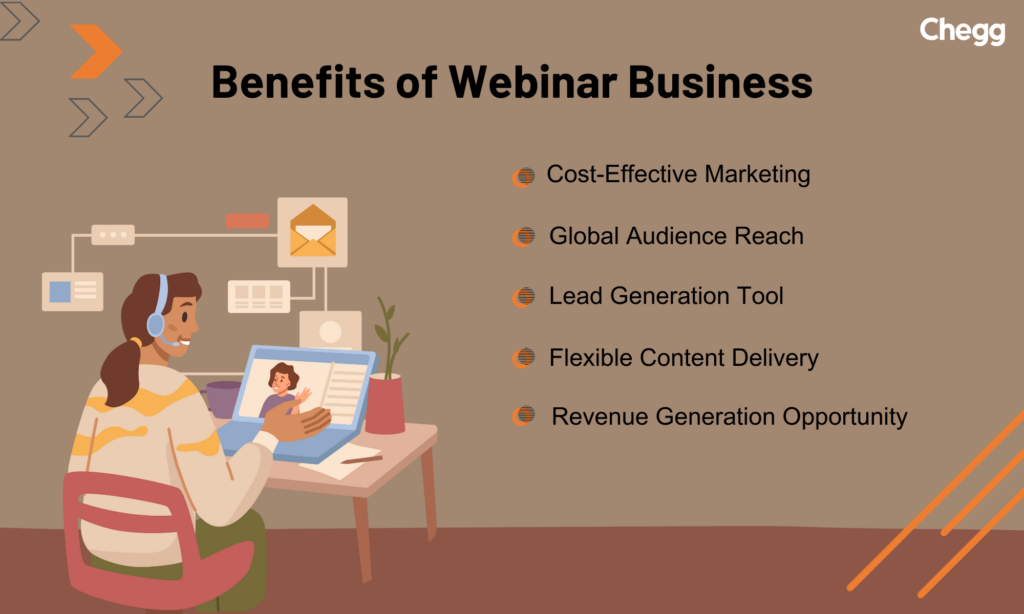
India has seen a significant rise in online learning and virtual events. With affordable internet access and increasing digital adoption, starting a webinar business is a profitable opportunity. Here are some key reasons:
Different types of webinar businesses can be broadly classified into four categories:
When it comes to webinar businesses, a common model is to find product owners and agree to promote their offerings on webinars. This doesn’t require you to create a product, offer customer support, or have a business account, making it a relatively simple business plan.
The webinar itself wouldn’t require your presence, as either the product owner or your voice would be on the internet during the webinar. You can profit from webinars like these by splitting the revenues, which are typically 50% of the sales.
Webinars are a great way for small business owners to reach an audience of potential customers interested in learning more about what they offer. If you have a webinar business, you can help them promote their products and get the word out there.
If you have extensive knowledge or experience in a particular area, hosting live online events with subject-matter experts is an easy and effective way to start a webinar business. You can offer live webinars, such as online coaching and training programs, to share your expertise with the world. Alternatively, you can create a curriculum based on your area of expertise and charge students who attend your lectures money to learn from you.
Webinars are a great way to build your reputation and attract more people to your business. After a successful webinar, you can hold a live chat Q&A session to answer questions and engage with your audience. Later, you can engage more professionals to help you expand your company.
You can find companies willing to give you a good price for your leads by looking for those that offer CPA (cost-per-action) deals. For example, if you create a webinar on home security, some businesses will pay you based on the number of people who sign up as a result of your marketing efforts.
You can generate leads for your upcoming webinar by using SEO to drive traffic to your website. Then, once you have their contact information, you can send them an email to let them know when the webinar will start. After they watch the webinar, you can include a link for them to learn more about what you’re offering. If they sign up, you’ll receive a commission.
Given the current state of the economy, many local businesses are looking for new ways to attract customers and boost conversions on their websites. As a webinar business, you can help them achieve this by offering to convert leads from the traffic they already receive.
For example, you could host a webinar for weight loss centers, pest control companies, insurance companies, and other businesses to inform their clients about the benefits of the goods and services they offer. By doing this, you would be able to help local businesses reach a wider audience and generate more sales.
Recommended Read:

Starting a webinar business may seem overwhelming at first, but breaking it down into manageable steps makes the process easier. Here’s a detailed roadmap to help you get started.
The first step in building a webinar business is identifying your niche. Ask yourself:
For example, if you are a yoga instructor, you could focus on teaching stress-relief techniques through webinars. If you’re a financial advisor, you might host webinars on personal finance management.
Understanding your audience is crucial for the success of your webinar business. Consider these questions:
For instance, if your audience consists of college students preparing for competitive exams, they might appreciate webinars delivered in both English and Hindi.
To run a smooth webinar business, you’ll need the right tools. Here are some essential components:
Popular options include Zoom, Hopin, GoToWebinar, and Cisco Webex. Each platform has its pros and cons, so choose based on your budget and requirements:
Best Webinar Tools & Platforms in India (2025 Update)
| Platform | Best For | Key Features (2025 Updates) | Pricing (Approx.) |
| Zoom Webinar | Large audiences & corporates | 1080p HD streaming, breakout rooms, AI meeting notes, multilingual captions | ₹600 – ₹2,000/month |
| Google Meet | Beginners & educators | Free for up to 100 participants, AI noise cancellation, auto-translations, YouTube live streaming | Free / with Google Workspace (₹500–₹1,500/month) |
| Zoho Webinar | Small businesses & trainers | Integrated with Zoho CRM, polls & Q&A, AI-powered engagement analytics | ₹800 – ₹2,500/month |
| Airmeet | Networking & virtual conferences | Virtual stages, sponsor booths, AI matchmaking, 3D immersive events | ₹15,000 – ₹50,000/year |
| Webex (Cisco) | Enterprise-grade security | AI transcription, enterprise-level data protection, breakout sessions | ₹1,000 – ₹5,000/month |
| Demio | Marketers & product demos | No-download browser-based webinars, interactive polls, automated replays | $49 – $99/month (~₹4,000 – ₹8,000) |
| AI-Powered Tools (2025) | Automation & personalization | AI chatbots for attendee support, smart reminders, automated summaries, adaptive content delivery | Varies (₹1,000 – ₹10,000/month) |
Invest in a good microphone (e.g., Blue Yeti) and webcam (e.g., Logitech C920). Good audio and video quality are critical for engaging your audience.
Use email marketing platforms like Mailchimp or Sendinblue to promote your webinars. Social media channels like Facebook, Instagram, and LinkedIn are also effective for reaching a wider audience.
Content is the backbone of any webinar business. Follow these tips to create engaging webinars:
Promotion plays a vital role in attracting attendees to your webinar business. Here’s how you can market your webinars effectively:
On the day of your webinar, ensure everything runs smoothly:
Pro Tip: Record your webinar so you can repurpose it later as a paid course or free lead magnet.
Once you’ve hosted a few successful online business webinar, it’s time to focus on monetization. Here are some strategies to consider:
Recommended Read:- Best Affiliate Marketing Platforms for Beginners
The total cost can vary widely depending on your scale and the level of professionalism you want to achieve. Here’s a rough breakdown:
Estimated Total: Approximately INR 50,000–1,00,000 as an initial investment.
Equipment: Investing in professional-grade audio–video gear, lighting, and possibly a dedicated recording space can cost anywhere from INR 1,00,000–2,00,000 or more.
Estimated Total: Overall initial investment in the range of INR 2,00,000–5,00,000+.
Keep in mind that these figures are approximate and can vary based on your specific requirements, the tools you choose, and regional price differences. Starting small and scaling up as you gain traction is a common approach in the webinar business.
People can easily calculate their ROI (Return on Investment) from webinars by tracking registration fees, attendee engagement, and post-event conversions.
While a profitable webinar business offers many advantages, it’s not without challenges. Below are some common obstacles and solutions:
The future of the webinar business in India looks promising, driven by technological advancements and increasing digital adoption. Here are some key trends shaping its growth:
The webinar business industry in India is expected to grow further as online learning, digital marketing, and remote work trends continue. Investing in a webinar business now can yield long-term benefits.
Starting a webinar business in India is a fantastic opportunity to share your expertise, connect with a global audience, and earn a steady income. By following the steps outlined in this guide defining your niche, choosing the right tools, creating engaging content, and promoting effectively you can build a thriving webinar business that ranks high on Google and attracts thousands of viewers.
Remember, consistency and quality are key. Keep refining your approach based on feedback, stay updated with industry trends, and always prioritize your audience’s needs. With determination and the right strategy, your webinar business can become a beacon of success in the digital world.
A webinar in business is a live, online seminar or presentation that allows companies to connect with their audience through real-time video, audio, and interactive tools like polls or Q&A sessions. It’s often used for training, marketing, or showcasing products to a wide-reaching audience.
Webinars can be highly profitable, depending on the niche, audience, & content quality. Revenue can come from ticket sales, sponsorships, or selling products during the event. With low overhead costs & scalability, they offer great potential if marketed effectively & provide valuable content.
Yes, you can make money with webinars. Revenue can be generated through ticket sales, sponsorships, selling products or services during the session, or offering premium content. With the right audience and compelling value, webinars can be a profitable business model with minimal investment.
To start a webinar:
1. Choose a Niche: Identify a specific topic or area of expertise you can focus on.
2. Select the Right Platform: Opt for webinar hosting software that fits your needs (e.g., Zoom, GoToWebinar).
3. Plan Content: Create engaging and valuable content for your target audience.
4. Promote Your Webinars: Use social media, email marketing, or ads to attract attendees.
5. Monetize: Charge for access, sell products, or offer premium content to generate income.
6. Engage Participants: Use live Q&A and interactive tools to keep your audience involved.
The cost of hosting a 1-hour webinar can range from ₹500 to ₹25,000 or more. Free platforms like Zoom (basic plan) offer no cost, but premium plans with features like branding, registration, and analytics may cost ₹1,000-₹5,000/month.
Yes, webinars can be highly profitable when planned strategically. Businesses often use webinars to sell products or services, generate leads, or build authority in their industry. By offering valuable content and engaging directly with participants, webinars can lead to substantial revenue opportunities.
The initial cost can range from ₹10,000 to ₹50,000, depending on the tools and marketing expenses.
Popular choices include Zoom, Google Meet, and GoToWebinar.
Use interactive elements like Q&A, polls, and live chat features to keep your audience engaged.
A Zoom Webinar license for 3,000 participants costs $990 per month or $9,900 annually, according to Jotform. Zoom also offers a pay-per-attendee option for events with up to 3,000 attendees, which can cost either $4,200 or $5,250, depending on the specific plan.
Absolutely. In 2025, webinars are still a powerful way to educate, market, and connect. Their flexibility, low cost, and ability to reach wide audiences make them a top choice for businesses and educators alike.


