Start your Airbnb business in India by securing permits and optimizing your property for steady passive income.
Use smart pricing, great service, and marketing to maximize bookings and comply with legal rules.
Offer unique stays and experiences to grow your Airbnb venture successfully in 2025 and beyond!
Table of Contents
Starting an Airbnb business in India is a lucrative way to earn passive income through short-term rentals. This guide explains what is Airbnb business and walks you through how to start Airbnb business in India, including tips on Airbnb hosting India and the homestay business India. Whether you’re renting a spare room or an entire property, understanding the essentials will help you build a successful Airbnb venture. Use this guide to successfully start and expand your Airbnb business in India.
What is Airbnb?
Airbnb is an online platform that connects travelers with local hosts offering short-term stays in homes, apartments, and unique properties like cabins, treehouses, and villas. The Airbnb business model allows individuals to earn income by renting out their space to guests. With over 7 million listings in more than 220 countries and regions, Airbnb provides flexible, affordable alternatives to traditional hotels.
How Airbnb Generates Revenue?
Airbnb earns its revenue mainly by charging service fees to both guests and hosts whenever a booking is made on its platform.
Guest Service Fees Guests pay a booking fee that usually ranges from 5% to 15% of their total reservation. This fee helps Airbnb cover customer support, keep the platform running smoothly, and ensure secure Kpayments.
Host Service Fees Hosts typically pay Airbnb a flat 3% fee for each booking. However, hotels or hosts using special software may be charged up to 15% under a different fee structure.
Experiences Airbnb also makes money from “Airbnb Experiences,” where locals offer unique activities and tours. Service fees are charged here too, just like with stays.
Airbnb for Work & Luxe Airbnb offers premium options like Airbnb Luxe for luxury stays and Airbnb for Work catering to business travelers. These services come with higher fees, adding another revenue stream for Airbnb.
How to Start an Airbnb Business in India?
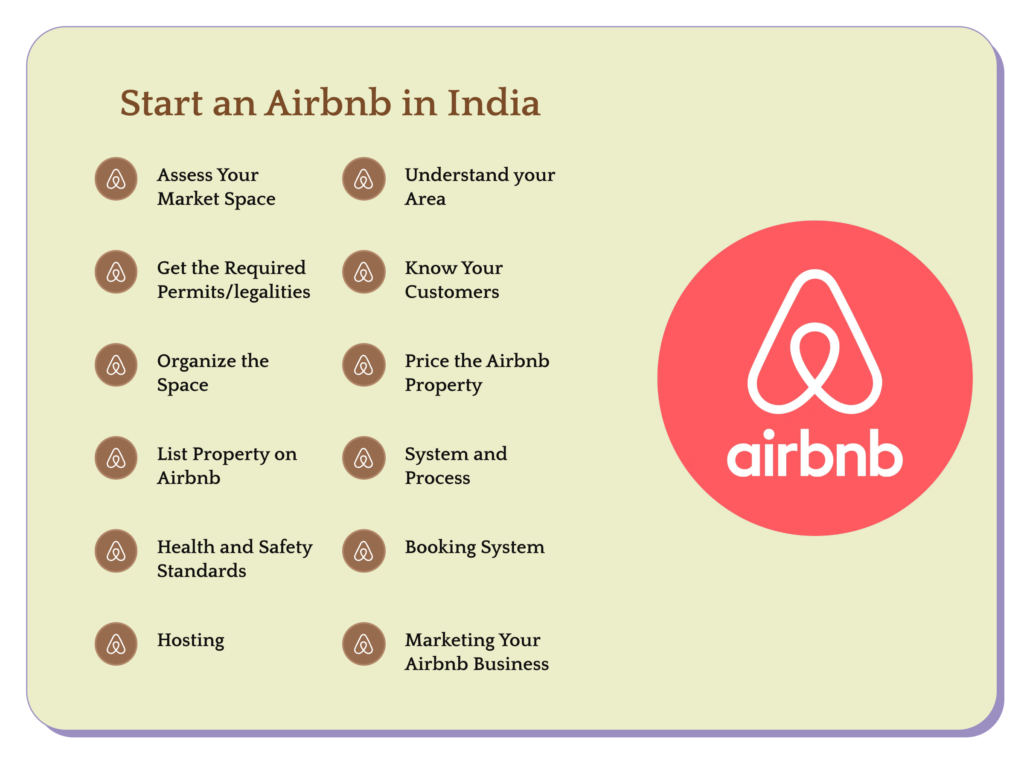
Are you interested in learning how to start an Airbnb business in India? Here are six simple steps to help you launch and turn it into a full-time job. From securing necessary permissions to preparing your property, pricing your listings competitively, and providing a great guest experience, each step is crucial for success.
1. Assess Your Market Space
One can start by reviewing other listings in the area on Airbnb, especially those with high ratings and bookings. Airbnb business requires an understanding of the travel trends in the market, along with local as well as tourist demands. Also one can do a competitor analysis by checking their prices, properties, and listings, etc.
2. Understand your Area
Identify the local attractions, such as museums, parks, restaurants, and events, that could draw visitors to the area. This helps position your property better by promoting its proximity to popular destinations. Check the (public transport, airports, highways) in your area. This can affect the attractiveness of your listing, especially in terms of convenience for guests.
3. Get the Required Permits/legalities
Starting an Airbnb business requires securing all necessary permissions to avoid legal issues. Operating without valid licenses can lead to complications with authorities, and it’s important to inform the Resident Welfare Association (RWA) about renting out rooms to prevent security concerns.
Depending on the location, hosts may need to obtain various permissions, such as No Objection Certificates (NOCs) from cooperative societies or the RWA, as well as municipal approvals.
Secure all necessary permissions to avoid legal issues.
Inform the Resident Welfare Association (RWA) about rentals.
Obtain No Objection Certificates (NOCs) if required.
Acquire municipal and local approvals based on location.
Ensure compliance for a hassle-free guest experience.
Airbnb verifies permissions before listing a property.
4. Know Your Customers
Understand the type of customers who are most likely to stay at your property. Are they tourists, business travelers, families, or solo adventurers? Knowing this helps in tailoring your listing and amenities (e.g., if you target business travelers, you might want to provide a work desk, Wi-Fi, and a quiet environment). Gather insights from past guest reviews in your area to understand their pain points or what they value the most (e.g., cleanliness, location, amenities).
5. Organize the Space
Once you’ve secured the necessary permissions, you can start preparing your property to ensure comfort and safety for your guests. Equip the space with essential amenities like refrigerators, microwaves, tea and coffee machines, and geysers. Ensure that the rooms offer privacy for a relaxing stay, and keep the property stocked with clean bedsheets, towels, and toiletries. If there’s a kitchen, provide basic utensils for guest use.
These preparations will enhance the guest experience and increase your chances of receiving positive ratings:
Prepare the property for guest comfort and safety.
Equipped with essential amenities: refrigerators, microwaves, tea and coffee machines, and geysers.
Ensure rooms provide adequate privacy.
Stock clean bedsheets, towels, and toiletries.
Provide basic kitchen utensils if applicable.
Enhance guest experience for positive ratings.
6. Price the Airbnb Property
Setting the right price for your Airbnb property is crucial for profitability. As a host, consider all expenses to determine a competitive rate that ensures good profits, keeping in mind that Airbnb charges a flat 3% service fee on the reservation amount.
Avoid pricing your property too high, as guests will compare it to others with better facilities. Research similar properties in your area to establish a rate that covers your costs, provides guest comfort, and generates profit per booking.
For further assistance, consider consulting with experts on the Airbnb business.
Determine a competitive price to ensure profitability.
Account for all expenses, including Airbnb’s 3% service fee.
Avoid setting prices too high to remain attractive to guests.
Research similar properties in your area for pricing insights.
Establish a rate that covers costs and enhances guest comfort.
Consult Airbnb experts for detailed pricing guidance.
7. List Property on Airbnb
When listing your property, it’s essential to be honest and transparent, avoiding any exaggeration or concealment of issues. Misleading guests can lead to lower ratings and fewer bookings. Highlight the unique features of your property that set it apart from others, and always include the latest photos to help guests understand its size and attributes.
Be honest and transparent in your property listing.
Avoid exaggerating or hiding any issues.
Highlight the unique features of your property.
Include the latest photos to showcase size and attributes.
Clearly state any rules regarding what is not allowed.
Specify restrictions like smoking, pets, or outside food in advance.
8. System and Process
Having staff on hand to manage your property, bookings, check-ins, and maintenance is highly recommended, especially if you don’t primarily live there. Airbnb allows for up to three co-hosts per property, which can be beneficial in sharing responsibilities during peak seasons.
Have staff to manage property and guest needs.
Consider co-hosts to share responsibilities, especially during peak seasons.
Airbnb allows up to three co-hosts for a single property.
Ensure co-hosts understand Airbnb’s terms and conditions.
Facilitate effective communication with guests.
Enhance guest comfort and make hosting easier with a solid team.
9. Health and Safety Standards
To make sure guests feel safe, it is important to equip the property with basic health and safety supplies, such as a first aid kit, fire extinguisher, smoke and carbon monoxide detectors, and emergency exit plans. Ensuring that these items are easily accessible would demonstrate my commitment to guest safety. The property must follow Airbnb’s Enhanced Cleaning Protocol, which involves strict cleaning procedures between each guest, including sanitizing high-touch areas like door handles, light switches, and remotes.
10. Booking System
As an Airbnb host, you would have to rely on their built-in booking system. The platform provides easy tools to manage reservations, set pricing, and establish house rules. To streamline the process, a system of automated booking confirmations and reminders for guests can be set up. This includes confirmation emails, pre-arrival instructions, check-in/check-out details, house rules, and a customer service desk. A proper and efficient booking system is crucial for a successful Airbnb business.
11. Hosting
Airbnb business is not just about hosting guests; it also offers opportunities for locals to sign up for Airbnb Experiences, where they can provide guided tours of local attractions. These experiences allow travelers to explore their surroundings with knowledgeable locals, such as trekking in nearby hills or going on nature trails. To get started, locals can apply to the Airbnb business, which will verify the application and the proposed experience, usually taking about a week for a response.
Airbnb offers opportunities for locals through Airbnb Business Experiences.
Hosts can provide guided tours of local attractions.
Outline availability, guest capacity, and trip frequency for travelers.
Apply to Airbnb for experience verification.
Expect a response within about a week.
Secure all necessary local permissions before applying.
12. Marketing Your Airbnb Business
Optimize the listing, use promotions, social media, and cross-list on other platforms to maximize exposure. Usesocial media platforms like Instagram, Facebook, and Pinterest to market the property. Posting aesthetically pleasing photos of the property, local attractions, or guest experiences could help generate interest. Paid ads could also be used for targeted marketing to Positive reviews play a huge role in marketing. Encourage guests to leave feedback after their stay for each specific customer segment.
Here’s a quick comparison of average Airbnb nightly rates and occupancy rates in top Indian cities. Use this to estimate your earning potential before you start your Airbnb business.”
City
Avg. Airbnb Nightly Rate (₹)
Occupancy Rate (%)
Mumbai
2,500 – 4,000
65% – 75%
Goa
3,000 – 5,500
75% – 85%
Delhi
2,200 – 3,500
60% – 70%
Bangalore
2,000 – 3,500
60% – 70%
Jaipur
1,800 – 3,000
55% – 65%
Airbnb Business in India
Starting an Airbnb business in India is becoming a popular choice for those with spare properties or unused spaces. The financial year 2020 saw Airbnb India generating around 687 million Indian Rupees, highlighting the potential for success in this market.
This trend not only benefits the travel and tourism industry but also presents a fantastic opportunity for individuals looking to start a side business with minimal investment. With the right approach, anyone can tap into this growing market and earn extra income even by doing the Airbnb business without owning property.
How much can you earn from Airbnb in India?
How much you can earn from Airbnb in India depends on your property type, location, pricing, and occupancy rate. On average, hosts in major cities like Mumbai, Delhi, Goa, and Bangalore can earn between ₹20,000 to ₹1,50,000 per month. Properties in tourist hotspots or with unique features, such as sea views or heritage design, can earn even more. Consistently providing a great guest experience and earning positive reviews can help maximize your Airbnb income.
Is Airbnb legal in India?
Yes, Airbnb is legal in India, but hosts must follow local regulations. You may need to register your property as a homestay or bed-and-breakfast with the state tourism department, depending on your location. Some cities require trade licenses or registration under the Shops and Establishments Act. Hosts should also obtain No Objection Certificates (NOCs) from housing societies or local authorities. Additionally, income from Airbnb is taxable, and GST may apply if your earnings exceed ₹20 lakh annually.
How to Make Money with Airbnb Business?
By utilizing these tips, you can increase your sales and provide a great experience for your visitors.
Providing good service and maintaining a good management record will help you build a strong reputation on Airbnb and attract repeat guests.
Staying on top of market trends and adjusting your pricing strategy will help you stay competitive and ensure orders keep flowing.
Success on Airbnb isn’t just about making money; it’s about creating memorable experiences for guests and establishing yourself as a true leader in your community.
With hard work and commitment to excellence, you can turn your Airbnb business into a profitable venture.
To earn extra money through Airbnb, focus on presentation by taking the best photos of your space, bright, clean, and inviting.
Make sure you have all the amenities guests need, from clean towels to Wi-Fi.
Establish a competitive price tag by reviewing similar listings in your area.
Provide excellent customer service by being responsive, friendly, and considerate of your guests’ requests.
By providing a great experience to your guests, you’ll not only earn money but also build a reputation that leads to continued bookings.
Here’s a general overview of the taxes associated with Airbnb rentals in India:
Goods and Services Tax (GST): Airbnb hosts in India are required to register for GST if their annual earnings are over a certain amount. GST rates for accommodation services vary between 12% and 18%, depending on factors such as the room cost and other services provided. Hosts are responsible for collecting GST from guests and paying it to the government.
Local Taxes: Some cities or states in India may impose additional taxes on short-term accommodation rentals. These could include taxes for occupying a certain place or tourism taxes. The rates and regulations for these taxes can vary significantly depending on the specific location.
Income Tax: Hosts are also required to declare their Airbnb income as part of their overall income tax filings. The income from Airbnb rentals is subject to income tax as per the tax rates.
Tips To Improve Your Airbnb Ratings
To attract more bookings on Airbnb, having a high rating is essential. With many listings available, competition among hosts can be fierce, making it important to make your property stand out. Good ratings not only help your listing appear higher in search results but also build trust with potential guests. Positive reviews reflect a great guest experience, encouraging more travelers to choose your property.
Provide clean and spacious rooms to the guests. The cleaning services of Airbnb should be good.
Ensure hassle-free check-ins and check-outs for the guests.
Provide all the essential amenities to the guests.
Have good staff on the property at all times to meet the guests’ requirements.
The property should have proper security for the guests to feel safe. You may also install CCTV cameras in the common spaces for added security.
Interact with the guests regularly. Please provide them with details about the local places to enjoy.
Many guests prefer to visit some local places known only to locals. The hosts can come in handy by providing them with the details of the most famous spots in the city.
The location should have good transport facilities and be accessible to essential places in the city.
The Airbnb hosts can use a property management system for handling the various operations of the business
What Challenges do Airbnb Owners Face?
Airbnb owners face various challenges, including managing guest expectations, handling maintenance issues, and navigating local regulations. They must also deal with competition from other listings and ensure consistent cleanliness and quality.
Balancing these responsibilities while providing excellent service can be demanding. Here are some of the challenges:
Handling maintenance emergencies and dealing with disgruntled guests.
Managing business challenges, especially at the beginning.
Adding a co-host to manage responsibilities, especially for multiple properties.
Up to three co-hosts can be added to the Airbnb listing.
Regularly updating rules and procedures as bookings increase and experience gains.
Advantages and Disadvantages of the Airbnb Business
Pros and Cons of the Airbnb Business
Aspect
Pros
Cons
Property Options
Wide selection including houses, apartments, houseboats, and even castles.
Listings may not match expectations; guests can face disappointment if hosts misrepresent properties.
Listing Fees
Hosts can list properties for free, including descriptions, photos, and personal profiles.
Airbnb charges service fees to both guests and hosts, which can increase the overall cost.
Pricing Control
Hosts decide their rates—per night, week, or month—giving them financial flexibility.
In some locations, taxes like VAT or rental income taxes may apply to hosts and guests.
Search Customization
Guests can filter by price, location, amenities, or property type and even use keywords to narrow searches (e.g., “near Louvre”).
None
Additional Services
Offers experiences such as tours and classes hosted by locals, along with restaurant recommendations and reviews.
None
Payment & Insurance
Guest payments are held for 24 hours after check-in to ensure smooth transactions. Hosts receive up to $3 million in damage protection via AirCover.
Host insurance doesn’t cover everything (e.g., rare valuables, pets), and hosts may experience inconvenience from damages.
Legal Compliance
Airbnb provides tools to help with tax reporting, like Form 1099 for U.S. hosts.
Not all locations permit Airbnb rentals; hosts may need permits or licenses, depending on local zoning laws.
Airbnb business offers flexibility, extra income opportunities, and unique experiences but comes with added responsibilities, fees, and potential risks.
Conclusion
Starting an Airbnb business in India is a rewarding way to earn passive income with the right strategy. By securing permits, optimizing your listing, and providing excellent guest experiences, you can build a thriving venture. Remember, effective pricing and clear communication are key to success. For a visual step-by-step guide, check out the helpful screenshots included in this blog to make setting up and managing your Airbnb easier. With dedication and smart planning, your Airbnb business can flourish in 2025 and beyond!
Deep dive into our Business section to read about more such interesting and emerging business ideas, trends, and tips.
Airbnb is a global online platform that connects hosts with guests for short-term rentals. Hosts can earn income by renting out rooms or entire properties, while guests benefit from cost-effective, home-like alternatives to traditional hotels.
How profitable is the Airbnb business?
According to Futurestay, rentalpreneurs listing their properties on Airbnb can earn anywhere from ₹8,30,000 annually as extra income to ₹2,49,00,000 for those looking to turn it into a full-time business.
How much does one earn by Airbnb hosting?
The earnings depend upon the type of properties, the rent it produces, and the number of bookings in a month. Airbnb has the option to rent properties from private rooms to villas. So, based on the property size, amenities, location, and transport facilities, the bookings happen, and based on it, the property owner earns.
How do I start an Airbnb business?
The steps to start an Airbnb business are – 1. Get Required Permits 2. Organize the Space 3. Price the Airbnb Property 4. List Property on Airbnb 5. Hire the Help 6. Host Airbnb Experience for Travellers
How much does it cost to start an Airbnb?
The cost of opening an Airbnb in India is approximately ₹2,90,000 to ₹16,50,000, depending on the property setup, location, and furnishing materials.
Can I run an Airbnb from my house?
Yes, you can list your property on Airbnb, regardless of where or how large it is.
How does the 80/20 rule apply to Airbnb hosting?
In Airbnb hosting, the 80/20 rule means that roughly 80% of your bookings and revenue come from just 20% of your listings or guests. Prioritizing your best properties and guests helps boost overall success.
Authored by, Samiksha Samra Digital Content Writer
Samiksha is a writer with a passion for sharing ideas and a knack for detail. She loves turning concepts into meaningful, engaging content. With a strong background in research and content strategy, she crafts clear, easy-to-understand narratives that resonate with readers. Her curiosity drives her to explore new subjects, ensuring every piece she creates is both insightful and impactful.