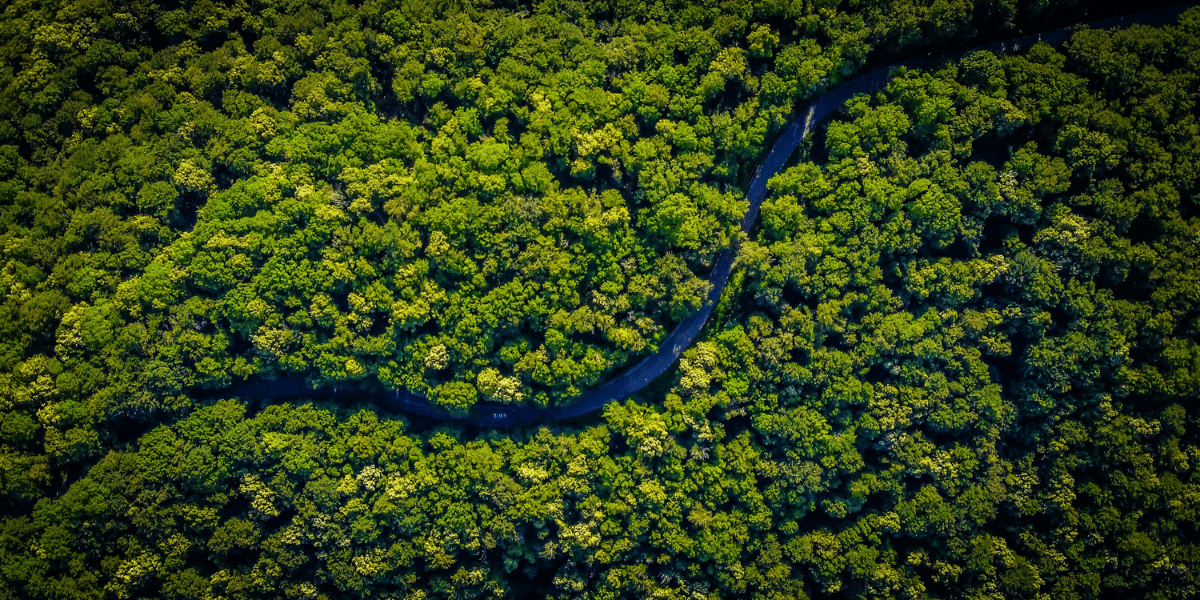
The Amazon Rainforest is the largest forest in the world, covering over 5.5 million square kilometers cross nine South American countries. Known as the “lungs of the Earth,” it plays a vital role in regulating the lobal climate and is home to unparalleled biodiversity. This blog explores the top largest forests globally, including the Taiga (Boreal Forest) and India’s Sundarbans, offering insights into their ecological significance, threats, and conservation efforts. Below is a list of the 10 biggest forest in the world, showcasing their importance and unique features.
“The Amazon Awaits: An Expedition into the Heart of Earth’s Biggest Rainforest”
The Amazon Rainforest, which refers specifically to the dense tropical forest region, covers approximately 5.5 million square kilometers. However, some sources cite a figure of 6.7 million square kilometers, which actually refers to the Amazon Basin a larger area that includes the rainforest along with surrounding rivers, wetlands, and ecosystems. It’s important to distinguish between the two to avoid overestimating the forested area itself. It spreads across nine South American countries:
The Amazon (which is the largest forest in the world) is home to over 390 billion trees and around 16,000 species, and it’s a vital part of the Earth’s climate.
Imagine a place filled with endless trees, home to countless creatures, from colorful birds to elusive jaguars. The Amazon isn’t just a forest; it’s a whole world of its own, with rivers that act like highways and trees that reach incredible heights.
Join me as we dive into the heart of the Amazon Rainforest, where nature shows its beauty in every leaf and every sound. This journey will reveal why the Amazon is so important, not just for the creatures that live there but for the entire Earth. Let’s explore this amazing place together and discover why it’s truly the biggest forest in the world.
When we talk about the “biggest forest in the world,” we consider factors such as total land area covered by the forest, its biodiversity, and its ecological importance. These forests are often characterized by their vast size, diverse ecosystems, and unique flora and fauna that contribute to the planet’s biodiversity.
Size and Geography :
Below is a list of the top 10 biggest forests in the world:
| Rank | Forest Name | Location | Area (Square Kilometers) |
|---|---|---|---|
| 1 | Taiga (Boreal Forest) | Northern Hemisphere | Approximately 11.5 million |
| 2 | Amazon Rainforest | South America | Approximately 5.5 million |
| 3 | Congo Basin | Central Africa | Approximately 2 million |
| 4 | Valdivian Temperate Rainforest | Chile and Argentina | Approximately 248,100 |
| 5 | Tongass National Forest | Alaska, USA | Approximately 68,062 |
| 6 | Sundarbans | India and Bangladesh | Approximately 10,000 |
| 7 | Borneo Rainforest | Indonesia, Malaysia, Brunei | Approximately 743,330 |
| 8 | Daintree Rainforest | Australia | Approximately 1,200 |
| 9 | Siberian Taiga | Russia | Approximately 3.1 million |
| 10 | Great Bear Rainforest | Canada | Approximately 6.4 million |
Forests play a crucial role in maintaining biodiversity, regulating the climate, and supporting local communities. Below is a list of the 10 largest forests globally, highlighting their size, significance, and threats. Below are the 10 largest forests in the world :
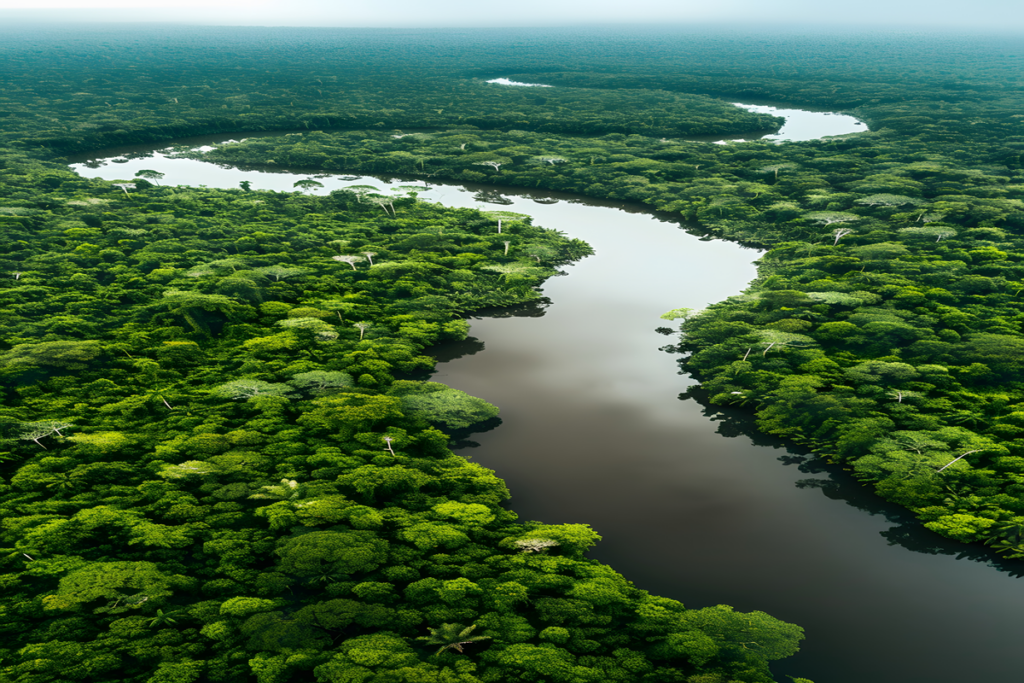
The Amazon forest is the largest tropical forest on Earth, covering 40% of South America across 9 countries (Brazil, Bolivia, Colombia, Ecuador, Guyana, Peru, Suriname, Venezuela). It spans 2.1 million square miles (5.5 million sq. km), making it larger than the Congo and Southeast Asian rainforests combined.
The Amazon forest isn’t just massive it’s one of the most biodiverse places on Earth!
As the biggest forest in the world, the Amazon is teeming with an astounding array of plant and animal life. Scientists estimate that around 10% of the world’s known species can be found in the Amazon forest.
Some key facts about the biodiversity of the Amazon Rainforest:
The sheer number and variety of species found in the Amazon are truly staggering. Scientists estimate that a single hectare (2.5 acres) of Amazon rainforest can contain as many as 750 different species of trees, more than are native to the entire United States and Canada combined.
This incredible biodiversity is due to the Amazon’s unique tropical climate, abundant rainfall, and nutrient-rich soil, which create the perfect conditions for a wide variety of plant and animal life to thrive. The dense, multi-layered canopy of the Amazon also provides a vast array of habitats and niches for species to occupy.
Unfortunately, much of this biodiversity is under threat. Deforestation, logging, mining, and other human activities have already destroyed large swaths of the Amazon, putting many species at risk of extinction. Experts estimate that we may be losing 137 plant, animal and insect species every single day in the Amazon due to habitat loss.
Protecting the Amazon and its incredible biodiversity must be a global priority. This unique and irreplaceable ecosystem is not only a natural wonder but also plays a crucial role in regulating the Earth’s climate and supporting indigenous communities who have lived in harmony with the forest for centuries.
The incredible biodiversity of the Amazon is not only vital for the forest itself but for the entire planet. The Amazon’s diverse plant and animal life contributes to:
The Amazon Rainforest isn’t just the biggest forest it’s also crucial for the Earth’s climate. Acting as a natural carbon sink, it absorbs and stores massive amounts of carbon dioxide (CO₂), helping to fight climate change.
Protecting the Amazon means protecting the entire planet!
Despite its incredible size and biodiversity, the Amazon Rainforest (world biggest forest in the entire globe ) faces several serious threats that put its long-term future at risk. The primary threats to the Amazon forest include:
These threats are not only destroying the Amazon’s precious habitats and biodiversity but also undermining its crucial role in regulating the global climate. Protecting the Amazon has never been more important.
Given the vital importance of the Amazon Rainforest (biggest forest in the world), there are numerous ongoing efforts to conserve, protect, and even restore this global treasure. Some of the key initiatives include:
While these efforts are making a difference, the threats facing the Amazon forest (the world’s biggest forest) remain immense. Deforestation rates in the Brazilian Amazon, for instance, have been rising in recent years, highlighting the ongoing challenges.
Ultimately, safeguarding the future of the Amazon forest will require a multi-pronged, global approach. Strengthening protected areas, empowering indigenous communities, promoting sustainable economic activities, and curbing the drivers of deforestation are all crucial components of this effort.
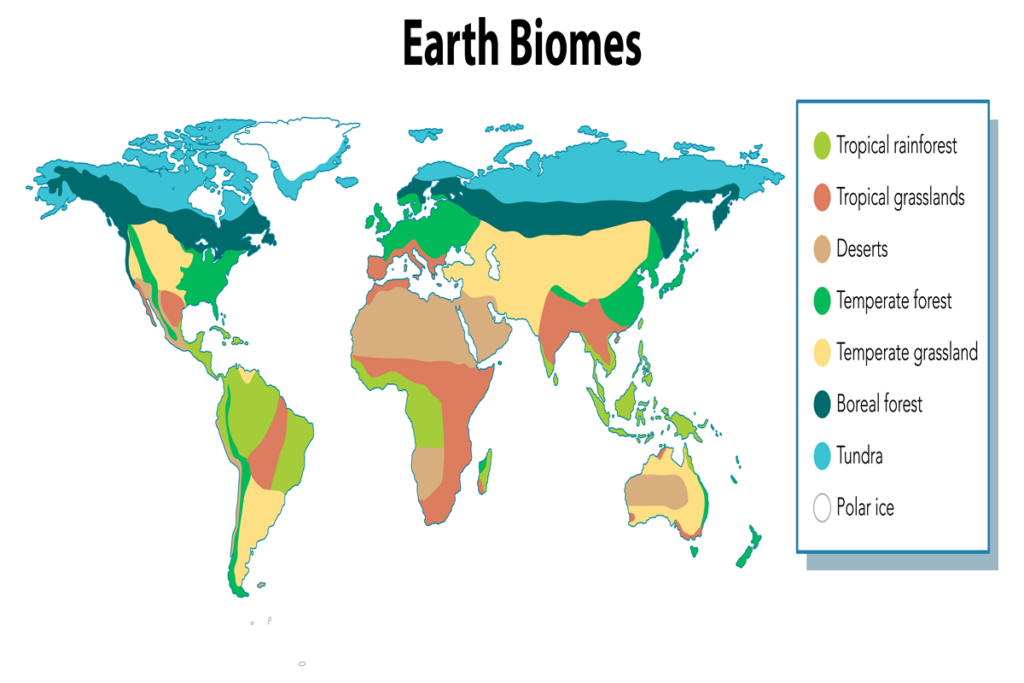
Forests cover over 31% of the global land area. Most of these forests are in Russia, Canada, China, Brazil, the USA, and Australia. The distribution and diversity of forests around the world may be shown with the help of a good map. This is commonly known as the World Forest Map. The World Forest Map is a helpful tool for illustrating the world’s forest cover. This map mainly shows the following data:
| Country | Forest area (Millions of Hectares) |
| Australia | 134 |
| Brazil | 497 |
| Canada | 347 |
| China | 220 |
| Democratic Republic of the Congo | 126 |
| India | 72 |
| Indonesia | 92 |
| Peru | 72 |
| Russia | 815 |
| United States | 310 |
Russia has more than 1/5th of the world’s forest area in Asia. In Southeast Asia, China, Indonesia, and India have the most trees. China is even popularly known as the 5th greenest country. Brazil has the Amazon Rainforest in South America, most popularly known as “The lungs of the planet”.
Scientists, policymakers, and environmentalists often use the World Forest Map. With this map, they can learn how to conserve the planet’s forests more effectively. They may ensure their efforts are directed at the specific location and its requirements. These maps can help track deforestation. They can also help people manage the conservation zones. All methods of forest preservation will need to use these maps to ensure they work effectively.
The Amazon Rainforest, the biggest forest in the world, is at risk. If deforestation continues, we could lose our rich biodiversity, climate benefits, and indigenous cultures. However, if we act now, we can protect it for future generations.
The Amazon is a global treasure we must act now to protect it before it’s too late!
Read More:-
Forests are rightly called the lungs of our planet, with the Amazon standing as the largest and most biodiverse of them all. From lush tropical rainforests to serene boreal forests, these ecosystems play a crucial role in regulating the climate, supporting wildlife, and sustaining human life. Understanding their importance highlights why forest conservation is not just an environmental concern but a global priority. Exploring the world’s greatest green expanses reminds us that protecting forests means protecting Earth’s future.
The Amazon Rainforest, which refers specifically to the dense tropical forest region, covers approximately 5.5 million square kilometers. However, some sources cite a figure of 6.7 million square kilometers, which actually refers to the Amazon Basin a larger area that includes the rainforest along with surrounding rivers, wetlands, and ecosystems. It’s important to distinguish between the two to avoid overestimating the forested area itself.
The biggest forest in the world is the Amazon Rainforest, located in South America. Brazil cover over 58.4% of the Amazon rainforest within its borders and rest of it is covered by 8 countries.
Russia has the most forests, with 815 million hectares covered in forest.
The largest forest in Asia is the Siberian Taiga, which extends across Russia and is part of the larger Boreal Forest biome.
The Amazon Rainforest is the largest tropical rainforest in the world, spanning approximately 5.5 million square kilometers (2.1 million square miles) across nine countries in South America, with the majority located in Brazil. It is home to an incredible diversity of wildlife, plants, and ecosystems, playing a crucial role in regulating the global climate.
The biggest forest in India is the Sundarbans Mangrove Forest, spread across West Bengal. Covering about 10,000 sq km (with nearly 4,200 sq km in India), it is the largest contiguous mangrove forest in the world and a UNESCO World Heritage Site. The Sundarbans is home to the famous Royal Bengal Tiger, saltwater crocodiles, and rich biodiversity, playing a vital role in protecting the coastline from erosion and storms while supporting thousands of local livelihoods.
The Amazon Forest is larger than India. While India’s total area is about 3.28 million sq. km, the Amazon spans over 5.5 million sq. km.
The smallest forest in the world is the Bukit Nanas Forest Reserve, located in the heart of Kuala Lumpur, Malaysia. Covering just about 11 hectares (27 acres), it is one of the oldest permanent forest reserves in the country. Despite its tiny size, it preserves tropical rainforest biodiversity and serves as an urban green lung, offering nature trails and educational experiences for visitors.