


Building a brand goes far beyond designing a logo-it’s about creating a strong brand identity that defines how customers perceive your business. To build a strong brand, you need to define your purpose and audience, research competitors, craft a unique brand personality and story, create a memorable visual identity, and maintain consistency across every touchpoint-online and offline. Engaging with your audience and fostering loyalty are key to long-term success.
A great example is Zomato’s brand journey in India. By blending a bold social media voice with consistent app design and customer trust, Zomato evolved from a restaurant listing site into a globally recognized brand. This proves that with the right brand strategy and awareness techniques, businesses can stand out and grow even in highly competitive markets.
This guide covers the brand development process step by step, helping you build authority, trust, and a lasting presence in 2025 and beyond.

To build a brand, define your values, research your audience, create a strong brand identity, craft consistent messaging, apply effective brand building strategies, boost brand awareness, and follow a continuous brand development process.
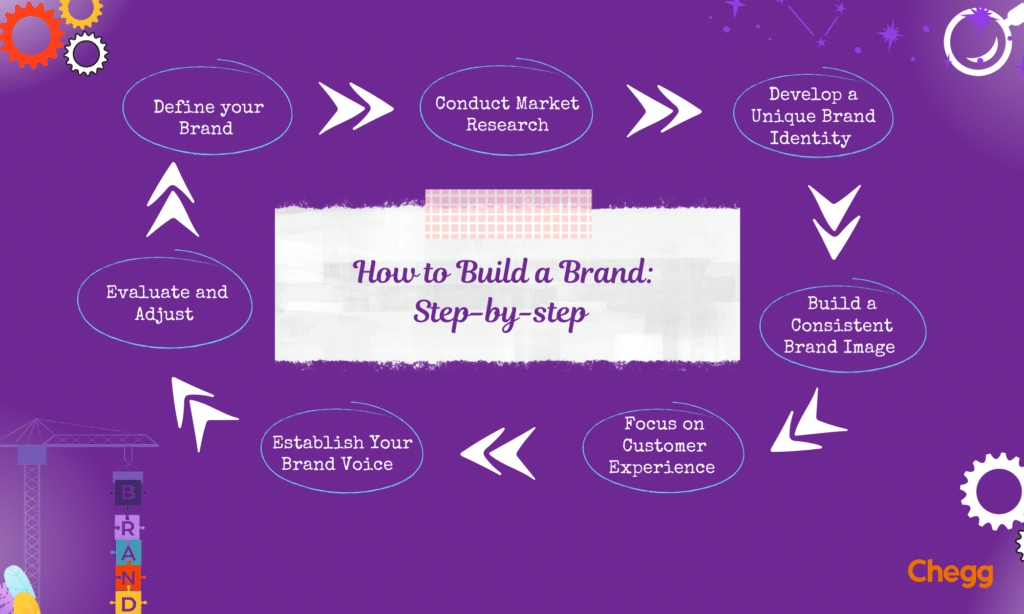
Every strong brand starts with a clear understanding of its audience. Defining who your brand speaks to helps tailor your message, visuals, and products. Ask questions like: What are their pain points? What do they value? Where do they spend time online?
Getting granular with demographics (age, gender, income) and psychographics (interests, lifestyle, motivations) will help you craft a connecting offering. Whether you’re a corporate entity or a solo creator learning how to build a personal brand, clarity around your audience will shape your entire brand-building process.
To dive deeper, segment your audience based on purchasing behaviors or loyalty. You may find distinct audience personas first-time users, loyal advocates, or price-conscious buyers each requiring tailored messaging. Knowing exactly who you’re speaking to enables you to position your brand with precision and impact.
Knowing your competitors helps you stand out in a crowded market. Analyze their branding what’s working, what isn’t, and where to offer something different. Review their messaging, tone, visual identity, and customer engagement. Make a list of their strengths and weaknesses.
One key tip when figuring out how to build a brand from scratch is to use competitor research as fuel for differentiation. The goal isn’t to imitate but to carve a distinct space. Use your competitors’ weaknesses as an opportunity to create a stronger and more engaging experience.
Competitor analysis also uncovers industry benchmarks. If most brands in your niche focus on luxury, there may be room for an affordable alternative. Conversely, a bold and colorful brand might be refreshing if everyone is minimal and neutral. Understand trends, but be brave enough to break them when needed.
Your purpose is your “why”- what your brand stands for beyond making a profit. Positioning is how your brand is perceived relative to others in the market. Ask yourself: What promise do you deliver to your customers? Why should they trust you over others?
When learning how to build a brand strategy, defining purpose and positioning gives your business direction. Brands that stand for something bigger than themselves foster emotional loyalty. Whether you’re creating eco-friendly products or tech-driven services, your brand needs a reason for being and it needs to own a unique position in the market.
For example, a skincare brand could position itself as science-backed, eco-conscious, or handmade and local each attracting a different type of customer. Your purpose and position should influence your messaging, partnerships, and hiring decisions. Clarity here is essential to long-term consistency.
Your brand’s personality gives it a human touch, while your voice determines how it communicates. Are you witty and casual or formal and informative? This personality should be reflected in everything from blog posts to social captions to packaging.
If you’re exploring how to build a brand image, understand that customers don’t just buy products they buy emotions and stories. A strong brand voice enhances connection and creates consistency. For individuals working on how to build a personal brand, letting your true personality shine through helps build trust and relatability.
A cohesive personality makes your brand memorable. If your tone shifts drastically between platforms or campaigns, it can create confusion. Brands like Apple, for instance, are known for their sleek, confident tone, which is carried through their products, website, and even packaging design.
People remember stories more than facts. Your brand story should communicate who you are, why you exist, and how you help your customers. This narrative forms the emotional backbone of your brand.
The best brand stories are authentic, relatable, and aligned with your audience’s values. Whether you’re a solopreneur or an enterprise, learning how to build a brand through storytelling will help you turn passive customers into brand advocates. Include details about your origin, mission, struggles, and evolution.
It’s also helpful to weave your story into your customer’s journey. Position your brand as the guide, helping them overcome challenges. This framework makes your story feel relevant and valuable, building deeper engagement.
Your brand name is one of the first things people will notice. It should be easy to remember, reflect your niche, and ideally be available as a domain name and social media handle. It’s the verbal logo of your business.
When considering how to build a brand from scratch, invest time in naming. Your name should be scalable, flexible across products, and evoke emotion or intrigue. Test your name with potential customers and avoid names that are too generic, hard to pronounce, or legally restricted.
Additionally, a trademark search must be performed before finalizing. A name already in use can lead to legal disputes and customer confusion. Names like Google, Uber, and Airbnb are simple yet distinctive aim for something equally timeless.
A good slogan summarizes your value proposition in just a few words. Think of it as your brand’s elevator pitch short, sharp, and emotionally appealing. It should be repeatable, distinctive, and relevant.
As part of mastering how to build a brand strategy, a slogan should clearly reflect your brand’s essence. Think of Nike’s “Just Do It” or L’Oréal’s “Because You’re Worth It” each expresses a feeling, not just a function. Brainstorm multiple options before selecting the one that resonates.
Don’t underestimate testing. Share a shortlist with team members or your target audience. A great slogan should pass the “sticky” test it lingers in the mind, evokes curiosity, and drives home your promise.
Design is where your brand takes a visual form. This includes logo, color palette, typography, and imagery. These elements should be consistent across all your materials from packaging to website to social media.
If you’re working on how to build a brand image, visuals are key. Use colors that evoke the emotions you want your brand to represent. A clean, adaptable logo can work across different media, from business cards to billboards. Consistent design builds familiarity and reinforces trust.
Your design system should include rules for logo usage, spacing, color codes, and font choices. Brand guidelines ensure that future campaigns, even when created by different designers, stay visually aligned and on-brand.
Branding isn’t confined to marketing. It should influence customer service, packaging, internal communication, and more. Your brand should guide how you write emails, design product manuals, and interact with clients.
When considering how to build a brand, think of it as the personality your business expresses in every action it takes. Whether creating content, responding to feedback, or onboarding a new hire, ensure your values and voice are reflected. Strong brands are consistent brands.
Ensure your brand’s promise is delivered at every touchpoint. Every customer-facing detail should align with your brand values, from return policies to voicemail greetings. It’s this operational branding that creates lasting impressions.
Brand building is essential for businesses of all sizes and industries. Here’s why:
Investing in brand development nurtures customer relationships and fuels long-term success.

Read More:
The 3-2-27 branding principle indicates that it takes just 3 seconds for a person to create a brand’s first impression, 2 minutes to grasp its essence, and 27 days of regular interaction for your brand to become truly memorable and recognizable. This principle highlights the importance of understanding how to build a brand effectively by making strong first impressions, delivering clear messages, and maintaining consistent branding efforts.
The 3-2-27 branding principle underscores the significance of making a strong first impression, delivering clear messages, and maintaining consistent visibility:
This principle emphasizes the necessity of a compelling visual identity, clear communication, and ongoing interaction to cultivate a memorable and recognizable brand.
Building a brand on social media requires a strategic plan to engage with the target audience and establish a strong online presence. Here are some steps to build a brand on social media:
1) Define your Brand Identity: Before you start understanding how to build a brand, ensure that you have a clear understanding of your brand identity, including your mission, values, and target audience.
2) Choose the Right Platforms: Select social media platforms that align with your brand and where your target audience is most active. Depending on your target demographic and content strategy, focus on Facebook, Instagram, Twitter, LinkedIn, or TikTok.
3) Create Engaging Content: Create content that resonates with your audience and shows your brand identity. It includes informative posts, behind-the-scenes glimpses, user-generated content, and interactive elements like polls and quizzes.
4) Maintain Consistency: Consistency is key to building brand recognition and trust on social media. Use branding elements like logos, colors, and tone of voice across all social media posts.
5) Engage with Your Audience: Regularly engage with your audience by responding to comments, messages, and mentions. Encourage conversations, ask questions, and seek feedback.
6) Collaborate with Influencers: Partner with influencers who align with your brand values and have a large social media following. Their endorsements can help increase brand visibility and credibility.
7) Analyze Performance: Regularly monitor your social media performance using analytics tools provided by each platform. Track KPIs such as engagement, reach, and conversion rates.
8) Follow Trends: Stay updated on the latest social media trends and adapt your content strategy accordingly. Experiment with new trends and features to keep the audience engaged.
By following these steps, understanding how to build a brand, and consistently delivering value to the audience, you can effectively build your brand on social media.
Building a successful brand isn’t just about visuals-it’s about creating a strategic identity that reflects your values, mission, and vision while resonating with your audience. A strong brand strategy combines a cohesive visual identity (logo, colors, typography), a clear brand message, and consistent communication across every platform. Regularly gathering customer feedback and adapting to market trends ensures your brand stays relevant and competitive.
By investing in authentic storytelling and brand awareness techniques, businesses can build trust, inspire loyalty, and achieve long-term recognition in their niche.
Tip: Share behind-the-scenes stories, customer success testimonials, or case studies on platforms like LinkedIn and Instagram. This not only humanizes your brand but also boosts visibility and engagement, helping your content rank higher and attract more traffic.
Recommended Read: Podcasting for business: How It Can Grow Your Business
Here’s how to build a personal brand:
1. Identify your unique strengths, values, and passions to make a personal brand.
2. Define your target audience and create a personal brand statement.
3. Develop a consistent brand voice and visual identity.
4. Create and share valuable content across various platforms.
5. Engage with your audience and network with peers in your industry.
The “3-7-27 Rule” of branding suggests that it takes multiple touchpoints to build brand recognition and trust: a brand should capture attention in 3 seconds, deliver its core message in 7 seconds, and require roughly 27 exposures to become truly memorable. This rule emphasizes the importance of creating an immediate impact, clear communication, and consistent, repeated exposure to build familiarity and loyalty with a target audience.
The seven pillars of personal branding are commonly identified as Authenticity, Clarity, Consistency, Visibility, Value, Relationships, and Adaptability, forming the foundation for building a strong, influential, and recognizable professional identity. These pillars guide individuals in defining and projecting a unique personal brand that fosters trust and opens doors to new opportunities.
To create a successful brand, clarify your brand’s mission, core values, and ideal audience. Craft a unified brand identity with a distinctive logo, color palette, and messaging. Ensure your branding is consistently implemented across all channels to foster recognition and establish trust.
Yes, building a personal brand is valuable. It boosts credibility, opens career and business opportunities, and helps you stand out in a crowded market by showcasing your unique skills and values.
Brand building costs vary widely from ₹10,000 to over ₹5 lakhs depending on factors like logo design, website, marketing, and strategy. DIY options are cheaper, while professional branding services cost more but offer higher impact.
A brand kit contains key elements such as logos, colors, fonts, and style guidelines to maintain a consistent and recognizable brand appearance across all channels and materials.
The 5 C’s of branding are Clarity, Consistency, Credibility, Connection, and Commitment essential elements that help build a strong, trustworthy, and memorable brand that resonates with its audience.
Brand identity represents how your brand is viewed by customers, competition, and the general public. Brand identity includes your values, brand personality (including brand voice and tone), and visual aesthetic. Your brand identity is communicated through every single part of your company-from your logo to your brand marketing to your copy to your in-store experience.


