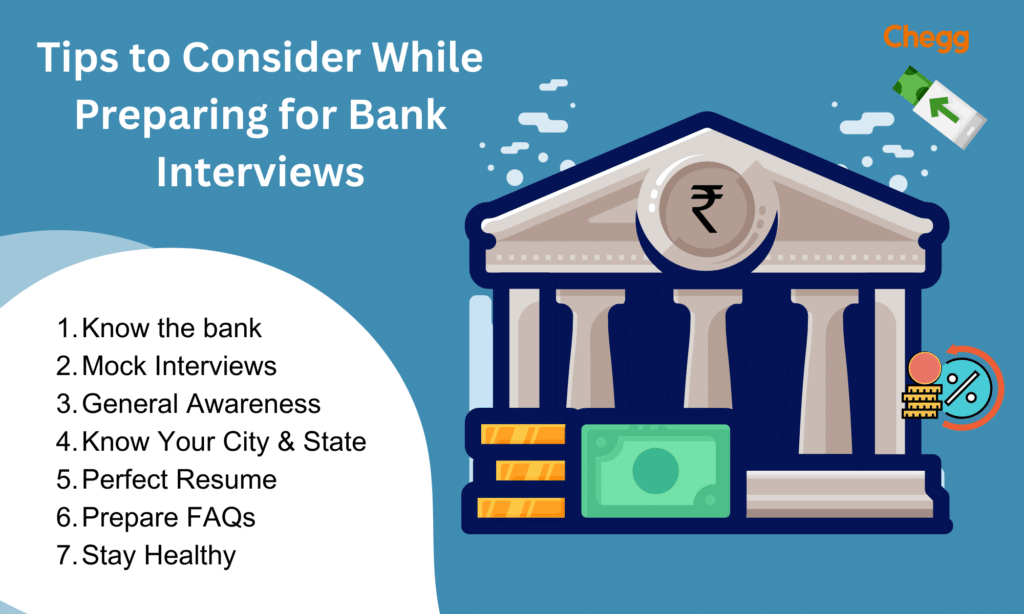
Questions in banking interviews assess candidates on banking concepts, customer service, and situational judgement for 2025.
Being prepared on common questions as well as real-life situations establish credibility and successful outcomes.
While being clear in the ways you are answering questions, it is always helpful to show professionalism so that that will lead to recruiters understanding you are competent for a banking job.
Table of Contents
Landing a bank job in India is a dream for many, but the interview process can be challenging. This guide is designed to help you succeed with Bank Interview Questions and Answers that cover everything from general topics to role-specific queries in Indian banking. Whether you’re a fresher or an experienced candidate, this guide serves as your one-stop resource for Bank Interview Questions and Answers to boost your confidence and preparation.
Common bank interview questions typically revolve around your reasons for choosing a career in banking, your understanding of key banking concepts, and your customer service skills. Interviewers also evaluate your ability to handle pressure, resolve conflicts, and think critically. Expect questions about your strengths and weaknesses, your knowledge of banking operations, and your long-term career goals.
The Institute of Banking Personnel Selection (IBPS) is an autonomous body that conducts recruitment exams for all Public Sector Banks in India, except SBI. Understanding their process and expected questions can give you a competitive edge.
To help you secure your dream banking job, we’ll explore Bank Interview Questions and Answers across Beginner, Intermediate, and Advanced levels. You’ll feel more prepared and confident by familiarizing yourself with these questions and responses. Let’s dive into these essential banking interview questions to help you succeed!
What is Banking Interview Questions?
Banking interview questions are asked during bank job interviews to assess your knowledge of banking concepts, customer service skills, problem-solving abilities, and suitability for the role. They cover general questions, banking awareness, behavioral and situational scenarios, and role-specific queries. These questions help interviewers evaluate your readiness for a career in the banking sector.
Banking Interview Questions for Freshers
These freshers’ interview questions and answers are fundamental and are often asked for entry-level positions like Bank Clerks or Teller roles. These Banking Interview Questions and Answers are a great starting point.
1. Tell me about yourself.
I recently graduated with a degree in [Your Degree] from [Your University]. I am a quick learner, enthusiastic, and eager to start my career in the banking sector. I am particularly interested in [mention area of interest in banking, e.g., customer service, finance]. I am also keen to learn more about the Indian banking system. During my studies, I [mention any relevant experience like internships, projects, or extracurricular activities that showcase relevant skills like teamwork, communication, or problem-solving]. I am a [mention 2-3 positive personality traits, e.g., responsible, detail-oriented, adaptable].
2. Why do you want to work in a bank?
I am drawn to the stability and growth opportunities offered by the banking sector. I believe banks play a crucial role in the Indian economy, and I want to contribute to this important industry. I am also interested in the customer interaction aspect of banking and helping people with their financial needs. I am particularly interested in [mention specific area like retail banking, loans, or customer service], and I believe this role provides a great opportunity to start my career in this field.
3. Why should we hire you?
I am a hard worker, dedicated, and possess strong communication skills. I am confident that I can quickly learn the necessary skills for this role and become a valuable asset to your team. I am also familiar with basic banking concepts and eager to learn more about the specific operations of your bank. I am a [mention 2-3 relevant skills like good with numbers, attention to detail, computer proficiency] and I am confident I can quickly adapt to your work environment.
4. What are your strengths and weaknesses?
(Strength): “One of my strengths is my ability to learn quickly. I am also a good team player and enjoy collaborating with others. I am also [mention another strength relevant to the role, e.g., organized, punctual, or have good communication skills].”
(Weakness): “Sometimes I can be a bit of a perfectionist, which can sometimes make me spend a little extra time on tasks. However, I am working on managing my time more effectively. Or, I sometimes hesitate to ask for help, but I’m learning to communicate more openly when I need assistance.” (Always frame a weakness as something you are actively working to improve.)
5. What is the definition of a bank?
A bank is a financial institution that accepts deposits and provides loans. It offers a range of financial services to individuals, businesses, and governments, acting as an intermediary between savers and borrowers.
6. What are the different types of banks?
Banks come in various forms, including:
Retail Banks
Commercial Banks
Cooperative Banks
Agricultural Banks
Investment Banks In India, all these are regulated by the Reserve Bank of India (RBI), the country’s central bank.
7. What are commercial banks, and what are their types?
Commercial banks are institutions that accept deposits and offer loans to individuals, businesses, and governments. They also provide services like credit facilities and payment processing. Types include:
Public Sector Banks: Majority-owned and regulated by the government, guided by RBI policies.
Foreign Banks: Operate in countries other than where they’re headquartered, bringing international banking services.
8. What are the main functions of commercial banks?
Key functions include:
Accepting deposits
Providing loans
Offering locker facilities
Trading in bonds and securities
9. What is liquidity in banking?
Liquidity refers to a bank’s ability to meet its short-term financial obligations. It means having enough cash or easily convertible assets to pay debts without incurring losses.
10. What is a credit score?
A credit score is a numerical rating that represents a person’s creditworthiness, based on their credit history and repayment behavior.
11. What is a mortgage?
A mortgage is a loan taken from a bank to buy real estate. The borrower repays the loan through monthly installments, which include both principal and interest.
12. What are SWIFT codes?
A SWIFT code (Society for Worldwide Interbank Financial Telecommunication) is a unique identifier used in international money transfers to specify the recipient’s bank.
13. What is the role of a bank teller?
Bank tellers handle customer transactions such as deposits, withdrawals, and payments. They ensure accuracy and provide front-line customer service in the bank.
14. What is a Cheque?
A cheque is a written order to a bank to pay a specific amount of money from one person’s account to another person or entity.
15. What is a passbook?
A passbook is a physical record of transactions in a bank account. It shows deposits, withdrawals, and the current balance in the account.
16. What is KYC?
KYC stands for ‘Know Your Customer.’ It is a process used by banks and other financial institutions to verify the identity of their customers. This is done to prevent money laundering, fraud, and other illegal activities.
14. What is the full form of ATM?
ATM stands for Automated Teller Machine. It’s an electronic device that allows customers to perform basic banking transactions like withdrawing cash, checking balances, and transferring funds without visiting a bank branch.
These Banking Interview Questions and Answers for freshers are crucial for beginners. Preparing with the right bank interview questions and answers for freshers can significantly boost your confidence and help you stand out during your first interview.
Banking Interview Questions for Intermediate
These interview questions delve deeper into banking concepts and are often asked for positions like Probationary Officers (PO) or Assistant Managers. These Bank Interview Questions and Answers require a more thorough understanding.
15. What is investment banking?
Investment banking is a specialized area of banking that helps companies and institutions raise capital. It also manages mergers, acquisitions, and complex financial transactions.
16. What is consumer banking?
Consumer banking provides financial services to individuals, such as personal loans, credit cards, and installment payment options, making everyday banking accessible and convenient.
17. Why do you want to work in the banking sector?
The banking sector offers stability, growth opportunities, and a structured career path. I have a strong interest in finance and enjoy working with numbers, which aligns well with the responsibilities in banking.
18. What are the different types of bank accounts?
Common types include:
Savings Account – Allows deposits and earns interest with easy access to funds.
Checking Account – Used for daily transactions like withdrawals and payments.
Money Market Account – Offers higher interest along with limited transaction features.
Certificates of Deposit (CDs) – Fixed-term deposits with guaranteed returns.
Retirement Accounts – Help individuals save for retirement with tax benefits.
19. How can a bank account be operated?
Bank accounts can be accessed and operated through:
In-branch banking
ATM services
Mobile or telephone banking
Online banking portals
20. What is overdraft protection? Do banks charge for it?
Overdraft protection allows transactions to go through even if the account lacks sufficient funds, up to a certain limit. Yes, banks usually charge a fee for this service.
21. What do you need to open a bank account?
To open a bank account, you typically need a valid government-issued ID, proof of residence, passport-sized photos, and initial deposit (if required).
22. What are the types of card-based payments?
The two main types are:
Credit Card Payments – Purchases made on credit, payable later with interest if unpaid.
Debit Card Payments – Direct deductions from the user’s bank account at the time of purchase.
23. What is the difference between a cheque and a demand draft?
Cheque: Issued by an individual, can be cancelled or bounced.
Demand Draft (DD): Issued by a bank, guaranteed payment, cannot be cancelled once issued.
24. What is NEFT/RTGS/IMPS?
These are electronic fund transfer systems in India:
NEFT (National Electronic Funds Transfer): Used for transferring funds between bank accounts across India. Transfers happen in batches.
RTGS (Real Time Gross Settlement): Used for large-value transactions where funds are transferred individually and immediately.
IMPS (Immediate Payment Service): Allows for instant money transfer 24/7, including weekends and holidays.
Banking Interview Questions for Experienced
These interview questions are more complex and are typically asked for managerial roles or specialist officer positions. These Bank Interview Questions and Answers test your in-depth knowledge and analytical skills.
30. Discuss the challenges faced by the Indian banking sector and suggest solutions.
The Indian banking sector faces several key challenges:
High NPAs: This erodes profitability and restricts lending capacity. Solutions include stricter loan appraisal processes, faster resolution mechanisms like the Insolvency and Bankruptcy Code (IBC), and better monitoring of loan accounts.
Cybersecurity Threats: Increasing digitalization exposes banks to cyberattacks. Solutions include investing in robust cybersecurity infrastructure, implementing strong data protection measures, and educating customers about online safety.
Financial Inclusion: Reaching the unbanked population remains a challenge. Solutions include expanding branchless banking, promoting digital financial services, and leveraging technology like mobile banking.
Competition from Fintech Companies: Fintechs offer innovative financial services, putting pressure on traditional banks. Solutions include embracing technology, collaborating with fintechs, and enhancing customer experience.
Maintaining Profitability in a Competitive Environment: With increasing competition and regulatory pressures, maintaining profitability is a challenge. Solutions include focusing on cost optimization, diversifying revenue streams, and improving operational efficiency.
31. What are the implications of Basel Accords for Indian banks?
Basel Accords are international banking regulations aimed at strengthening the stability of the global financial system. For Indian banks, the implications include:
Higher Capital Requirements: Banks need to maintain adequate capital reserves to absorb potential losses. This strengthens their resilience but can also impact profitability.
Improved Risk Management Practices: Basel norms emphasize robust risk management frameworks, requiring banks to assess and manage credit risk, market risk, and operational risk effectively.
Enhanced Transparency and Disclosure: Banks need to disclose more information about their financial health and risk exposures, promoting transparency and market discipline.
Increased Regulatory Scrutiny: Regulators like the RBI monitor banks’ compliance with Basel norms, ensuring adherence to international standards.
32. Explain the concept of risk management in banking.
Risk management in banking involves identifying, assessing, measuring, monitoring, and controlling various risks that banks face. Key types of risks include:
Credit Risk: The risk of borrowers defaulting on their loans.
Market Risk: The risk of losses due to changes in market factors like interest rates, exchange rates, and equity prices.
Operational Risk: The risk of losses due to internal failures, human error, fraud, or external events.
Liquidity Risk: The risk of not being able to meet short-term obligations due to a shortage of liquid assets.
Reputational Risk: The risk of damage to a bank’s reputation due to negative publicity or loss of public trust.
Effective risk management is crucial for a bank’s stability and profitability.
33. What is monetary policy and how does it affect the economy?
Monetary policy refers to actions taken by a central bank (like the RBI in India) to manage the money supply and credit conditions to achieve macroeconomic objectives like price stability, economic growth, and full employment. Key instruments of monetary policy include:
Repo Rate: The rate at which the central bank lends money to commercial banks.
Reverse Repo Rate: The rate at which the central bank borrows money from commercial banks.
Cash Reserve Ratio (CRR): The percentage of deposits that banks must maintain with the central bank.
Statutory Liquidity Ratio (SLR): The percentage of deposits that banks must invest in government securities.
Changes in these rates influence interest rates, credit availability, and overall economic activity.
34. Discuss the impact of globalization on the Indian banking system.
Globalization has significantly impacted the Indian banking system:
Increased Competition: Foreign banks have entered the Indian market, increasing competition and forcing domestic banks to improve efficiency and customer service.
Access to Global Capital Markets: Indian banks can now access global capital markets for funding and expansion.
Adoption of International Standards: Globalization has led to the adoption of international banking standards like Basel Accords, strengthening the Indian banking system.
Increased Cross-Border Transactions: Globalization has led to a rise in cross-border trade and investment, increasing the demand for international banking services.
Technological Advancements: Globalization has facilitated the transfer of technology and best practices, leading to innovation in the Indian banking sector.
35. Explain different types of banking risks (credit risk, market risk, operational risk).
(Covered in the answer to question 3, but here’s a more detailed breakdown)
Credit Risk: The potential that a borrower will fail to meet their obligations according to agreed terms. Banks mitigate this through credit scoring, collateral requirements, and diversification of loan portfolios.
Market Risk: The risk of losses arising from movements in market variables such as interest rates, foreign exchange rates, equity prices, and commodity prices. Banks use various models and techniques to manage market risk, including Value at Risk (VaR).
Operational Risk: The risk of loss resulting from inadequate or failed internal processes, people, and systems or from external events. This includes fraud, system failures, and legal risks. Banks mitigate operational risk through internal controls, audits, and business continuity planning.
36. What are the latest trends in digital banking and their impact on traditional banking?
Key trends include:
Mobile Banking: Increased use of smartphones for banking transactions.
Digital Payments: Growth of UPI, mobile wallets, and other digital payment methods.
Open Banking: Sharing of financial data between banks and third-party providers.
Artificial Intelligence (AI) and Machine Learning (ML): Used for fraud detection, personalized customer service, and risk assessment.
Blockchain Technology: Potential for secure and transparent transactions.
These trends are forcing traditional banks to adapt by investing in technology, enhancing their digital offerings, and improving customer experience.
37. What are the measures taken by the government to promote financial inclusion in India?
The government has taken several measures:
Pradhan Mantri Jan Dhan Yojana (PMJDY): A national mission for financial inclusion, providing access to basic banking services.
Direct Benefit Transfer (DBT): Transferring government subsidies directly to beneficiaries’ bank accounts.
Microfinance Initiatives: Promoting access to small loans for low-income individuals and businesses.
Promotion of Digital Payments: Encouraging the use of digital payment methods through initiatives like UPI and BHIM.
Expanding Banking Infrastructure in Rural Areas: Increasing the number of bank branches and ATMs in rural areas.
38. Discuss the role of technology in preventing financial fraud.
Technology plays a crucial role:
Fraud Detection Systems: Using AI and ML to identify suspicious transactions and patterns.
Biometric Authentication: Using fingerprints, facial recognition, and other biometric methods for secure access.
Data Analytics: Analyzing large datasets to identify fraud trends and patterns.
Blockchain Technology: Enhancing transaction security and transparency.
Cybersecurity Measures: Protecting against cyberattacks and data breaches.
39. Explain the concept of securitization.
Securitization is the process of pooling together various types of debt (like mortgages or loans) and converting them into marketable securities. These securities are then sold to investors, allowing the original lender to remove the assets from their balance sheet and free up capital for further lending. It helps in managing risk and improving liquidity for banks.
40. What are the different types of financial derivatives?
Financial derivatives are contracts whose value is derived from an underlying asset, such as stocks, bonds, currencies, or commodities. Common types include:
Futures: Agreements to buy or sell an asset at a future date at a predetermined price.
Options: Contracts that give the holder the right, but not the obligation, to buy or sell an asset at a specific price within a specific time frame.
Swaps: Agreements to exchange cash flows or liabilities from two different financial instruments.
41. How can banks improve their customer service and customer experience?
Banks can improve customer service by:
Personalized Services: Using data analytics to understand customer needs and offer tailored solutions.
Omnichannel Banking: Providing seamless service across multiple channels like branches, online banking, and mobile apps.
Efficient Complaint Resolution: Establishing clear processes for handling customer complaints and resolving issues quickly.
Proactive Communication: Keeping customers informed about new products, services, and changes in regulations.
Investing in Employee Training: Equipping staff with the skills and knowledge to provide excellent customer service.
42. Discuss the importance of corporate governance in the banking sector.
Corporate governance is crucial for banks because it ensures:
Accountability and Transparency: Clear roles and responsibilities for the board and management, ensuring accountability for their actions and transparent reporting of financial information.
Effective Risk Management: Strong risk management frameworks and internal controls to mitigate various risks.
Protection of Stakeholders’ Interests: Balancing the interests of shareholders, depositors, customers, and employees.
Ethical Conduct: Promoting ethical behavior and preventing fraud and corruption. Compliance with Regulations: Ensuring adherence to all applicable laws and regulations.
Strong corporate governance is vital for maintaining trust and confidence in the banking system. It plays a key role in ensuring transparency, stability, and long-term growth, making it an essential aspect of Bank Interview Questions and Answers.
43. What are the key regulations governing the Indian banking sector?
The Indian banking sector is primarily regulated by the Reserve Bank of India (RBI) under various acts and regulations, including:
Reserve Bank of India Act, 1934: Establishes the RBI and its functions.
Banking Regulation Act, 1949: Governs the functioning of commercial banks in India.
Negotiable Instruments Act, 1881: Deals with negotiable instruments like cheques and promissory notes.
Prevention of Money Laundering Act (PMLA), 2002: Addresses money laundering and terrorist financing.
Insolvency and Bankruptcy Code (IBC), 2016: Provides a framework for resolving insolvency and bankruptcy cases.
Various circulars and guidelines have been issued by the RBI from time to time.
44. How can banks balance profitability with social responsibility?
Banks can balance profitability with social responsibility by:
Financial Inclusion Initiatives: Extending banking services to underserved populations, promoting financial literacy, and offering affordable financial products.
Sustainable Lending Practices: Considering environmental, social, and governance (ESG) factors in lending decisions.
Community Development Programs: Supporting local communities through various initiatives like education, healthcare, and infrastructure development.
Ethical Business Practices: Adhering to high ethical standards and preventing fraud and corruption.
Balancing Profit Motives with Social Impact: Recognizing that long-term sustainability depends on contributing to society and creating shared value.
These Bank Interview Questions and Answers are for advanced positions. These detailed answers provide a comprehensive understanding of advanced banking concepts and should help you demonstrate your expertise in bank interviews for senior roles. Remember to stay updated on the latest developments in the banking sector and tailor your answers to the specific context of the interview. The official IBPS Exam Calendar 2025 has been uploaded to the official website on 15th January 2025.
Behavioral and Situational Questions
45. Describe a time when you had to handle a difficult customer. How did you manage it?
Situation: In my previous internship at a bank branch, a customer was upset because their transaction had been delayed and they were worried about missing a payment deadline.
Task: My responsibility was to calm the customer, understand the issue, and resolve it efficiently.
Action: I listened patiently to the customer without interrupting, acknowledged their concern, and explained the reason for the delay. I then coordinated with the operations team to expedite the transaction and kept the customer updated throughout the process.
Result: The transaction was completed the same day, and the customer appreciated the proactive communication and stayed satisfied with the bank’s services.
46. Tell us about a time you made a mistake at work or in a project. How did you resolve it?
Situation: During a college project on financial analysis, I miscalculated some data in the final report, which affected one of our key conclusions.
Task: My responsibility was to correct the error quickly and ensure the accuracy of the report before submission.
Action: I immediately reviewed all calculations, identified the mistake, and corrected it. I also informed my project team about the error and explained the steps I was taking to fix it. Then, I double-checked all other data to prevent further errors.
Result: The corrected report was submitted on time, and our project received positive feedback for accuracy and transparency. I learned the importance of careful review and proactive communication.
47. How would you handle a situation where two team members have a conflict over a banking process?
Situation: While working on a banking operations project during my internship, two team members disagreed on the correct procedure for processing a customer request.
Task: As a team member responsible for coordination, my task was to help resolve the conflict and ensure the process was completed accurately.
Action: I first listened to both team members’ perspectives without taking sides, asked clarifying questions to understand the root of the disagreement, and referred to the official banking process guidelines. Then, I facilitated a discussion to agree on the correct approach and suggested a way to document the agreed procedure for future reference.
Result: The conflict was resolved amicably, the process was completed without errors, and both team members appreciated the collaborative approach. It also helped the team avoid similar disagreements in future tasks.
Role-Specific Questions & Answers
Credit Analysts:
48. How do you evaluate a borrower’s creditworthiness?
To evaluate a borrower’s creditworthiness, I would check their credit history to see past repayments, look at their income, expenses, and debts to understand their financial stability, and calculate their debt-to-income ratio to see if they can manage the loan. I would also consider any collateral they offer, check their credit score, and understand the purpose of the loan to ensure it fits their financial situation.
49. Explain the process of risk assessment in lending.
Risk assessment in lending is the process of checking if a borrower can repay a loan and identifying possible risks. It involves looking at the borrower’s income, expenses, debts, and credit history. The bank also considers any collateral offered and the purpose of the loan. Based on this, the bank decides whether to approve the loan and what measures, like interest rates or security, are needed to reduce risk. This helps the bank lend safely while supporting borrowers who can repay.
Relationship Managers:
50. How do you retain key clients?
To retain key clients, I focus on building strong relationships by understanding their needs and providing personalized solutions. I ensure regular communication, address their concerns promptly, and offer value-added services that enhance their experience with the bank. Maintaining trust, being proactive, and consistently delivering quality service helps in keeping clients satisfied and loyal.
51. Describe how you handle client complaints regarding banking services.
When handling client complaints, I first listen carefully to understand the issue fully and show empathy toward their concerns. I then investigate the problem, coordinate with the relevant team if needed, and provide a clear solution or update to the client. Finally, I follow up to ensure the issue is resolved satisfactorily and take steps to prevent similar problems in the future.
Operations Officers:
52. How do you ensure accuracy in daily banking operations?
To ensure accuracy in daily banking operations, I follow standard procedures carefully and double-check all transactions for errors. I use checklists and reconciliations to verify balances, maintain proper documentation, and stay updated on banking policies and guidelines. Being detail-oriented, organized, and proactive in identifying discrepancies helps prevent mistakes and maintain smooth operations.
53. Explain how you would handle discrepancies in account statements.
If I notice discrepancies in account statements, I would first review the transactions carefully to identify the source of the error. I would then verify the details with relevant records, coordinate with the concerned team or department if needed, and communicate with the customer to clarify any confusion. Finally, I would ensure the discrepancy is corrected promptly and take steps to prevent similar errors in the future.
How to Clear Bank Interviews?
Cracking bank interview questions exams requires a strategic approach and dedicated preparation. Here are some tips that will help you succeed in bank exams in 2025, while naturally incorporating the focus on bank interview questions and answers:
Understand the Exam Pattern: The first step in preparing for any exam is understanding its pattern. Familiarize yourself with the sections, types of questions, and time allocation for each part of the exam. Knowing this will help you tailor your study plan accordingly.
Create a Study Plan: Develop a comprehensive study plan that covers all subjects and topics included in the syllabus. Allocate specific time slots for each subject, and make sure to include regular revisions. Consistent study habits are key to retaining information.
Practice with Previous Papers: Solving previous years’ bank exam papers can give you a clear idea of the types of questions asked and the difficulty level of the exam. It also helps you identify important topics that are frequently tested.
Improve Your Speed and Accuracy: Bank exams often test your ability to answer questions quickly and accurately. Practice solving questions under timed conditions to improve your speed. Additionally, focus on accuracy to minimize negative marking.
Strengthen Your Basics: Make sure you have a strong grasp of fundamental concepts in subjects like Quantitative Aptitude, Reasoning Ability, English Language, and General Awareness. Clear basics will help you tackle complex problems with confidence.
Stay Updated with Current Affairs: General Awareness and current affairs are crucial sections in bank exams. Stay updated with the latest news, especially in the banking and financial sectors. Regularly read newspapers, magazines, and online resources.
Take Mock Tests: Mock tests simulate the real exam environment and help you assess your preparation level. Analyze your performance in these tests, identify your strengths and weaknesses, and work on areas that need improvement.
Focus on Time Management: Effective time management is crucial during the exam. Practice solving questions efficiently and learn to prioritize questions based on their difficulty level. This ensures that you attempt all sections within the given time.
Prepare for Bank Interview Questions and Answers: Once you clear the written exam, the next step is the interview. Start preparing for common bank interview questions and answers well in advance. Practice your responses to questions like “Tell me about yourself,” “Why do you want to work in banking?”, and “What are your strengths and weaknesses?”
Stay Positive and Confident: Maintaining a positive attitude and confidence in your abilities is essential throughout the preparation process. Stay motivated, believe in yourself, and keep pushing forward despite challenges.
By following these tips and incorporating thorough preparation for bank interview questions and answers, you can enhance your chances of cracking the bank exams in 2025.
Pre-Interview Advice That Will Be Helpful
Preparing for an interview can feel like navigating through a maze. However, having a solid strategy can help you traverse it with ease. Here are some tips to help you excel, specifically in banking interviews:
Research the Company: Knowing the bank’s history, culture, and updates helps you answer Bank Interview Questions and Answers confidently. It shows enthusiasm, alignment with values, and commitment to growth.
Know the Role: Familiarize yourself with the job description and key responsibilities. Knowing what the role entails can help you highlight your relevant skills and experiences during the interview. It’s also useful to anticipate what bank interview questions and answers might come up and prepare accordingly.
Practice Common Questions: While each interview is unique, there are common themes in banking interviews. Practice answering questions about your background, strengths, weaknesses, and career aspirations. Preparing for bank interview questions and answers ensures you can respond thoughtfully and confidently.
Understand Technical Aspects: For technical roles, mastering financial concepts, industry terms, and tools is vital. Confidently answering Bank Interview Questions and Answers on topics like financial statements, risk management, and regulations can set you apart and boost your chances of success.
Prepare Questions: Asking insightful questions at the end of the interview demonstrates your genuine interest in the role and the company. Consider asking about the team structure, company culture, or opportunities for professional growth.
Dress Appropriately: First impressions matter. Ensure your attire is professional and appropriate for the banking industry. This shows that you respect the formality of the industry and are serious about the role.
Stay Calm and Confident: Interview nerves are normal. Use deep breathing to stay calm. Confidence, not arrogance, helps you answer Bank Interview Questions and Answers effectively and leave a strong impression.
Follow-Up: Sending a thank-you email after the interview expresses gratitude for the opportunity and reinforces your interest in the position.
By following these steps and preparing your bank interview questions and answers thoroughly, you’ll enhance your chances of making a great impression and securing the role you aspire to.
Conclusion
Mastering Bank Interview Questions and Answers is key to passing the selection process and securing a banking job. Understanding the right Bank Interview Questions and Answers can boost your confidence and help you present your skills effectively. By practicing these questions, you’ll improve your chances of success and stand out as a strong candidate. With proper preparation, you’ll be ready to tackle any Bank Interview Questions and Answers and land the job you desire.
Banking jobs are highly competitive and involve multiple selection rounds. Candidates must answer various Bank Interview Questions and Answers to demonstrate their industry knowledge. To succeed, it’s essential to grasp banking fundamentals and stay updated on industry trends. Being well-prepared for common Bank Interview Questions and Answers allows you to showcase your expertise and handle the interview with ease. Thorough preparation increases your chances of securing your dream banking job.
Make sure you carefully explore all your professional options because your career is extremely important. Before making the right decision, look over our Career Advice.
Research the bank’s history, values, and services. Review common interview questions specific to banking. Prepare examples of relevant experiences and skills. Understand financial products and current industry trends. Dress professionally and arrive early. Bring multiple copies of your CV and any required documents. Practice good body language and maintain eye contact. Prepare questions to ask the interviewer about the bank and role.
Can I go for a banking course after the 12th?
Yes, you can opt for a Diploma Banking Courses After 12th Commerce. Most banking diploma programs are designed for both graduate and 12th-grade students. They get valuable skills from this course that are based on an understanding of the banking industry.
What is basic banking knowledge?
A bank is a type of financial institution that accepts public deposits, issues demand deposits, and lends money to its customers all at the same time. These loan activities might be carried out by banks directly or through the capital markets.
Which type of questions are asked in a bank interview?
Topics like types of banking policies, financial assets, tax regimes, money supply, Indian economic conditions, the stock market, and banking-related current affairs are frequently covered in Bank Interview Questions and Answers.
How to pass a banking interview?
To pass a banking interview:
1. Research: Learn about the bank’s services, mission, and values. 2. Practice: Prepare answers for common interview questions and practice with a friend or in front of a mirror. 3. Dress Professionally: Wear formal business attire. 4. Be Confident: Answer questions clearly and confidently. 5. Ask Questions: Show your interest by asking insightful questions about the role and the bank.
How to answer “Why do we hire you in bank?”
You should hire me because I bring a strong understanding of financial services, excellent customer service skills, and a commitment to helping clients achieve their financial goals. My proactive approach and ability to adapt to new challenges make me a valuable asset to your team. Additionally, I am highly motivated to contribute to the bank’s success and uphold its reputation for excellence.
Which type of questions are asked in a bank interview?
Bank interview questions often include: 1. Personal background: “Tell us about yourself.” 2. Experience and skills: “Describe your experience in banking or finance.” 3. Situational questions: “How would you handle a difficult customer?” 4. Technical knowledge: “What is the difference between a savings account and a fixed deposit?” 5. Behavioral questions: “Can you give an example of a time when you demonstrated leadership?”
Why do we want to join the bank?
Joining a bank can provide various benefits, including secure storage for your money, access to loans and credit, interest on savings, convenient payment methods, and financial advice.
How do I prepare for a bank interview?
It’s important to collect as much information as possible, not only about the bank itself but also about the position you’ve applied for. Don’t forget that newspapers and magazines can provide valuable insights, so be sure to check those out too. Additionally, take some time to familiarize yourself with banking terminology and the different terms commonly used in the banking industry.
What are the 10 main interview questions?
Can you tell me a little about yourself? What are your greatest strengths and weaknesses? Why do you want to work here? Where do you see yourself in five years? Can you describe a challenging situation and how you handled it? What do you know about our company? Why should we hire you? How do you handle stress and pressure? Can you give an example of a time you worked in a team? Do you have any questions for us?
Authored by, Rashmi Jaisal Career Guidance Expert
Rashmi is a Content Strategist who creates research-driven content focused on education, higher education policy, and online learning. She brings an energetic blend of expertise in technology, business, and literature, sparking fresh perspectives and engaging narratives. Outside of work, she’s a passionate traveler who enjoys journaling and curating visual inspiration through Pinterest boards.