
dropshipping in india

How to Start a Dropshipping in India 2025? Profitable Guide

Published on October 6, 2025
|
11 Min read time
dropshipping in india

Quick Summary

  • Comprehensive 2025 guide on how to start a dropshipping business in India, covering niche selection, trusted suppliers, and store setup using platforms like Shopify and WooCommerce.
  • Explains key business models, marketing strategies, and legal requirements, including GST and business registration.
  • Highlights top Indian suppliers like Flipkart Wholesale, IndiaMART, and Amazon, along with expert tips to build a profitable, low-investment eCommerce business.

Table of Contents

Setting up a dropshipping business in India has emerged as one of the most lucrative and low-risk e-commerce models. Trusted suppliers handle delivery directly to your customers. With the rapid rise of e-commerce in India, digital payment adoption, and improved logistics in 2025, dropshipping offers a scalable and low-risk way to start an online business, perfect for aspiring entrepreneurs, students, and side hustlers.
dropshipping in india

What is Dropshipping?

Dropshipping is a retail fulfillment method where you, as a seller, don’t keep products in stock. Instead, when a customer places an order on your online store, you purchase the product from a third-party supplier who ships it directly to the customer.

Dropshipping in India allows you to sell products without worrying about inventory management or shipping logistics. You act as the middleman between the customer and the supplier, earning a profit margin on each sale.

Key Features of Dropshipping

  • No Inventory: You don’t need to buy or store products upfront.
  • Low Startup Costs: Minimal investment is required to set up your online store.
  • Flexible Location: You can run your business from anywhere with an internet connection.
  • Wide Product Range: Offer multiple products without holding any stock.

Dropshipping in India is particularly appealing because of the growing e-commerce market and increasing internet penetration. It’s a great way to test different products and niches without significant financial risk.

How to Start Dropshipping in India in 2025?

Dropshipping in India has emerged as one of the most lucrative and low-risk e-commerce models, especially with the rise in digital payments, logistics infrastructure, and consumer trust in online shopping. Here’s a detailed, step-by-step guide on how to start dropshipping in India, optimized with long-tail keywords to help you scale a profitable business.

Step 1: How to Choose the Best Dropshipping Niche in India?

The first step to starting your dropshipping business is selecting a high-demand, low-competition niche. A niche refers to a specific category of products targeted to a defined audience.

Tips for Choosing a Profitable Niche:

  • Use tools like Google Trends, Amazon Best Sellers, and Meesho insights to identify trending product categories.
  • Choose evergreen categories like fitness gear, kitchen accessories, baby products, or mobile accessories.
  • Ensure the niche is suitable for online delivery and doesn’t involve fragile or perishable items.
  • Validate interest using social media insights and keyword research (e.g., “best dropshipping products in India 2025″).

Step 2: Where to Find Trusted Dropshipping Suppliers in India?

Once your niche is finalized, the next step is finding trustworthy dropshipping suppliers India can rely on for timely delivery, consistent product quality, and easy return support.

Top Supplier Platforms for Indian Dropshippers:

  • Flipkart Wholesale – Bulk products for electronics, clothing, and home goods.
  • TradeIndia – B2B platform with verified Indian manufacturers.
  • GlowRoad – Dropshipping app integrated with Indian logistics.
  • IndiaMART – Large supplier database with ratings and reviews.
  • Alibaba & AliExpress – Best for global products; use with caution for Indian shipping timelines.

Pro Tip: Always request sample products and assess communication quality, packaging, and delivery speed before committing.

Step 3: How to Set Up a Dropshipping Store in India?

Creating your e-commerce store is essential to start selling products. Your store will be the face of your business.

Best Platforms for Dropshipping in India:

  • Shopify India – Feature-rich, beginner-friendly, and scalable.
  • WooCommerce – Flexible and ideal for WordPress users.
  • Instamojo – Local Indian platform with payment gateway integration.
  • Dukaan – Easy setup tailored for small Indian businesses.

Must-Have Pages: Home, Shop, About Us, Contact Us, Return Policy, FAQs, and Privacy Policy.

SEO Tip: Use keywords like “affordable dropshipping in India,” “Indian dropshipping suppliers,” and “dropshipping suppliers India” throughout your product descriptions and blog content.

Step 4: What Are the Best Ways to Market Dropshipping Products in India?

Even with great products, you won’t get sales without effective marketing. A proper digital marketing plan is crucial for attracting traffic and converting visitors.

Top Marketing Channels for Dropshipping Stores in India:

  • Facebook & Instagram Ads – Target based on location, age, and shopping behavior.
  • Google Ads – Use shopping campaigns and keyword-based search ads.
  • Influencer Marketing – Collaborate with micro-influencers on Instagram and YouTube.
  • WhatsApp Business – Use for customer support and personalized offers.
  • Content Marketing – Post blogs and how-to guides targeting keywords like “dropshipping business from home in India.”

Step 5: How to Manage Orders & Customer Service in Dropshipping?

As orders begin to flow in, managing them smoothly is critical. Since you’re relying on third-party suppliers, automation and prompt communication are key.

Top Tools for Order Fulfillment and Inventory Management:

  • Oberlo – Syncs with Shopify to automate order handling (works best with AliExpress).
  • GlowRoad App – Works well for COD and India-based deliveries.
  • Zoho Inventory – Indian-friendly inventory and order management software.

Customer Support Tips:

  • Offer email and WhatsApp support.
  • Provide easy return/refund policies.
  • Use chatbots or live chat plugins to answer queries in real-time.

Step 6: How to Track Dropshipping Performance and Improve?

To build a long-term, scalable dropshipping business in India, monitor your performance regularly and make data-backed improvements.

Key Metrics to Track:

  • Conversion Rate – Number of sales per 100 visitors.
  • Average Order Value (AOV) – How much customers spend on average.
  • Cart Abandonment Rate – Optimize checkout process.
  • Customer Retention – Re-engage through email campaigns.
  • Traffic Sources – Analyze organic vs paid visitors.

Tools to Use:

  • Google Analytics
  • Facebook Pixel
  • Hotjar (for behavior analysis)
  • Shopify Analytics / WooCommerce Reports

How Dropshipping Works?

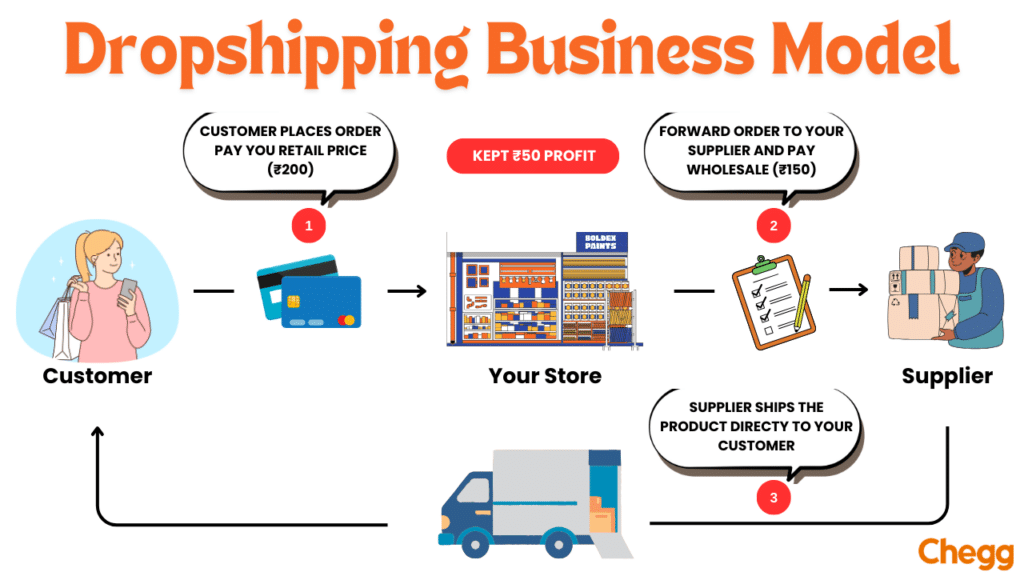
Dropshipping is a retail fulfillment method where the seller doesn’t keep the products they sell in stock. Instead, when a customer orders, the seller purchases the item from a third-party supplier or manufacturer, who then ships the product directly to the customer. Here’s how it typically works:
dropshipping in india business model
  1. Set Up an Online Store: The seller creates an online store or uses a marketplace to showcase products they want to sell.
  2. Partner with Suppliers: The seller identifies reliable, best dropshipping suppliers in India who will handle inventory and shipping.
  3. Customer Places an Order: The order details are forwarded to the supplier when a customer purchases a product from the seller’s store.
  4. Supplier Ships the Product: The supplier packages and ships the product directly to the customer, often without including any branding from the supplier.
  5. Profit Margin: The seller earns the difference between the customer’s and supplier’s payment for the product.

Dropshipping is popular because it requires less upfront investment and inventory management. However, it has challenges such as finding trustworthy suppliers, managing shipping delays, and handling customer service.

Earn Online with Chegg No Investment Required

Best Dropshipping Platforms for Indian Entrepreneurs

Choosing the right platform is critical for the success of your dropshipping business. Here are some of the best options available:

PlatformFeatures
ShopifyEasy setup, good for beginners
WooCommerceCustomizable, requires WordPress
Amazon DropshippingLarge customer base, higher competition
Flipkart DropshippingTrusted Indian marketplace

Each platform caters to different needs, so choose one that aligns with your goals for dropshipping in India for beginners.

1. Integration with Indian Payment Gateways

Most of these platforms integrate well with popular Indian payment gateways. Here are some options:

  • Razorpay
  • PayTM
  • CCAvenue
  • PayU
  • Instamojo

Choose a payment gateway that offers competitive rates and supports multiple payment methods (credit/debit cards, UPI, net banking, etc.).

2. Considerations for Indian Dropshippers

When choosing a platform, consider:

  • Ease of Use: If you’re new to e-commerce, prioritize user-friendly platforms.
  • Mobile Responsiveness: Many Indian customers shop on mobile devices.
  • Language Support: Consider platforms that support multiple Indian languages.
  • SEO Features: Good SEO can help you attract more customers.
  • Customer Support: Check if the platform offers support during Indian business hours.

Remember, the best platform for Drop shipping in India depends on your specific needs, technical expertise, and budget. Don’t hesitate to explore a few options before deciding!

Types of Business Models for Dropshipping in India

Now that you know what dropshipping is. Let’s know the different types of dropshipping businesses you can choose from in India.

1. Business-to-Consumer (B2C) Dropshipping

In B2C dropshipping, businesses sell products to everyday customers through online stores. Think of it like an online shop where you can buy clothes, gadgets, or health products.

  • Examples: Online fashion retailers, electronics stores, or health products websites.
  • Advantages:
    • Direct customer engagement.
    • Greater control over branding and marketing.

2. Business-to-Business (B2B) Dropshipping

In this model, one business sells products to another company, often in bulk. It’s like a wholesaler supplying goods to a retail store, helping companies to stock up without holding inventory themselves.

  • Examples: Wholesale supply companies or platforms targeting retailers.
  • Advantages:
    • Potential for larger order sizes.
    • Building long-term relationships with other businesses.

3. Print-on-Demand Dropshipping

Print-on-demand lets you create custom-designed products, like T-shirts or mugs, that are only made when someone orders them. You don’t keep stock; every order is printed fresh for the buyer.

  • Examples: Custom apparel stores and personalized gift shops.
  • Advantages:
    • Unique product offerings that can significantly differentiate a brand.
    • No need for upfront inventory investment.

4. Niche Dropshipping

Niche dropshipping focuses on a specific type of product or customer group, like eco-friendly items or pet supplies. This helps you stand out and attract customers who are passionate about those particular products.

  • Examples: Eco-friendly products, pet supplies, or handmade crafts.
  • Advantages:
    • Less competition compared to general stores.
    • Ability to build a loyal customer base.

5. Global Dropshipping

Global dropshipping involves selling products from international suppliers to customers in India or other countries. This allows you to access various products, often at lower prices.

  • Examples: E-commerce stores that source products from China, the US, or Europe.
  • Advantages:
    • Access to a wider variety of products.
    • Potentially lower prices depending on global suppliers.

6. Local Dropshipping

In local dropshipping, businesses work with nearby suppliers to sell products within a specific region. This means faster shipping times and supporting local merchants and products.

  • Examples: Regional fashion boutiques or local handmade crafts.
  • Advantages:
    • Faster shipping times due to proximity.
    • Support for local businesses and products.

7. Crowdfunding Dropshipping

Crowdfunding dropshipping uses platforms like Kickstarter to see if people want a product before you start selling. It helps you test ideas with potential customers and gather funds before production.

  • Examples: Innovative gadgets or unique products introduced on platforms like Kickstarter or Indiegogo.
  • Advantages:
    • Validating market interest before investing in inventory.
    • Building a community around a product.

8. Subscription-Based Dropshipping

Subscription-based dropshipping allows customers to receive products regularly. It creates a steady income stream and helps keep customers coming back for more.

  • Examples: Monthly beauty boxes, snack subscriptions, or health supplements.
  • Advantages:
    • Predictable revenue stream.
    • Opportunity for strong customer retention.

What Are the Pros and Cons of Starting a Dropshipping Business?

dropshipping in india

Pros

  1. Low Startup Costs: No need to invest heavily in inventory upfront. You only purchase products when you have orders.
  2. Easy to Start: You don’t need a warehouse or inventory management; you just need a website and suppliers.
  3. Flexible Location: You can run your dropshipping business from anywhere as long as you have internet access.
  4. Wide Selection of Products: You can offer a wide range of products without worrying about managing stock.
  5. Scalability: It’s easier to scale up as you don’t need to handle physical products. Your suppliers take care of shipping and logistics.

Cons

  1. Low Profit Margins: Since you’re not buying in bulk, the cost per item is higher, which can limit your profit margins.
  2. Inventory Issues: You don’t control the inventory, so you might face stock issues if your suppliers run out of products.
  3. Shipping Complexities: You might have to deal with different shipping times and costs if you work with multiple suppliers.
  4. Limited Control: Quality control, packaging, and shipping are all in the hands of your suppliers, which can lead to inconsistencies.
  5. Highly Competitive: With low barriers to entry, many people get into dropshipping, leading to intense competition.

Despite these challenges, many people find that the benefits of dropshipping outweigh the drawbacks, especially when starting in e-commerce.

How Much Does It Cost to Start Dropshipping in India?

The rise of e-commerce in India makes dropshipping in India a profitable venture, with access to global suppliers and a growing online market. Starting a dropshipping business in India is relatively low-cost compared to traditional retail businesses. Here’s a breakdown of the typical expenses you might incur:

  1. E-commerce Platform: Setting up an online store is essential. Platforms like Shopify or WooCommerce charge monthly fees, ranging from ₹1,000 to ₹3,000, depending on your chosen features.
  2. Domain Name and Hosting: To run your website, you’ll need a domain name (around ₹500 to ₹1,000 per year) and hosting services (₹2,000 to ₹5,000 annually).
  3. Marketing and Advertising: To attract customers, you must invest in digital marketing. This could include social media ads, Google Ads, or influencer marketing, costing anywhere from ₹5,000 to ₹20,000 per month, depending on your budget.
  4. Product Costs: Since dropshipping involves purchasing products only after a customer orders, you don’t need to invest in inventory upfront. However, you should have some funds ready to pay suppliers for initial orders.
  5. Payment Gateway Fees: Payment gateways like Razorpay or PayPal charge a small percentage (usually 2-3%) of each transaction as a processing fee.
  6. Miscellaneous Costs: These could include tools for email marketing, analytics, or customer support, which might add ₹1,000 to ₹3,000 monthly.

You can start a dropshipping business in India with an initial investment of around ₹10,000 to ₹30,000, depending on the scale and tools you choose. It’s a flexible and scalable business model, making it an attractive option for aspiring entrepreneurs.

Legal Requirements for Dropshipping in India

Before starting your business, it’s essential to understand the legal aspects of dropshipping in India. While no specific law governs drop shipping, you must comply with general business regulations.

Key Legal Considerations

  1. GST Compliance :
    • If your annual turnover exceeds ₹40 lakhs (₹20 lakhs for North-Eastern states), you must register for GST. Even if your turnover is below this limit, registering for GST is recommended to build trust with suppliers and customers.
  2. Tax Compliance :
    • Pay taxes on profits earned through your dropshipping business.
  3. Business Registration :
    • While not mandatory, registering your business under the Ministry of Corporate Affairs (MCA) gives you legal recognition and access to benefits like bank loans.
  4. Supplier Agreements :
    • Always sign supplier agreements to avoid disputes over payments, returns, or shipping delays.
  5. Consumer Protection Laws :
    • Ensure transparency in pricing, returns, and refunds.

Adhering to these legal requirements ensures your dropshipping business in India operates smoothly and avoids penalties.

Top Indian Suppliers for Dropshipping

When running a successful dropshipping business in India, choosing the right suppliers is one of your most important decisions. A reliable supplier ensures that your customers receive high-quality products on time, which keeps them happy and boosts your reputation. Here is the list of the best dropshipping suppliers in India:

  1. Flipkart Wholesale: If you want to source branded and authentic products, Flipkart Wholesale is an excellent option. They offer various items across categories like electronics, fashion, and home goods. It’s a great platform for accessing high-demand products that customers trust.
  2. Indiamart: Indiamart connects you with a vast network of suppliers and manufacturers offering everything from clothing and accessories to electronics and home decor. This platform allows you to find suppliers across almost every product category, making it a versatile choice for those new to dropshipping in India.
  3. Amazon Seller Central: Through Amazon’s vast network of sellers, you can find a variety of products that cater to different customer needs. Amazon’s trusted name and fast shipping options can help you provide a seamless experience for your customers.

When selecting suppliers for your dropshipping business in India, always prioritize a few key factors:

  • Reliability: Ensure the supplier has a good track record for timely delivery and product quality.
  • Delivery Speed: Faster shipping keeps customers satisfied and encourages repeat purchases.
  • Product Quality: Low-quality items can lead to returns and negative reviews, so this should never be compromised.

By partnering with reliable suppliers like those mentioned above, you can set a strong foundation for your dropshipping business and build a loyal customer base.

Conclusion

Dropshipping in India offers immense opportunities for aspiring entrepreneurs. With low startup costs, flexibility, and access to global markets, starting your own online business has never been easier. You can build a thriving dropshipping venture by following the steps outlined in this guide and staying committed to learning and improving.

Remember to focus on providing value to your customers, optimizing your content for search engines, and continuously analyzing your performance. Whether you’re just starting or scaling your existing business, dropshipping in India can transform your entrepreneurial dreams into reality.

With our Business Guide, discover Unique Business Ideas, build a successful business from scratch, and learn effective business growth strategies.

31 Winning Dropshipping Products That Can Skyrocket Your Income in 2025
by Gagandeep Khokhar
31 Winning Dropshipping Products That…
by Gagandeep Khokhar
How to Start an Online Reseller Business & Earn from Day One
by Samiksha Samra
How to Start an Online Reseller Busin…
by Samiksha Samra
Startup in India: 6 Powerful Steps to Launch & Succeed in 2025
by Gagandeep Khokhar
Startup in India: 6 Powerful Steps to…
by Gagandeep Khokhar

Read More:

Frequently Asked Questions (FAQs)

Is Dropshipping legal in India?

Yes, dropshipping is legal in India. However, you must comply with business registration, taxation (like GST), and consumer protection laws. Ensure you partner with reliable suppliers and avoid selling prohibited or counterfeit products.

Who is the best dropshipper in India?

The best dropshipper in India is Baapstore, known for its vast product range, reliable suppliers, and automated tools. Other top options include GlowRoad, Shop101, and TradeIndia, offering affordable, beginner-friendly dropshipping solutions for Indian entrepreneurs.

Can I earn 1 lakh from Dropshipping?

Yes, earning ₹1 lakh per month is achievable with the right strategy. Focus on trending products, effective marketing (SEO, ads, influencers), and excellent customer service. Building a strong brand and targeting the right audience are key to scaling your business.

Who is the richest Dropshipper in India?

Manjeet Singh Sangha, also known as Desirichkid, is a successful dropshipper in India.

Which is the best Indian Dropshipping suppliers for Shopify?

Some of the best Indian dropshipping suppliers for Shopify include vFulfill, Printrove, Syncee, and Blinkstore. These suppliers offer a wide range of products and seamless integration with Shopify.

How much money is needed for Dropshipping in India?

The initial investment for dropshipping India can be as low as ₹10,000 to ₹30,000, depending on the platform, product sourcing, and marketing expenses.

Can I start Dropshipping without investment?

Starting a dropshipping business with no money is challenging but not impossible. You can use free eCommerce platforms, promote products via social media, and rely on organic traffic to drive sales. However, investing in marketing and a domain name can significantly enhance your chances of success.

Is dropshipping a good career in India?

Income from dropshipping in India varies depending on your niche, supplier reliability, marketing efforts, and order volume. On average, successful dropshippers can earn anywhere between ₹30,000 to ₹1,50,000 per month, with some scaling even higher through strategic optimization and product selection.

How do I start dropshipping?

To start dropshipping, choose a niche, set up an online store using platforms like Shopify or WooCommerce, find reliable suppliers, list their products, and promote your store through digital marketing. When a customer places an order, your supplier ships the product directly to them.

Authored by, Samiksha Samra
Digital Content Writer

Samiksha is a writer with a passion for sharing ideas and a knack for detail. She loves turning concepts into meaningful, engaging content. With a strong background in research and content strategy, she crafts clear, easy-to-understand narratives that resonate with readers. Her curiosity drives her to explore new subjects, ensuring every piece she creates is both insightful and impactful.

Editor's Recommendations