Learn the step-by-step process of publishing a research paper. Start with selecting a topic, then move on to conducting research. After that, focus on writing and formatting your manuscript.
Discover how to choose the right journal. Prepare your submission and respond to peer review feedback to achieve successful publication.
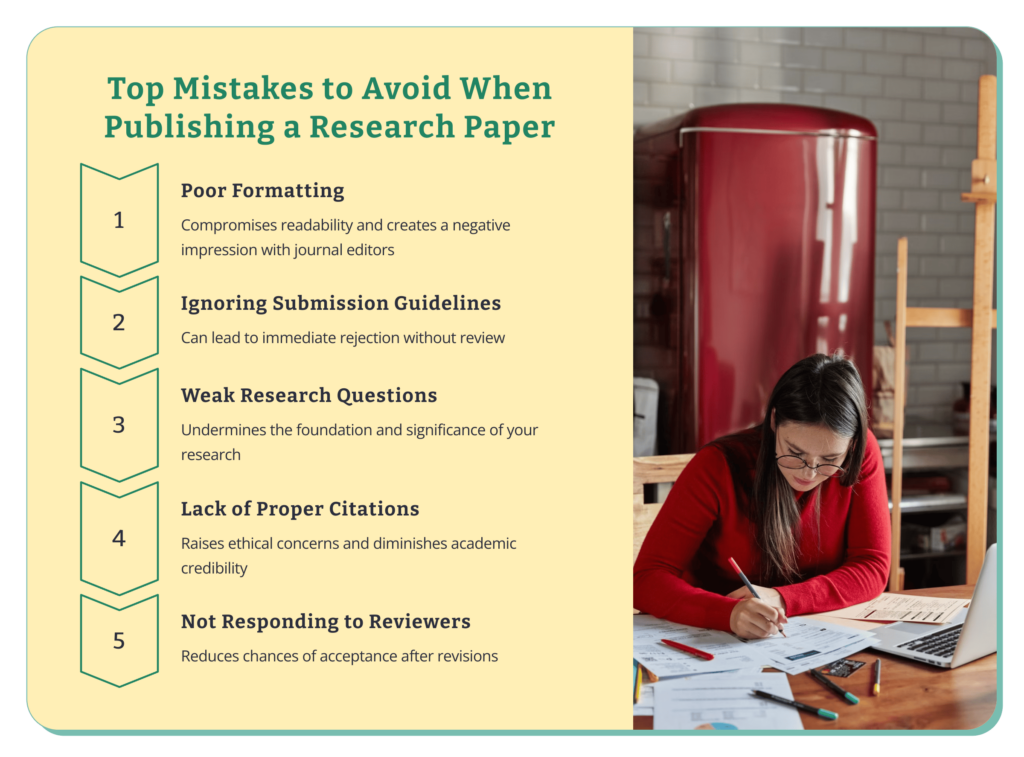
Get expert tips to avoid common mistakes. Improve your paper’s credibility and increase your chances of being published.
Table of Contents
Have you ever thought about how important discoveries end up in scientific journals? Publishing a research paper is a big step for any student, scholar, or professional who wants to share their work with the world. Although the process can seem intimidating at first, knowing each step can help you turn your research goals into a published reality.
In this guide, you will learn how to change your ideas and experiments into a polished paper that is ready for publication. We will go through selecting the right journal and dealing with peer review. We will provide practical tips to help you succeed. Whether you’re a first-time author or trying to improve your academic profile, let’s uncover the keys to publishing your research with confidence.
How to Publish a Research Paper: Step-by-Step Guide
Publishing a research paper involves several steps, from selecting a suitable journal to the final production and post-submission processes. Here’s a detailed explanation of how to publish a research paper.
Step#1: Selecting a Journal
Choosing the right journal is a crucial step in the publication process, significantly affecting your research’s visibility, reach, and impact. To ensure your work finds the best platform, consider the following factors:
Relevance: Select journals that specialize in your research field. This ensures your work is targeted at the right audience, maximizing its relevance and potential influence.
Impact Factor: Review the journal’s impact factor, which measures its academic credibility and reputation. A higher impact factor often indicates a well-regarded journal with a broad readership.
Scope and Aims: Carefully examine the journal’s scope and aims to determine if they align with your research. Submitting to a journal with a matching focus increases the likelihood of acceptance and relevance to its audience.
Target Audience: Identify the primary readership you aim to engage, whether it’s fellow academics, industry professionals, or an interdisciplinary audience. Choosing a journal that caters to your intended audience enhances the visibility and impact of your research.
Publication Frequency: Consider how frequently the journal publishes. A journal with frequent publications may offer a quicker turnaround from submission to publication, which is essential if timely dissemination of your findings is critical.
Using a journal finder can help you quickly identify the most suitable academic journals for your research, ensuring your paper reaches the right audience.
Step#2: Preparing Your Paper
Once you’ve selected the right journal, the next crucial step is preparing your paper to align with the journal’s guidelines. Ensuring your submission is professional and compelling involves careful attention to several key elements:
Title and Abstract: Your title should be clear, concise, and informative, capturing the essence of your research. The abstract is equally critical, providing a succinct summary of your objectives, methods, key findings, and implications. It should entice readers and reviewers by highlighting the significance of your study.
Introduction: The introduction should clearly define the research problem and objectives, establishing the context and importance of your study. A strong introduction explains the gap your research addresses and why it matters, setting a solid foundation for the rest of the paper.
Methodology: Transparency and reproducibility are crucial in academic writing. Provide a detailed account of your research design, data collection methods, and analysis techniques. This section should be comprehensive enough for other researchers to replicate your study if needed.
Results: Present your findings in a clear, organized manner. Use tables, graphs, or figures to enhance the presentation of your data, making it more accessible and engaging for the reader. Ensure that the results are objective and directly address the research questions posed.
Discussion and Conclusion: Analyze your results in the discussion section, interpreting their significance and how they contribute to your field. The conclusion should succinctly summarize the key contributions and implications of your study, suggesting potential areas for future research.
References: Properly cite all sources used in your research, strictly adhering to the citation style required by the journal. Accurate referencing not only adds credibility to your paper but also acknowledges the work of other researchers.
Step#3: Formatting and Submitting the Paper
Adhering to the journal’s formatting guidelines is a crucial step in ensuring your submission is professional and aligns with the journal’s standards. Proper formatting demonstrates your attention to detail and respect for the journal’s requirements, which can positively impact the review process. Key formatting requirements typically include:
Font and Spacing: Journals often specify preferred font styles (e.g., Times New Roman or Arial), font sizes (commonly 10-12 points), and line spacing (such as single or double-spaced). Following these specifications ensures consistency and readability.
Margins and Page Limits: Exact margin settings and restrictions on page length are commonly outlined in the guidelines. Adhering to these requirements helps maintain a standardized format across submissions and ensures your paper stays within the acceptable length.
Citations and References: Properly formatted in-text citations and reference lists are essential. Journals usually require adherence to specific citation styles, such as APA, MLA, or Chicago. Consistency in citation formatting is crucial for the credibility and professionalism of your paper.
Figures and Tables: Clear guidelines are often provided for formatting and labeling visual elements like figures and tables. Ensure these elements are high-quality, correctly labeled, and referenced in the text, as they play a significant role in presenting your data effectively.
Once your paper is meticulously formatted, submit it through the journal’s online submission system. This process typically involves creating an account and providing essential metadata, such as the title, author details, abstract, and keywords. Some journals may also request a cover letter or supplementary materials.
Step#4: Peer Review Process
The peer review process is a critical quality control mechanism where experts in your field, known as referees, independently evaluate your research to ensure its validity, significance, and originality. This thorough assessment ensures that your work aligns with the journal’s purpose and scope, employs robust methodologies, and offers unique contributions that are not easily replicated.
Reviewers assess your paper based on several key criteria:
Originality and Significance: Reviewers examine the novelty of your research and its potential impact on the field. They assess whether your work introduces new insights, theories, or applications that advance academic discourse.
Methodological Rigor: The accuracy and reliability of your research methods are scrutinized to ensure that your study design, data collection, and analysis are sound. Robust methodologies are essential for producing credible and reproducible results.
Clarity and Organization: The coherence and readability of your writing are evaluated. Reviewers consider how well you present your arguments, structure your paper, and explain your findings. Clear, well-organized writing enhances the accessibility and understanding of your research.
Ethical Standards: Compliance with ethical guidelines is a crucial aspect of the review process. Reviewers check for adherence to ethical norms, such as proper handling of data, transparency, and appropriate treatment of subjects involved in the study.
Based on their evaluation, reviewers provide constructive feedback, suggesting improvements to enhance the quality of your paper. They then recommend whether your paper should be accepted, revised, or rejected. Addressing reviewer comments thoughtfully and making the necessary revisions is a vital part of the process, ensuring that your research meets the highest academic standards.
Production and Post-Submission Process
The production and post-submission process of a research paper involves several critical stages, each ensuring the quality, accuracy, and dissemination of scientific knowledge. Here’s an overview of these key steps:
1. Manuscript Preparation
After completing the research, authors meticulously organize their manuscripts in line with the target journal’s guidelines. This includes structuring it into sections such as the introduction, methodology, results, and conclusion. Authors must also adhere to specific formatting rules, citation styles, and word limits, ensuring the paper meets the journal’s requirements for submission.
2. Peer Review
Upon submission, the manuscript enters a rigorous peer review process where experts evaluate its validity, originality, methodology, and overall significance. This assessment helps ensure the research’s credibility and relevance, with reviewers providing detailed feedback to identify areas for improvement.
3. Revision and resubmission
The authors address the reviewers’ suggestions, which may involve conducting additional experiments, re-analyzing data, or clarifying certain sections. Once revisions are complete, the manuscript is resubmitted for further evaluation. This iterative process helps refine the paper, enhancing its quality and clarity.
4. Acceptance and copyediting
If the revised manuscript meets the journal’s standards, it is accepted for publication. The paper then undergoes copyediting, where language, grammar, and formatting are polished to ensure clarity and professionalism. Authors are provided with proofs to review, allowing them to make final corrections and confirm the accuracy of the content.
5. Post-publication
Following publication, researchers actively promote their work by presenting it at academic conferences, sharing it on social media, and collaborating on future studies. Engaging with readers, peers, and the broader academic community fosters discussions and amplifies the impact of their findings, contributing to the advancement of knowledge in their field.
Writing a research paper can be difficult, especially if you are unfamiliar with the procedure. You can, however, generate a high-quality paper. thus paper may successfully explain your study findings with careful organization. A well-designed research paper template can help you stay organized and focused, making it easier to follow academic writing standards. Here you will find some helpful hints for writing and how to publish a research paper.
1. Choose your area of interest
Selecting a topic that excites you and aligns with your academic or career goals is the first step in the research process. A compelling topic not only makes the research journey more enjoyable but also motivates you to invest time and effort into delivering a well-researched and thoughtful paper. When you are passionate about your subject, it reflects in the quality of your work and inspires you to delve deeper into the subject matter.
2. Conduct a literature review
A thorough literature review is essential for understanding the existing body of knowledge related to your topic. By reviewing scholarly articles, books, and other research materials, you can identify gaps in the current research, which your work can aim to fill. This step also helps you build a strong theoretical framework and positions your research within the broader academic discourse. A well-conducted literature review demonstrates your familiarity with the field and establishes the relevance of your study.
3. Develop a clear research question and hypothesis
After gaining a comprehensive understanding of your topic through the literature review, the next step is to formulate a clear and focused research question. This question should guide your entire study and help you maintain a sharp focus on your objectives. Alongside the research question, develop a hypothesis that predicts the expected outcomes of your study. A well-defined research question and hypothesis provide a solid foundation for your investigation and analysis.
4. Use proper citations and references
Using proper citations and references is crucial in academic writing. It not only gives credit to the original authors but also enhances the credibility of your paper. Ensure you use a recognized citation style, such as APA, MLA, or Chicago, and consistently apply it throughout your paper. Accurate citations and a comprehensive reference list demonstrate your attention to detail and respect for academic integrity. Additionally, using a plagiarism detection tool can help you avoid unintentional plagiarism and ensure the originality of your work.
5. Seek feedback and conduct peer review
Before submitting your paper, it is vital to gather feedback from mentors, peers, or professors. Their constructive criticism can help you refine your arguments, clarify your ideas, and strengthen the overall quality of your paper. Engaging in peer review exchanges with other researchers also provides valuable insights and helps you see your work from different perspectives. This process enhances the rigor of your research and increases its chances of acceptance by academic journals or conferences.
6. Revise and edit your paper
Revision and editing are crucial steps in the research process. After completing your initial draft, take time to review and revise your paper to correct any grammatical errors, improve clarity, and ensure it meets formatting requirements. Pay attention to the flow of your arguments, the coherence of your writing, and the accuracy of your data. Utilize proofreading tools or seek assistance from colleagues to identify mistakes you might have overlooked. A polished and well-edited paper reflects your commitment to quality and attention to detail.
7. Prepare for submission
Once your paper is thoroughly revised and edited, it is time to prepare it for submission. Ensure that your paper adheres to the guidelines provided by the target journal or conference. These guidelines typically include formatting specifications, word limits, and required sections such as abstracts or keywords. Carefully following these guidelines demonstrates your professionalism and increases the likelihood of your paper being accepted for publication.
8. Utilize online platforms
Online platforms like ResearchGate offer valuable opportunities for researchers to share their work, collaborate, and network with other professionals in their field. By uploading your research to these platforms, you can increase your visibility and engage with a broader academic audience. These platforms also provide access to a vast repository of scientific articles and insights, which can enrich your research and keep you updated on the latest developments in your field.
9. Stay up-to-date with free articles
Staying informed about the latest research is crucial for producing high-quality work. Explore open-access journals and platforms such as arXiv, bioRxiv, or other preprint servers to access free articles. These resources provide a wealth of up-to-date information and can help you incorporate recent findings into your research. Staying current with the latest studies ensures that your work remains relevant and contributes meaningfully to the academic community.
Publish your Research Paper with Ease!
Publishing a research paper is essential for advancing your career and contributing to academic knowledge. To understand how to publish a research paper, you must select the right journal, prepare a well-structured manuscript, and adhere to submission guidelines. Key steps include peer review, revisions, and final approval, ensuring quality and credibility. By following best practices like thorough research, proper citations, and seeking feedback, you can successfully navigate the publishing process and enhance your work’s impact in your field.
Evaluate numerous career choices to choose the right career path for yourself. Dive in to our guide on Career Advice.
Publishing a research paper can seem harsh, but you can do it with the right approach and preparation. By carefully following each step, from picking a relevant topic to thoughtfully responding to reviewer feedback, you can confidently move through the publication process.
Remember that every published paper boosts your academic credentials and helps the broader scientific community. Stay persistent, keep improving your work, and don’t let setbacks discourage you. Your research can potentially make a real impact, so take that next step and share your findings with the world!
Frequently Asked Questions (FAQ’s)
How do I publish my research paper?
To publish your research paper, select a suitable journal. Format the paper according to its guidelines. Submit it online. Go through peer review. Address feedback from reviewers. Complete the final acceptance and publication process.
Is it free to publish a research paper?
Some journals offer free publication of research papers. However, many journals, particularly open-access ones, charge publication or article processing fees. These costs vary depending on the publisher and the publication model.
Where can I publish my research paper and get paid?
You can publish and earn money in well-known journals, magazines, or platforms that provide honoraria or royalties. Examples include IEEE Spectrum, Nature Careers, and paid research publications specific to certain industries. Payment varies based on the topic, quality, and publisher policy.
What is required to publish a research paper?
To publish a research paper, you need original research, a well-organized manuscript, and to follow the target journal’s guidelines. You also need proper citations and to submit your work through the journal’s review process.
Can I publish my research paper without a PhD?
Yes, you can publish a research paper without a PhD. Your work just needs to be original, thoroughly researched, and meet the publication standards of the journal or conference you aim for.
What are the 7 steps of the publishing process?
The seven steps of the publishing process are: 1. Research and Writing 2. Selecting a Journal 3. Formatting the Manuscript 4. Submission 5. Peer Review 6. Revisions 7. Acceptance and Publication
Authored by, Gagandeep Khokhar Career Guidance Expert
Gagandeep is a content writer and strategist focused on creating high-performing, SEO-driven content that bridges the gap between learners and institutions. He crafts compelling narratives across blogs, landing pages, and email campaigns to drive engagement and build trust.