
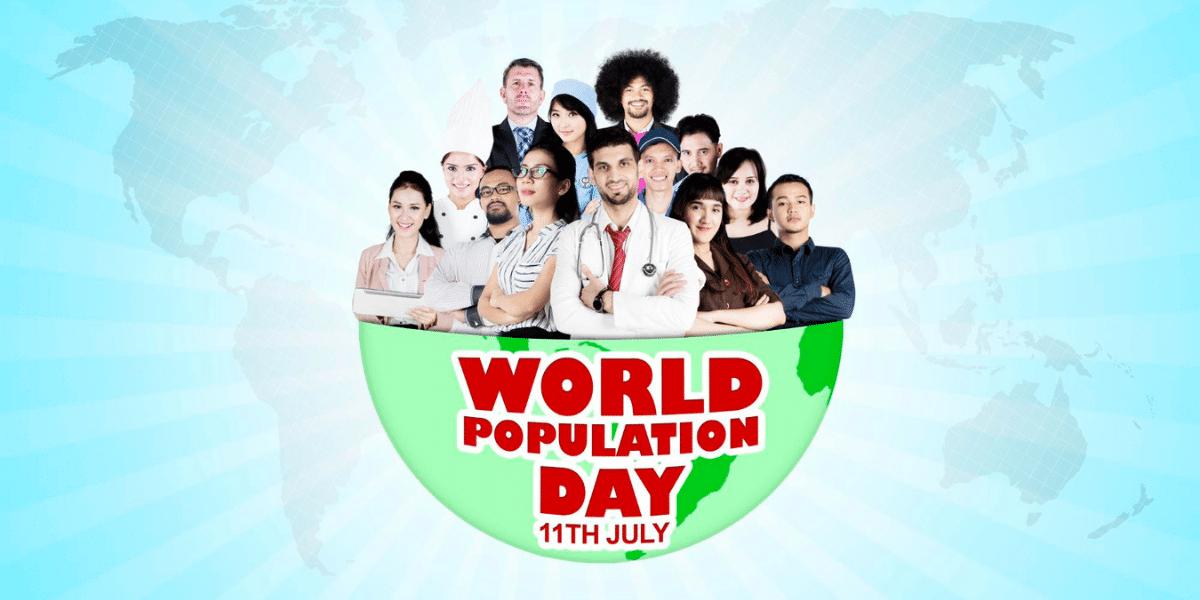
World Population Day was established in 1989 by the Governing Council of the United Nations Development Programme to raise awareness about population issues. It emerged from the global interest generated by the “Day of Five Billion” on July 11, 1987.
In December 1990, the United Nations General Assembly, through resolution 45/216, decided to observe World Population Day annually, emphasizing its connection to environmental and developmental concerns.
The first World Population Day was observed on July 11, 1990, in over 90 countries. Since then, the day has been commemorated by various UNFPA country offices, organizations, and institutions in partnership with governments and civil society.
As per Worldometer, The global population currently stands at 8,223,240,530 and continues to grow.
World Population Day was established by the United Nations Development Programme in 1989, following the global attention sparked by “Five Billion Day” on July 11, 1987, when the world’s population was estimated to have reached five billion. The purpose of the day is to highlight the critical importance of population issues and their connection to environmental sustainability and development.
Since its inception, World Population Day has focused on raising awareness and fostering action on key population-related concerns, including family planning, gender equality, poverty reduction, maternal health, and human rights. Over the years, it has emphasized both the challenges and opportunities presented by demographic changes, encouraging global collaboration to address these issues.
World Population Day aims to raise awareness about reproductive health issues, which are a leading cause of illness and death among pregnant women globally. The day encourages people to engage in discussions on topics like family planning, gender equality, maternal and child health, poverty, human rights, sexuality education, contraceptive use, and adolescent pregnancy.
It highlights the importance of safe, voluntary family planning as a human right, essential for gender equality and women’s empowerment. Accessible family planning helps reduce poverty, improve health, and drive economic growth, making it crucial for sustainable development. The celebration also focuses on addressing sexuality-related issues among youth, particularly those aged 15-19.
World Population Day serves as a broad platform where governments, organizations, and individuals come together. On this day, people unite to discuss and work on strategies, share their knowledge, and cooperate to address issues related to population. It offers an opportunity to highlight success stories, share the best ways of dealing with concerns like overpopulation, gender equality, poverty, and sustainable development, and exchange ideas.
Often, educational programs, seminars, workshops, and media campaigns are organized to spread awareness about population-related topics. These events help individuals understand how population growth affects different aspects of society.
World Population Day is on 11 July 2025 and the theme for World Population Day 2025 is “Empowering young people to create the families they want in a fair and hopeful world.”
This theme highlights the needs of the largest youth generation ever, emphasizing reproductive rights, gender equality, and access to education, health, and opportunities so young people can make informed choices and shape a sustainable future .
World Population Day 2025 was observed on July 11, with global events organized by the UN, UNFPA, NGOs, and governments. Activities included awareness campaigns, public lectures, youth forums, and community outreach focusing on reproductive rights, gender equality, and sustainable family planning. In Madurai, over 500 participants—including health workers, students, and officials—joined an awareness rally to advocate for family planning and prevention of child marriage.
A UN message by Secretary‑General António Guterres celebrated the largest youth generation ever, urging countries to invest in education, health, decent work, and reproductive rights under the theme “Empowering young people to create the families they want in a fair and hopeful world”.
Internationally, notable efforts included Jamaica unveiling a new Population & Sustainable Development Policy and forums in Shanghai emphasizing youth empowerment in the context of declining fertility.
The world population took centuries to reach 1 billion but grew sevenfold in just 200 years. By 2011, it hit 7 billion; in 2021, it reached nearly 7.9 billion. Projections suggest 8.5 billion by 2030, 9.7 billion by 2050, and 10.9 billion by 2100.
This rapid growth is driven by higher life expectancy, more people surviving to reproductive age, and shifts in fertility rates. In the 1970s, women had an average of 4.5 children; by 2015, that dropped below 2.5. Global life expectancy has risen from 64.6 years in the ’90s to 72.6 years by 2019.
Urbanization is accelerating too, with more people now living in cities than in rural areas. By 2050, 66% of the world’s population will reside in cities.
These megatrends influence everything from economic growth and poverty to access to health, education, food, and energy. Policymakers must understand these shifts to ensure sustainable development for future generations.
| Domain | Status & Insight |
|---|---|
| Demographics | Youngest large-scale workforce; potential for growth |
| Education & Skills | Widespread gaps in basic, digital, and job-related skills |
| Employment | High youth unemployment; overdependence on informal jobs |
| Mental Health | Rising suicide rates; poor emotional resilience |
| Soft-Skills | Personality and interpersonal skills underdeveloped |
| Social Challenges | Substance abuse, inflation, and digital addiction increasing |
| Government Efforts | Focus on skills, entrepreneurship & community platforms |
The day provides us with an opportunity to contemplate the intricate issues of global population growth and sustainable development. Here, we present insightful World Population Day quotes from influential figures, offering their wisdom on these critical topics:
Some of the insightful slogans on World Population Day are:
This slogan on World Population Day will emphasize the importance of responsible family planning and population control. It encourages us to embrace the idea of sustainable growth, recognizing that each birth should be a conscious choice.
This slogan champions reproductive rights and informed decision-making. It inspires individuals to take control of their reproductive health, emphasizing that the power to shape one’s future begins with the choices they make.
This slogan highlights the positive outcomes of controlled population growth. It advocates for the long-term benefits of balanced demographics, where resources can meet the needs of the population.
These slogans of this day encapsulate the spirit of the day, encouraging responsible choices, empowerment, and the pursuit of a balanced and prosperous future for all.
Dear audience,
This empowerment extends to entire communities through education. It’s crucial to understand that family planning transcends personal choices; it signifies a shared responsibility. Informed decisions significantly contribute to achieving a balanced and sustainable global population.
Dear audience,
Achieving a balance in population growth is an essential aspect of this vision. Across the globe, there exist inspiring examples of successful models for sustainable population management.
Dear audience,
The easy access to reproductive healthcare should not only be a privilege. It must also represent a fundamental human right. They should make such decisions without facing discrimination or encountering obstacles.
On July 11th, every year, we join together to celebrate World Population Day. This special date holds historical significance. World Population Day underscores our collective commitment to addressing population-related challenges. This day reminds us to plan for a fair and lasting future. People and governments worldwide commit to a world where everyone’s well-being is important, and their voices are heard in discussions about our planet’s future.
Essays and speeches have a mass impact on the minds of the people of the world. Below are some examples of World Population Day essays:
World population dynamics have far-reaching effects on societies. Rapid growth can strain resources, causing poverty and environmental issues. However, it also brings innovation and diversity. Sustainable development is crucial, with strategies like family planning and resource management being vital.
Education empowers people to make informed decisions about family planning. It leads to smaller, healthier families and fosters development. Girls’ and women’s education is especially impactful, breaking the cycle of high population growth for a more sustainable future.
These are some of the insightful essay choices in brief.
World Population Day has evolved over the years, each annual theme reflecting the ever-changing global population concerns. These themes serve as a lens through which we address various facets of this complex issue. Throughout its history, World Population Day themes have spanned from
The World Population Day theme tackles specific challenges, from promoting reproductive rights to empowering marginalized groups. They highlight how family planning contributes to economic development and gender equality. By focusing on these themes, the day becomes a catalyst for awareness and action, offering a nuanced understanding of the multifaceted global population concerns and inspiring initiatives that address them comprehensively.
World Population Day serves as a crucial reminder of our collective responsibility for achieving balanced global growth. Governments, organizations, and people like us have jobs to do. Governments should make rules that help families plan and get an education. This way, everyone can make smart choices about their families. Organizations also help communities that need it. World Population Day teaches us that when we work together and take care of our planet and its people, we can make the world a better and fairer place for everyone. It’s like making our world a better team for a brighter future.

World Population Day is a crucial global event that goes beyond raising awareness—it serves as a catalyst for change. Through evolving themes, it highlights the challenges and opportunities of population growth, inspiring action, dialogue, and collective efforts to address complex population issues worldwide.
Read More:-
World Population Day is celebrated on the 11th of every July.
The World Population Day is celebrated to spread awareness about rising global population growth and control.
The father of Population Day is Dr KC Zachariah, who took the initiative to start the celebration of World Population Day.
India is the largest populated country in the world.
World Population Day 2025 focuses on the largest-ever generation of young people. The theme, “Empowering young people to create the families they want in a fair and hopeful world,” emphasizes providing youth with the rights, tools, and opportunities to shape their futures.
World Population Day was started on July 11, 1989, by the United Nations.
On World Population Day, we’re reminded that population growth must align with our capacity to provide for everyone. Family planning is essential for sustainable development, and our choices today shape a better world for tomorrow. Let’s pledge to make informed decisions for a sustainable future.
India’s population is equivalent to 17.78% of the total world population. India ranks number 1 in the list of countries (and dependencies) by population.
World Population Day is celebrated to raise awareness about global population issues, reproductive health, and sustainable development challenges.