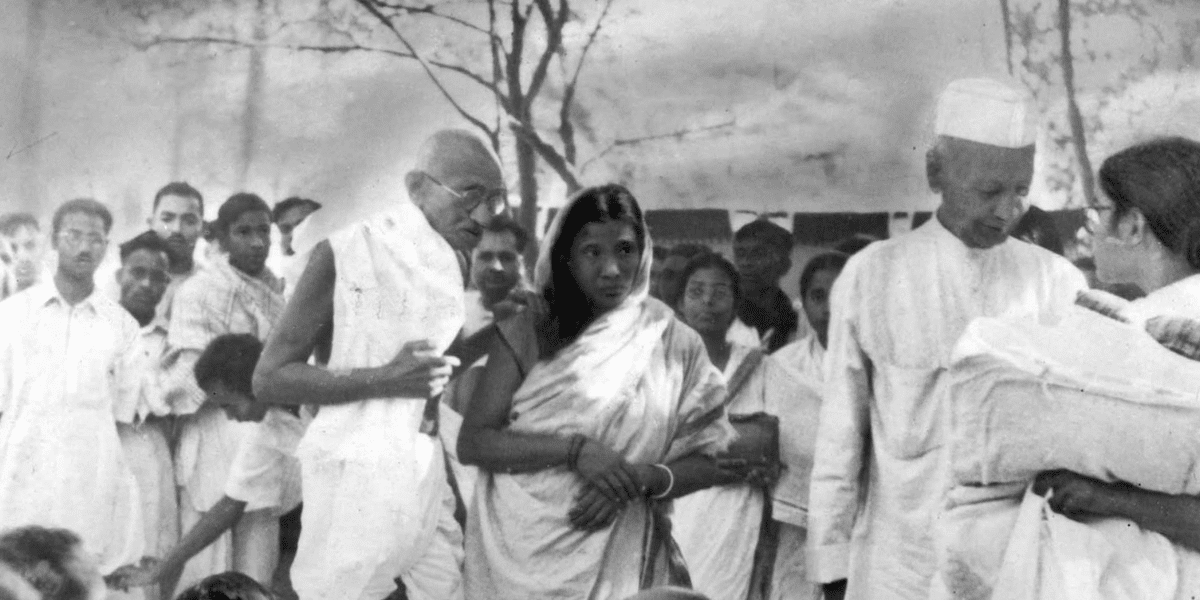
The Non-Cooperation Movement was a significant phase of India’s freedom struggle, launched by Mahatma Gandhi in 1920. It urged Indians to boycott British institutions, titles, goods, and services to resist colonial rule through non-violence. Sparked by events like the Jallianwala Bagh massacre and the Rowlatt Act, it gained massive public support across the country. Although suspended in 1922 after the Chauri Chaura incident, it marked a turning point in uniting Indians for self-rule.
What is Non Cooperation Movement? The non-cooperation movement, initiated on August 1, 1920, by Mahatma Gandhi, aimed to urge Indians to withdraw their cooperation with the British government in hopes of achieving self-governance. Triggered by the Indian National Congress withdrawing support for British reforms post the oppressive Rowlatt Act of March 18, 1919, which curtailed political prisoners’ rights, the movement gained momentum after the Jallianwala Bagh massacre of April 13, 1919.
The Non-Cooperation Movement, initiated by Mahatma Gandhi in 1920, was a widespread protest in India focused on attaining self-governance (Swaraj) through peaceful resistance to British colonial rule. It urged Indians to stop supporting British institutions and to withhold cooperation from the colonial administration. This movement played a crucial role in India’s fight for independence, promoting national unity and representing the first significant instance of nonviolent opposition.
India’s struggle for independence took a new direction in 1920-21 with the rise of two key movements: the Khilafat Movement and the Non-Cooperation Movement. What is Non Cooperation Movement? It was initiated by Mahatma Gandhi in 1920 as a call for mass participation in peaceful resistance against British rule. Gandhi encouraged Indians to boycott British goods, services, and institutions as a way to challenge colonial control. What is Non Cooperation Movement’s purpose? It aimed to unite Indians and weaken the British grip on India through non-violent means. What is Non Cooperation Movement’s significance? It played a crucial role in mobilizing public opinion and advancing the fight for independence.
This movement converged with the Khilafat Movement by late summer, uniting Indians against British institutions, laws, and policies. Gandhi’s prior successes in localized movements like Champaran and Kheda had already established him as a leader, allowing him to mobilize the masses across the nation, marking a new era of nationwide struggle.
| Aspect | Details |
|---|---|
| Leader | Mahatma Gandhi |
| Time Period | 1920-1922 |
| Objective | Resist British rule through non-cooperation |
| Methods | Movement suspended after the Chauri Chaura incident |
| Reason | Jallianwala Bagh massacre, Rowlatt Act |
| Outcome | Movement suspended after Chauri Chaura incident |
| Legacy | Strengthened Indian independence movement |
Now that we know what is Non Cooperation Movement, let’s understand its launch. The movement began in 1920, led by Mahatma Gandhi. He called for a nationwide boycott of British goods, services, and institutions. Gandhi aimed to unite Indians in peaceful resistance to weaken British rule.

Click here to read: What is Non-Cooperation Movement in Hindi?
Now that we know what is Non Cooperation Movement, let’s look at its features. The movement encouraged Indians to boycott British goods, services, and institutions. It promoted self-reliance by urging people to use local products like khadi. Gandhi advocated for peaceful protests and mass participation. It aimed to unite Indians against British rule and create a strong, non-violent resistance.
These features, combined with Gandhi’s leadership and mass participation, made the Non-Cooperation Movement a significant turning point in India’s freedom struggle. It paved the way for future movements and showcased the power of peaceful resistance to achieve political goals.
Now that we know what is Non Cooperation Movement, let’s understand its causes. The movement was driven by widespread dissatisfaction with British rule and its policies. Key issues included high taxes, racial discrimination, and economic exploitation. The Non-Cooperation Movement in India was sparked by several causes and motivations that led people to join the movement.
Now that we know what is Non Cooperation Movement, let’s understand its spread. The movement quickly gained traction across India as people from various regions and communities joined in. Gandhi’s call for boycotts and non-violent protests resonated widely.
The impact of the non-cooperation movement across different regions in India:
| Region | Key Movements and Leaders |
|---|---|
| Bengal | Anti-union board agitation led by Birendranath Sasmal |
| Assam | Strikes in tea plantations, steamer services by J.M. Sengupta |
| United Province | Agrarian riots under Baba Ram Chandra’s leadership |
| ‘Eka movement’ peasant outburst led by Madari Pasi | |
| Awadh | Prominent Kisan Sabha movement |
| Punjab | Akali movement for Gurudwara reform and communal unity |
| Rajasthan | Protests against cesses and begar; Bijolia and Bhil Movements |
| Gujarat | Vallabh Patel’s spread of non-cooperation |
| Karnataka | Limited impact; textile mill workers’ strike |
| Andhra | Linking tribal grievances to Non-Cooperation Movement |
| Alluri Sitaram Raju’s leadership | |
| Tamil Nadu | Led by C. Rajagopalachari, S. Satyamurthy, and Periyar E.V.R. |
| Kerala | Peasant anti-Jemni struggles; intense Mopillah revolt |
Now that we know what is Non Cooperation Movement, let’s understand Mahatma Gandhi’s role. Gandhi was the key leader who launched the movement in 1920. He inspired millions with his call for peaceful resistance and non-violent protests. Gandhi encouraged boycotts of British goods and institutions and promoted self-reliance through local products like khadi. His leadership and vision were crucial in mobilizing the masses against British rule.
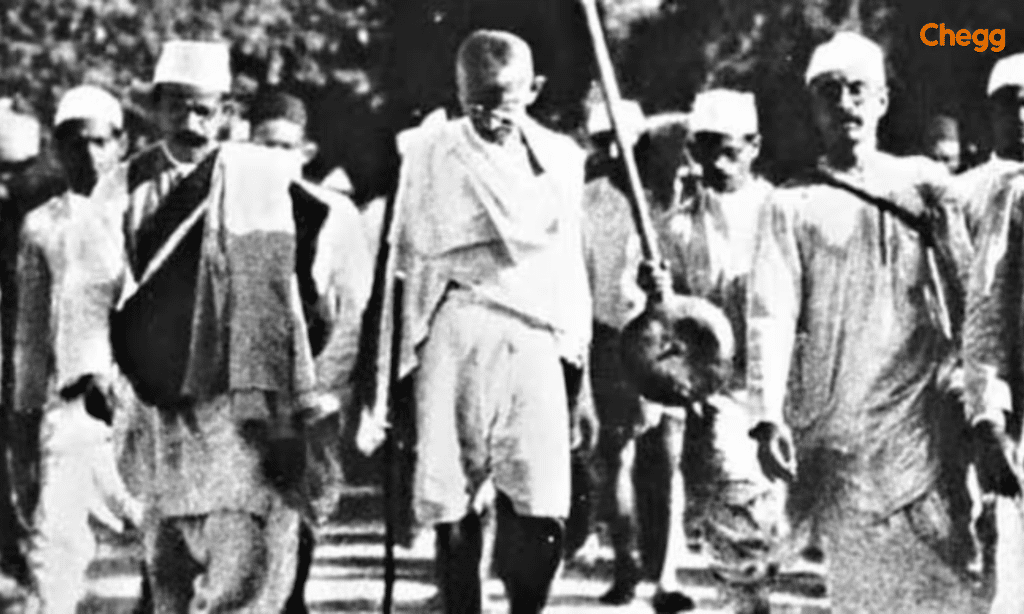
Mahatma Gandhi spearheaded the non-cooperation movement, issuing a manifesto in March 1920 advocating for non-violent resistance. Through this declaration, Gandhi urged people to:
Now that we know what is Non Cooperation Movement, let’s understand its withdrawal. The movement was halted abruptly in February 1922 after the Chauri Chaura incident, where a violent clash between protesters and police resulted in deaths. Gandhi decided to stop the movement to avoid further violence and maintain its non-violent nature. Other reasons included –
Now that we know what is Non Cooperation Movement, let’s look at how people responded. Many Indians eagerly joined the movement, boycotting British goods, services, and institutions. The widespread support showed a strong desire for change and resistance against British rule, highlighting the movement’s impact on Indian society.
Now that we know what is Non Cooperation Movement, let’s understand its significance. The movement marked a major shift in India’s fight for independence by demonstrating the power of non-violent resistance. It united people from various backgrounds and showed that collective action could challenge British rule.
Now that we know what is Non Cooperation Movement, let’s understand the difference between it and the Civil Disobedience Movement. The Non-Cooperation Movement started in 1920 and focused on boycotting British goods and institutions. In contrast, the Civil Disobedience Movement, launched in 1930, involved actively defying British laws, such as refusing to pay taxes.

| Feature | Non-Cooperation Movement (NCM) | Civil Disobedience Movement (CDM) |
| Goal | Achieve Swaraj (self-rule) through non-violent resistance | Challenge specific unjust British laws and policies |
| Leader | Mahatma Gandhi | Mahatma Gandhi |
| Time Period | Challenge specific, unjust British laws and policies | 1920 – 1922 (withdrew after the Chauri Chaura incident) |
| Methods | Boycotts of British goods, schools, and courts; resignations from government positions; peaceful protests | Selective disobedience of specific laws and regulations; non-violent protests |
| Scale of Participation | Large-scale participation across India | Primarily focused on targeted actions by specific groups |
| Nature of Protest | More passive and symbolic resistance | More active and confrontational disobedience |
| Reason for Ending | No specific endpoint, gradually faded as negotiations with the British began | No specific endpoint, gradually faded as negotiations with British began |
| Impact | Showed the strength of Indian nationalism and inspired future movements | Challenged British authority and highlighted specific grievances |
Now that we know what is Non Cooperation Movement, let’s understand its failure. The movement ended abruptly in February 1922 after the Chauri Chaura incident, where violent clashes led to deaths. Gandhi halted the movement to prevent further violence and maintain its non-violent principles.
Let’s try to understand what is Non Cooperation movement from UPSC’s perspective –
Let’s try to understand what is Non Cooperation movement for class 10th. For Class 10 students, the Non-Cooperation Movement is a key topic in history. It provides detailed knowledge about the strategies used by Indians to oppose British rule. This movement showed the power of peaceful protest and self-reliance. Students learn about the boycott of British goods, resignation from jobs, and the establishment of Indian institutions. Understanding this movement is crucial for exams as it covers important dates, events, and figures in India’s struggle for independence.
What is Non Cooperation Movement? it was a pivotal chapter in India’s fight for independence. Launched in 1920, it united Indians in a peaceful resistance against British rule, marking a significant shift in the struggle for freedom. Though it ended in 1922 due to violence at Chauri Chaura, its legacy lives on in the political awakening it sparked and the foundation it laid for future protests. The movement demonstrated the power of non-violence and collective action, showing that even under colonial oppression, peaceful resistance could challenge a mighty empire. Its broader significance lies in the lessons it offers for global movements, proving that persistence, unity, and non-violent resistance can be potent tools for achieving justice and freedom.
Read More:-

The Non-Cooperation Movement was a significant political campaign in India against British rule. Initiated by Mahatma Gandhi in 1920, it called for Indians to boycott British goods and institutions. The Movement aimed to achieve Swaraj or self-rule for India.
The key strategies included boycotting British goods, refusing to attend British educational institutions, and avoiding employment in British offices. This was to cripple the British economy and administrative structure in India.
The Non-Cooperation Movement was a mass protest launched by Mahatma Gandhi in 1920 against British rule. It urged Indians to boycott British goods, schools, courts, and titles, promote Swadeshi products, and embrace self-reliance (Swaraj). The movement united millions across India and became a major step in the struggle for independence, laying the foundation for future freedom movements.
Despite its abrupt end, the movement had several long-term effects. It led to the rise of a new Indian leadership, inspired future civil disobedience movements, and weakened British control over India.
The Non-Cooperation Movement, led by Gandhi in 1920, wasn’t a response to a single issue. Discontent brewed due to the yearning for Swaraj (self-rule), repressive laws like the Rowlatt Act, and economic exploitation by the British. The brutal Jallianwala Bagh massacre and support for the Khilafat movement further fueled the movement, uniting Indians in their pursuit of independence through peaceful resistance.
Gandhiji wanted the Civil Disobedience Movement to be non-violent and peaceful in response to the government’s savage repression, which included assaulting women and children and attacking peaceful Satyagrahis, and making arrests. Gandhiji canceled the movement as it descended into violence, and numerous people were killed.
Mahatma Gandhi initiated the Non-Cooperation Movement in 1920 to peacefully resist British rule after the Jallianwala Bagh massacre and the Rowlatt Act.
Gandhiji suspended the movement in 1922 after the Chauri Chaura incident, where protestors turned violent and killed policemen, violating the principle of non-violence.