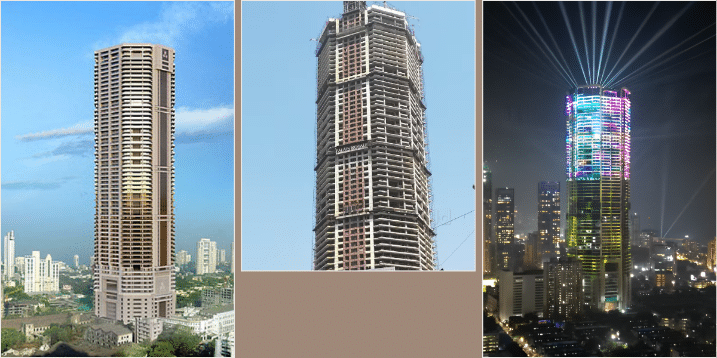
Skyscrapers and the tallest buildings in India become architectural marvels and powerful symbols of progress and innovation in modern urban landscapes. Among these towering giants that shape the skyline, one structure captures India’s ambition and achievements in a singular sweep: the tallest building in India. This majestic building stands tall in Mumbai’s bustling metropolis, a testament to human ingenuity and engineering.
In a time when cities are known for their tall buildings, these large structures represent urban growth, economic strength, and a country’s confident move into the future. As India makes its mark on the world, the tallest building serves as a powerful symbol of its rise, showcasing a mix of cultural roots and modern design.

India’s urbanization has been astonishing and transformational. A mixed economy and private sector expansion accelerated urbanization after independence. 11.4% of India’s population lived in cities in 1901. Its ratio climbed to 28.53% in 2001 and 34% in 2021. The UN expects 40.76% of India’s population to live in cities by 2030. The World Bank predicts India and other nations will lead the worldwide urban population boom by 2050.
Cities like Mumbai and Delhi have led this urban transition. Mumbai, India’s second-largest city, had 22.1 million residents in 2018 after a massive 20th-century rural-urban migration. With 28 million people, Delhi had the fastest 2011 census urbanization at 4.1%.
This fast urbanization has several causes:
Discovering the tallest building in India, we see a stunning architectural masterpiece that changes the country’s skyline. It is rightly recognized as the tallest building in Mumbai and the highest building in India. Its importance goes beyond just its height.
This impressive structure showcases human creativity and the engineering talent of Mumbai. It sits within the busy city landscape. Its name and central location convey a sense of greatness. The striking building stands out for its modern design and its cultural elements, both of which honor the country’s history.
The tallest building in Mumbai reaches for the sky and impacts the lives of millions. Its towering presence shows Mumbai’s place in the world and reflects its spirit of resilience and growth. As the highest building in India, it serves as a symbol of the country’s ambition, inspiring architects and dreamers to break barriers. This tallest tower in India represents the nation’s quest for new heights.
India’s skylines are transforming! Once known primarily for its historical monuments, modern India boasts some of the world’s most impressive skyscrapers. Let’s explore the top 10 tallest building in India, stretching skyward and redefining urban landscapes.
| Rank | Building Name | City | Height (m) | Floors | Year Completed |
| 1 | Palais Royale | Mumbai | 320 | 88 | Expected to be completed by mid of 2025 |
| 2 | Lokhandwala Minerva | Mumbai | 301 | 78 | 2023 |
| 3 | Piramal Aranya Arav | Mumbai | 282.2 | 83 | 2022 |
| 4 | World One | Mumbai | 280.2 | 76 | 2020 |
| 5 | World View | Mumbai | 277.6 | 73 | 2020 |
| 6 | Lodha Trump Tower | Mumbai | 268 | 76 | 2021 |
| 7 | Omkar 1973 Tower A | Mumbai | 267 | 73 | 2020 |
| 8 | Nathani Heights | Mumbai | 262 | 72 | 2020 |
| 9 | Three Sixty West Tower B | Mumbai | 260 | 66 | 2020 |
| 10 | The 42 | Kolkata | 260 | 65 | 2019 |
Have you ever looked at a skyscraper and wondered, “How high can they build these things?” Well, wonder no more! The title of the world’s tallest building goes to the awe-inspiring Burj Khalifa in Dubai, United Arab Emirates.
Standing at a staggering 828 meters (2,717 feet), the Burj Khalifa dominates the Dubai skyline and holds several records:
Construction of this architectural marvel began in 2004 and was completed in 2010. The Burj Khalifa features a mix of residential apartments, hotels, office space, and observation decks, offering breathtaking views of the Arabian Gulf and the surrounding city. But what makes a building as tall as possible? The Burj Khalifa’s design incorporates several innovative features:
The Burj Khalifa’s reign as the world’s tallest building might not last forever. Architects and engineers are constantly pushing the boundaries of what’s possible. But for now, it symbolizes human ambition and an engineering marvel.
| Building Name | Height (m) | Height (ft) | Floors | Location | Year Completed |
|---|---|---|---|---|---|
| Burj Khalifa | 828 | 2,717 | 163 | Dubai, UAE | 2010 |
| Shanghai Tower | 632 | 2,073 | 128 | Shanghai, China | 2015 |
| Abraj Al-Bait Clock Tower | 601 | 1,972 | 120 | Mecca, Saudi Arabia | 2012 |
| Ping An Finance Center | 599.1 | 1,965 | 115 | Shenzhen, China | 2017 |
| Lotte World Tower | 554.5 | 1,819 | 123 | Seoul, South Korea | 2016 |
| One World Trade Center | 541.3 | 1,776 | 104 | New York, USA | 2014 |
India’s major cities are witnessing a boom in high-rise construction, each vying to claim a spot among the Highest Building in India. Here’s a glimpse at the current tallest structures in some key Indian cities:
| City | Building Name | Height (meters) | Height (feet) | Category |
| Mumbai | Palais Royale | 320 | 1,050 | Residential |
| Kolkata | The 42 | 268 | 879 | Residential |
| Noida | Supernova Spira | 250 | 820 | Multi-purpose |
| Bengaluru | CNTC Presidential Tower | 175 | 607 | Residential |
| Chennai | SPR City Tower H | 172 | 564 | Residential |
| Hyderabad | Lodha Bellezza | 153 | 502 | Residential |
While not currently the tallest building in India, The 42 in Kolkata holds a special place in the city’s skyline and history.
Here’s what makes the 42 stand out:
While not the current title holder for “tallest building in India,” The 42 remains a significant landmark in Kolkata and a testament to the city’s architectural evolution.
The architectural style of the tallest building in India stands as a remarkable fusion of modernity and cultural heritage, capturing the essence of India’s journey from tradition to innovation. Its design elements seamlessly intertwine, creating a visual narrative celebrating the country’s diversity while embracing cutting-edge aesthetics.
The building has an elegant exterior decorated with historical motifs to honor India’s rich cultural heritage. Intricate carvings and patterns connect the past and present in some tower sections.
The building’s functional design is equally captivating within its towering walls. The layout was meticulously crafted to optimize efficiency and user experience. The interiors are cleverly designed to maximize natural light, reducing the need for artificial lighting and boosting energy efficiency.
The tallest building in India stands as a remarkable testament to the fusion of engineering prowess and architectural ingenuity. The creation of towering structures involves a symphony of technical marvels, and this iconic building exemplifies the cutting-edge innovations and construction techniques that enable such architectural feats.
Engineers employed advanced materials that ensure structural integrity while withstanding immense vertical and lateral loads to support the unprecedented height of the Highest Building in India. The tower’s foundation delves deep into the Earth, ensuring stability against various forces, including seismic activity.
The highest tower in India was built by architects, engineers, and builders working together to overcome challenges. Building Information Modeling (BIM) was leveraged to visualize complex designs, anticipate potential clashes, and optimize resource allocation.
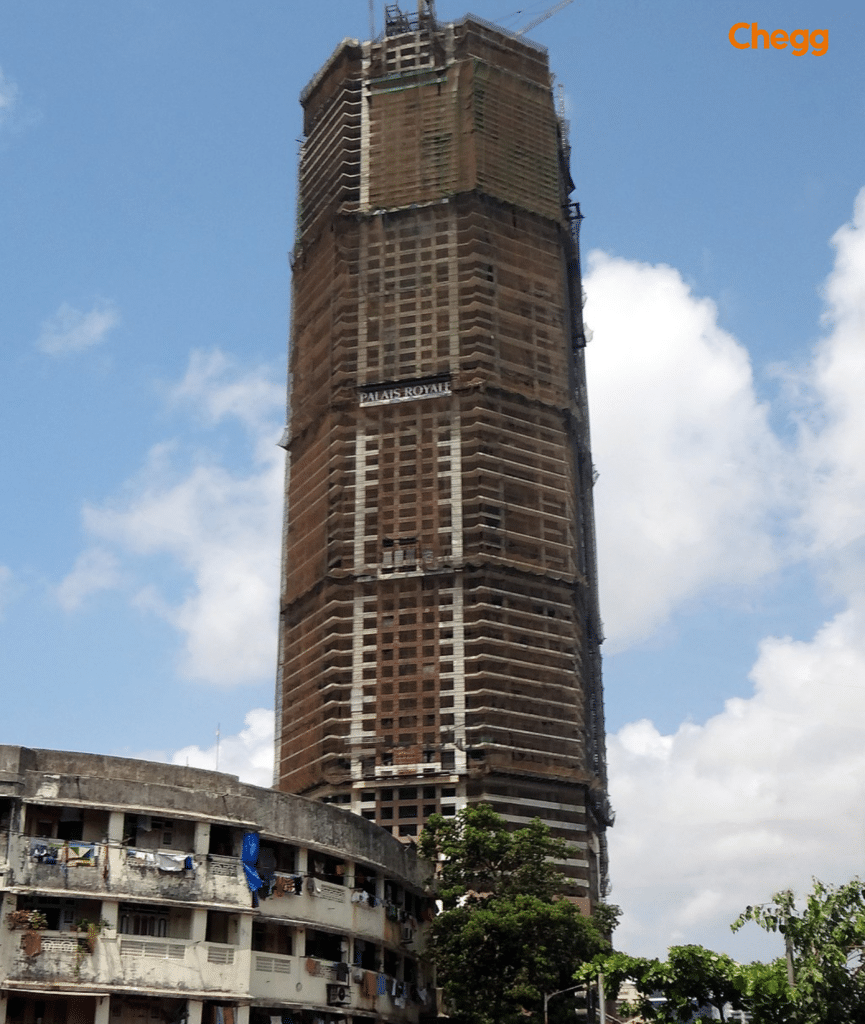
The tallest building influences a city’s skyline and urban narrative. The imposing sentinel redraws the city’s profile and serves as a metaphor for its inhabitants’ architectural skill and aspirations. Due to its iconic status in the community, a towering structure often attracts residents and visitors.
The tallest building commands attention immediately after its construction, becoming an emblem of the city’s modernity and progress. Its unique design and remarkable height set it apart from the surrounding structures, resulting in an immediate visual impact. The skyline transforms as the new building symbolizes aspiration, representing the city’s determination to embrace innovation.
The tallest building impacts the skyline beyond its aesthetic value over the long term. It has the potential to entice businesses, investors, and tourists, thereby boosting the economies of the surrounding areas. The once-traditional skyline now reflects the city’s development. This transformation often starts a “skyline race,” where developers compete to reach similar heights, thus changing the city’s architecture.
Tall buildings wield a profound influence on the cultural fabric of a city, offering a unique lens through which to explore the amalgamation of architectural innovation and community sentiment. These towering structures transcend their physical dimensions, integral to a city’s identity and cultural narrative. The exploration of artistic influence and community perception in the context of tall buildings unveils a complex interplay between tradition and modernity.
Tall buildings define a city by their presence. They serve as markers and conversation starters. Their skyline becomes a global symbol of urban character. Cultural institutions, offices, and public spaces that promote social interaction and artistic expression are often located there. The convergence of functionality and symbolism lets them shape urban life.
India’s urban landscape is punctuated by remarkable skyscrapers, reflecting the country’s rapid urbanization and architectural prowess. India’s Silicon Valley, Bengaluru, has many tall buildings. The UB Tower’s shimmering glass symbolizes the city’s entrepreneurial spirit. Kolkata’s South City Tower has changed the skyline to include commercial and residential spaces.
New Delhi, the capital, displays the Palika Heights facade, symbolizing its administrative importance. Worldmark, a modern marvel, boosts the city’s economy.
Elegantly designed, Chennai’s Bayview Tower combines luxury and practicality. Its prominence symbolizes the city’s status as an industrial hub. Hyderabad’s HITEC City skyline, dominated by the Lanco Hills Signature Tower, shows its rise as a technological and economic powerhouse.

Tall structures are city icons and markers of progress today. Skyscrapers shape a city’s skyline and show its vitality and ambitions. These massive architectural marvels are human achievements beyond their size. Tall skyscrapers guide city inhabitants and tourists to navigate the complex city life below. They symbolize civic pride and a city’s ability to dream large and innovate.
Skyscrapers have significantly changed throughout history. The word “skyscraper” originally applied to 10-20-story skyscrapers built in the 1880s. Modern buildings have huge windows due to steel frames and curtain walls. Many buildings have setbacks to seem slim, reduce wind exposure, and increase daylight. As of February 2022, Hong Kong, New York City, and Mumbai had hundreds of skyscrapers, demonstrating urban growth.
Skyscrapers pioneered green design. Energy-efficient equipment, natural lighting, and green spaces help balance urbanization with environmental responsibility. These innovations reduce buildings’ environmental impact and encourage urban expansion. Skyscrapers’ steel skeleton creates safe, livable areas in towering buildings that withstand wind and earthquakes. Skyscrapers are about pushing architectural, engineering, and sustainability limits and heights. These enormous towers will continue representing human inventiveness and the shifting urban environment as cities flourish.
India’s skylines are transforming, and the “tallest building” title is constantly up for grabs! While the current champion is the Palais Royale in Mumbai, several upcoming projects are vying to take the crown. Let’s explore these contenders that might redefine India’s architectural landscape:
1. Lodha Project Wadala, Mumbai: This ambitious project promises to be a game-changer. With an estimated height of a whopping 1,739 feet (530 meters), Lodha Project Wadala could become India’s undisputed tallest building upon completion.
2. Joyous Housing, Location yet to be disclosed: While details are still under wraps, Joyous Housing is another project aiming for the top spot. Estimates suggest it might reach a height of 1,594 feet (486 meters), making it a serious contender in the race for India’s tallest building.
What to Expect: These upcoming giants promise to be more than just tall. They might incorporate:
India’s architectural landscape is reaching unprecedented heights, with cities such as Mumbai, Kolkata, and Noida showcasing an array of towering skyscrapers. The competition for the title of the Tallest Building in India is dynamic, as ongoing and upcoming construction projects redefine the skyline. Each completed structure adds a new contender to the list, reflecting the rapid pace of urban development.
As modern engineering and design push boundaries, India’s cityscapes are transforming into symbols of growth and progress. These vertical marvels are more than just buildings—they represent the country’s ambition, innovation, and vision for the future. Each year, the list is expected to evolve, making India’s skyline a fascinating story of architectural excellence.
Read More:
The tallest building in India is Palais Royale in Mumbai, which is 320 meters (1,050 feet) high and has 88 floors.
The tallest building in India, “Palais Royale” in Mumbai, has several unique features. It seeks Green Building Council LEED Platinum for sustainability. Sky gardens look better and resist wind. The building will have top-to-bottom insulated glazing to save thermal energy. This skyscraper is both modern and green.
The tallest building in India was built using cutting-edge engineering, clever construction, and careful planning. To complete this massive project, architects and engineers used many methods to overcome height and complexity. The tallest building in India is a testament to visionary design, engineering, and innovative construction.
The tallest tower in Thane, rising 72 storeys high, offers unmatched luxury with five levels of world-class amenities. Experience elevated living with stunning views, premium design, and state-of-the-art facilities crafted for comfort, convenience, and a modern lifestyle.
The tallest completed building in India is the Lokhandwala Minerva in Mumbai, which is 301 metres (988 feet) high and has 78 floors.
The highest floor building in India is Lodha World One in Mumbai. It has 117 floors and stands approximately 442 meters (1,450 feet) tall. Located in the upscale area of Lower Parel, it is one of the tallest residential skyscrapers in the world and a symbol of modern luxury living in India.
Supernova Spira is the tallest building in Delhi NCR, with a height of 300 meters and 80 floors.
As of 2025, the highest floor building in India is Palais Royale in Mumbai. It is around 320 meters tall with 88 floors, making it the tallest skyscraper in the country by floor count. The residential building symbolizes Mumbai’s growing skyline and luxury real estate market.