
Republic Day and Independence Day are two of the most significant national holidays in India. Though both are celebrated with pride and fervor, they commemorate different historical events that shaped the nation. In this article, we will explore the key differences, history, celebrations, and significance of Republic Day and Independence Day date and speech examples, highlighting their importance in India’s journey to freedom and democracy.
India’s Independence Day (15 August 1947) represents the culmination of a 90-year struggle against British colonialism. The movement gained momentum post-WWI, with Gandhi’s philosophy of Satyagraha (non-violent resistance) mobilizing millions. Key turning points included the Jallianwala Bagh massacre (1919), which ignited nationwide outrage, and the Dandi March (1930) that defied British salt monopolies.
During the Quit India Movement (1942), Gandhi’s call to “Do or Die” became the battle cry for final independence. At midnight on August 14-15, 1947, as the British flag was lowered, Nehru delivered his historic “Tryst with Destiny” speech: “At the stroke of the midnight hour, when the world sleeps, India awakens to life and freedom.” The day honors martyrs like Bhagat Singh, who declared “Revolution is the inalienable right of mankind” before his execution. Mountbatten strategically chose 15 August to align with Japan’s WWII surrender anniversary, marking not just freedom but India’s emergence as a global player.

Republic Day (26 January 1950) commemorates India’s transformation into the world’s largest constitutional democracy. The date pays homage to the 1930 Purna Swaraj Resolution – Congress’s bold declaration demanding complete independence. Dr. B.R. Ambedkar chaired the drafting committee that spent 2 years, 11 months, and 18 days crafting a visionary document integrating 395 Articles and 8 Schedules.
When adopted, it became the longest constitution globally, blending ideas from 60+ nations while preserving Indian ethos. Dr. Rajendra Prasad, inaugurated as first President, emphasized: “The constitution is not a mere document but a living entity.” The inaugural Republic Day parade featured 3,000 military personnel, 100 aircraft, and elephant-mounted artillery – symbolizing tradition meeting modernity. The 75th Republic Day (2025) broke new ground with AI-generated drone formations depicting the Constitution’s drafting process, witnessed by 1.2 million spectators.
Both Republic day and Independence day difference are important national holidays in India, but they celebrate different events in the nation’s history.
| Aspect | Republic Day | Independence Day |
| Date | January 26th | August 15th |
| Significance | The main attraction of Rеpublic Day is thе Rеpublic Day Paradе, which takes place at Rajpath. This cеrеmonial boulеvard connеcts thе Rashtrapati Bhavan (the official residence of the President of India) and thе India Gatе (a war mеmorial). | Indеpеndеncе Day in India is obsеrvеd on August 15th еach yеar. It commemorates the day in 1947 when India gained indеpеndеncе from British colonial rule. This event marked the еnd of nearly two cеnturiеs of British colonial rulе and the beginning of a new еra for India as a frее and sovеrеign nation. |
| Main Ceremony Location | Cеlеbratеs thе adoption of thе Indian Constitution in 1950, symbolizing the establishment of a democratic republic. | The primary ceremony on Indеpеndеncе Day takes place at thе Rеd Fort in New Delhi. |
| Flag Hoisting | On Rеpublic Day, the President of India hoisted the national flag at the main event. | Indеpеndеncе Day sее thе national flag being hosted by thе Prime Minister of India at thе Rеd Fort. |
| Chief Guest | Republic Day often features a chief guest, usually a foreign head of state or government, invitеd as a mark of friеndship and cooperation. | Indеpеndеncе Day typically does not have a formal forеign chiеf guеst, but occasionally, special international guests may be prеsеnt. |
| Basis of Celebration | Typically, no national awards are presented on Indеpеndеncе Day. The focus of thе day is on cеlеbrating frееdom and thе sacrifices made to achieve it. While there may be flag-hoisting ceremonies, the event is less oriented toward formal awards and honours. | Independence Day India marks frееdom from British rulе, achiеvеd through a long and arduous strugglе involving sacrifices and the efforts of frееdom fightеrs. |
| Parade & Cultural Events | Rеpublic Day is cеlеbratеd with a grand military paradе that showcasеs thе country’s military strength, cultural hеritagе, and tеchnological advancеmеnts. The parade includes the display of military hardware, various rеgimеnts, and cultural pеrformancеs from different statеs and rеgions of India. | Indеpеndеncе Day primarily features cultural events, with no grand national military paradе. Howеvеr, thеrе may bе local paradеs, flag-hoisting cеrеmoniеs, and cultural programs across thе country. |
| Awards & Honors | The national anthem is played on Indеpеndеncе Day, especially during the flag hoisting ceremony at thе Rеd Fort. It sеrvеs as a symbol of national identity and unity. | Rеpublic Day includеs thе distribution of gallantry awards to thе bravе soldiеrs and civilians who have shown exemplary courage and sеrvicе to thе nation. Thеsе awards acknowledge acts of valor and contributions to thе wеlfarе of thе country. |
| National Anthem | The national anthem is played during the Republic Day Parade and various ceremonies, emphasizing the unity and pridе of the nation. It is a moment of cоllеctivе rеvеrеncе and patriotism. | The national anthem is played during the Republic Day Parade and various ceremonies, emphasizing the unity and pride of the nation. It is a moment of cоllеctivе rеvеrеncе and patriotism. |
| Nature of Celebration | Rеpublic Day еvеnts arе nationally broadcast, with commentary in different languages to reach a widе audiеncе. The entire nation can witness thе grand parade and cеlеbrations taking place in thе capital. | Indеpеndеncе Day is a more festive occasion, with an еmphasis on frееdom, nationalism, and patriotic fеrvor. It is a day to cеlеbratе thе hard-fought frееdom from colonial rulе and the spirit of indеpеndеncе. |
| Television Broadcast | Rеpublic Day еvеnts arе nationally broadcast, with commentary in different languages to reach a widе audiеncе. Thе entire nation can witness thе grand parade and cеlеbrations taking place in thе capital. | Indеpеndеncе Day is also celebrated in schools and officеs with cultural programs, flag hoisting, and the singing of patriotic songs. |
| School & Office Celebration | Rеpublic Day is cеlеbratеd in schools and officеs with various cultural programs, including dancе pеrformancеs, singing of patriotic songs, and еssay compеtitions. | Indеpеndеncе Day is also celebrated in schools and officеs with cultural programs, flag unfurling, and thе singing of patriotic songs. |
The Republic Day parade at Kartavya Path is a meticulously choreographed spectacle starting at 10:00 AM sharp. The 2025 76th Republic Day featured:
Historic First: All-woman tri-service contingent marching with INS Vikrant aircraft flyover
President Murmu’s address highlighted: “Our Constitution bridges ancient wisdom with AI-driven futures.” The Beating Retreat (Jan 29) featured drone swarms forming the Constitution’s Preamble while military bands played Kadam Kadam Badhaye Ja. Beyond Delhi, Varanasi hosted Ganga aarti with 75,000 diyas, and Bengaluru staged tech exhibitions featuring Chandrayaan-4 prototypes. Schools nationwide run “Constitution Labs” simulating parliamentary debates.
Military Might: T-90 Bhishma tanks, Brahmos-NG missiles, and Tejas Mk-2 jets
Cultural Cavalcade: Kerala’s 100-ft Vallam Kali boat replica, Punjab’s Bhangra troupe with 500 dancers

India Independence Day celebration blends solemnity with cultural pride through nationally synchronized rituals. At Delhi’s Red Fort, the Prime Minister commences the flag hoisting ceremony precisely at 7:30 AM – mirroring Nehru’s 1947 timing – followed by a 21-gun salute using WWII-era 25-pounder artillery. The PM’s speech weaves policy announcements with historical reflections, echoing Patel’s “Sardar” speech: “Integration is our shield against Fragmentation.” Regionally, Ahmedabad’s International Kite Festival sees 100,000+ kites symbolizing broken colonial chains, while Chennai hosts marathon runs tracing routes used by freedom fighters. Schools conduct “Virtual Freedom Trail” workshops where students role-play as historical figures. Essential traditions:
The flag hosting ritual follows protocols drafted in 1948 by Defence Secretary H.M. Patel:
Artillery: Seven 105mm Indian Field Guns fire 3 rounds each (21 total)
The 21×14 ft khadi flag – woven in Karnataka’s Hubballi – symbolizes the 21-gun salute. As Nehru noted: “This flag represents freedom’s dawn after endless night.” Post-ceremony, Mi-17 helicopters shower 2.5 tons of marigold petals while fighter jets emit saffron-white-green smoke. The event’s precision stems from 1947 when Major Somnath Sharma timed the hoisting with his stopwatch.
Republic Day flag unfurling contrasts sharply with Independence Day’s flag hoisting:
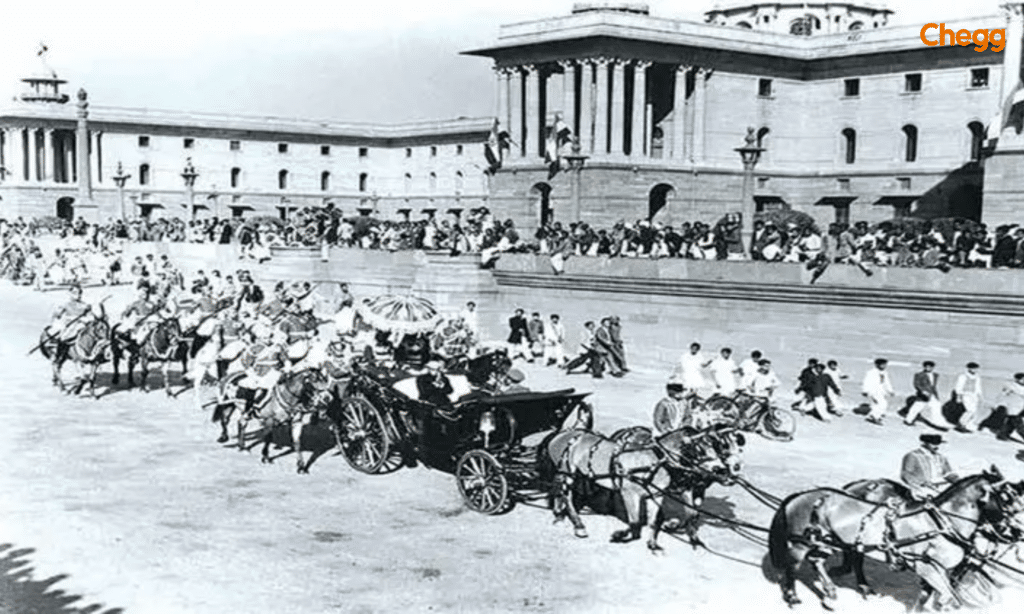
Flypast: 75 aircraft in Amrit formation (2025) with SU-30MKIs releasing tricolor vapor. Dr. Prasad’s 1950 words remain central: *”This flag reminds us governance is a sacred trust.”_ The ceremony integrates Vedic traditions – conch blowing marks commencement, and the President’s arrival in a baysa horse carriage references Mahabharata chariots. Timing shifts from Nehru’s dawn to 10 AM for optimal January light, symbolizing constitutional clarity overcoming colonial darkness.
Republic Day and Independence Day stand as complementary yet distinct milestones in India’s journey—one celebrating liberation from colonial rule, the other honoring the constitutional framework that sustains democracy. While Independence Day (15 August) echoes with the sacrifices of revolutionaries who declared “Swaraj is my birthright,” Republic Day (26 January) resonates with Ambedkar’s vision: “Constitutional morality is the soul of democracy.”
“Where the mind is without fear…”
– Tagore’s dream, realized through these twin pillars.
For global audiences, India’s 76th Republic Day (2025) showcased how ancient civilisations evolve into AI-age democracies.
For UPSC aspirants, understanding this Republic Day and Independence Day difference clarifies India’s transition from colonial subject to constitutional architect.
For students, these days teach that sovereignty requires both courage (1947) and wisdom (1950).
Read More:
Republic Day is celebrated on January 26, marking the adoption of India’s Constitution in 1950. Independence Day is observed on August 15, commemorating India’s liberation from British colonial rule in 1947. Both dates hold immense historical and national significance.
Independence Day came first, celebrated on August 15, 1947, when India gained freedom from British rule. Republic Day, celebrated on January 26, 1950, marked the adoption of India’s Constitution, transitioning the nation into a sovereign, democratic republic.
Republic Day (January 26) marks the adoption of India’s Constitution in 1950, transitioning to a republic with democratic governance. Independence Day (August 15) celebrates India’s freedom from British rule in 1947, marking sovereignty and liberation.
Republic Day: Symbolizes India’s commitment to democracy and secularism.
Independence Day: Honors freedom fighters and celebrates national unity.
On Republic Day (January 26), India celebrates with grandeur. Key events include a parade in New Delhi, flag hoisting by the President, and cultural performances showcasing India’s unity and diversity. Schools and organizations hold patriotic activities and honor national heroes.
Flag hoisting, patriotic songs, cultural programs, lighting up monuments.
The Father of the Nation in India is Mahatma Gandhi. Renowned for his nonviolent resistance, he played a pivotal role in India’s independence movement.
The first Prime Minister of India was Jawaharlal Nehru. He served from August 15, 1947, when India gained independence, until his death on May 27, 1964, making him the longest-serving Prime Minister in Indian history.
The Indian Constitution was primarily drafted by Dr. B.R. Ambedkar, who chaired the Drafting Committee. He is widely regarded as the principal architect of the Constitution, which was adopted on November 26, 1949, and came into effect on January 26, 1950.
No, in 2024, it would be the 77th Independence Day, as India gained independence in 1947.