Pollution is one of the biggest challenges we face today. It harms the environment, public health, economic growth, and quality of life. Recent studies show that air pollution alone is responsible for over 7 million deaths worldwide. This indicates that businesses are starting to recognize the need for sustainable practices a crucial topic often explored in any pollution essay. It’s a shift we all need to make, individually and together. This article breaks down the following areas:

Pollution occurs when harmful substances like chemicals, waste, or noise disrupt nature’s balance, harming air, water, and land. It poses serious risks to health, wildlife, and ecosystems, making it a pressing issue for humanity.
Pollution escalated with industrial growth in the 19th and 20th centuries. Factories, mining, and transportation increased fossil fuel use, leading to smog, waste, and resource depletion. These historical patterns highlight the long-term roots of today’s pollution challenges.
Pollution drives climate change, harms health with diseases like asthma and cancer, and weakens ecosystems, worsening disasters. It’s a critical issue impacting health, the economy, and the future, demanding urgent action for a sustainable planet.

When writing a complete essay on pollution, focus on these significant types of pollution:
Pollution is largely a result of human activities that disrupt the natural balance of the environment. While some pollution can occur naturally, the major causes of pollution today are man-made, driven by industrialization, modernization, and unsustainable practices. Below are the key contributors:
1. Industrial Emissions
Factories and manufacturing plants release harmful gases, chemicals, and particulates into the air and water. Industries such as chemical production, textiles, cement, and mining are major contributors to air, water, and soil pollution. These pollutants degrade the environment and pose serious health risks to nearby populations.
2. Vehicular Pollution
The burning of petrol and diesel in vehicles emits carbon monoxide, nitrogen oxides, and hydrocarbons, contributing heavily to air pollution. With urbanization, vehicles have increased significantly, especially in cities, leading to dense smog, reduced visibility, and respiratory illnesses.
3. Improper Waste Disposal
Dumping of solid waste, especially non-biodegradable materials like plastics, leads to soil and water pollution. Landfills release methane gas, a potent greenhouse gas, while leachate contaminates groundwater sources. Unregulated e-waste and medical waste also introduce toxic substances into the ecosystem.
4. Agricultural Activities
Excessive use of chemical fertilizers, pesticides, and insecticides contaminates the soil and nearby water bodies. Runoff from fields during rain carries these chemicals into rivers and lakes, harming aquatic life and affecting water quality. Livestock farming also contributes to methane emissions and organic waste pollution.
5. Deforestation and Land Degradation
Cutting down forests for development or agriculture reduces the earth’s capacity to absorb pollutants. Soil erosion, desertification, and biodiversity loss are direct outcomes of unchecked deforestation, which also impacts air quality and contributes to climate change.
6. Household and Domestic Sources
Everyday activities such as using detergents, burning wood or coal, and dumping household garbage contribute to various forms of pollution. Improper sewage disposal pollutes rivers and lakes, while indoor pollution from cooking fuels affects human health, especially in rural areas.
Pollution is one of the most urgent environmental challenges of our time, notably air pollution, which directly affects the health of millions. As many air pollution essays highlight, addressing this issue requires a multi-layered approach involving individuals, communities, governments, and global cooperation. Here are some key solutions we can adopt:
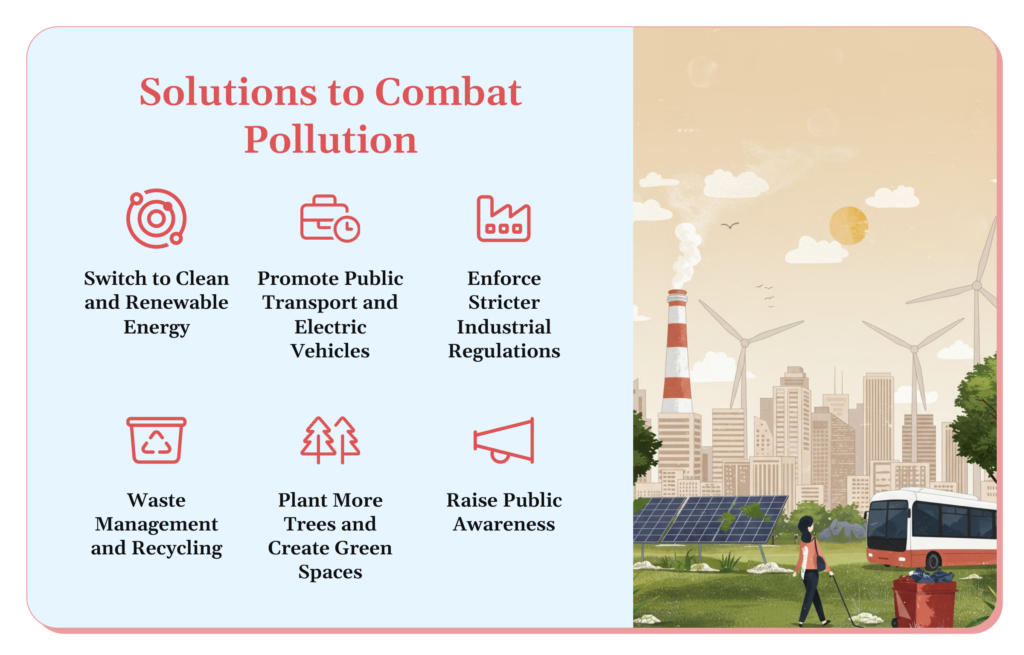
One of the most effective ways to combat air pollution is to transition from fossil fuels to renewable energy sources like solar, wind, and hydroelectric power. This shift reduces harmful emissions from coal and gas power plants, which release carbon dioxide, sulfur dioxide, and particulate matter.
Reducing the number of personal vehicles on the road can drastically cut emissions. Governments should invest in reliable public transport systems and promote electric vehicles (EVs) through subsidies and charging infrastructure. Cycling and walking should also be encouraged as eco-friendly alternatives.
Industries are major contributors to air and other forms of pollution. Strict emission norms, real-time pollution monitoring, and penalties for non-compliance can help control industrial pollution. Cleaner production technologies and filters for smoke and gases should be made mandatory.
Proper disposal of household, industrial, and e-waste is crucial. Segregating waste at source, composting organic waste, and recycling materials like plastic and glass reduce pollution and conserve resources. Burning garbage or agricultural waste should be discouraged.
Afforestation and urban greenery help absorb carbon dioxide and other harmful pollutants. Trees act as natural air filters and improve overall air quality. Cities should invest in parks, green belts, and rooftop gardens.
Education plays a key role in pollution control. Campaigns about the causes and effects of pollution and sustainable lifestyle choices empower individuals to make a difference like reducing plastic use, conserving energy, and supporting eco-friendly products.
Pollution is one of the most pressing issues of our time, significantly impacting the environment, human health, and ecosystems. It refers to the contamination of air, water, soil, and even sound due to harmful substances and human activities. Major causes of pollution include industrial emissions, vehicular exhaust, deforestation, and improper waste disposal. These actions release pollutants such as carbon dioxide, plastics, and harmful chemicals into the environment, leading to severe consequences.
Air pollution causes respiratory problems and contributes to global warming, while water pollution endangers aquatic life and makes water unsafe for consumption. Soil pollution reduces agricultural productivity, and noise pollution affects mental health and disrupts wildlife habitats. Collectively, these types of pollution threaten biodiversity and accelerate climate change.
Addressing pollution requires immediate action. Simple measures like reducing plastic usage, switching to renewable energy sources, using public transport, and adopting sustainable farming practices can help mitigate its effects. Governments and organizations must enforce strict environmental regulations, while individuals can contribute by conserving resources and spreading awareness.
In conclusion, pollution is a critical challenge that demands collective efforts from individuals, communities, and governments. By adopting eco-friendly habits and taking proactive measures, we can protect the environment and create a sustainable future. Tackling pollution is not just an option but a necessity for the survival of all living beings.
Pollution is the presence of harmful substances in our environment that negatively affect living organisms and the planet. It has become a serious global issue due to rapid industrialization, urbanization, and population growth. There are various types of pollution, including air, water, soil, noise, and plastic pollution each posing unique threats to nature and human health.
Air pollution, caused by vehicle emissions, industrial smoke, and burning fossil fuels, leads to respiratory problems and contributes to climate change. Water pollution results from dumping industrial waste, sewage, and plastics into rivers and oceans, harming aquatic life and contaminating drinking water. Soil pollution affects agriculture through the excessive use of pesticides and fertilizers. Noise pollution, often overlooked, causes stress, hearing issues, and sleep disturbances.
The major causes of pollution are human activities like deforestation, overuse of plastic, poor waste management, and fossil fuel consumption. However, the solution lies in our hands. Using public transport, adopting renewable energy, practicing waste segregation, and planting trees can significantly reduce pollution.
Governments must also implement strict laws to regulate emissions and promote sustainable development. Public awareness and education are equally important in encouraging eco-friendly habits.
In conclusion, pollution is a pressing issue that requires immediate attention. Working together individually and collectively can protect the environment and ensure a healthier future for future generations.
Pollution is a major environmental issue that harms the planet and all living beings. It occurs in various forms, such as air, water, soil, and noise pollution, primarily caused by human activities like industrial emissions, vehicle exhaust, and improper waste disposal.
Pollution negatively impacts health, disrupts ecosystems, and contributes to global challenges like climate change. Simple actions like reducing plastic use, conserving energy, and planting trees can help combat pollution. Awareness and collective efforts are essential to protect the environment and ensure a cleaner, healthier future for future generations.
Pollution is a growing global concern that seriously affects the environment, human health, and overall quality of life. A well-rounded pollution essay highlights the visible damage and the hidden threats it poses to our ecosystems and well-being. By understanding the various types of pollution, such as air, water, and soil, we can better grasp how each one contributes to the ongoing degradation of our planet.
The consequences of pollution are far-reaching. Beyond harming the environment, pollution disrupts natural habitats, endangers wildlife, and poses significant health risks to human populations. It’s no longer just an ecological issue. It has become a full-blown public health crisis that demands urgent action.
Tackling pollution requires collective responsibility. Governments must enforce stricter environmental regulations, industries should adopt greener technologies, and individuals must embrace sustainable habits. Whether it’s reducing plastic use, conserving energy, or spreading awareness, every action counts.
As emphasized in every impactful pollution essay, the time to act is now. Delaying action only increases the risk of irreversible damage. By making informed choices and supporting environmental initiatives, we can build a cleaner, healthier, and more sustainable future for future generations.
Pollution is one of the most urgent global challenges, threatening our environment, health, and economy. Tackling it requires joint action from individuals, communities, and governments. By reducing waste, saving energy, switching to renewable resources, and enforcing strong environmental policies, we can significantly reduce pollution’s impact. A cleaner, healthier, and more sustainable future is possible if we act together now.
To write an essay on pollution in English, start with a clear introduction that defines pollution and its importance. Follow with body paragraphs discussing its types, causes, harmful effects on health and the environment, and possible solutions like waste reduction, renewable energy use, and strict laws. Conclude with a strong summary emphasizing collective action for a cleaner future. Use simple language, factual information, and logical structure to make your essay impactful and easy to understand.
An environmental pollution essay is a written piece that explains the causes, types, and effects of pollution on the environment. It also discusses possible solutions to reduce pollution and raise awareness about protecting natural resources, aiming to promote sustainable living and environmental responsibility.
Pollution disrupts ecosystems and environmental balance. Growing populations and expanding industries have made pollution a serious problem, contaminating air, soil, and water. Today, river water is often unsafe for drinking, threatening health and nature.
Pollution can be reduced by using public transport, recycling waste, avoiding plastic, planting trees, and switching to renewable energy. Government laws, public awareness, and eco-friendly habits play a crucial role in stopping pollution and protecting the environment.
Soil is polluted when harmful chemicals and waste materials contaminate it, reducing fertility and harming living organisms. Common causes of soil pollution include:
Pesticides and fertilizers used in agriculture
Industrial waste and chemical spills
Plastic and non-biodegradable garbage
Oil leaks and mining activities
Sewage and improper waste disposal
A pollution short essay is a concise piece of writing that explains the causes, effects, and solutions of pollution in a clear and simplified manner. It highlights how pollution harms the environment, human health, and wildlife, while also suggesting practical steps like reducing waste, using renewable energy, and spreading awareness to combat it. Short essays on pollution are commonly written by students to promote environmental responsibility and awareness.
To stop pollution, we need eco-friendly habits like reducing plastic use, recycling, saving energy, and using public transport. Governments should enforce strong environmental laws, promote clean technologies, and raise public awareness. Tree planting and sustainable practices are vital steps. Together, our actions can create a cleaner, healthier planet for future generations.
Plastic wastes are discarded plastic materials like bags, bottles, packaging, and non-biodegradable containers. They accumulate in landfills, oceans, and the environment, causing pollution, harming wildlife, and taking hundreds of years to decompose naturally.