
When you picture the longest mountain range in the world, what comes to mind? For many, it’s the image of towering, snow-dusted peaks carving a path through a continent. While colossal land-based ranges capture our imagination, the planet’s most extensive mountain system is actually hidden from view, submerged beneath the vastness of our global oceans. The title of the longest mountain range on Earth belongs to the Mid-Ocean Ridge, a staggering underwater network that wraps around the globe for more than 65,000 kilometers (over 40,000 miles).
This revelation often sparks a follow-up question: What is the longest mountain range on land? That distinction goes to the mighty Andes Mountains, which form the continental backbone of South America. This article will explore both of these colossal geological features. We will dive deep to uncover the secrets of the Mid-Ocean Ridge and then journey along the length of the Andes.
Before we delve into the world’s longest ranges, it’s helpful to understand the language geologists use to describe them. These terms are often used interchangeably in casual conversation, but they have specific meanings.
The Earth’s single most dominant geological feature is the Mid Ocean Ridge system. This immense, continuous volcanic chain is located almost entirely beneath the world’s oceans, with about 90% of its massive structure lying in the deep sea. Its total length is estimated to be around 65,000 kilometers (40,390 miles), a distance that dwarfs any mountain range on land and is long enough to circle the globe more than one and a half times.
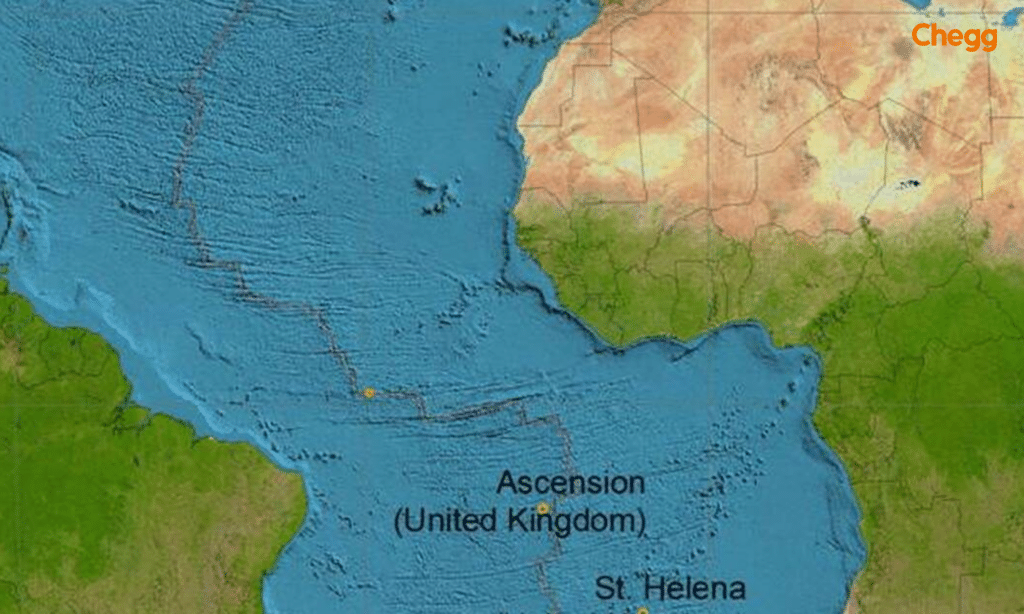
The Mid-Ocean Ridge is a direct and dynamic product of plate tectonics. It forms at divergent plate boundaries, which are seams in the Earth’s crust where tectonic plates are pulling apart from each other. As the plates separate, a gap is created. Molten rock, or magma, from the Earth’s mantle rises to fill this void. When this superheated material meets the cold ocean water, it cools and solidifies, creating new oceanic crust.
This process, known as seafloor spreading, literally renews the surface of our planet. The continuous creation of new crust at the ridge’s center pushes the older crust away, causing the ocean basins to widen over geological time. The Atlantic Basin, for example, is estimated to be widening at a rate of 1 to 10 cm per year due to spreading at the Mid-Atlantic Ridge.
This system is also the largest single volcanic feature on Earth. It consists of thousands of individual volcanoes and volcanic ridge segments that periodically erupt, making it the most volcanically active zone on the planet.
The global Mid-Ocean Ridge is a connected system that runs through every ocean. Notable segments include:
As the formidable backbone of South America, the Andes Mountains represent the longest stretch of highlands on any continent. This immense range extends for approximately 7,000 kilometers (4,300 miles) in a continuous chain along the western coast of the continent. Its path traverses seven nations: Venezuela, Colombia, Ecuador, Peru, Bolivia, Chile, and Argentina.
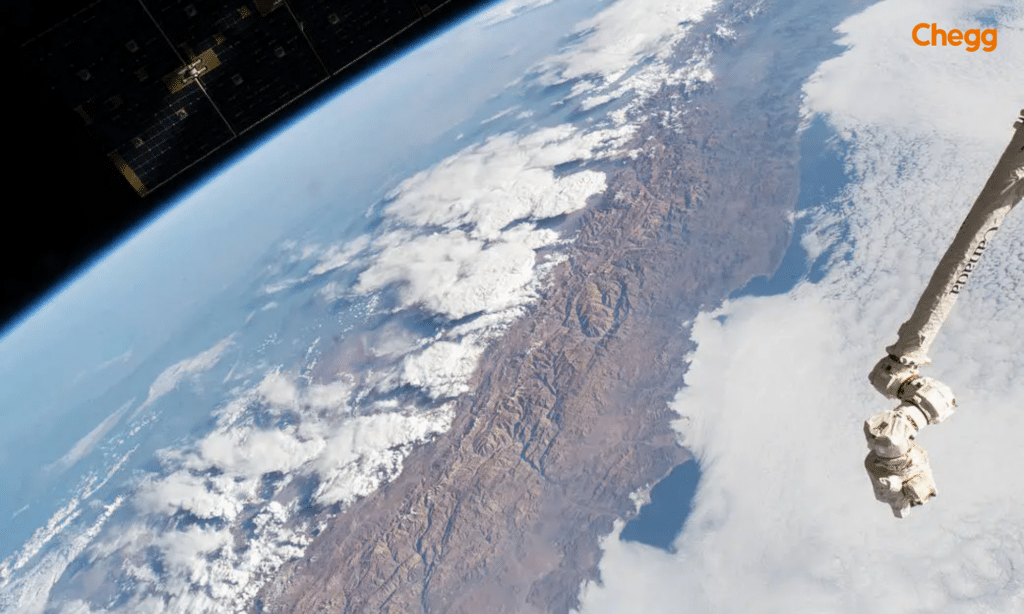
The Andes’ immense path carves its way through seven different nations, shaping the landscape and culture of each.
The Andes are a textbook example of mountains created by subduction, a powerful geological process where one tectonic plate is forced beneath another.
The Andes are not just long; they are also exceptionally high, boasting several records for the Western Hemisphere.
Mountains have a lot of cultural significance to people. This is why people always name them to give them a sense of identity. We have included mountains in every cultural aspect. For example, mythology, religions, metaphors, and more. Even the longest mountain range in the world, such as the Andes, carries deep cultural meaning for the indigenous communities that have lived alongside it for centuries. These majestic ranges not only shape landscapes but also inspire stories, beliefs, and a profound connection to nature.
While the Andes holds the top spot on land, many other massive mountain ranges stretch across the globe. Here is a ranked list of the ten longest continental ranges, each a testament to the powerful geological forces that shape our world.
| Rank | Mountain Range | Approximate Length | Location |
|---|---|---|---|
| 1 | The Andes | 7,000 km (4,300 mi) | South America |
| 2 | Southern Great Escarpment | 5,000 km (3,100 mi) | Southern Africa |
| 3 | The Rocky Mountains | 4,830 km (3,000 mi) | North America |
| 4 | The Great Dividing Range | 3,500 km (2,175 mi) | Australia |
| 5 | Transantarctic Mountains | 3,500 km (2,175 mi) | Antarctica |
| 6 | The Ural Mountains | 2,500 km (1,550 mi) | Russia/Kazakhstan (Europe/Asia) |
| 7 | The Atlas Mountains | 2,500 km (1,550 mi) | Northwest Africa |
| 8 | The Himalayas | 2,400 km (1,500 mi) | Asia |
| 9 | The Altai Mountains | 2,000 km (1,243 mi) | Central and East Asia |
| 10 | The Western Ghats | 1,600 km (990 mi) | India |
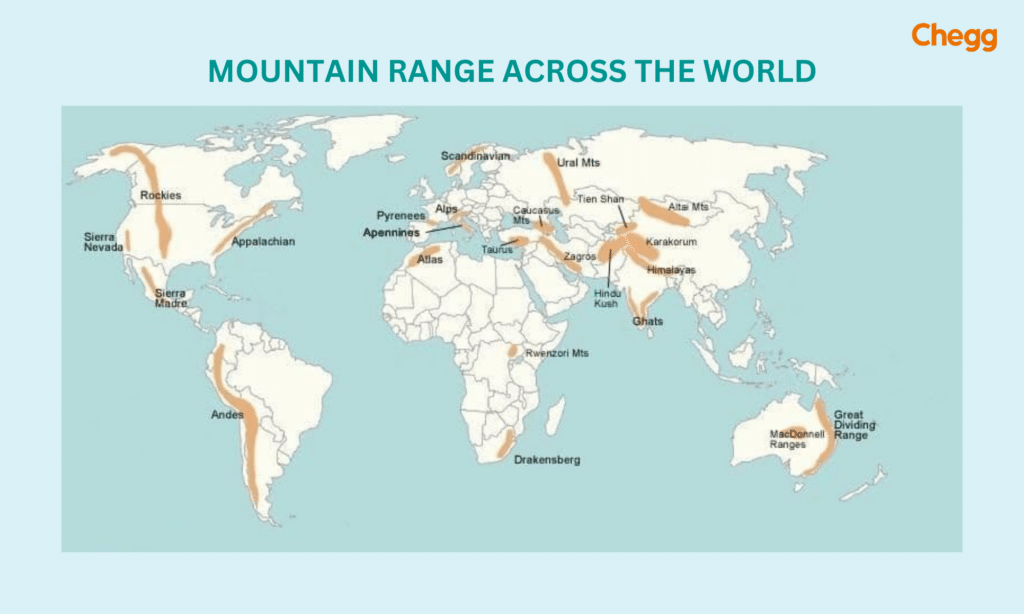
Some of the most recognizable and breathtaking sights on Earth are mountain ranges. Every kind of adventurer may find their perfect mountain range, from the lofty Himalayas to the wild Andes. Some of the most prominent mountain ranges of the world are listed in the given table:
| Continent | Popular Mountains |
| Africa | Atlas Mountains |
| East African Mountains | |
| Asia | Himalayas |
| Japanese Alps | |
| T’aebaek Mountains | |
| Antarctica | Queen Alexandra Range |
| Tangra Mountains | |
| Royal Society Range | |
| Australia | Australian Alps |
| Snowy Mountains | |
| Southern Alps | |
| Europe | Alps |
| Caucasus | |
| Balkan Mountains | |
| North America | The Appalachian Mountains |
| American Cordillera | |
| Sierra Maestra | |
| South America | The Andes |
| Serra do Mar | |
| Cordillera Huayhuash |
There is a mountain range somewhere that will appeal to your particular set of interests. Mountain ranges have something to offer everyone. Whether you are looking for breathtaking beauty or a difficult hiking route, you can find it on a mountain. Some of the mountains also have different cultures.
For example, the Himalayas tend to have a lot of cultural value. This is because of the Buddhist monasteries and Hindu temples present there. Just like this, every mountain range has its history and significance.
Throughout history, we have been in awe of mountain ranges and used them for our interests. Some religious and mythological traditions also feature mountains. For example, the Kikuyu people resorted to Mount Kenya during droughts to pray to their god, Ngai, for rain. Chinese communities typically built temples to honor the mountain god.
The linguistic diversity seen in mountain regions is astounding. There are at least seven indigenous communities located in the Italian Alps with their languages. This shows the region’s rich linguistic and cultural variety.
People can have both a positive and negative effect on the mountains. It’s important to reduce the pollution left behind by humans on these mountains as much as possible. Everyone should be careful of the waste they leave behind whenever they visit these areas. The economic benefits from these mountain ranges should also remain in local communities to decrease poverty.
While this article focuses on length, other mountain records are just as fascinating.
The Himalayas are home to all 14 of the world’s peaks over 8,000 meters.
| Rank | Peak | Height | Range |
|---|---|---|---|
| 1 | Mount Everest | 8,848.86 m | Himalayas |
| 2 | K2 | 8,611 m | Karakoram |
| 3 | Kangchenjunga | 8,586 m | Himalayas |
| 4 | Lhotse | 8,516 m | Himalayas |
| 5 | Makalu | 8,485 m | Himalayas |
The highest mountain range in the world is Mount Everest. It is positioned between Nepal and China’s Tibet autonomous region.
The title of the oldest known mountains on Earth goes to the Barberton Greenstone Belt in South Africa, also known as the Makhonjwa Mountains. These mountains are estimated to be between 3.2 and 3.6 billion years old, containing some of the most ancient and well-preserved rocks on the planet.
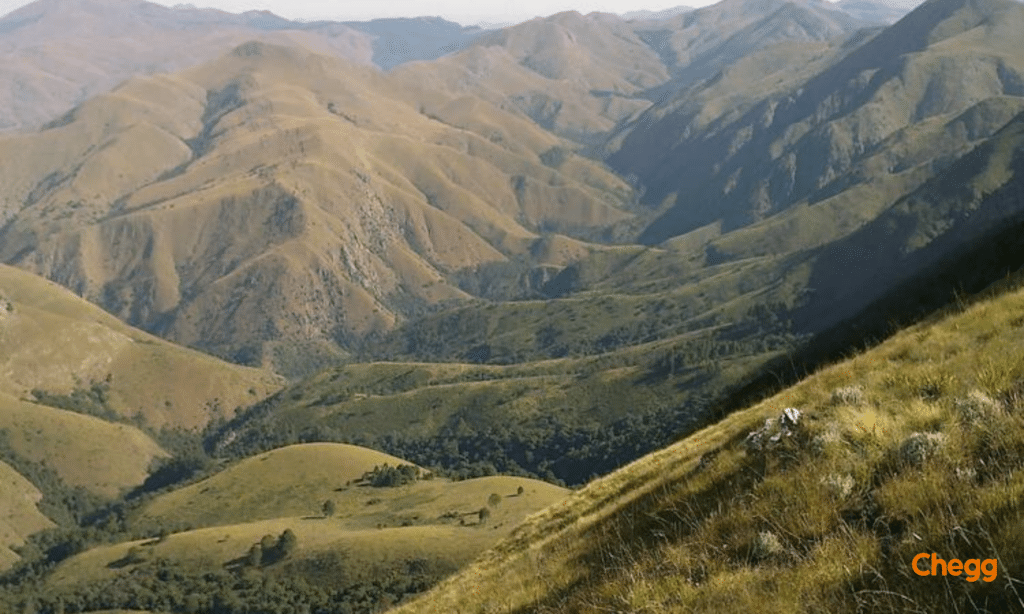
The question of the “longest mountain range in the world” reveals a fascinating truth about our planet: its most immense geological feature is hidden beneath the waves. The Mid-Ocean Ridge is an active, globe-spanning underwater system that fundamentally shapes our world. On land, the Andes Mountains stand as the undisputed champion of length, a continental-scale testament to the power of plate tectonics. By exploring these ranges and the many others that crisscross our continents, we gain a deeper appreciation for the dynamic and ever-changing geology of Earth.
Read More:-
The Mid-Ocean Ridge is the longest mountain range on Earth, stretching for over 65,000 kilometers (40,000 miles) beneath the world’s oceans. It is a continuous volcanic system formed by shifting tectonic plates. The longest mountain range on land is the Andes, which runs for
Mountain ranges are primarily formed by the movement and collision of Earth’s tectonic plates. Major formation processes include:
Convergent Boundaries: Where plates collide, one can slide under the other (subduction) or both can crumple upwards, creating volcanic ranges like the Andes or fold mountains like the Himalayas.
Divergent Boundaries: Where plates pull apart, magma rises to form volcanic ranges, such as the Mid-Ocean Ridge.
The Himalayas are the highest mountain range in the world. This range contains the planet’s highest peak, Mount Everest, at 8,848.86 meters (29,032 feet), along with over 100 other mountains exceeding 7,200 meters in elevation. The Himalayas were formed by the powerful collision of the Indian and Eurasian tectonic plates, which created their extreme height.
The Andes is the longest mountain range in the world, approximately 7,000 kilometers, stretching along South America’s western coast.
The second-longest continental mountain range is the Southern Great Escarpment in Africa, stretching approximately 5,000 km (3,100 miles). While the Andes is the longest on land, the Southern Great Escarpment forms a massive cliff-like edge to the central Southern African plateau, running through countries like South Africa, Namibia, and Angola.
The Barberton Greenstone Belt (3.6 billion years) in South Africa is considered the oldest. Following it are other ancient formations like the Aravalli Range in India and the St. Francois Mountains in North America, both over a billion years old. The precise ranking can be debated, but these are consistently recognized among Earth’s most ancient ranges.
K2 is significantly higher than Nanga Parbat. Standing at 8,611 meters (28,251 feet), K2 is the second-highest mountain on Earth. Nanga Parbat, while still a formidable peak and the world’s ninth highest, has an elevation of 8,126 meters (26,660 feet). Both are part of the greater Himalayan-Karakoram mountain system in Asia.