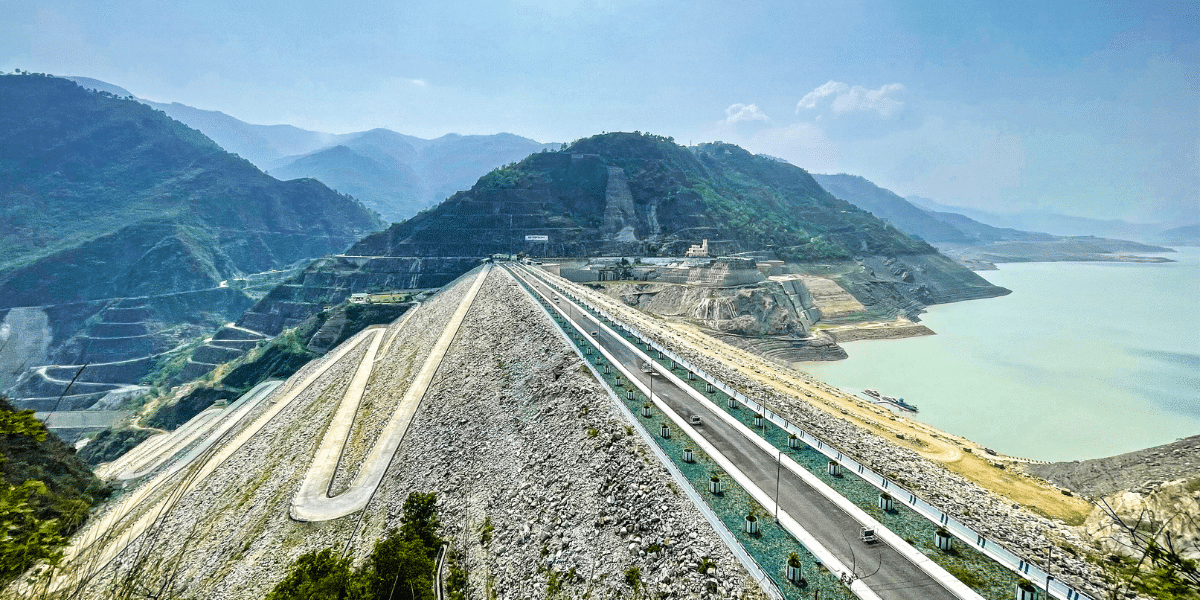
Tehri Dam in Uttarakhand is the tallest dam in India at 260.5 m, built on the Bhagirathi River for power, irrigation, flood control, and water supply.
Tehri Dam also has a reservoir capacity of 3,200 million cubic meters and generates 1,000 MW of hydroelectric power while supporting agriculture and drinking water needs.
Other major dams include Indira Sagar Dam with the largest reservoir volume and Hirakud Dam, the longest dam in India.
Table of Contents
What is the Largest Dam in India?
The largest dam in India is the Tehri Dam, located on the Bhagirathi River in Uttarakhand. Standing at 260.5 meters, it is one of the tallest dams in the world. Tehri Dam is vital for hydroelectric power, irrigation, and flood control, making it a key asset in India’s water management infrastructure. On the other hand, when measuring by the amount of water stored, the Indira Sagar Dam on the Narmada River in Madhya Pradesh ranks as the largest in India.
In addition, the Hirakud Dam in Odisha holds the title of the longest dam in India, stretching over 25.79 kilometers. It’s also recognized as the longest earthen dam globally. Meanwhile, the Bhakra Nangal Dam is notable for being the second-highest concrete dam in the world.
Types of Dams: Largest Dam in India
Dams are crucial structures for water management and come in various types based on their construction and function. Here’s a breakdown:
Based on Structure
Arch Dams: These concrete dams have an upstream curve, resembling an arch. The water pressure pushes against the arch, strengthening the structure. They are ideal for narrow canyons with stable rock walls.
Gravity Dams: Made of concrete or masonry, these dams rely solely on their weight to resist water pressure. Each section is designed to be independent and stable.
Arch-Gravity Dams: Combining features of arch and gravity dams, these dams curve upstream, directing water pressure towards the canyon walls and reducing lateral force.
Barrages: These low-head dams have gates to control water flow. They regulate river levels for irrigation and other purposes.
Embankment Dams: Constructed from compacted soil, sand, clay, or rock, these dams have a waterproof core and a semi-pervious surface.
Rock-Fill Dams: Made of compacted rock and earth with an impervious zone, these dams are often used in areas with abundant rock.
Concrete-Face Rock-Fill Dams (CFRDs): These dams have a concrete face on the upstream side, providing an impervious barrier and reducing uplift pressure.
Earth-Fill Dams: Constructed entirely of earth, these dams require careful compaction and may include a drainage layer.
History of Tehri Dam
The story of the largest dam in India, Tehri Dam, begins in the mid-20th century. The initial idea of constructing a dam on the Bhagirathi River was proposed in the 1950s. However, the actual construction work started much later, in 1978. The project faced numerous challenges, including technical difficulties, financial constraints, and environmental concerns. Despite these hurdles, the determination to harness the river’s potential for irrigation and power generation kept the project moving forward.
After years of relentless effort and overcoming various obstacles, the Tehri Dam was finally completed in 2006. This monumental project was undertaken by the Tehri Hydro Development Corporation (THDC) and stands as a testament to human ingenuity and perseverance.
Structure and Specifications of Tehri Dam
Tehri Dam, the largest dam in India and the fourth highest dam in the world, is a multi-purpose rock and earth-fill embankment dam on the Bhagirathi River, a tributary of the Ganges River. Here are some key structural features and specifications:
The dam’s height makes it the highest dam in India and one of the highest in the world. The vast reservoir created by the dam, known as the Tehri Lake, stretches over 42 square kilometers, providing water storage for irrigation, municipal supply, and hydroelectric power generation.
Significance of the Tehri Dam
The Tehri Dam, being the largest dam in India, holds immense significance in various aspects:
Hydroelectric Power Generation: With an installed capacity of 1,000 MW, the Tehri Dam is a major source of renewable energy. The additional 1,000 MW of pumped storage further enhances its capability to meet peak electricity demands.
Irrigation: The dam provides irrigation water to an extensive area of agricultural land in the states of Uttar Pradesh, Uttarakhand, and Haryana, significantly boosting agricultural productivity.
Flood Control: By regulating the flow of the Bhagirathi River, the Tehri Dam is crucial in controlling floods in the downstream areas, thereby protecting lives and property.
Drinking Water Supply: The reservoir serves as a vital source of drinking water for millions of people in northern India, addressing the water scarcity issues in the region.
Environmental Impact
The construction of the largest dam in India has had significant environmental implications. While the Tehri Dam provides numerous benefits, it has also brought about several environmental challenges:
Submergence of Land: The creation of the Tehri Lake led to the submergence of approximately 100 square kilometers of land, including forests, agricultural fields, and human settlements.
Displacement of People: Around 100,000 people were displaced due to the construction of the dam, necessitating large-scale resettlement and rehabilitation efforts.
Ecological Changes: The alteration of the river’s flow and the creation of a large reservoir have impacted the local ecosystem, affecting aquatic life and biodiversity.
Seismic Concerns: The dam is located in a seismically active region, raising concerns about its structural stability during earthquakes. Extensive engineering measures have been implemented to mitigate these risks.
Economic and Social Impact
The Tehri Dam has had profound economic and social impacts:
Job Creation: The construction and ongoing operation of the dam have created numerous job opportunities for local communities, contributing to regional economic development.
Infrastructure Development: The project has led to the development of essential infrastructure, including roads, schools, and healthcare facilities, improving the quality of life for the local population.
Tourism: The scenic beauty of the Tehri Lake and the surrounding areas has become a popular tourist destination, boosting the local tourism industry and economy.
Educational Opportunities: The project has also spurred educational initiatives, including the establishment of schools and vocational training centers for the displaced and local communities.
Importance of Dams in India
Water Storage and Irrigation: Dams help store water, which is essential for irrigation, especially in areas with irregular rainfall. This ensures a steady supply of water for agriculture, increasing crop yield and food security, which is crucial in a largely agrarian economy like India.
Flood Control: Many parts of India are prone to flooding during the monsoon season. Dams help regulate the flow of rivers, reducing the risk of floods by controlling excess water and releasing it gradually.
Hydropower Generation: Dams are a major source of hydroelectric power in India. The energy generated from these dams helps meet the country’s growing electricity demand, contributing to economic development and supporting industries.
Drinking Water Supply: Dams store water that is treated and supplied to urban and rural populations for drinking and sanitation purposes. In regions where groundwater levels are depleting, dams provide a reliable source of water.
Recreation and Tourism: Dams often become centers for tourism and recreational activities like boating, fishing, and sightseeing, contributing to local economies.
Economic Development: Besides supporting agriculture and industry, the water stored in dams also facilitates transportation, improves access to water for industrial use, and aids in the development of nearby communities.
Environmental Management: While there are debates about the ecological impact of dams, they also contribute to controlling erosion, managing watershed areas, and maintaining ecological balance in river systems.
Tehri Dam in Comparison to Other Indian Dams
When discussing the largest dam in India, it’s important to understand how Tehri Dam compares to other major dams in the country:
Bhakra Nangal Dam: Located on the Sutlej River, the Bhakra Nangal Dam is one of India’s largest gravity dams. While it is lower in height (226 meters) compared to Tehri, it has a larger reservoir capacity and plays a vital role in irrigation and power generation.
Sardar Sarovar Dam: Built on the Narmada River, the Sardar Sarovar Dam has a height of 163 meters and is known for its extensive canal network that supports irrigation and water supply across multiple states.
Hirakud Dam: Situated on the Mahanadi River in Odisha, the Hirakud Dam is one of the longest dams in the world, stretching over 25.8 kilometers. It is a major flood control, irrigation, and hydroelectric power source.
Visiting Tehri Dam
Tehri Dam and the surrounding areas offer a unique blend of natural beauty and engineering marvels. Here are some tips for those interested in visiting:
Location: Tehri Dam is located in the Tehri Garhwal district of Uttarakhand, approximately 280 kilometers from Delhi.
Best Time to Visit: The best time to visit is from March to June and September to December, when the weather is pleasant.
Attractions: Apart from the dam, visitors can enjoy boating and other water sports on the Tehri Lake, explore nearby trekking trails, and visit the Tehri Hydro Development Corporation’s Visitor Center.
Tehri Dam: Interesting Facts
The Tehri Dam, a marvel of engineering, offers a multitude of interesting facts:
World’s Tallest Rock-Fill Dam: It holds the distinction of being the world’s tallest rock-fill dam, showcasing India’s expertise in dam construction.
A Hydropower Giant: The dam’s power plant has a total installed capacity of 1,000 MW, making it a significant contributor to India’s energy grid.
A Tourist Attraction: The Tehri Dam has become a popular tourist destination, attracting visitors with its scenic beauty and the opportunity to explore the surrounding hills.
Wildlife Sanctuary: The Tehri Dam reservoir has created a new habitat for various wildlife species, including birds, mammals, and reptiles.
Challenges and Triumphs: The construction of the dam faced numerous challenges, including environmental concerns and the displacement of local communities. However, through careful planning and mitigation measures, these obstacles were overcome.
The Tehri Dam is not just a structure; it is a symbol of India’s progress and its ability to harness its natural resources for the benefit of its people. It stands as a testament to the country’s engineering prowess and its commitment to sustainable development.
Top 10 Largest Dams in India by Height
India, a land of diverse landscapes, relies heavily on dams for water management. These giants of civil engineering serve multiple purposes, including irrigation, flood control, and hydropower generation. Let’s explore the top 10 largest dams in India, marvels of human ingenuity that play a vital role in the nation’s development.
These top 10 largest dams in India are just a glimpse into India’s vast network of dams. They stand as testaments to the country’s commitment to water management and infrastructure development.
Tehri Dam (Uttarakhand)
Height: 260.5 meters
Multi-purpose: Hydroelectric power, irrigation, water supply to Delhi and Uttar Pradesh
Important for water management and flood control
Bhakra Nangal Dam (Himachal Pradesh)
Height: 225. meters
Location: Sutlej River
Provides irrigation to Punjab, Haryana, and Rajasthan
Generates hydroelectric power
Key role in flood control
Sardar Sarovar Dam (Gujarat)
Height: 163 meters
Location: Narmada River
Provides irrigation to Gujarat, Maharashtra, and Rajasthan
Supplies drinking water and generates power
Significant for water distribution and energy supply
Indira Sagar Dam (Madhya Pradesh)
Height: 92 meters
Location: Narmada River
Important for irrigation, drinking water, and power generation
Benefits of Narmada Valley’s agriculture and urban populations
Nathpa Jhakri Dam (Himachal Pradesh)
Height: 67.5 meters
Primarily for hydroelectric power generation
Contributes to the Northern Power Grid
Helps regulate water flow and reduce flooding
Srisailam Dam (Andhra Pradesh)
Height: 145 meters
Location: Krishna River (Andhra Pradesh and Telangana)
Provides irrigation and power generation for both states
Significant role in flood control and water management
Nagarjuna Sagar Dam (Telangana)
Height: 124 meters
Location: Krishna River
Largest masonry dam in the world
Provides irrigation, generates electricity, and helps with flood control
Hirakud Dam (Odisha)
Height: 60.96 meters
Location: Mahanadi River
Longest earthen dam in the world
Multi-purpose: Irrigation, flood control, hydroelectric power
Tungabhadra Dam (Karnataka)
Height: 49 meters
Location: Tungabhadra River
Provides irrigation, generates power, and supplies drinking water
Important for regulating water flow in agricultural areas
Maithon Dam (Jharkhand)
Height: 50 meters
Location: Barakar River
Primarily for hydroelectric power generation
Supports irrigation and provides water to nearby communities
Top 10 Longest Dams in India by Length
Here are the top 10 longest dams in India based on their length:
Here are the top 10 largest dams in India based on their reservoir capacity:
Rank
Dam Name
Location
State
Capacity (MCM)
Purpose
1
Indira Sagar Dam
Narmada River
Madhya Pradesh
12,220
Hydroelectric, Irrigation
2
Bhakra Dam
Sutlej River
Himachal Pradesh
9,670
Hydroelectric, Irrigation
3
Hirakud Dam
Mahanadi River
Odisha
8,135
Hydroelectric, Irrigation
4
Nagarjuna Sagar Dam
Krishna River
Telangana
7,449
Hydroelectric, Irrigation
5
Srisailam Dam
Krishna River
Telangana
6,760
Hydroelectric, Irrigation
6
Tehri Dam
Bhagirathi River
Uttarakhand
6,330
Hydroelectric, Irrigation
7
Sardar Sarovar Dam
Narmada River
Gujarat
6,320
Hydroelectric, Irrigation
8
Nathpa Jhakri Dam
Satluj River
Himachal Pradesh
4,600
Hydroelectric
9
Maithon Dam
Barakar River
Jharkhand
4,500
Hydroelectric, Irrigation
10
Tungabhadra Dam
Tungabhadra River
Karnataka/Andhra Pradesh
4,380
Hydroelectric, Irrigation
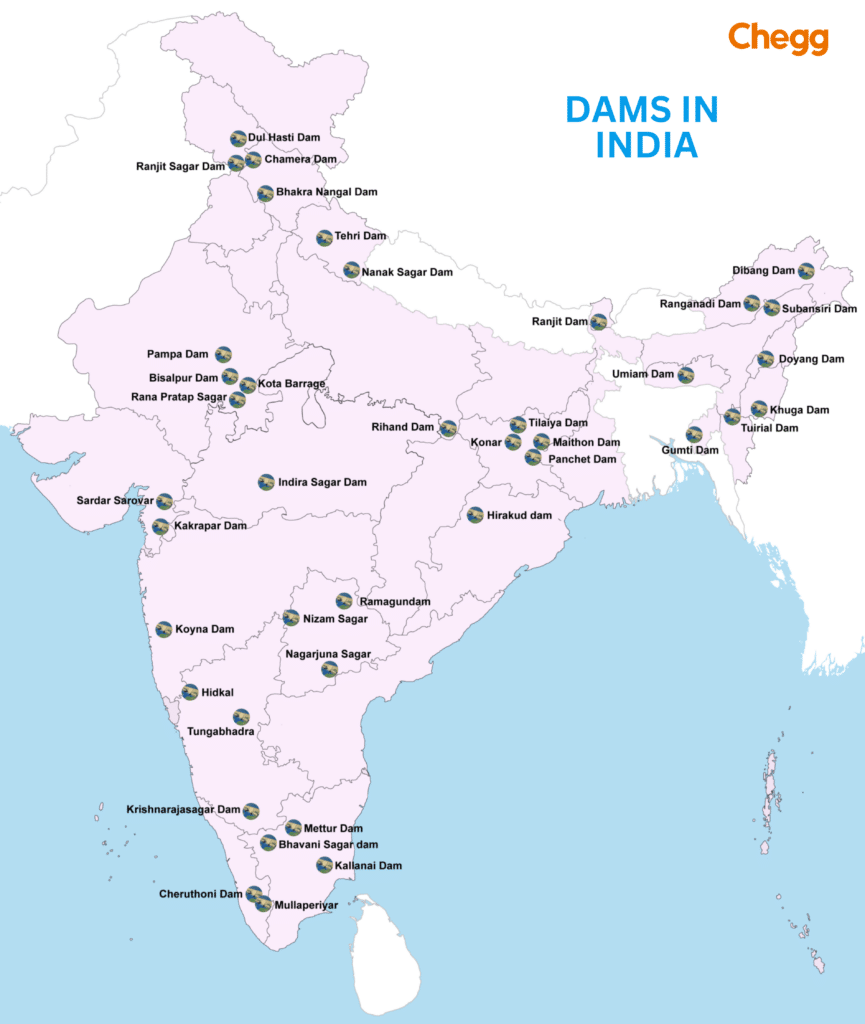
Largest Dam in India on the Map
Creating a visual representation of the largest dams in India on a map can be a helpful way to understand their geographical distribution and significance
Major Dams in India
The major dams in India have benefited inhabitants in several ways, including:
Supplying sufficient water for domestic, industrial, and irrigation needs.
Generating hydroelectric power and facilitating river navigation.
Offering recreational opportunities such as fishing and boating in their reservoirs.
Contributing to flood control and reduction.
Below is a list of some major dams in India, along with their respective states and rivers:
Dam
State
River
Bhavani Sagar Dam
Tamil Nadu
Bhavani
Tungabhadra Dam
Karnataka
Tungabhadra
Rihand Dam
Uttar Pradesh
Rihand
Maithon Dam
Jharkhand
Barakar
Koyna Dam
Maharashtra
Koyna
Bisalpur Dam
Rajasthan
Banas
Mettur Dam
Tamil Nadu
Kaveri
Krishnarajasagar Dam
Karnataka
Kaveri
Indira Sagar Dam
Madhya Pradesh
Narmada
Cheruthoni Dam
Kerala
Cheruthoni
Sardar Sarovar Dam
Gujarat
Narmada
Nagarjuna Sagar Dam
Telangana
Krishna
Hirakud Dam
Odisha
Mahanadi
Bhakra Nangal Dam
Punjab-Himachal Pradesh Border
Sutlej
Tehri Dam
Uttarakhand
Bhagirathi
Largest Dam in India: A UPSC Guide
For UPSC (Union Public Service Commission) exams, it’s important to understand significant infrastructure projects in India, including dams. The UPSC syllabus covers a wide range of topics, and knowledge about the largest dams in India can be relevant for both the Prelims and Mains exams, especially under the sections related to Indian geography, economy, and environment.
When preparing for UPSC, it’s crucial to not only know which dam is the largest based on specific criteria (like height, length, or reservoir capacity) but also to understand the dam’s significance in terms of its purpose, impact on the environment and society, and its role in India’s development.
Here are some key points to remember about India’s largest dams for UPSC preparation:
Tehri Dam: Located in Uttarakhand, Tehri Dam is the tallest dam in India. It’s a multipurpose dam that serves for hydroelectric power generation, irrigation, and flood control. Its construction and impact on the environment and local communities are significant topics.
Indira Sagar Dam: Situated in Madhya Pradesh on the Narmada River, Indira Sagar Dam is the largest dam in India by volume. It’s part of the Narmada Valley Project and is crucial for irrigation and power generation.
Bhakra Dam: Located in Himachal Pradesh, Bhakra Dam is a significant dam for its contribution to irrigation and power generation. It’s part of the Bhakra Nangal Project and is known for being one of the highest gravity dams in the world.
Sardar Sarovar Dam: Situated on the Narmada River, this dam is a key component of the Narmada Valley Project and is located in Gujarat. It’s significant for water supply, irrigation, and power generation.
Hirakud Dam: Located in Odisha on the Mahanadi River, Hirakud Dam is one of the earliest multipurpose river valley projects in India. It’s crucial for flood control, irrigation, and hydroelectric power generation.
For UPSC preparation, candidates should focus on understanding these dams’ geographical, economic, and environmental significance. It’s also important to stay updated with any recent developments, policies, or debates related to these dams, as they can be potential topics for UPSC questions.
Conclusion
The Tehri Dam, the largest dam in India, stands as a symbol of human achievement in harnessing natural resources for sustainable development. Its contributions to hydroelectric power generation, irrigation, flood control, and water supply are invaluable. However, it is essential to balance such large-scale projects with environmental and social considerations to ensure a sustainable future. Through understanding and appreciating the complexities of the Tehri Dam, we can gain insights into the broader challenges and opportunities in the field of water resource management.
The largest dam in India is the Tehri Dam on the Bhagirathi River in Uttarakhand. At 260.5 meters, it is the tallest dam in the country, providing irrigation, drinking water, flood control, and 1,000 MW of hydro power. Together with major dams like Indira Sagar and Hirakud, it showcases India’s engineering strength and vital role in development.
What is the world’s largest dam?
The Three Gorges Dam in China is considered the largest dam in the world. It’s the world’s largest hydroelectric power plant with an installed capacity of 22,500 MW.
The highest dam in India is located in which state?
The highest dam in India, based on its height, is the Tehri Dam, located in the state of Uttarakhand.
What challenges were faced during the construction of the Tehri Dam?
The construction of the Tehri Dam faced several challenges, including environmental concerns, the relocation of thousands of people, and technical difficulties related to building in a seismically active region.
What is the second largest dam in India?
The Bhakra Nangal Dam, located on the Sutlej River in Himachal Pradesh and Punjab, is considered the second largest dam in India in terms of height and capacity.
Is Bhakra Dam the highest dam in India?
Yes, Bhakra Dam is the highest dam in India in terms of its structure. Located in Himachal Pradesh on the Sutlej River, it stands at an impressive 226 meters (741 feet) tall. It plays a key role in water storage, irrigation, and hydroelectric power generation for northern India.
Which is India’s smallest dam?
The smallest dam in India is often cited as the Anangpur Dam in Haryana. Constructed in the 9th century during the reign of King Anangpal Tomar, this ancient gravity dam is just 7 meters high and 50 meters long. Though no longer functional, it’s recognized as one of the smallest and oldest surviving dams in the country.
Which is the 2nd largest dam in Asia?
The second largest dam in India, based on height and reservoir capacity, is often considered to be the Tehri Dam in Uttarakhand. With a height of 260.5 meters, it is Asia’s tallest rock and earth-fill dam and plays a crucial role in hydroelectricity, irrigation, and flood management in northern India.
Authored by, Muskan Gupta Content Curator
Muskan believes learning should feel like an adventure, not a chore. With years of experience in content creation and strategy, she specializes in educational topics, online earning opportunities, and general knowledge. She enjoys sharing her insights through blogs and articles that inform and inspire her readers. When she’s not writing, you’ll likely find her hopping between bookstores and bakeries, always in search of her next favorite read or treat.