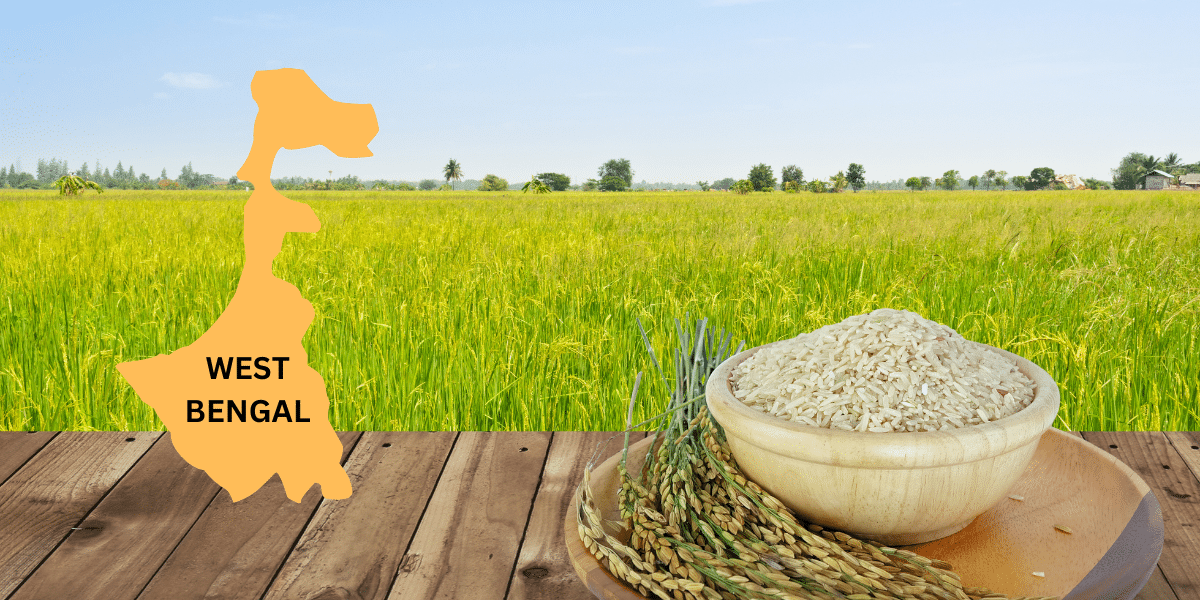
West Bengal leads as the top rice-producing state in India, yielding around 15–16 million tonnes each year. Its fertile Gangetic plains, plentiful rainfall, and nutrient-rich alluvial soil make it ideal for rice cultivation. Uttar Pradesh and Punjab also rank among the major contributors. West Bengal is commonly known as the “Rice Bowl of India”.
Join us on this journey to discover the secrets behind the success of rice production. We’ll explore the rich agricultural practices, the hard work of farmers, and the factors that make West Bengal the highest rice-producing state in India, ensuring we have ample rice on our plates. Get ready for an insightful adventure into the heart of India’s rice production!
India has the greatest agricultural heritage, which is a thousand years old, like civilization. India’s diverse geographical features make it best suited for cultivating a wide range of crops. While all crops hold significance, rice is the most culturally and quantitatively significant crop. Many states are among the largest producers of rice in India.
In India, people know that growing rice is a way of life. It sustains the livelihoods of many people. India is the world’s leading rice producer and exporter, accounting for nearly 40% of the global rice trade in 2022. The increasing global demand for Indian rice varieties contributes significantly to the country’s export earnings. This article focuses on the highest rice producing state in India, West Bengal, and its effect on the country’s economy.
The top 3 largest rice-producing states of India are:
Out of the total rice production in India, about 36% comes from these states. West Bengal produces 13.7% of the total rice produced in India. Meanwhile, Uttar Pradesh and Punjab contribute 12.51% and 11.8% of the total rice produced in India.
West Bengal is the highest-producing state in India, with a substantial 14% share of the nation’s rice production. Most of the state’s rice farming occurs in districts like Bankura, Bardhaman, and Midnapore. Popular varieties grown here by farmers include Swarna, IR36, and Sona Masuri, which are in high demand domestically and abroad.
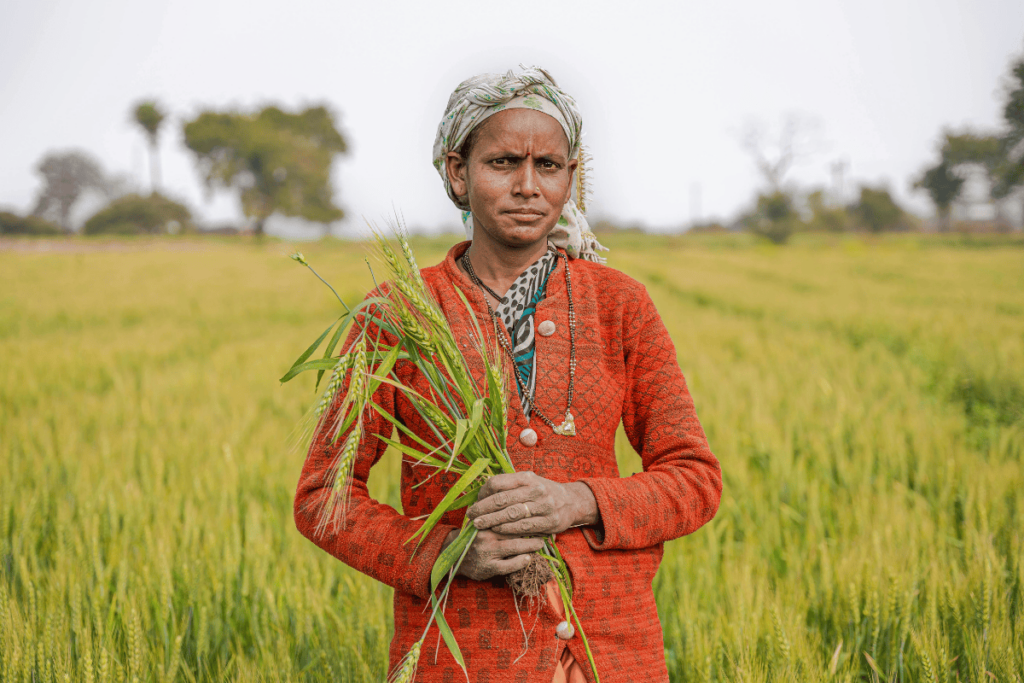
The state’s favorable climate, fertile soil, and adequate irrigation practices contribute to its leading position in rice production, making it a vital contributor to India’s agricultural landscape and economy. Understanding the dynamics of West Bengal’s rice farming helps highlight its significance as the highest rice producing state in India and its impact on food security and export potential.
The highest rice producing state in India, West Bengal, produced 15.75 million tons of rice, underscoring its vital contribution to the country’s overall rice output.
Uttar Pradesh, the second highest rice producing state in India, is known for its lush Gangetic plains, which contribute significantly to the country’s rice production. With a combination of contemporary farming methods and agricultural diversity, the state has seen a substantial increase in producing high-yielding rice varieties such as Pusa Basmati, Sugandha, and Mahsuri. Accounting for 10% of India’s rice production, Uttar Pradesh is recognized for its dedication to the crop. Rice fields can be found in places like Bareilly, Muzaffarnagar, Lakhimpur Kheri, Gorakhpur, and Faizabad. Understanding the role of Uttar Pradesh as India’s second-highest rice producing state helps us appreciate its contribution to the nation’s agricultural landscape and food security.
The highest rice-producing state in India, West Bengal, produced 12.5 million tons of rice, highlighting its crucial role in the overall rice output. This substantial production not only supports domestic consumption but also enhances India’s standing in the global rice market
Punjab is one of the leading contributors to rice production in India, with an annual output of 12 million tons, making it the third highest rice producing state in India. With this accomplishment, Punjab is ranked third in the world for rice production, which is impressive. Punjab, well-known for producing premium basmati rice varieties, such as Pusa Basmati 1509 and 1121, has substantially contributed to the rice industry.
The highest rice producing state in India, West Bengal, produced 11.82 million tons of rice, showcasing its significant contribution to the country’s overall rice output.

The following list includes India’s top 10 highest rice producing states that produce the most rice as of 2025.
| Rank | State | Rice Production (million tonnes) | The area under Rice Cultivation (million hectares) |
| 1 | West Bengal | 15.75 | 5.46 |
| 2 | Uttar Pradesh | 12.5 | 5.86 |
| 3 | Punjab | 11.82 | 2.97 |
| 4 | Tamil Nadu | 7.98 | 2.04 |
| 5 | Andhra Pradesh | 7.49 | 2.16 |
| 6 | Bihar | 6.5 | 3.21 |
| 7 | Chhattisgarh | 6.09 | 3.82 |
| 8 | Odisha | 5.87 | 3.94 |
| 9 | Assam | 5.14 | 2.46 |
| 10 | Haryana | 4.14 | 1.35 |
Regarding rice production in India, the largest rice producer in West Bengal is recognized as the highest rice-producing state in India. The highest rice-producing state in India, understanding more than just the most prominent state is crucial. Rice cultivation thrives in diverse agro-climatic zones, with five central regions standing out:
Here’s a table summarizing the highest paddy crop-producing states in India:
| Rank | State | Paddy Production (in million tons) | Key Districts |
|---|---|---|---|
| 1 | West Bengal | 15.75 | Bardhaman, Birbhum, Murshidabad |
| 2 | Punjab | 11.29 | Ludhiana, Ferozepur, Moga |
| 3 | Uttar Pradesh | 12.77 | Hardoi, Lakhimpur Kheri, Faizabad |
| 4 | Andhra Pradesh | 10.37 | Krishna, West Godavari |
| 5 | Tamil Nadu | 8.31 | Thanjavur, Tiruvarur |
In various regions of the country, farmers cultivate rice, and among them, India’s top 5 rice-producing states are:
With over 129 million metric tons of millet rice production in 2022, India became the second largest producer of rice globally after China. China produced 148 million metric tons of millet rice in the same year. States of India like Punjab, West Bengal, and Uttar Pradesh have helped this country produce millions of tons of rice. Understanding the role of the highest rice producing state in India is essential, as these states contribute significantly to the national rice output and play a vital role in sustaining cultural practices and traditions that revolve around rice.
The country’s role as one of the major rice-producing countries has ensured an ample supply in domestic and global households. Understanding the highest rice-producing state in India, West Bengal, is essential, as it highlights the contributions of this state along with others like Uttar Pradesh and Punjab, all of which have significantly boosted production levels. Globally, India has exported many rice varieties and has played a crucial role as a significant contributor to the market.
According to statistics, the Asia-Pacific region produces and consumes over 90% of the world’s rice. In that region, India and China are leading nations that grow rice. These two countries have vast paddy fields, rural labor, and favorable conditions for rice cultivation. Some more nations are-
| Rank | Country | Notes |
|---|---|---|
| 1 | China | Highest rice producing country |
| 2 | India | Major exporter of rice |
| 3 | Indonesia | Significant production |
| 4 | Bangladesh | Growing rice industry |
| 5 | Vietnam | Major exporter |
This table highlights the top rice-producing countries, with China being recognized as the country with the highest rice production globally. Among the states in India, the highest rice-producing state is West Bengal, followed by other significant contributors like Uttar Pradesh and Punjab.
The Green Revolution started at the beginning of the mid-20th century. William S. Gaud of the United States Agency for International Development coined the term “Green Revolution.” The initiative aimed to alleviate hunger in the Mexican and Indian subcontinent by cultivating high-yielding varieties (HYVs), such as rice and wheat. Scientists developed genetically improved varieties of wheat and rice by incorporating genes responsible for photo-insensitivity in rice. Indian scientists tested these HYVs of wheat and rice in 1962 and 1964, and they allowed the adaptation of these varieties in India’s agriculture sector.
Green Revolution brought HYVs with new agricultural practices like using chemical pesticides (harmful practices), use of tractors, and controlling water supply to the crops (done with the help of canals and tube wells). These advancements significantly impacted rice production, particularly in the highest rice producing state in India, West Bengal, as well as in other states like Punjab and Haryana.
The production of rice has faced many challenges. I will detail these challenges below.
The rice production in India is known for the varieties of rice this country produces. Some of those varieties of rice are –
Improving rice production in India requires a balanced approach combining traditional wisdom with modern innovation. Farmers can adopt high-yield seed varieties, practice crop rotation, and use precision farming tools like drip irrigation and soil health monitoring to enhance output. Integrated pest management and timely use of organic fertilizers also play a key role. Additionally, access to real-time weather forecasts, government support schemes, and training in sustainable techniques empower farmers to boost rice yields while protecting the environment.
By adopting these practices, rice farmers can significantly improve their yield, reduce input costs, and contribute to food security with sustainable methods.
India ranks among the top countries for its rice production, and regions like Uttar Pradesh, the country’s second largest producer of rice in India, while considering rice as a symbol of purity and prosperity. During Hindu weddings, people throw rice into the sacred fire. West Bengal is the Highest Rice-Producing State in India.
The country’s role as one of the major rice-producing countries has ensured ample supply in domestic and global households. The increasing global demand for Indian rice varieties, particularly those from the Top rice producing states in India, West Bengal, contributes significantly to the country’s export earnings.
Read more:

Based on 2024–25 official estimates (reported in 2025), Telangana remained the top rice producer. State and national figures place Telangana’s paddy output near 16.7–16.8 million tonnes for 2024–25, keeping it ahead of Uttar Pradesh and West Bengal – driven by expanded irrigation, intensified cropping and higher yields shown in state reports.
Telangana is currently India’s largest rice-producing state. The Economic Survey 2023–24 reports Telangana produced about 16.63 million tonnes of rice (≈12.2% of national output), surpassing Uttar Pradesh and West Bengal. Recent 2024–25 estimates and state data keep Telangana ahead due to larger paddy area, irrigation, improved seed varieties and agronomy practices.
Telangana ranks first nationally in rice production. The Economic Survey 2023–24 lists Telangana at about 16.63 million tonnes (≈12.2% share), and 2024–25 estimates maintain its top position. Telangana’s rank-one status reflects extensive paddy area, reliable irrigation, multiple cropping cycles, and better agronomic practices across the state.
The top five wheat-producing states are: Uttar Pradesh, Madhya Pradesh, Punjab, Haryana, and Rajasthan. Official agri statistics (Economic Survey and national tables) show Uttar Pradesh leading by a wide margin (over 30 million tonnes), followed by Madhya Pradesh and Punjab; these five together contribute the majority of India’s wheat output.
India holds the second position globally in terms of rice production. The world’s largest producer of rice is China.
The Krishna-Godavari Delta region has historically been referred to as the “Rice Bowl of India,” though Chhattisgarh is also included in this term. The East Godavari district of Andhra Pradesh is also referred to as the “rice bowl” of the state.
Basmati rice is the most exported rice variety from India. It is highly valued for its long grains, aromatic fragrance, and superior taste. Major importing countries include Iran, Saudi Arabia, Iraq, the UAE, and the USA. India is the largest exporter of Basmati rice, contributing significantly to the global rice trade.
Uttar Pradesh is No. 1 in agriculture in India, leading in the production of wheat, sugarcane, and various pulses.