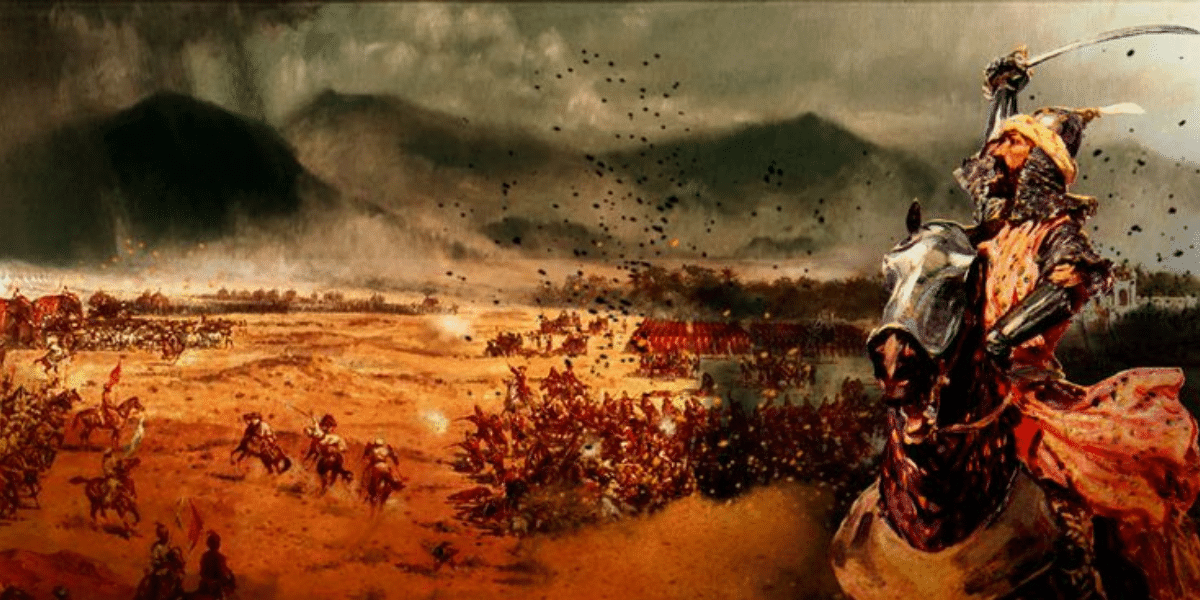
The First Battle of Panipat (1526) stands as a turning point in Indian history, marking the beginning of a new era that reshaped the subcontinent’s political and cultural landscape. Fought on 21 April 1526 between Babur, the ambitious founder of the Mughal Empire, and Ibrahim Lodi, the last ruler of the Delhi Sultanate, this battle decided the fate of northern India. Despite being heavily outnumbered, Babur’s disciplined forces and clever use of military innovations ensured a decisive victory.
What made this battle historic was not just the fall of the Lodi dynasty, but the introduction of gunpowder weapons, field artillery, and the Tulughma strategy tactical maneuvers that showcased Babur’s brilliance as a commander. His flanking tactics and clever deployment of cavalry stunned Ibrahim Lodi’s elephant-based army, proving that strategy could triumph over sheer numbers.
The outcome of Panipat was more than a battlefield success; it was the foundation stone of the Mughal Empire, which would dominate India for centuries. Thus, the First Battle of Panipat is remembered not only as a clash between two rulers but as the beginning of a new imperial legacy that redefined Indian history.
| Aspect | Details |
|---|---|
| Date | 21 April 1526 |
| Location | Panipat, Haryana |
| Belligerents | Babur (Mughal) vs Ibrahim Lodi (Delhi Sultanate) |
| Commanders | Babur, Humayun (support); Ibrahim Lodi |
| Strength (range) | Babur: ~15,000 + 20–24 cannons; Lodi: 30,000–40,000 (some sources: 100,000) |
| Casualties | Lodi: ~15,000–20,000 killed, Ibrahim slain; Babur minimal |
| Outcome | Decisive Mughal victory; Lodi dynasty ends |

Before the First Battle of Panipat (1526), North India was politically unstable. The Delhi Sultanate, once a powerful empire, was in decline after years of weak rulers and court intrigues. Ibrahim Lodi (1517–1526), the last ruler of the Lodi dynasty, faced widespread discontent due to his autocratic style and failure to manage powerful nobles. Several Afghan chiefs and regional governors began asserting independence, further fragmenting the Sultanate’s authority.
Meanwhile, in Central Asia, Babur, a Timurid prince and descendant of both Timur and Genghis Khan, was seeking opportunities to expand his dominion. Having lost his ancestral seat of Samarkand, Babur turned his ambitions toward India, a region known for its wealth and fertile lands. His first raids began in 1519, when he advanced into the Punjab region. Over the next few years, between 1519–1524, Babur launched multiple expeditions, testing the political weaknesses of northern India.
In 1524, Daulat Khan Lodi, governor of Punjab, and Alam Khan, Ibrahim Lodi’s uncle, invited Babur to intervene against the Sultan. Seizing the chance, Babur invaded, capturing Lahore and advancing to Dipalpur. However, internal rivalries and shifting alliances forced him to temporarily retreat to Kabul.
By 1525, Babur returned with renewed determination, assembling a disciplined army equipped with field artillery and cavalry tactics unfamiliar to Indian rulers. Discontent among Afghan nobles and Rajput chiefs weakened Ibrahim Lodi’s position, leaving the Delhi Sultan vulnerable.
Thus, by early 1526, the stage was set for confrontation. Babur’s ambition to establish a new empire and Ibrahim Lodi’s struggle to preserve the crumbling Sultanate would soon collide on the battlefield of Panipat, altering the course of Indian history.
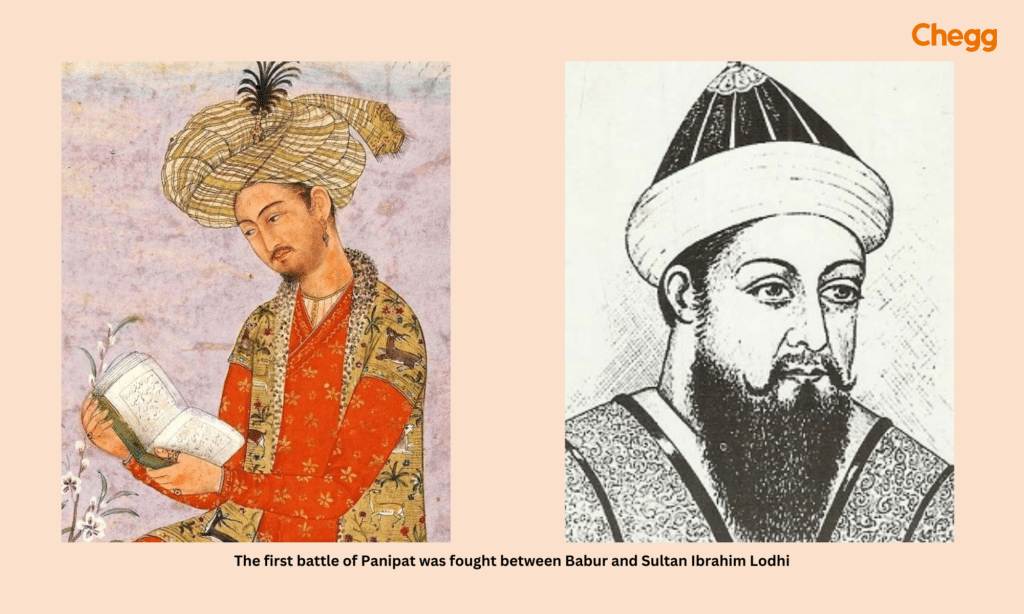
The First Battle of Panipat (1526) was not just a clash of rulers but a confrontation between two contrasting military systems. On one side stood Babur, who introduced advanced Central Asian and Ottoman-inspired warfare tactics, and on the other was Ibrahim Lodi, representing the older medieval Indian style of combat.
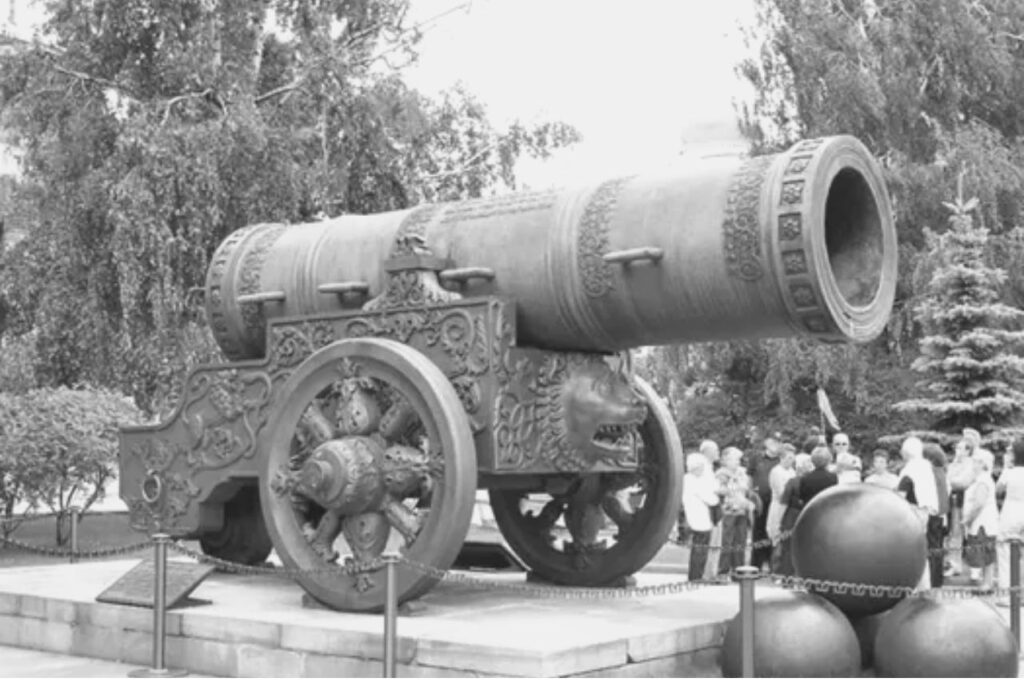
Babur entered Panipat with a relatively small but disciplined force of around 12,000–15,000 soldiers. His army relied on highly mobile cavalry mounted on swift horses, supported by Ottoman-style artillery under the expert guidance of Ustad Ali Quli and Mustafa Rumi Khan. The strategic use of Tulughma (flanking maneuvers) and Araba (wagon defense lines) gave Babur a tactical advantage, allowing his men to outmaneuver and encircle much larger forces. Firearms and cannon fire also created panic among war elephants, a decisive factor in the battle.
In contrast, Ibrahim Lodi commanded a massive force estimated at 40,000–50,000 troops, supported by nearly 1,000 war elephants. His formation was traditional large infantry units, cavalry, and elephants deployed in a frontal assault. However, the sheer size of his army became a disadvantage, as it was less coordinated, slow to maneuver, and vulnerable to artillery fire. The elephants, though terrifying in appearance, proved difficult to control under bombardment, contributing to the collapse of the Sultan’s lines.
The stark difference between Babur’s modernized strategy and Lodi’s traditional approach explains why a smaller Mughal force triumphed over a numerically superior opponent.
| Side | Commander | Army Strength | Key Weapons & Tactics |
|---|---|---|---|
| Mughal Forces | Babur | 12,000–15,000 | Cavalry, field artillery, matchlocks, Tulughma & Araba tactics |
| Delhi Sultanate | Ibrahim Lodi | 40,000–50,000 + 1,000 war elephants | Large infantry, cavalry, elephants, traditional frontal assault |
The First Battle of Panipat (1526) is remembered not just for its scale but for the revolutionary tactics introduced by Babur, which marked a shift in Indian warfare. His use of artillery, mobile cavalry, and disciplined formations outclassed the massive but outdated forces of Ibrahim Lodi.
At the heart of Babur’s deployment was the Ottoman-inspired use of artillery. Under the supervision of Ustad Ali Quli, Babur positioned his cannons behind a defensive line of araba (wagon-carts). These carts were fastened together with rawhide ropes, creating a fortified barricade. Small gaps were left between the carts for cavalry charges. This innovative wagon-cart formation absorbed enemy charges and provided a steady platform for gunners.
Complementing this was the Tulughma strategy, a classic Central Asian maneuver. Babur divided his army into the left, right, and center wings, with flanking cavalry units positioned to encircle the enemy once they were drawn into combat. This allowed the relatively small Mughal force to strike from multiple directions, trapping the larger Lodi army in a pincer movement.
Ibrahim Lodi relied heavily on traditional medieval formations, deploying his 40,000–50,000 infantry and nearly 1,000 war elephants in a straightforward frontal assault. His elephants, intended to terrify and scatter enemy troops, instead became a liability. When struck by cannon fire and musket volleys, they panicked, trampling their own soldiers and throwing the Sultan’s army into chaos. Unlike Babur, Lodi had no effective system of reserves or coordinated flanking maneuvers, leaving his forces vulnerable to encirclement.
Babur’s blend of firepower and mobility transformed the battlefield. His artillery broke the psychological advantage of elephants, while the Tulughma strategy ensured that Ibrahim Lodi’s massive army could not effectively use its numbers. The Mughal victory at Panipat was therefore not just about manpower but about superior tactics, discipline, and innovation factors that defined Mughal warfare in India for generations.
On 21 April 1526, the armies of Babur and Ibrahim Lodi clashed on the plains near Panipat. Ibrahim Lodi commanded nearly 50,000 soldiers and 1,000 war elephants, arranged in a massive traditional formation. He relied on the elephants for a crushing frontal assault. In contrast, Babur, with only 15,000 men, positioned his forces strategically, dividing them into center, left, and right wings under the Tulughma system. He fortified his center with wagon-carts (araba) where artillery and musketeers were placed.
The battle opened with Lodi’s elephants charging at Babur’s center. But Babur’s Ottoman-style cannons roared, filling the air with smoke and thunder. The blasts terrified the elephants, which turned back and trampled Lodi’s own troops, breaking his lines.
Seizing the opportunity, Babur executed the Tulughma maneuver. His cavalry swiftly encircled Lodi’s flanks and rear, while his center held steady behind the barricades, firing volleys of cannon and musket shots. The disciplined Mughal formations contrasted sharply with the disorganized Sultanate troops.
As panic spread, Ibrahim Lodi attempted to rally his men, but the pressure of artillery fire and encirclement proved overwhelming. In the fierce fighting, Lodi was killed along with thousands of his soldiers.
By midday, Babur’s forces had secured a decisive victory. The defeat ended the Lodi dynasty and marked the beginning of Mughal rule in India, reshaping the subcontinent’s history.
| Battle | Date | Parties Involved | Outcome |
|---|---|---|---|
| First Battle of Panipat | 21 April 1526 | Babur vs. Ibrahim Lodi | Akbar’s victory solidified Mughal rule |
| Second Battle of Panipat | 5 November 1556 | Akbar vs. Hemu | Akbar’s victory, solidified Mughal rule |
| Third Battle of Panipat | 14 January 1761 | Maratha Empire vs. Durrani Empire led by Ahmad Shah Durrani | Durrani’s victory, significant Maratha losses |
The First Battle of Panipat (1526) was not merely won by numbers but by Babur’s strategic brilliance and his opponent’s weaknesses. Several key factors explain why Babur’s smaller army triumphed over Ibrahim Lodi’s massive force:
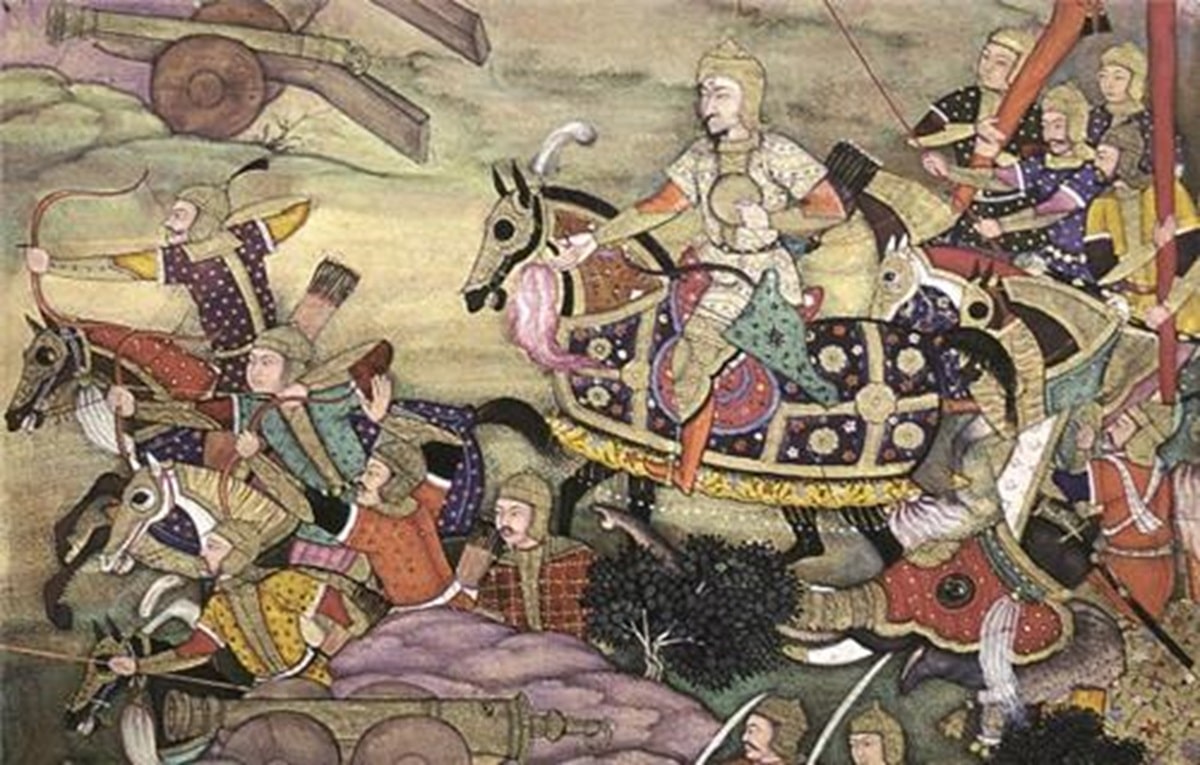
Together, these factors explain why Babur’s modern military approach overcame the Delhi Sultanate’s traditional methods, laying the foundation for the Mughal Empire in India.
The First Battle of Panipat (1526) marked the decisive end of the Delhi Sultanate and the fall of the Lodi dynasty. Ibrahim Lodi’s death on the battlefield left northern India without a strong central authority, creating a political vacuum.
With his victory, Babur laid the foundation of the Mughal Empire, which would dominate India for centuries. Although Babur initially controlled only Delhi and Agra, the triumph gave him legitimacy and attracted the support of Afghan nobles and discontented regional powers. The Rajputs under Rana Sanga soon resisted Mughal expansion, but Panipat ensured that the Lodis would never return to power.
The battle also had symbolic importance in military history. It showcased the superiority of artillery and firearms over traditional reliance on war elephants and mass infantry. Ibrahim Lodi’s elephants, once considered invincible, panicked under cannon fire, proving ineffective in the face of modern weaponry. This battle thus signaled the transition from medieval to early modern warfare in India.
In the larger context, Panipat was not just a dynastic change but a turning point that redefined Indian politics, military strategy, and empire-building. It inaugurated an era of Mughal dominance, shaping the subcontinent’s history for the next three centuries.
Much of what we know about the First Battle of Panipat (1526) comes from both Babur’s own memoirs and the writings of later historians. In his celebrated autobiography, the Baburnama, Babur vividly describes his anxiety before facing Ibrahim Lodi’s much larger force and the decisive role of artillery in securing victory. He proudly noted how the Tulughma strategy and Ottoman-style cannons disrupted the Sultan’s army, calling the triumph a sign of divine favor.
Modern historians have examined Panipat with varying interpretations. Jadunath Sarkar, one of India’s foremost historians of the Mughal period, emphasizes the battle as a watershed moment, not only for its political consequences but also for its military innovations. Satish Chandra, on the other hand, situates it within the broader decline of the Delhi Sultanate, arguing that internal dissension among Afghan nobles was as critical as Babur’s tactical superiority.
There are also differing estimates of the armies’ strengths and losses. Contemporary accounts suggest Babur commanded 12,000–15,000 troops, while Ibrahim Lodi had 40,000–50,000 soldiers and around 1,000 elephants. Casualty figures remain uncertain, with some chronicles claiming up to 20,000–30,000 dead on the Sultan’s side, though exact numbers are debated.
The road to the First Battle of Panipat (1526) was marked by Babur’s repeated invasions and the political decline of the Lodi dynasty. Key events unfolded as follows:
This timeline captures the sequence of invasions, strategy, and final clash that reshaped Indian history.
The First Battle of Panipat (1526) stands as a decisive turning point in Indian history. It not only marked the downfall of the Delhi Sultanate but also laid the foundation of the Mughal Empire, which would dominate North India for over three centuries. The battle symbolized the triumph of gunpowder warfare and mobile tactics over traditional reliance on elephants and massed infantry, signaling the transition from medieval to early modern military systems.
Its importance is also reflected in the continuity of Panipat as a battlefield of destiny in India, with the Second Battle of Panipat (1556) confirming Mughal supremacy under Akbar and the Third Battle of Panipat (1761) reshaping power dynamics between the Marathas and Afghans. Thus, Panipat remains etched in history as a site where the fate of empires was decided.
Read More:-
The 1st Battlе of Panipat took place on April 20, 1526.
In 1526, during the First Battle of Panipat, Babur the founder of the Mughal Empire defeated Ibrahim Lodi, the last ruler of the Lodi Dynasty, paving the way for Mughal dominance in India.
The Battles of Panipat, fought in 1526, 1556, and 1761, were three crucial military engagements in northern India. On the plains of Panipat, approximately 50 miles (80 km) north of Delhi, these battles significantly shaped the region’s history.
The Second Battle of Panipat (1556) was won by Mughal Emperor Akbar, led by his regent Bairam Khan, against Hemu, the Hindu ruler of North India. This victory reestablished Mughal dominance after Humayun’s earlier exile.
The Third Battle of Panipat (1761) was won by Ahmad Shah Durrani (Abdali) of the Durrani Empire against the Maratha Empire led by Sadashivrao Bhau. Though victorious, Durrani withdrew, and the battle marked the decline of Maratha power in northern India.
Prithviraj Chauhan, the Rajput king of Ajmer and Delhi, won the First Battle of Tarain (1191). He defeated Muhammad Ghori, forcing him to retreat. However, Ghori later returned and won the Second Battle of Tarain in 1192.