Sir Chandrasekhara VenkataRaman, one of India’s most celebrated scientists, is renowned for his groundbreaking contributions to the field of physics. Born in 1888 in Tamil Nadu, Raman displayed an early fascination with science, which later translated into a remarkable career marked by curiosity, innovation, and perseverance. His research spanned various areas of physics, but he is most famously remembered for discovering the Raman Effect, which explains the scattering of light and its change in wavelength when passing through different materials.
This discovery revolutionized the study of light and molecular structures and earned him global recognition as the first Asian to receive the Nobel Prize in Physics in 1930. Today, CV Raman’s legacy is celebrated annually on National Science Day in India, inspiring generations of students and scientists to pursue scientific inquiry with passion and dedication. Beyond his awards, he is remembered as a symbol of India’s scientific prowess and a pioneer who placed Indian research on the global map.
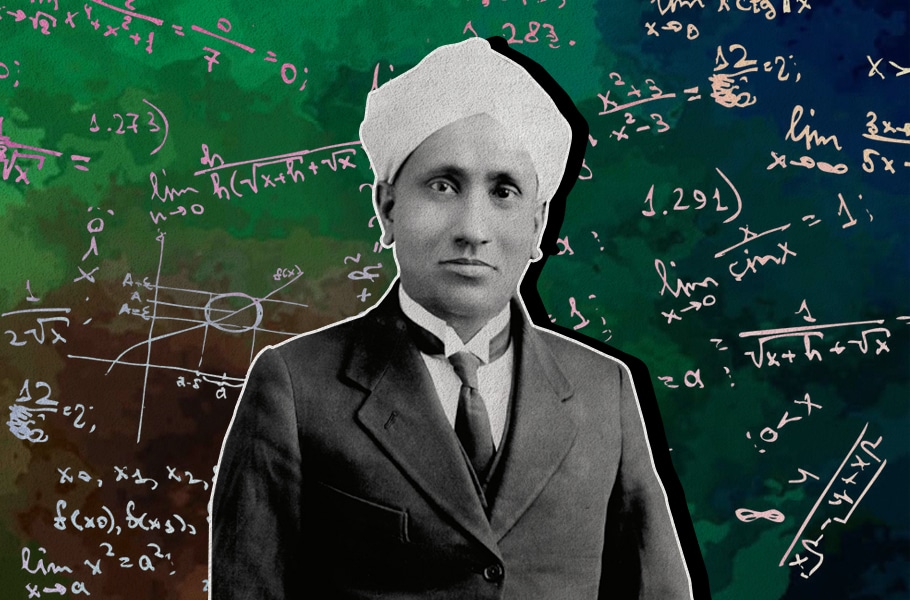
CV Raman was born on 7 November 1888 in Tiruchirapalli, Tamil Nadu, into a family that valued education and intellectual curiosity. His father, a lecturer in mathematics and physics, played a pivotal role in nurturing Raman’s early fascination with the natural world. Growing up in an environment that encouraged questioning and learning, young Raman developed an insatiable curiosity about light, sound, and physics principles, laying the foundation for his future scientific pursuits.
Raman’s formal education began in the schools of Tiruchirapalli, where he quickly stood out for his academic brilliance. He later enrolled at Presidency College, Madras, one of the most prestigious institutions, earning his Bachelor’s and Master’s degrees in Physics. Raman’s exceptional intellect was widely recognized during college, culminating in a Gold Medal in Physics for his outstanding performance. His achievements reflected talent and a deep passion for understanding the laws of nature.
After completing his studies, Raman briefly joined the Indian Finance Department in Kolkata as an assistant accountant-general. Although this position provided stability, his heart remained with scientific research. His dedication to understanding the physical world eventually led him to leave his government job and fully commit to a career in science. This decision led to groundbreaking discoveries and global recognition, establishing him as one of India’s foremost physicists.
After leaving his government job in the Indian Finance Department, CV Raman dedicated himself entirely to scientific research. He joined the Indian Association for the Cultivation of Science (IACS) in Calcutta 1907. At IACS, he conducted pioneering experiments on the behavior of light and sound, establishing himself as a meticulous and innovative experimental physicist. During this time, Raman also mentored young researchers, inspiring many to pursue careers in science and laying the groundwork for India’s emerging scientific community.
In 1933, Raman transitioned to the Indian Institute of Science (IISc), Bangalore, as Director. At IISc, he emphasized rigorous experimental research and encouraged young scientists to explore original ideas. His leadership transformed IISc into a center of excellence in physics, attracting some of the brightest minds in India. Under his guidance, many students went on to make significant contributions to science, reflecting Raman’s dedication to education and mentorship.
Beyond his institutional roles, Raman was committed to strengthening India’s scientific infrastructure. In 1934, he founded the Indian Academy of Sciences, a platform for researchers to collaborate, publish findings, and promote scientific advancement nationwide. This initiative helped create a thriving scientific network and continues to support innovation and research today.

Later, in 1948, Raman established the Raman Research Institute in Bangalore, dedicated to advanced physics, optics, and acoustics research. The institute became a hub for experimental studies, where Raman and his team conducted pioneering work that further cemented his global reputation.
CV Raman’s career journey reflects his groundbreaking research and vision of nurturing talent, building scientific institutions, and creating a lasting impact on Indian science. His efforts ensured that India became a significant player in the global scientific community, inspiring generations of scientists to follow in his footsteps.
The Raman Effect is one of the most significant discoveries in physics. It reveals how light interacts with matter in unexpected ways. Discovered by CV Raman in 1928, this phenomenon involves the inelastic scattering of light. It provides a powerful tool for understanding molecular structures and revolutionizes chemistry, biology, and materials science research.
Before CV Raman’s groundbreaking work, scientists had long studied the scattering of light when it passed through different media. The prevailing theories suggested light scattered elastically, meaning its energy and wavelength remained unchanged. However, subtle anomalies in the scattering of sunlight through liquids hinted at phenomena that were not yet understood. Motivated by curiosity and a desire to explore these unusual patterns, Raman began investigating the behavior of light in more controlled laboratory conditions.
In collaboration with his colleague KS Krishnan, Raman conducted meticulous experiments using sunlight filtered through various liquids. Their work involved observing the scattered light at different angles and under precise conditions, allowing them to measure changes in the light’s properties. On 28 February 1928, Raman made a historic observation: the wavelength of scattered light changed, a phenomenon that the classical theories of elastic scattering could not explain.
This discovery, later named the Raman Effect, revealed that when light interacts with a material, a small fraction of the light is scattered inelastically, meaning it gains or loses energy corresponding to the vibrational modes of the molecules in the material.
The scientific significance of the Raman Effect was profound. It provided a new method to study molecular structures and interactions without destroying the sample. By analyzing the shift in wavelength, scientists could identify the chemical composition and properties of substances. The discovery quickly gained recognition from the global scientific community. In 1930, CV Raman was awarded the Nobel Prize in Physics, making him the first Asian to receive this honor in science.
The applications of the Raman Effect have been wide-ranging and transformative:
The discovery of the Raman Effect established CV Raman as a pioneer in physics and laid the foundation for modern analytical techniques used worldwide. Today, his work inspires scientific exploration, demonstrating how careful observation, innovative experimentation, and relentless curiosity can lead to discoveries with far-reaching impact.
Besides the Raman Effect, CV Raman made remarkable contributions across multiple areas of physics. His research spanned acoustics, optics, crystallography, and natural phenomena, reflecting his versatility as a scientist. These studies advanced theoretical knowledge and had practical applications in material science, music, and understanding the natural world.
Beyond the famous Raman Effect, CV Raman made significant contributions in acoustics, studying the vibrations of musical instruments. His work explained why different instruments produce unique tonal qualities, blending scientific analysis with the art of music. These studies helped lay the foundation for understanding sound production and resonance.
Raman conducted pioneering research in optics, focusing on diffraction and the scattering of X-rays. His experiments provided more profound insights into how light interacts with matter, contributing to understanding wave behavior. This research influenced subsequent spectroscopy, material science, and optical physics studies.
Raman also investigated natural phenomena, such as the blue sky and the sea’s varying hues. He explained these observations through the scattering of sunlight by molecules in the atmosphere and water, bridging physics with everyday experiences and making science more relatable.
In crystallography, Raman studied the optical properties and structures of crystals, including diamonds. His work revealed insights into molecular arrangements and the unique qualities of gemstones, supporting practical applications in material science and gemology.
CV Raman established himself as a versatile and innovative physicist through his acoustics, optics, and crystallography research. His contributions extended far beyond a single discovery, inspiring generations of scientists to explore multiple facets of the natural world.
CV Raman’s groundbreaking research earned him numerous awards and honors in India and internationally. From the Nobel Prize in Physics to the Bharat Ratna, his achievements reflect global recognition of his scientific contributions. These accolades celebrate his discoveries, leadership, and enduring impact on the scientific community.
The most celebrated recognition of CV Raman came in 1930 when he was awarded the Nobel Prize in Physics for his discovery of the Raman Effect. This achievement made him the first Asian and Indian to receive a Nobel Prize in the sciences, placing India prominently on the global scientific map.
Before his Nobel recognition, the British government honored Raman with a knighthood in 1929 to recognize his outstanding contributions to physics. The title “Sir” reflected his early international acclaim even before his most famous discovery.
In 1954, Raman was awarded the Bharat Ratna, India’s highest civilian honor, recognizing his lifelong dedication to scientific research and education. This award celebrated his groundbreaking discoveries and his role in inspiring generations of Indian scientists.
Beyond these prominent awards, Raman received numerous international accolades, including the Lenin Peace Prize. He was also an esteemed member of several scientific academies and societies in India and abroad, reflecting the global respect for his work.
The awards and honors received by CV Raman stand as a testament to his monumental contributions to physics and science at large. They underscore his influence as a pioneer whose work inspires innovation and research worldwide.
CV Raman was married to Sita Raman and maintained a close-knit family that supported his scientific endeavors. Known for his discipline, passion for science, and hands-on mentoring style, he inspired students to pursue curiosity and rigorous experimentation.
Beyond his professional achievements, Raman was admired for his simplicity in lifestyle and independence of thought. He often explored unconventional ideas without concern for recognition. His humility and intellectual rigor made him a revered figure in the scientific community. These traits not only shaped his research approach but also left a lasting impression on generations of scientists in India and around the world.
CV Raman’s contributions went far beyond his discoveries, profoundly shaping the scientific landscape in India. By establishing research as a respected and structured pursuit, he laid the foundation for a strong scientific culture in the country. His leadership at institutions such as the Indian Institute of Science, along with the founding of the Indian Academy of Sciences and the Raman Research Institute, created environments where rigorous experimentation and original research could thrive. These institutions not only facilitated groundbreaking work during his lifetime but continue to serve as hubs for scientific inquiry today.
Raman’s influence also extended to science education, inspiring a generation of students to pursue careers in physics and other scientific fields. He emphasized hands-on experimentation, critical thinking, and curiosity, encouraging young scientists to explore new ideas fearlessly. His commitment to nurturing talent ensured that India would produce future leaders in science and technology.

The impact of his work is celebrated annually on 28 February as National Science Day, commemorating the discovery of the Raman Effect in 1928. This day serves as a reminder of the importance of scientific inquiry, education, and innovation in India, and it continues to inspire students and researchers nationwide.
Globally, the Raman Effect has become an essential tool in modern science. Raman spectroscopy is widely used in chemistry, biology, material science, pharmaceuticals, and forensic science, making Raman’s legacy truly international. His pioneering work advanced knowledge in physics and demonstrated the practical applications of scientific discovery in everyday life.
CV Raman left an enduring mark on science in India and worldwide through his discoveries, mentorship, and institution-building. His legacy lives on in the research culture he fostered, the institutions he shaped, and the countless scientists whose careers were inspired by his vision, curiosity, and dedication.
CV Raman’s life is a testament to curiosity, dedication, and the transformative power of scientific inquiry. From his early fascination with light and sound to the groundbreaking discovery of the Raman Effect, he consistently pushed the boundaries of knowledge and inspired generations of scientists. His contributions went beyond individual research; through his leadership at institutions like the Indian Institute of Science, the founding of the Indian Academy of Sciences, and the Raman Research Institute, he helped establish a strong research culture in India.
The impact of his work continues to resonate globally. Raman spectroscopy, derived from his discovery, is an indispensable tool in chemistry, biology, material science, and medicine, influencing research and practical daily life applications. In India, his legacy is celebrated annually on National Science Day, inspiring students to embrace scientific curiosity and innovation.
CV Raman’s life story is a powerful example for future generations, showing how passion, perseverance, and independent thinking can lead to discoveries that change the world. His enduring influence underscores the importance of CV Raman not only in Indian science but in global scientific progress.
Read more:
Raman was known for discovering the “Raman Effect,” a phenomenon in which light changes its path and wavelength as it scatters.
Raman was awarded the Nobel Prize for discovering the change in wavelength of light as it scatters, also known as the ‘Raman Effect’.
Sir Chandrashekhar Venkatraman was the first Indian scientist to receive the Nobel Prize in 1930 for discovering the change in light wavelength, also known as the Raman effect.
Lord Ernest Rutherford and Charles Wilson were amongst those who nominated C.V. Raman for the Nobel Prize in 1930.
C.V. Raman was famous for discovering the Raman Effect, which describes how light changes frequency when scattered by molecules. This breakthrough earned him the 1930 Nobel Prize in Physics, making him the first Asian to win a scientific Nobel Prize.