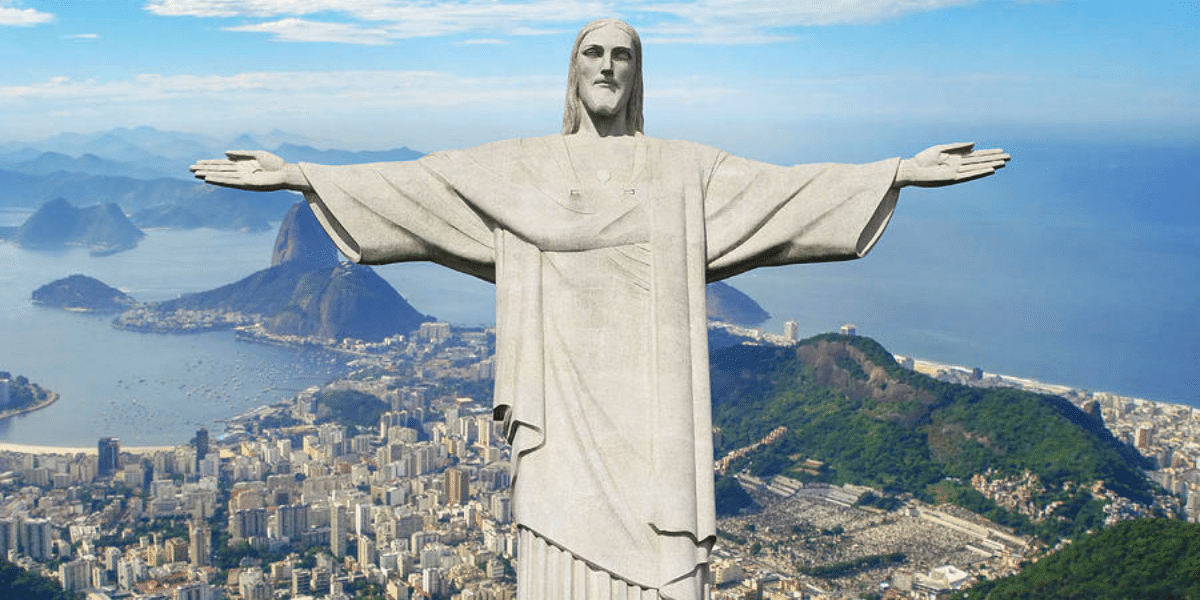
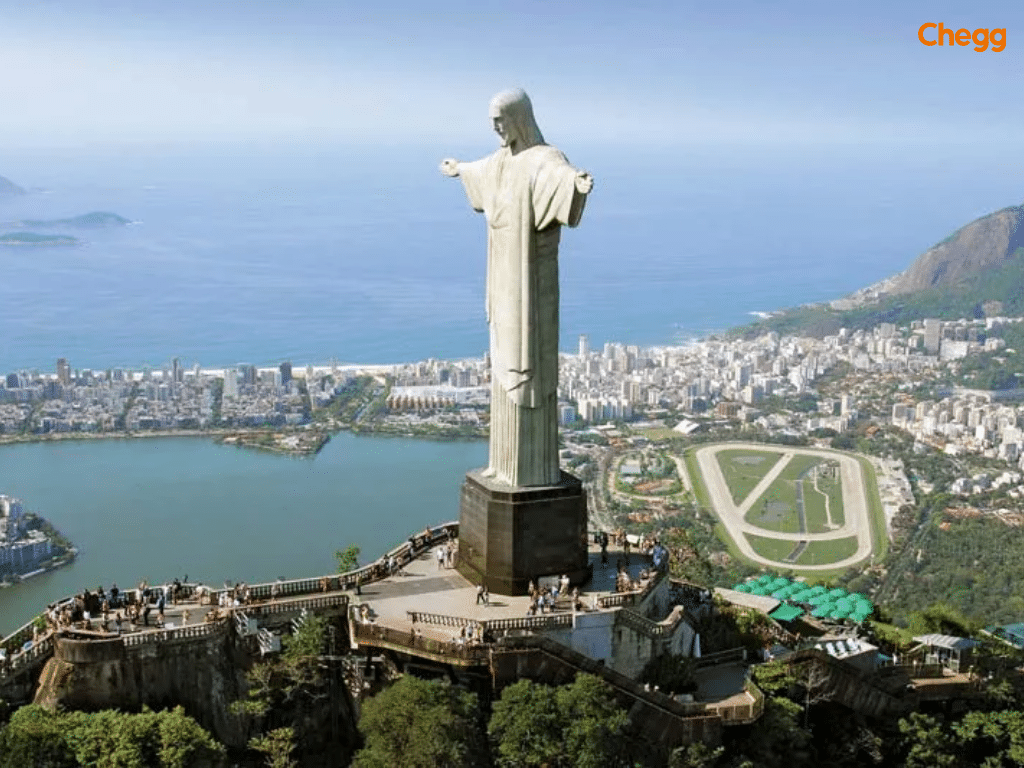
Christ the Redeemer in Rio de Janeiro stands 98 feet tall (plus a 26-foot pedestal) and is one of the New Seven Wonders of the World, symbolizing Christianity and Brazilian culture.
Built between 1922 and 1931, it was designed by Paul Landowski, engineered by Heitor da Silva Costa and Albert Caquot, and sculpted by Gheorghe Leonida.
Made of reinforced concrete and soapstone, the statue sits atop Corcovado Mountain in Tijuca Forest, offering panoramic views and attracting millions of visitors each year.
Table of Contents
Perched atop the 710-meter Corcovado Mountain, the Christ the Redeemer statue (Cristo Redentor) is more than a landmark; it is a powerful symbol of faith, welcome, and Brazilian identity . This colossal Art Deco statue, with its arms outstretched over Rio de Janeiro, is one of the New Seven Wonders of the World and a UNESCO-protected site, drawing millions of visitors each year.
This guide provides a complete overview of the statue, from its deep history to practical tips for your visit.
Christ the Redeemer Statue Meaning
The Christ the Redeemer statue has a few layers of meaning:
Religious Symbol: First and foremost, it’s a powerful symbol of Christianity. The outstretched arms represent Jesus’ sacrifice on the cross, while the statue’s position on top of Corcovado Mountain makes it visible from much of Rio de Janeiro, signifying God’s ever-present watch over the city.
Hope and Redemption: The statue’s name itself, “Christ the Redeemer,” speaks to the concept of redemption through Jesus. It’s a symbol of hope and salvation.
Welcome and Acceptance: The open arms of the statue can also be interpreted as a welcoming embrace, signifying Jesus’ love and acceptance for all people.
National Pride: Built during a time of increased secularism in Brazil, the statue became a point of national pride, a way to reaffirm the country’s Christian identity.
Global Icon: Today, Christ the Redeemer is a world-famous landmark, recognized and admired by people of all faiths and backgrounds.
Christ the Redeemer Statue: History and Origins
The statue’s journey from concept to reality was a monumental effort of faith and engineering.
A Long Gestation: The idea was first proposed in the mid-1850s by a Vincentian priest, Pedro Maria Boss, but was not realized at the time . The project gained momentum in the 1920s when the Catholic Circle of Rio championed it as a symbol of faith .
A Collaborative Design: The project was a global effort. Brazilian engineer Heitor da Silva Costa oversaw the project, while the French-Polish sculptor Paul Landowski created the statue, sculpting the head and hands in his Paris studio. The intricate internal structure was designed by French engineer Albert Caquot, and the face was sculpted by Romanian artist Gheorghe Leonida.
A Changed Design: The initial design featured Christ holding a globe and a cross, but it was changed to the now-iconic open-armed pose, symbolizing peace and welcome .
Innovative Materials: The statue is made of reinforced concrete and clad in a mosaic of millions of triangular soapstone tiles . Soapstone was chosen for its durability and resistance to the elements . The construction, which cost approximately $250,000 (around $4 million today), was funded almost entirely by donations from Brazilian Catholics .
A Daunting Build: Construction lasted from 1922 to 1931. All materials and workers were transported up Corcovado Mountain using the existing Corcovado Railway. The statue was officially inaugurated on October 12, 1931.
Key Facts and Dimensions
Dimension
Measurement
Statue Height
30 meters (98 feet)
Pedestal Height
8 meters (26 feet)
Total Height
38 meters (125 feet)
Arm Span
28 meters (92 feet)
Weight
635 metric tons
Material
Reinforced concrete & soapstone
A Practical Visitor’s Guide
Location: The statue is located at the summit of Corcovado Mountain within the Tijuca National Park, offering panoramic views of Rio, including Sugarloaf Mountain and Guanabara Bay.
How to Visit:
Getting There: The most popular route is the scenic 20-minute Corcovado Railway ride. Official vans are also available.
Accessibility: Elevators and escalators are installed to transport visitors from the summit station to the base of the statue.
Best Time to Visit: Late afternoon offers beautiful lighting and fewer crowds. The statue is also stunningly illuminated at night.
Maintenance and Curiosities
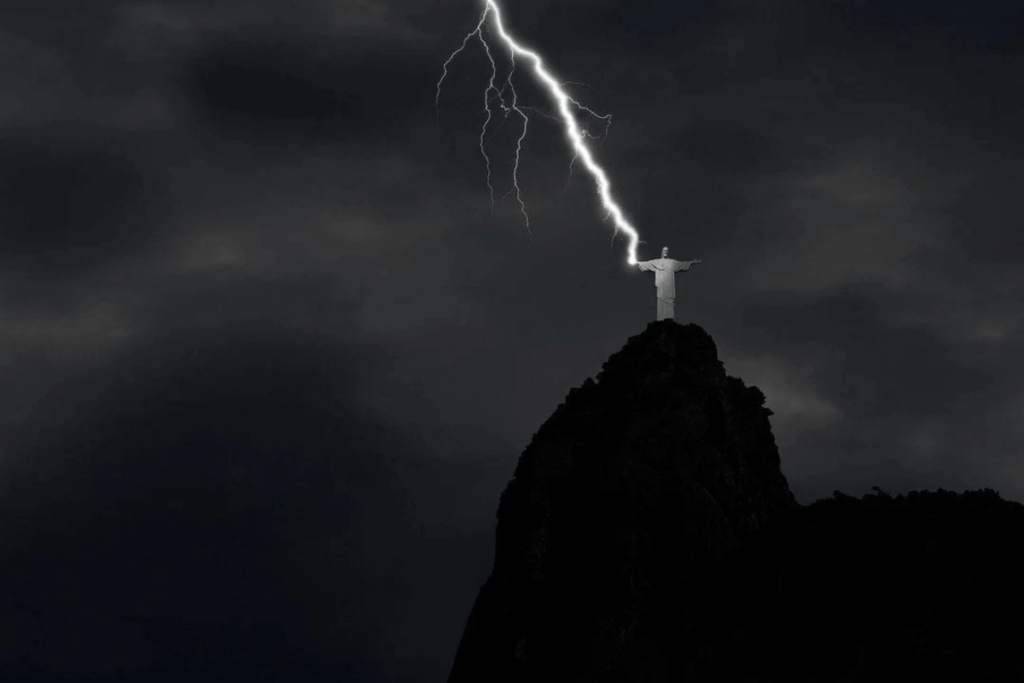
Lightning Strikes: Due to its exposed location, the statue is struck by lightning several times each year. It is equipped with lightning rods, but strikes have caused damage to fingers and the head in the past, requiring ongoing restoration.
Ownership and Preservation: The statue is owned and maintained by the Archdiocese of Rio de Janeiro. Ongoing upkeep is essential to preserve it from the elements.
Christ the Redeemer Statue Building Reason
Christ the Redeemer was built for several key reasons, blending faith, national pride, and hope.
A Symbol of Faith: In the 1920s, the Catholic Church in Brazil sought to create a powerful symbol of Christianity. The statue was intended to be a beacon of hope and a reaffirmation of the nation’s deep-rooted Christian faith.
A Unifying National Icon: As Brazil modernized, the statue was envisioned as a monument to inspire national pride and unity. It was completed for the country’s 100th anniversary of independence, serving as a unifying symbol for all Brazilians.
A Strategic Location: Placing the statue atop Corcovado Mountain was a deliberate choice. Its towering position, visible from across Rio de Janeiro, solidifies its role as a constant, watchful presence over the city.
In short, Christ the Redeemer wasn’t built for a single purpose. It stands as a testament to faith, national identity, and hope, which is why it remains a beloved global icon today.
Christ the Redeemer Statue: Construction and Design
Christ the Redeemer is a feat of engineering and artistry.
A Daunting Build: From 1922 to 1931, workers battled the steep terrain and harsh weather on Corcovado Mountain to assemble the statue, which was pre-fabricated in France and transported up via railway.
A Collaborative Effort: The statue was a global project. Brazilian engineer Heitor da Silva Costa oversaw it, while French sculptor Paul Landowski created the statue’s parts, most notably the compassionate face and hands.
Innovative Materials: The internal structure is made of reinforced concrete, while the exterior is clad in millions of triangular soapstone tiles, chosen for their durability and soft, radiant glow.
Christ the Redeemer Statue Location
Christ the Redeemer is situated atop the 710-meter (2,329-foot) Corcovado Mountain in the Tijuca National Park, overlooking the city of Rio de Janeiro. This strategic location provides breathtaking panoramic views of the city, including sights like Sugarloaf Mountain and the coastline.
The most popular way to reach the summit is via the historic Corcovado Railway, a scenic cogwheel train that takes about 20 minutes to climb through the Tijuca Forest. Once at the top, visitors can take elevators and escalators installed to reach the base of the statue, avoiding a climb of over 200 steps.
To ensure a good experience:
Buy Skip-the-Line Tickets: The site is extremely popular, with long queues. Booking a skip-the-line ticket online in advance is highly recommended.
Visit Early or Late: Go first thing in the morning or later in the afternoon to avoid the biggest crowds and the midday sun
Christ the Redeemer Statue Price
While the original construction cost for Christ the Redeemer is estimated at $250,000 USD (equivalent to roughly $4 million today), its true value is immeasurable as a cultural and religious icon.
Breaking Down the Costs (1922-1931): The significant expense was due to:
Materials: Reinforced concrete for the core and millions of soapstone tiles for the exterior.
Skilled Labor: A team of engineers, sculptors, and construction workers.
Complex Logistics: Transporting all materials and workers up Corcovado Mountain.
Beyond the Build: The initial cost was just the beginning. Ongoing maintenance, repairs from weather damage (like lightning strikes), and restorations are required to preserve the statue for future generations.
5 Reasons for Iconic Status of Christ the Redeemer
Rio’s Christ the Redeemer statue is a global landmark. Here’s why:
Powerful Proportions: The statue’s human form, scaled to immense size, creates a humbling contrast.
Enduring Beauty: The outstretched arms evoke a cross, both aesthetically pleasing and emotionally resonant. Light-colored materials enhance its visibility.
Engineering Marvel: Building such a large structure on a steep mountain was a remarkable feat. Its design allows for ongoing maintenance.
Rich Symbolism: The statue embodies the Christian cross, the memory of Christ’s sacrifice, God’s light, and a blessing upon the city.
Collaborative Masterpiece: From design to construction, the statue reflects the power of collaboration.
Christ the Redeemer Facts
Here are some key facts about the Christ the Redeemer Statue:
Age and Inception: Christ the Redeemer was completed in 1931 making it a historic icon for over 90 years.
Materials Used: The statue is primarily constructed from reinforced concrete and adorned with soapstone tiles. These materials were chosen for their durability and resistance to Rio’s harsh weather.
Significant Weight: This colossal structure weighs approximately 635 metric tons, a testament to its robust construction.
Symbolic Importance: Beyond its architectural marvel it symbolizes peace hope and Brazil’s deep-rooted Christian faith.
Strategic Location: Perched atop the Corcovado mountain it overlooks Rio de Janeiro offering breathtaking panoramic city views.
UNESCO Recognition: In recognition of its cultural significance and architectural brilliance it was designated a UNESCO World Heritage site.
Weather Challenges: The statue has withstood numerous weather challenges including a lightning strike in 2014 that damaged its thumb.
Global Comparison: While it’s among the most famous it’s not the tallest Jesus statue. The “Christ the King” statue in Poland holds that title.
Origins: The idea of constructing this statue dates back to the 1850s but it took decades for the vision to become a reality.
Community Effort: The construction was largely funded by donations from Brazilian Catholics showcasing the community’s commitment to the project.
Sun’s Embrace: One of the statue’s unique features is its position facing the sun which illuminates it beautifully, especially during sunrise and sunset.
Christ the Redeemer Statue Iconic Lightning Strikes
The Redeemer statue often faces the fury of nature. Its stature and position make it a magnet for lightning. These strikes aren’t mere chance occurrences; they’ve played a part in the statue’s story. In 2014 a severe storm descended. Lightning targeted Christ the Redeemer Statue leaving visible scars. The statue’s thumb suffered a chip. This incident captured international attention highlighting the statue’s susceptibility.
Another bolt impacted its head necessitating restoration. The city responded by summoning specialists. They evaluated and mended the damage and the safety precautions are now stringent and effective. Engineers strategically positioned state-of-the-art lightning conductors on the statue. These conductors divert lightning, safeguarding the Redeemer statue’s longevity.
Such episodes underscore the inherent risks and perils. While the Redeemer statue is grand it isn’t impervious. Still, it remains upright braving nature’s challenges. These occurrences contribute to the narrative of Christ the Redeemer Statue exemplifying its enduring strength over the years.
Photographing Christ the Redeemer: Best Spots and Techniques
Christ the Redeemer is a dream for photographers. To capture it best, you need a mix of the right location, perfect timing, and creative technique.
Best Photography Spots
Different locations around Rio offer unique perspectives of the iconic statue. The table below compares the top spots:
Spot
What to Capture
Pro Tip
At the Statue’s Base
Grand, close-up shots emphasizing scale and intricate details.
Use a wide-angle lens to fit the entire figure. For a dramatic perspective, shoot from a low angle, looking up.
Sugarloaf Mountain
Stunning distant shots with the city and bay in the foreground.
A telephoto lens is essential to bring the statue into focus from afar. Sunset here creates dramatic silhouettes.
Mirante Dona Marta
A beautiful side profile of the statue against the Rio cityscape.
This is a “secret” spot with about 90% fewer visitors, allowing for crowd-free shots and tripod use.
Helicopter Tour
Unique, breathtaking aerial perspectives.
Offers a completely unique viewpoint impossible to achieve from the ground.
Essential Techniques for Stunning Shots
Master the Light: The best times are during the golden hours—shortly after sunrise (aim for the 7:20 AM first train) or before sunset. The light is softer, warmer, and more flattering. The statue is also illuminated at night for a different striking effect.
Compose Your Shot: Use the rule of thirds; avoid placing the statue dead-center for a more dynamic image. Look for leading lines, like pathways or railings, and use natural elements like tree branches to frame your shot.
Choose the Right Gear: A wide-angle lens (14-24mm) is perfect for shots at the base, while a telephoto lens (70-200mm or more) is necessary for capturing the statue from other viewpoints like Sugarloaf Mountain.
Key Takeaways for Your Blog Readers
Go Early: The first train at 7:20 AM helps you avoid crowds and capture the best morning light.
Check the Weather: Clear days offer the best visibility. Interestingly, the period just after a rainstorm can provide exceptionally clear air and dramatic skies with fewer tourists.
Shoot from Different Angles: Don’t just take the classic shot. Explore different viewpoints like Mirante Dona Marta for a unique portfolio.
Christ the Redeemer: The Swift Welcome Project
The table below summarizes the key aspects of how this welcome was orchestrated:
Aspect
Details
The Visual
A projection of a “Welcome to Brasil” T-shirt, inspired by the “Junior Jewels” shirt Swift wears in the “You Belong With Me” music video.
The Organizers
A collaboration between Brazilian “Swifties” and the Christ the Redeemer Archdiocesan Sanctuary, led by its rector, Father Omar Raposo.
The Challenge
Father Omar challenged fans to raise money for the poor in exchange for the projection.
The Charity
Fans raised approximately $37,000 in a single day, funding 20,000 kits with water and panettone (a sweet bread) for homeless and food-insecure people in Rio.
This special event highlights the global cultural impact of Taylor Swift and showcases how her fan community can mobilize for positive social change.
Conclusion
Christ the Redeemer stands as a powerful symbol of faith, love, and protection, watching over Rio de Janeiro from atop Corcovado mountain. More than a stunning architectural wonder, it serves as a spiritual beacon for pilgrims and a proud emblem of Brazilian identity. Its outstretched arms offer hope, unity, and comfort to millions, making it not just a global landmark but a timeless representation of compassion, redemption, and cultural pride.
Yes , in 2007 Christ the Redeemer was listed among the Seven Wonders of the World.
How big is the Jesus statue in Brazil?
The Jesus statue in Brazil is 30 meters tall (98 feet) and has an 8-meter pedestal (26 feet), with an arm span of 28 meters (92 feet).
When was Christ the Redeemer built?
Construction began in 1922. It was completed in 1931.
Who designed Christ the Redeemer?
Heitor da Silva Costa was the chief engineer. French sculptor Paul Landowski crafted the face.
How often is Christ the Redeemer struck by lightning?
Due to its height and location, it’s a frequent target. It faces multiple strikes yearly.
Why is Jesus called the Redeemer?
In Christian theology, Jesus is often referred to as the Redeemer or Savior. This title highlights the salvation he achieved, rooted in the concept of redemption, which means “buying back” or “rescuing.
Why is the statue of Christ the Redeemer famous?
Christ the Redeemer is famous as a global Christian symbol and one of the New Seven Wonders of the World. This 98-foot-tall Art Deco statue was built over nine years (1922-1931) and is covered in six million soapstone tiles. Perched atop Rio’s Corcovado Mountain, it is frequently struck by lightning and even contains a small chapel in its base.
How many years did it take to build Christ the Redeemer?
The Christ the Redeemer statue in Rio de Janeiro took about nine years to build, with construction starting in 1922 and finishing in 1931. It was officially inaugurated on October 12, 1931.
Authored by, Muskan Gupta Content Curator
Muskan believes learning should feel like an adventure, not a chore. With years of experience in content creation and strategy, she specializes in educational topics, online earning opportunities, and general knowledge. She enjoys sharing her insights through blogs and articles that inform and inspire her readers. When she’s not writing, you’ll likely find her hopping between bookstores and bakeries, always in search of her next favorite read or treat.