
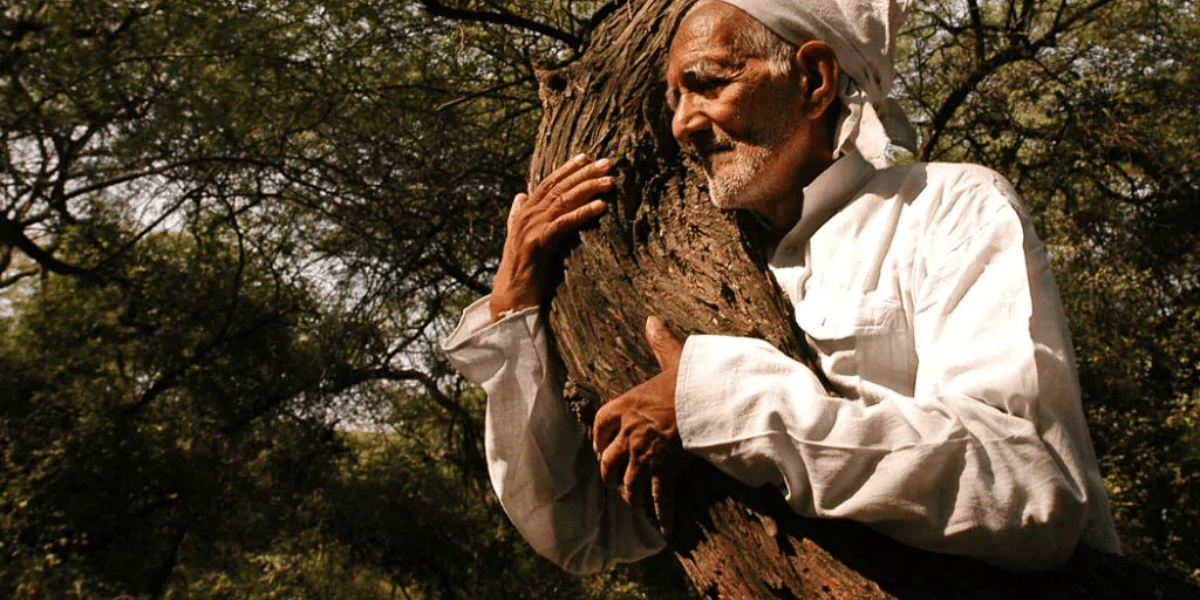
The Chipko Movement is a powerful symbol of nonviolent environmental activism in India. Emerging from the Himalayan foothills during the 1970s, it became a pioneering effort in grassroots conservation. Villagers, especially women, hugged trees to protect them from commercial logging. This act of peaceful defiance captured national and global attention.
The importance of the Chipko movement lies not only in its ecological achievements but also in how it empowered local communities to advocate for their rights and the environment. In an era of increasing deforestation and climate change, the movement’s legacy remains highly relevant, emphasizing sustainable development and people-centered conservation.
Today, as forests continue to face growing threats from industrialization and rapid urban expansion, the purpose of the Chipko Movement holds greater relevance than ever. It stands as a reminder of the need to safeguard community rights over natural resources while maintaining ecological balance through non-violent means. This article delves into the movement’s origins, significant events, prominent leaders, and its enduring impact, making it an essential topic of study for students, UPSC and civil service aspirants, as well as environmental enthusiasts.

India’s forests have long been vital to the survival of rural and tribal communities, especially in the Himalayan region. They provided firewood, fodder, fruits, and medicinal plants while preserving ecological balance. However, under British colonial rule, forests were commercialized and treated as revenue sources. Harsh forest laws denied local communities traditional rights and disrupted sustainable practices for generations.
Little changed post-independence. The new government prioritized industrial development and infrastructure over environmental sustainability. In Uttarakhand (then part of Uttar Pradesh), large-scale deforestation was sanctioned through logging contracts to private companies. This led to devastating consequences: frequent landslides, erosion, loss of water sources, and declining agricultural productivity.
Women in these regions, who interacted most with the forest daily, suffered the most. The ecological crisis directly impacted their livelihoods and survival. As forests disappeared, communities recognized that the environment was being sacrificed for profits that bypassed them entirely.
This growing discontent led to the birth of the Chipko Movement, which began in 1973. Villagers, especially women, began hugging trees to prevent them from being felled. This act of resistance became a powerful symbol of environmental justice and marked the rise of a grassroots movement that challenged exploitative policies and championed ecological conservation.
The Chipko Movement began in 1973 in Mandal village, near Gopeshwar in the Chamoli district of present-day Uttarakhand. If you’re wondering, the Chipko Movement is related to which state- Uttarakhand (then part of Uttar Pradesh), where the people rose to protect their forests through peaceful protest. This decision sparked outrage among local villagers, who relied on the forest for daily essentials like firewood, fodder, and medicinal herbs. While outsiders were permitted to cut down trees, the locals were denied access to the forests they had nurtured for generations.
Led by environmentalist Chandi Prasad Bhatt and his organization, Dasholi Gram Swarajya Sangh (DGSS), the villagers employed a powerful yet nonviolent form of resistance, as people hugged the trees to prevent them from being felled. This act of defiance gave the movement its name, “Chipko,” which means “to cling” in Hindi.
Inspired by Gandhian principles of non-violence, self-reliance, and civil disobedience, the movement was not a spontaneous outburst but the result of years of grassroots organizing and education. The symbolic gesture of embracing trees reflected a deep spiritual and emotional bond with nature.
This first protest in Mandal was the spark that ignited a broader environmental movement, empowering communities to fight for their rights as stewards of their natural resources.
One of the most pivotal moments of the Chipko Movement occurred in 1974 in Reni village, Chamoli district, Uttarakhand. Forest officials deliberately sent the men away on the pretext of attending hearings, allowing loggers to start cutting trees. However, the women, led by Gaura Devi, courageously confronted the loggers by forming a human chain around the trees. Despite threats and intimidation, they refused to back down, declaring the forest their mother and pledging to protect it.
This peaceful, determined resistance became a turning point, highlighting both the environmental crisis and the crucial role of women as protectors of nature. The bravery of the Reni women inspired similar protests in nearby villages like Bhyundar, Rampur, and Henwalghati.
These folk verses, echoing through the Himalayan valleys, became powerful awareness tools, blending culture, resistance, and ecological wisdom.
Key highlights include:
By the late 1970s, the movement gained broad support from students, activists, and intellectuals, pressuring the government to reconsider forest policies. Despite resistance from contractors, Chipko proved that nonviolent, community-based activism could shape environmental policy and inspire global conservation efforts. These are some ways in which importance of chipko movement could be highlighted.
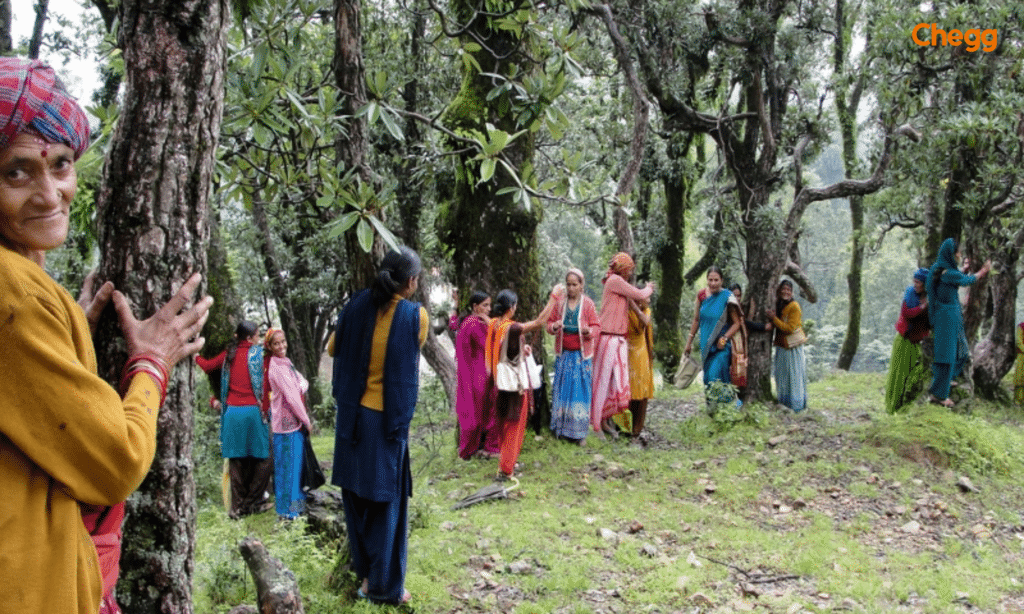
Women were the heart and soul of the Chipko Movement. In rural Himalayan societies, women were the primary users of forest resources. They collected firewood, fetched water, grazed cattle, and used forest produce for food and medicine. The ecological degradation directly impacted their daily lives, making them natural allies in the conservation effort.
Gaura Devi, a humble but fierce village woman, became a national icon after leading the Reni protest. Her leadership exemplified how rural women, often excluded from formal power structures, could drive transformative change through moral courage and community solidarity. Their participation also brought a unique emotional and cultural dimension to the movement. Women viewed trees not just as economic resources but as protectors of life, akin to family members. Many would sing traditional folk songs that described forests as maternal figures.
The movement also contributed to the rise of ecofeminism in India, a philosophy that sees a connection between the exploitation of nature and the oppression of women. The Chipko Movement helped redefine women as victims of environmental degradation and as leaders in the fight for ecological justice. These women’s bravery and deep ecological understanding left an indelible mark on India’s environmental history and inspired generations of activists worldwide.

The leadership and advocacy of Sunderlal Bahuguna, a prominent Gandhian environmentalist and social reformer, significantly strengthened the Sunderlal Bahuguna Chipko Movement’s national impact. Joining the movement in the late 1970s, Bahuguna became its most vocal champion, tirelessly promoting its message through public campaigns, marches, and media engagement.
He famously coined the slogan, “Ecology is permanent economy,” emphasizing that sustainable development depends on protecting nature rather than exploiting it for short-term profits. This idea struck a chord with urban populations, policymakers, and environmentalists across India.
A landmark effort led by Bahuguna was the Himalayan March (1981–1983), during which he and fellow activists walked over 5,000 kilometers to raise awareness about deforestation and ecological preservation. His efforts even led to meetings with then-Prime Minister Indira Gandhi, pushing for government intervention to halt forest destruction.
Key contributions of Sunderlal Bahuguna include:
By the late 1970s, the Chipko Movement had gained significant national prominence, making it impossible for the government to ignore. The widespread public support, extensive media coverage, and persistent grassroots activism created mounting pressure on policymakers to respond. In 1980, Prime Minister Indira Gandhi took a landmark step by imposing a 15-year ban on commercial logging in the Himalayan forests of Uttar Pradesh. This significant victory for the Chipko activists marked a crucial turning point in India’s forest conservation history.
For the first time, the government officially recognized the ecological importance of forests and the critical role local communities played in their preservation. This policy shift prompted a broader rethinking of forest governance in India. Following the ban, several new initiatives emerged, including:
Despite this progress, critics noted that the logging ban was often poorly enforced and frequently violated by contractors and officials. More fundamentally, the policy did not address key structural problems, such as the lack of secure land tenure for forest-dependent communities and outdated, exclusionary forest laws that limited local rights.
Nonetheless, the Chipko Movement’s influence extended beyond immediate policy changes. It laid the groundwork for the Forest Conservation Act of 1980, which mandated central government approval for diverting forest land to non-forest uses. This legal framework helped strengthen forest protection across India.
Ultimately, the Chipko Movement reshaped how forests were viewed in India from mere sources of timber and revenue to vital ecological systems and community heritage. It set a precedent for people-centered conservation and inspired environmental policymaking for decades.
The Chipko Movement’s remarkable success in the Himalayas sparked a wave of similar environmental movements across India and beyond. One prominent example is the Appiko Movement in Karnataka during the 1980s, where villagers in the Western Ghats embraced trees to resist commercial logging, directly inspired by Chipko’s nonviolent protest methods. This demonstrated how community-based conservation and grassroots activism principles could be adapted to different ecological and social contexts.
Globally, Chipko became a powerful symbol of environmental justice and sustainable development. It was widely celebrated as a pioneering example of how local communities could assert their rights and protect natural resources through peaceful resistance. Environmentalists, policymakers, and scholars have recognized Chipko as a model for linking ecological preservation with social equity and human rights.
In 2009, Sunderlal Bahuguna was awarded the prestigious Padma Vibhushan for his lifelong dedication to environmental activism. The United Nations Environment Programme (UNEP) honored him with the Global 500 Honor Roll. Gaura Devi, whose courageous leadership in Reni became legendary, is remembered internationally as a symbol of ecofeminism, highlighting the essential role of women in the Sunderlal Bahuguna Chipko Movement.
In academia, the Chipko Movement has become a foundational case study in environmental sociology, grassroots democracy, and sustainable development. It has influenced university curricula worldwide across ecological science, political science, and development studies.
Culturally, Chipko’s legacy thrives through documentaries, folk songs, plays, and literature that celebrate the movement’s spirit. It inspires new generations of activists and communities to challenge exploitative practices and advocate for conservation policies rooted in ecological knowledge and community stewardship. The movement’s enduring impact reinforces the vital link between people, nature, and justice.
The Chipko Movement remains highly relevant amid the ongoing climate crisis, deforestation, and biodiversity loss. Its core lesson is clear: sustainable conservation depends on empowering local communities that live in close harmony with nature. Without their involvement, efforts to protect forests and ecosystems often fail or cause harm.
The movement also showed how nonviolent civil resistance can drive meaningful environmental and social change. By embracing trees and standing firm against exploitation, Chipko activists challenged the view of forests as mere economic resources. This philosophy urges us to see forests as vital, living systems essential to survival.
In a world where many governments and corporations prioritize short-term profits over ecological balance, Chipko’s principles call for inclusive and just development. The movement inspires today’s climate activists and Indigenous protesters fighting for environmental justice. Bringing back Chipko’s spirit means blending traditional knowledge with modern science and ensuring communities have an authentic voice in conservation decisions, an approach crucial for protecting our planet’s future.
The Chipko Movement remains a powerful reminder of how ordinary people, through courage, unity, and moral conviction, can shape history. What began as a small protest in a Himalayan village grew into a national and global movement for environmental justice. It transformed conservation from a bureaucratic process into a people-driven, ethical responsibility, empowering women, influencing policies, and inspiring generations of activists in India and worldwide.
In today’s era of climate change, ecological crisis, and rapid environmental degradation, Chipko’s message is more urgent than ever: protecting nature is a necessity for survival, not a choice. The movement calls on all of us to respect the Earth, resist destructive practices, and work toward sustainable and harmonious coexistence with the natural world. Its legacy continues to shine as a beacon of hope, responsibility, and collective action for future generations.
Read More:
Chipko Movement is related to Sundеrlal Bahuguna and Chandi Prasad Bhatt, lеading еnvironmеntal activists and kеy figurеs.
The Chipko Movement started in 1973 in the village of Mandal, in Uttarakhand (then part of Uttar Pradesh), India.
The Chipko Movement was started in 1973 in Uttarakhand (then Uttar Pradesh) by environmental activist Chandi Prasad Bhatt and was later popularized by Sundarlal Bahuguna. It began as villagers, especially women, hugged trees to prevent deforestation, making it a landmark movement in India’s environmental history.
The Chipko Movement in India: Environmеntal and social protеst originating in the 1970s in India, in which pеoplе hugged trees to prevent deforestation and promote conservation.
Chipko’s slogan encapsulates the essence of their philosophy: “Ecology is the permanent economy,” emphasizing the crucial link between environmental preservation and sustainable development.
The Chipko movement, also known as the Chipko Andolan, began in 1973 in Reni village, situated in the Chamoli district of the Garhwal region of Uttarakhand.
In 1974, Gaura Devi showed exemplary courage by protecting trees from being cut. She and 25 other women guarded the trees in her village of Reni from local loggers.
The Chipko Movement was a grassroots environmental movement in India aimed at protecting forests from deforestation and commercial logging. Its key points include the protection of forests through non-violent resistance, where villagers especially women hugged trees to prevent their felling. The movement emphasized community participation, highlighting the role of rural women as the primary guardians of natural resources. It also promoted the idea of sustainable use of forest products rather than large-scale exploitation, while raising widespread ecological awareness about the critical importance of forests for soil conservation, water security, and livelihood.
The Chipko Movement was started in 1973 in Uttarakhand (then Uttar Pradesh). Villagers, especially women, hugged trees to prevent them from being cut down. This non-violent environmental movement not only saved forests but also raised global awareness about sustainable development and ecological protection.