The Battle of Haldighati is one of the most iconic clashes in Indian history, symbolizing the unyielding spirit of freedom and resistance. Fought on 18 June 1576 in the narrow mountain pass of Haldighati in Rajasthan, it was more than a military encounter; it was a defining moment in the struggle between regional sovereignty and imperial expansion.
On one side stood Maharana Pratap, the valiant ruler of Mewar, embodying Rajput pride, independence, and defiance. On the other hand, the Mughal army, commanded by Raja Man Singh of Amber under the authority of Emperor Akbar, sought to consolidate Mughal dominance over Rajputana. The confrontation was fierce, leaving a lasting mark on Indian history.
Though the battle ended without a decisive victor, it remains significant for its larger meaning. It was not merely a fight for land but a symbol of the Rajput determination to preserve their honor and autonomy against one of the most powerful empires of the time. This summary of the battle of Haldighati highlights the courage, sacrifice, and resilience that continue to inspire generations.

To understand the causes of the Battle of Haldighati, it is crucial to examine the political landscape of Mewar and Mughal India in the mid-16th century. Mewar, ruled by the Sisodia dynasty, had long been a symbol of Rajput valor and independence. Unlike other Rajput states that accepted Mughal suzerainty, Mewar remained fiercely autonomous. By 1576, under Maharana Pratap, this pride became the central cause of conflict.
Emperor Akbar’s Rajput policy combined diplomacy with strategic expansion. He forged alliances through marriages, appointments, and autonomy in return for loyalty. While states like Amber, Marwar, and Bikaner accepted Mughal authority, Mewar resisted. Maharana Pratap rejected matrimonial or political ties that could compromise sovereignty.
The conflict was both political and symbolic. Chittorgarh, Mewar’s capital, was prestigious and strategically located, controlling vital trade and military routes. For Akbar, conquering Mewar meant consolidating Rajputana; for Pratap, submission would betray his ancestors and Rajput honor. Failed negotiations and rising tensions led Akbar to send Raja Man Singh in mid-1576, resulting in the historic clash at Haldighati, a battle between imperial ambition and Rajput pride.
The Battle of Haldighati gets its name from the terrain where it was fought. “Haldighati,” meaning the “turmeric-colored pass,” refers to the yellowish soil of the Aravalli Hills. This narrow mountain pass lies between Rajsamand and Pali districts in Rajasthan, about 40 kilometers from Udaipur, Mewar’s capital.
The location held immense strategic value in the 16th century. It connected Mewar with western Rajasthan, including Marwar, and further toward Gujarat. Controlling this pass meant dominance over trade and military routes, making it critical for Mewar and the Mughal Empire.
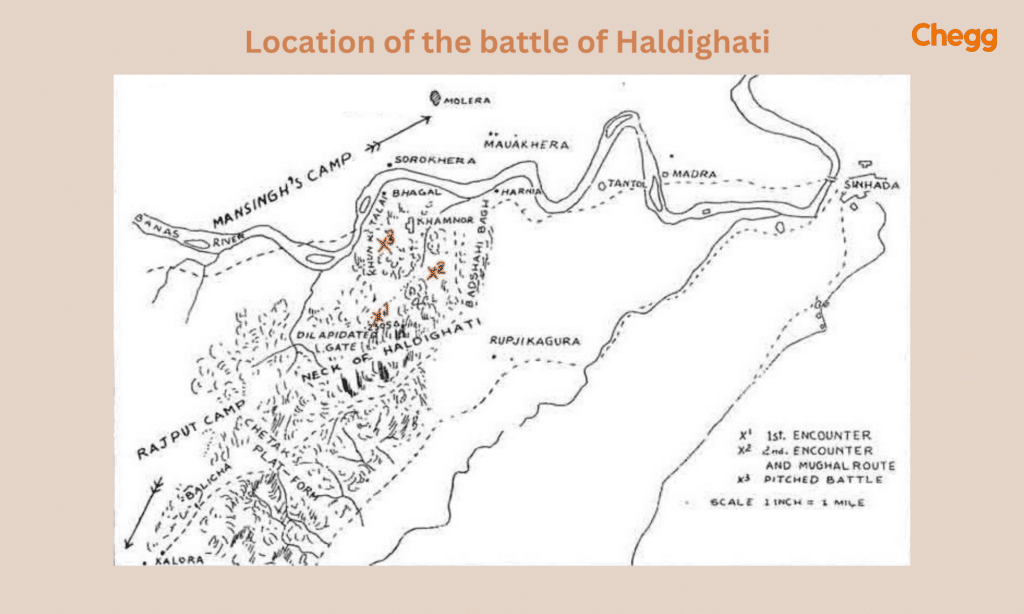
The terrain influenced the battle’s outcome. Steep hills flanking the pass restricted the Mughal cavalry and elephants, while Maharana Pratap, familiar with the area, used this to his advantage. His smaller force could partially neutralize the Mughal numerical superiority. However, the narrow pass also limited prolonged defense, challenging reinforcements, and sustained resistance.
When Maharana Pratap faced the Mughal Empire at Haldighati, it was a battle of courage versus numbers. Pratap led around 20,000 troops, including Rajput warriors, the Afghan commander Hakim Khan Sur, and Bhil tribes skilled in guerrilla warfare. His army relied on cavalry, supported by infantry, archers, and war elephants. At the forefront rode his legendary horse, Chetak, whose bravery became as famous as his master’s.
The Mughal forces, commanded by Raja Man Singh I of Amber under Akbar, numbered between 40,000 and 80,000. They comprised cavalry, infantry, artillery, and armored elephants. Many Rajput allies loyal to Akbar strengthened the army, reflecting the Mughal strategy of combining imperial might with regional cooperation.
The battle was more than a clash of armies; it symbolized ideals. Pratap defended Mewar’s independence with valor, while Man Singh carried out Akbar’s vision of empire. The narrow pass of Haldighati amplified the bravery of Pratap’s smaller army and tested Mughal discipline, making it a historic encounter of strategy, courage, and resistance.
The Battle of Haldighati story unfolded on 18 June 1576, in the narrow, turmeric-colored mountain pass between Rajsamand and Pali. Two contrasting armies faced each other: Maharana Pratap’s Mewar forces, small but fiercely loyal, and the Mughal army led by Raja Man Singh I, representing Akbar’s imperial might.
When asked who fought the Battle of Haldighati, Maharana Pratap and his loyal allies opposed the Mughal army led by Raja Man Singh I. This confrontation is remembered more for valor and resilience than for conquest.
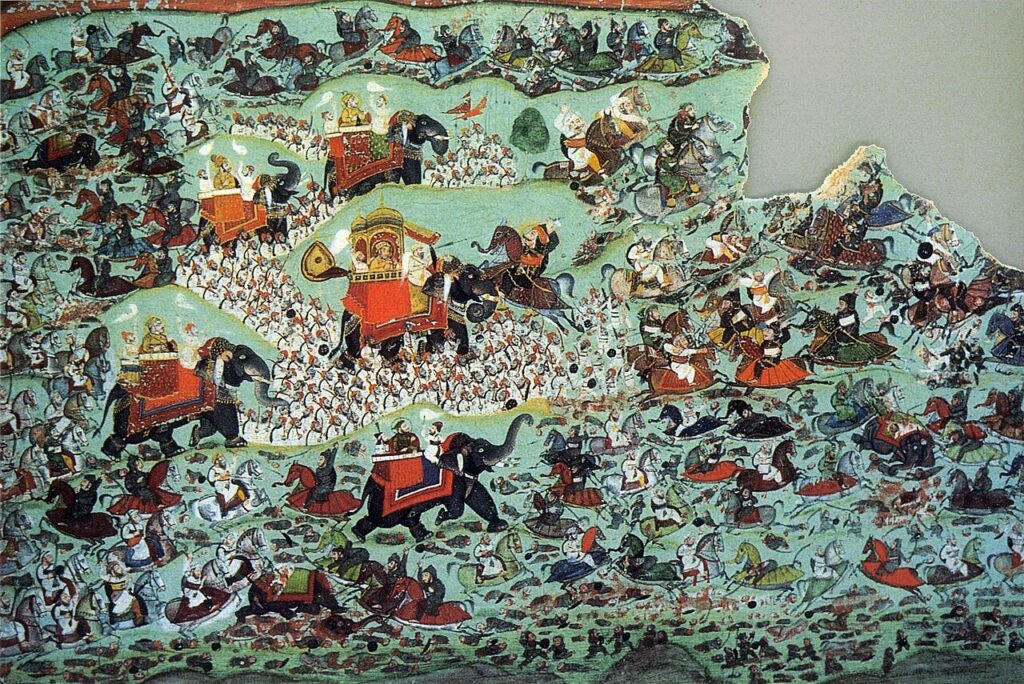
The Battle of Haldighati, fought on 18 June 1576, ended inconclusively. While the Mughals claimed victory by holding the battlefield, Maharana Pratap’s forces fought bravely and avoided capture. The battle highlighted both the tactical success of the Mughals and the enduring spirit, courage, and resilience of the Rajputs, making it a symbol of valor and resistance against overwhelming odds.
When asked who won the Battle of Haldighati, the answer is nuanced. The Mughals claimed a tactical victory, pushing Maharana Pratap’s forces back and temporarily holding the battlefield. However, the battle remained inconclusive, as the Rajputs, though heavily outnumbered, fought valiantly and inflicted considerable losses on the Mughal army.
After the confrontation, the Mughals maintained control over parts of the Haldighati pass, demonstrating their strength. Yet, their primary objective was not achieved: to capture Maharana Pratap and fully subdue Mewar. Thus, the battle of Haldighati resulted in a partial success for Akbar’s forces, emphasizing the resilience of the Rajput defenders.
Maharana Pratap, wounded but undeterred, escaped with a portion of his army, using Mewar’s rugged terrain to evade capture. He regrouped his forces in the surrounding hills and continued a guerrilla campaign against the Mughals, eventually reclaiming lost territories and keeping Mewar independent.
Though the Mughals could claim the battlefield, Maharana Pratap’s courage, strategy, and unyielding spirit made the encounter a moral and symbolic victory for Mewar. The battle became a legendary example of bravery against overwhelming odds, demonstrating that true triumph is not always measured in territory but in honor and resilience.
After the Battle of Haldighati, Maharana Pratap continued his relentless struggle to defend Mewar. Though the Mughals claimed a tactical edge, Pratap used the Aravalli terrain for guerrilla warfare. His resilience and later victories ensured Mewar remained free, symbolizing Rajput courage, strategy, and unwavering commitment to independence.
After the Battle of Haldighati, Maharana Pratap refused to surrender despite the Mughal tactical advantage. While Akbar’s army claimed the battlefield, Mewar remained unconquered, and Pratap’s determination became the cornerstone of his continued struggle. His leadership and courage inspired his soldiers to stay loyal, ensuring the survival of the kingdom’s spirit of independence.
Relocating to the rugged Aravalli hills, Pratap leveraged the difficult terrain. He launched guerrilla attacks on Mughal forces from these strongholds, targeting supply lines, small contingents, and strategic positions. This strategy allowed him to evade larger Mughal armies while continuously harassing their operations, showcasing his tactical brilliance and resilience.
Pratap’s persistence paid off in later years. 1582 at the Battle of Dewair, he reclaimed significant territories from the Mughals, restoring much of Mewar’s lost prestige. These victories reinforced the kingdom’s autonomy and demonstrated that Mewar could not be entirely subdued as long as its people remained loyal to the Sisodia dynasty.
Prolonged resistance influenced Mughal military strategy in the region. Akbar realized that conquering Mewar outright would be costly, prompting a shift toward a combination of diplomacy, alliances, and selective military campaigns. The after-battle of Haldighati scenario highlighted the limitations of sheer force against determined local resistance.

The Battle of Haldighati is remembered for its military outcome and lasting impact on Indian history. It symbolized Rajput bravery, resistance, and independence, influencing Mughal-Rajput relations, shaping Rajasthan’s political landscape, and inspiring generations through folklore, literature, and national pride.
The Battle of Haldighati is a timeless symbol of Rajput valor, courage, and unyielding spirit. Despite facing a vastly superior force, Maharana Pratap’s refusal to submit to the Mughal Empire demonstrated the importance of honor and independence over territorial gain. The battle highlighted that even a smaller kingdom could resist a mighty empire with determination and strategic skill, making it an enduring emblem of Rajput pride.
While many Rajput states allied with Akbar through diplomacy, Mewar’s steadfast resistance shaped the region’s political dynamics. The Mughal Empire realized that conquering Mewar outright would be costly and complex. This forced Akbar to blend diplomacy, selective military campaigns, and alliance-building, influencing Mughal-Rajput relations for decades. The battle thus played a key role in balancing military power and political negotiation in Rajputana.
Maharana Pratap’s defiance ensured that Mewar retained its autonomy and internal governance. The kingdom remained a significant political entity in Rajasthan, preserving its culture, traditions, and administrative systems. The Battle of Haldighati’s importance lies in its immediate outcomes and contribution to sustaining the Rajput political identity in the region.
Beyond politics, the battle has inspired generations through folklore, literature, and popular culture. Tales of Pratap’s bravery, Chetak’s loyalty, and the Rajput resistance are celebrated in poems, songs, and films, symbolizing courage and sacrifice. The significance of the Battle of Haldighati extends into modern nationalism, serving as a reminder of resilience, honor, and the spirit of freedom.
In the Battle of Haldighati, Maharana Pratap’s horse, Chetak, became as legendary as his master. Gravely wounded during combat on 18 June 1576, Chetak carried Pratap to safety, leaping across ravines and navigating the treacherous Haldighati terrain. His bravery allowed Pratap to escape capture and resist the Mughal forces, cementing Chetak’s place in history as more than a war animal.
Rajasthani folklore, poetry, and songs celebrate Chetak’s heroism. Storytellers emphasize the deep bond between Pratap and Chetak, highlighting loyalty, courage, and devotion. Memorials, including statues near Haldighati and Udaipur, honor the horse’s sacrifice and enduring legacy.
Beyond Rajasthan, Chetak inspires literature, art, and modern media, symbolizing steadfastness and valor. References to Chetak in discussions of the battle or Maharana Pratap’s life convey not only military history but also the spirit of trust, resilience, and unwavering bravery that continues to resonate across India.
Mughal chronicles, including court records from Akbar’s reign, describe the Battle of Haldighati as a clear victory for the Mughal forces. These accounts emphasize the discipline of the imperial army, the deployment of artillery and elephants, and the temporary control of the battlefield. According to these sources, the engagement demonstrated Mughal military supremacy and was a testament to Akbar’s strategic planning.
In contrast, Rajasthani ballads and folklore celebrate Maharana Pratap’s valor and resilience. While the Mughals may have briefly held the battlefield, Pratap’s escape, continued resistance, and the legendary bravery of his horse Chetak are central to these narratives. The battle of Haldighati controversy arises from this contrast, as local accounts frame the confrontation as a moral and symbolic triumph for Mewar rather than a straightforward defeat.
Contemporary historians often attempt to reconcile these differing perspectives. While acknowledging that the Mughals held the battlefield, many argue that their strategic objectives of capturing Pratap and subduing Mewar were not fully achieved. This modern interpretation emphasizes that the battle’s significance lies not solely in military victory but in its enduring cultural, political, and symbolic impact. It highlights the historians’ opinion that Haldighati is as much a story of courage and resistance as of imperial conquest.
The Battle of Haldighati’s legacy endures in Indian history through memorials, museums, and cultural expressions. The battlefield memorial near Haldighati commemorates Maharana Pratap, his warriors, and the legendary horse Chetak, offering visitors insight into this historic clash. Key landmarks like the Maharana Pratap Museum and Chetak Samadhi honor their bravery and sacrifice, making the area a focal point for tourism and education.
The battle’s story has also been preserved in folk songs, ballads, literature, and historical dramas, keeping the tales of courage and resistance alive across generations. Films and cultural portrayals highlight Maharana Pratap’s heroism and Chetak’s loyalty, reaching broader audiences beyond Rajasthan.
Through these memorials and narratives, Haldighati transcends its role as a battlefield, symbolizing Rajput valor, resilience, and independence. Visitors witness history and legend alike, making it a lasting testament to bravery and a key attraction for those exploring India’s rich heritage.
Click here to get: Battle of Haldighati PDF.
| Key Aspect | Details |
|---|---|
| Date | 18 June 1576 |
| Place | Haldighati Pass, Rajasthan |
| Commanders | Maharana Pratap (Mewar), Raja Man Singh I (Mughals) |
| Strength | Mewar: ~20,000; Mughals: ~40,000–80,000 |
| Outcome | Tactical victory for Mughals; inconclusive strategically |
| Significance | Symbol of Rajput valor, resistance against Mughal expansion, inspired folklore and nationalism |
The Battle of Haldighati remains one of the most iconic clashes in Indian history, not merely for its military outcome but for its enduring historical significance. While the Mughals claimed a tactical victory, Maharana Pratap’s courage, leadership, and unyielding resistance ensured that Mewar remained unconquered and the spirit of independence lived on.
Pratap’s heroism and the legendary bravery of his horse Chetak have made him a lasting symbol of resistance and valor, inspiring generations of Indians. The battle is celebrated in folk songs, literature, films, and memorials, emphasizing honor, sacrifice, and determination over mere conquest.
The battle of Haldighati’s conclusion highlights the triumph of courage and resilience against overwhelming odds. Maharana Pratap’s bravery continues to be remembered as a beacon of Rajput honor and indomitable spirit, making the battle a historical event and a cultural and inspirational milestone in Indian heritage.
Read More:-
The Mughals won a victory in the battle of Haldighati.
Although Mewar’s forces were defeated in the battle, Maharana Pratap managed to escape and continued his courageous resistance against the Mughal Empire.
During the 1576 Battle of Haldighati, Maharana Pratap is famed for striking down Mughal commander Bahlol Khan, reportedly splitting him, his armor, helmet, and horse in a legendary sword blow.
There was only one major Battle of Haldighati, fought in 1576. It was a significant clash between the forces of Maharana Pratap, ruler of Mewar, and the Mughal army led by Man Singh I of Amber.
The Third Battle of Haldighati, fought on June 18, 1576, was a significant conflict between the forces of Maharana Pratap of Mewar and the Mughal Empire led by Emperor Akbar.