In today’s competitive job market, knowing how to write a cover letter can help you stand out from other candidates. A cover letter is more than just an introduction. It’s your chance to show your personality, highlight relevant skills, and explain why you’re the right fit for the job. Employers in 2025 want candidates who can communicate clearly, customize their applications, and show real enthusiasm for the position. A well-crafted cover letter adds to your resume by providing context for your achievements and demonstrating how your experience matches the company’s needs.
Whether you’re a new graduate or an experienced professional, getting good at cover letter writing can open doors to exciting career opportunities. Ready to make a memorable first impression? Let’s look at the key steps to writing a standout cover letter.

A cover letter is a short (one-page) document that allows you to introduce yourself with a resume for job-seeking purposes. It provides a place for you to explain your qualifications and why you are a good fit for a specific position within a company.
If you’re unsure how to write a cover letter, this step-by-step guide will walk you through the process. Let’s break down the format and structure of a good cover letter, making sure it’s super simple to follow.
Greeting:
Start with a polite greeting. If you know the hiring manager’s name, use it (e.g., Dear Ms. Johnson). This adds a personal touch and shows attention to detail.
Opening Paragraph:
Begin with a strong introduction. Mention the job title you’re applying for and briefly explain why you’re the ideal candidate. Grab their attention right away.
Body Paragraphs:
Closing Paragraph:
Conclude by expressing your enthusiasm for the position and letting them know you’re excited to discuss your application further.
Sign-Off:
End with a polite and professional closing, such as Best regards or Sincerely, followed by your name.
Learning how to write a cover letter can significantly increase your chances of landing your dream job. If you’re writing a cover letter for a job application, you must first remember how to write a specific cover letter. What do we mean by that? Most applicants make the mistake of writing just one generic cover letter and using it on every job application when they’re on a job hunt.
Make no such mistake. Recruiters can sense a generic cover letter from a mile away.
If you’re wondering how to write a cover letter for an internship, the key lies in customization. Instead, do your research about the role you’re applying for and about the company. Understand what the role requires and what type of candidate the company is looking for. Tailor your cover letter to highlight your relevant coursework, skills, or projects, even if you lack formal work experience. Include those points in your cover letter and see it shine.

Mastering how to write a cover letter helps you stand out from other applicants right from the start. When writing your cover letter for a job application, highlight your skills and achievements in a way that directly aligns with the job requirements.
For example, if you’re applying for a Junior Copywriter role, and the job description mentions needing someone who can craft strong headlines under tight deadlines, your cover letter should showcase your ability to do that. Mention relevant experience, specific skills, or achievements to support your claim.
The STAR method helps you present your skills and experiences in a way that matches the job requirements. It stands for:
“In my previous job, my team urgently needed 5 strong headlines for a project, with only 30 minutes to deliver.
I quickly came up with 10 creative headline ideas on the spot. Collaborating with my team, we refined and finalized the best 5.
This resulted in a 20% increase in leads compared to the previous version.”
When describing your achievements, choose powerful action verbs to make your cover letter more compelling. Some great examples include:
These words create a strong impression and show you’re proactive and results-oriented.
Writing a cover letter highlighting your strengths is crucial in today’s competitive job market. Writing a cover letter for a job application is entirely different from writing a cover letter for an internship. You need a different approach and way to present yourself in these cases. How to do it? Let’s have a look:
Whether you’re a fresher or an experienced professional, understanding how to write a cover letter is crucial for career success. Since internships are for learning and complete beginners, you need to show that you’re the right person with the right mindset for this opportunity.
Here, you need to show your passion and enthusiasm for learning. Present yourself as a good team player and a go-getter. If you already know some skills related to that profile, mention how you can use them to provide value to the company.
If you want to land interviews faster, mastering writing a cover letter is a must. If you don’t have previous experience, don’t worry. We all started the same way. In this case, how to write a cover letter that highlights your skills and your mindset is key to catching the recruiters’ attention. Just like an internship, if you can present yourself as a person who’s a quick learner and a good team player, you have a better chance of getting an entry-level job.
For example, if you’ve created a project for your college assignments or managed or led a team during your college years, mention it in your cover letter.
Writing a cover letter that sings your praises is essential on platforms like Upwork, where freelance gigs are king. Pinpoint freelance projects with measurable successes and cite client testimonials that speak to your reliability and quality of work.
If you have repeat clients, highlight this as it reflects dependability and satisfaction with your work.
You position yourself as a candidate by fine-tuning your cover letter according to these scenarios.
Want to impress recruiters? Discover how to write a cover letter that grabs attention instantly. It’s time to put everything we’ve learned above into action. We’ve included a sample cover letter to give you a clear perspective on how your cover letter should look. Take a look:
Dear Ms. Johnson,
I am writing to express my interest in the Junior Graphic Designer position advertised on your company website. Knowing how to write a cover letter highlighting my qualifications and enthusiasm, I would like to share that with a Bachelor’s degree in Graphic Design and two years of experience at a busy marketing agency, I am excited to contribute to your creative team.
In my current role at Creative Designs Ltd., I have honed my skills in Adobe Creative Suite and have been commended for my ability to handle multiple projects under tight deadlines. Knowing how to write a cover letter that emphasizes these accomplishments, I’d like to highlight that I led the redesign of a client’s branding, which included creating a fresh logo and new packaging. This project increased the client’s sales by 30% and won the Best Brand Revamp award in 2021.
Additionally, I have developed strong teamwork skills, often collaborating with writers and marketers to create a cohesive visual and narrative story. These experiences have prepared me to effectively contribute to your team’s upcoming projects.
I am drawn to this position at [Your Company] because of your commitment to innovation and quality, which I share and practice in my work. I am eager to bring my graphic design background and creative problem-solving skills to your company.
Thank you for considering my application. I look forward to discussing this exciting opportunity with you. I am enthusiastic about the prospect of contributing to your team and am available for an interview at your earliest convenience.
Best regards,
[Your Name]
Here is an exhaustive, step-by-step checklist to confirm your cover letter is polished, convincing, and tailored to the specific position you’re applying for:
Impressing recruiters without speaking a single word may seem challenging, but there are several effective strategies you can employ to make a strong impression through non-verbal communication, presentation, and preparation. Here are some key ways to achieve this:
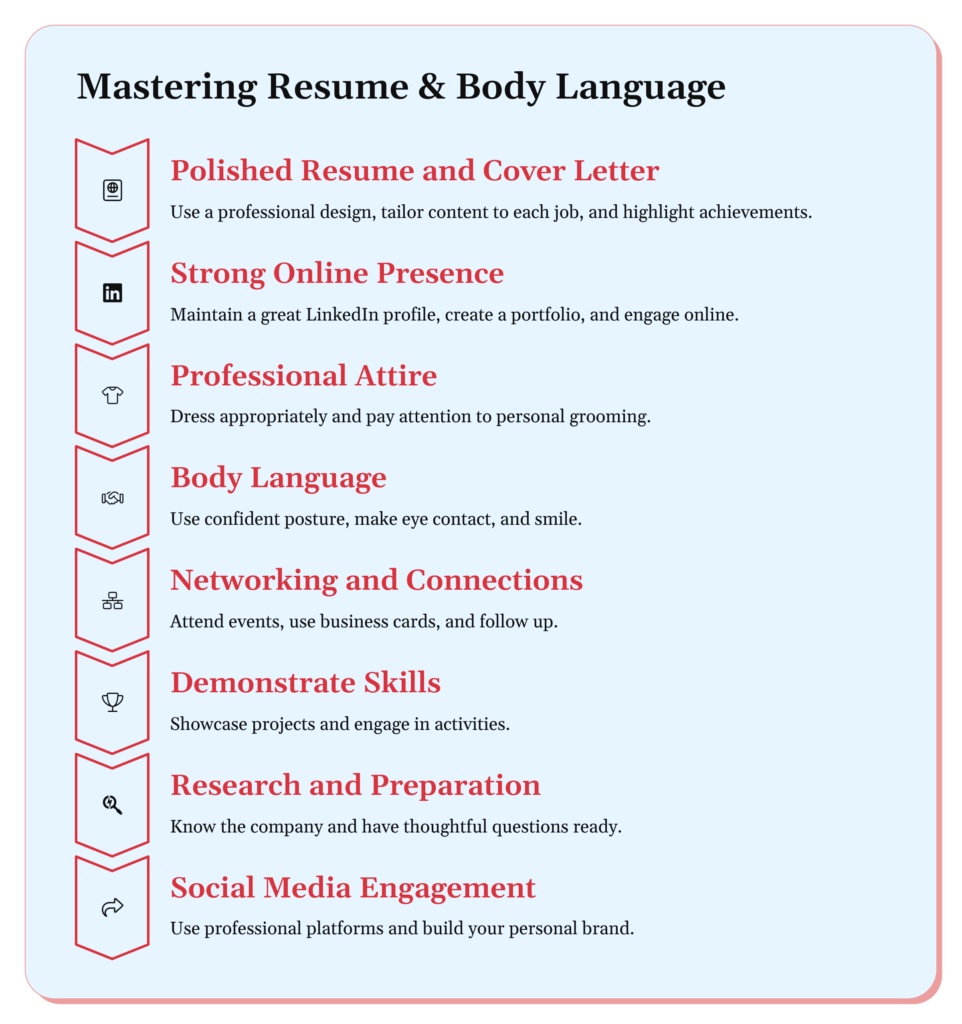
Writing an effective cover letter is an important step in your job search. Personalizing each letter, highlighting your strengths, and linking your experience to the employer’s needs shows initiative and professionalism. Keep your cover letter brief, error-free, and engaging. Avoid using generic templates; make your application stand out.
As hiring trends change in 2025, employers more than ever appreciate authenticity and clear communication. Research the company, address the hiring manager by name, and conclude with a strong call to action. With these strategies, your cover letter will grab attention and improve your chances of getting an interview. Start working on your perfect cover letter today and move closer to your dream job.
A cover letter is a personal document that you send with your resume. It introduces you and shows why you are a good fit for the job.
Example: A candidate applying for a marketing role describes relevant projects and achievements in the cover letter.
Tip: Keep it brief, professional, and specific to the job description.
A cover letter should have a Header, Salutation, Introduction, Body, and Closing.
Example: Begin with “Dear Hiring Manager,” then briefly introduce yourself. Highlight your achievements and finish with a call to action.
Tip: Use formal language and steer clear of generic templates.
Focus on your skills, achievements, and experiences that relate to the job.
Example: “I managed a social media campaign that increased engagement by 30% in 3 months.”
Tip: Use measurable results to highlight your achievements.
Ideally, a cover letter should be one page or between 250 and 400 words.
Example: A single-page letter that highlights key experiences without extra details.
Tip: Avoid long paragraphs; use bullet points if needed.
Yes, customize your cover letter to fit the company, position, and skills needed.
Example: If you’re applying for a sales role, highlight your successes in sales, meeting targets, and managing clients.
Tip: Look into the company and include keywords from the job description.
Templates can help you organize your letter, but it’s important to personalize it.
Example: Use a template for the formatting; make sure to replace all placeholders with your information.
Tip: Avoid generic templates that come off as impersonal to recruiters.