


Graduating is a major milestone, but what comes next can define your entire professional journey. With the job market constantly evolving, choosing the right postgraduate course after graduation is more important than ever for standing out and advancing your career. Whether you aim to specialize in your field, switch industries, or gain an edge with new-age skills, the options for courses after graduation are vast and varied.
This guide explores the best courses after graduation in India, keeping in mind industry trends, eligibility, career opportunities, and salary potential. From management and technology to creative arts and professional certifications, you’ll find insights into the top postgraduate courses that can help you make an informed decision for 2025 and beyond.
Having the right skills can open doors to better job opportunities, higher pay, and global exposure. By enrolling in the best professional courses after graduation, you increase your chances of career success and long-term growth.

A bachelor’s degree is a great foundation, but in today’s competitive market, it may not be enough. Pursuing after degree courses in India can give you an edge by helping you:
| Course | Duration | Eligibility | Fees (per year) | Career Prospects & Avg. Salary | Top Institutes |
|---|---|---|---|---|---|
| M.Sc. (Science) | 2 years | B.Sc. in relevant subject, 50–55%, entrance exam in some universities | Govt.: ₹10k–50k; Pvt.: ₹50k–2L | Research Scientist (₹4–8 LPA), Data Analyst (₹3–6 LPA), Lab Technician (₹2–4 LPA), Teacher (₹3–5 LPA), Technical Writer (₹3–6 LPA) | IISc Bangalore, JNU Delhi, Delhi Univ., IITs, BHU |
| M.Tech (Engineering) | 2 years | B.Tech/B.E. with 60%+, GATE score required | Govt.: ₹20k–1L; Pvt.: ₹1–5L | R&D Engineer (₹5–12 LPA), Software Architect (₹8–20 LPA), Technical Lead (₹7–15 LPA), Project Manager (₹10–20 LPA), Robotics Engineer (₹6–15 LPA) | IITs, IISc Bangalore, NITs, BITS Pilani, DTU Delhi |
| M.Sc. Bioinformatics | 2 years | B.Sc. in Life Sciences/CS, 55%+, some entrance exams | Govt.: ₹30k–1L; Pvt.: ₹1–3L | Bioinformatics Scientist (₹4–10 LPA), Computational Biologist (₹5–12 LPA), Biotech Data Analyst (₹4–8 LPA), Biostatistician (₹5–10 LPA) | IISc Bangalore, JNU Delhi, Univ. of Hyderabad, BIT Mesra, Manipal Academy |
| M.Sc. Environmental Science | 2 years | B.Sc. with 50–55%, some entrance exams | Govt.: ₹15k–50k; Pvt.: ₹50k–2L | Environmental Consultant (₹3–8 LPA), Sustainability Manager (₹5–12 LPA), Safety Officer (₹4–9 LPA), Policy Analyst (₹4–10 LPA), Wildlife Conservationist (₹3–6 LPA) | JNU Delhi, BHU Varanasi, TERI SAS Delhi, DU, IISER Pune |
| M.Tech/M.Sc. Nanotechnology | 2 years | B.Sc./B.Tech in Physics, Chemistry, Engg., 60%+, GATE for M.Tech | Govt.: ₹30k–1.5L; Pvt.: ₹1.5–5L | Nanotech Engineer (₹5–15 LPA), Research Scientist (₹6–18 LPA), Materials Scientist (₹5–14 LPA), Nanoelectronics Specialist (₹6–16 LPA) | IIT Bombay, IISc Bangalore, Amity Noida, SRM Chennai, VIT Vellore |
| M.Pharm (Pharmaceutical Sciences) | 2 years | B.Pharm with 55–60%, GPAT for some institutes | Govt.: ₹20k–1L; Pvt.: ₹1–4L | Drug Safety Specialist (₹4–10 LPA), Clinical Research Associate (₹3–8 LPA), Formulation Scientist (₹5–12 LPA), Regulatory Officer (₹4–10 LPA), QA Manager (₹6–15 LPA) | NIPER Mohali, Jamia Hamdard Delhi, ICT Mumbai, Manipal Pharmacy College, Bombay College of Pharmacy |
A Master of Science is one of the most popular postgraduate courses after graduation in science. It offers in-depth knowledge and research opportunities in fields like Physics, Chemistry, Biology, Mathematics, and Computer Science. These courses after degree prepare students for careers in research, teaching, or specialized industries.
Duration: 2 years
Eligibility: Bachelor’s degree in a relevant subject (50–55% minimum)
Career Prospects: Research Scientist, Data Analyst, Teacher, Technical Writer
An M.Tech is among the most prestigious courses after graduation for high salary in engineering and technology. It provides advanced knowledge in fields like Computer Science, Mechanical, Civil, Biotechnology, and more. This degree emphasizes research, innovation, and leadership in technical domains.
Duration: 2 years
Eligibility: B.Tech/B.E. with minimum 60% + valid GATE score
Career Prospects: Software Architect, R&D Engineer, Project Manager, Robotics Engineer
Bioinformatics courses are interdisciplinary courses after graduation, merging biology, computer science, and data analysis. It focuses on computational tools for analyzing genomic and proteomic data, preparing students for careers in personalized medicine and drug discovery.
Environmental Science are multidisciplinary courses after graduation that studies the environment and solutions to environmental problems. This course after graduation covers topics such as ecology, pollution control, natural resource management, and environmental policy. It prepares students to address critical global challenges like climate change, biodiversity loss, and sustainable development.
Nanotechnology are cutting-edge courses after graduation that deals with manipulating matter on an atomic, molecular, and supramolecular scale. This course after graduation covers aspects of physics, chemistry, biology, and engineering at the nanoscale. It prepares students for careers in advanced materials development, electronics, medicine, and environmental applications, driving innovation across multiple industries.
Pharmaceutical Sciences are comprehensive after degree courses that covers various aspects of drug discovery, development, and delivery. This course, after graduation, includes topics such as medicinal chemistry, pharmacology, pharmaceutics, and drug regulatory affairs. It prepares students for careers in pharmaceutical research, drug manufacturing, clinical trials, and regulatory compliance, contributing to advancements in healthcare and medicine.
| Course | Duration | Eligibility | Approx. fee (₹) | Top careers (avg salary LPA) | Top institutes (India) |
|---|---|---|---|---|---|
| Chartered Accountancy (CA) | ~3–4 years (incl. articleship) | 10+2 route or B.Com (55%); pass CA exams; 3 yrs articleship | Registration/exam: ₹50,000–1,00,000 · Coaching (opt): ₹1,00,000–3,00,000 (total vary) | Chartered Accountant in Practice (₹7–15+), Financial Controller (₹15–25), Tax Consultant (₹10–20), Auditor (₹8–20), CFO (senior) | ICAI (with top coaching: J.K. Shah, Achievers Academy, VS Education) |
| Master of Business Administration (MBA / PGDM) | 2 years (FT) / 3 years (part-time) | Bachelor’s degree (≈50%); CAT/XAT/GMAT or institute tests; exp. preferred | Govt/public: ₹5,00,000–25,00,000 (total) · Private: ₹10,00,000–40,00,000 (total) | Marketing Manager (₹8–15), Financial Analyst (₹6–12), HR/Operations Manager (₹7–15), Consultant (₹10–20) | IIMs, FMS Delhi, XLRI, SPJIMR, ISB |
| M.Com (Master of Commerce) | 2 years | B.Com or related (50–55%) | Govt: ₹10,000–50,000/yr · Private: ₹50,000–2,00,000/yr | Financial Analyst (₹4–10), Accountant (₹3–7), Investment Banker (₹5–15), Business Consultant (₹5–12) | Delhi School of Economics (DU), Loyola, Christ Univ., Symbiosis |
| Company Secretary (CS) | 3–3.5 years (incl. training) | Clear CS exams (Foundation/Executive/Professional) or graduate with 50% | Registration/exam: ₹50,000–80,000 · Coaching (opt): ₹80,000–2,00,000 (total vary) | Company Secretary (₹6–12), Compliance Officer (₹8–15), Legal Advisor (₹10–20), Corp Governance Specialist (₹12–25) | Institute of Company Secretaries of India (ICSI) + top trainers |
| Financial Risk Management (FRM / Risk Mgmt) | 1–2 years / certification | Bachelor’s in Commerce/Econ (50–60%); experience may be preferred | Indian programs: ₹2,00,000–10,00,000 · Intl certs (per level): $350–750 | Risk Analyst (₹5–10), Credit/Market Risk Manager (₹8–20), Quant Analyst (₹12–25), Chief Risk Officer (₹25–50) | IIM programs, NISM, IIRM Hyderabad, BIMTECH |
| Investment Banking (Cert / PG) | 6 months – 2 years | Bachelor’s in Commerce/Econ (≈55–60%); strong quantitative skills | Short courses: ₹50,000–2,00,000 · Full-time programs: ₹5,00,000–20,00,000 | Investment Banking Analyst (₹8–15), Associate (₹15–25), VP/MD (₹25–50+) | ISB, NISM, Imarticus Learning, FinSchool |
| Business Analytics / Data Analytics | 1–2 years | Any bachelor’s (50–60%); basic math/stats | Indian programs: ₹3,00,000–15,00,000 · Online certs: ₹50,000–2,00,000 | Business Analyst (₹5–10), Data Scientist (₹8–20), Analytics Manager (₹12–25), Consultant (₹10–18) | IIMs, ISB, Great Lakes, Praxis, MISB Bocconi |
Chartered Accountancy (CA) are prestigious professional courses after graduation in commerce, focusing on accounting, auditing, finance, and taxation. This rigorous program, overseen by the Institute of Chartered Accountants of India (ICAI), equips students with advanced financial knowledge and skills essential for various business and financial roles.
An MBA is one of the most sought-after courses after graduation for high salary in Commerce. It’s a postgraduate degree that focuses on developing management skills and business acumen. This course after graduation covers various aspects of business administration, including finance, marketing, human resources, operations, and strategy, preparing students for leadership roles in diverse industries.
Recommended read: PGDM vs MBA- Which is better?
Master of Commerce (M.Com) are advanced courses after graduation that provides in-depth knowledge of commerce, business, and financial management. This course after graduation covers advanced topics in accounting, finance, taxation, and business economics. It prepares students for careers in corporate finance, accounting, academia, and entrepreneurship, enhancing analytical and decision-making skills in the business world.
Company Secretary are professional courses after graduation in Commerce that focuses on corporate governance, compliance, and legal affairs. This course after graduation prepares students to become key managerial personnel responsible for ensuring that companies adhere to regulatory norms and maintaining effective board processes.
Financial Risk Management are specialized courses after graduation in Commerce that focuses on identifying, analyzing, and mitigating financial risks in organizations. This course after graduation equips students with skills to assess market, credit, and operational risks, and develop strategies to protect financial assets and investments.
Investment Banking are specialized courses after graduation in Commerce that focuses on financial advisory services, mergers and acquisitions, and capital raising for corporations and governments. This course after graduation prepares students for high-stakes financial roles, teaching them about financial modeling, valuation techniques, and deal structuring.
Business Analytics is one of the best courses after graduation in Commerce that combines data analysis, statistical methods, and business intelligence to drive data-driven decision-making in organizations. This course after graduation equips students with skills to interpret complex data sets, develop predictive models, and provide actionable insights to improve business performance.
Recommended read:
| Course | Duration | Eligibility | Fee range (₹) | Top careers (avg salary LPA) | Top institutes |
|---|---|---|---|---|---|
| MA (Master of Arts) | 2 years | BA (relevant), 50–55% (some entrances) | Govt: ₹5k–50k/yr · Private: ₹50k–2L/yr | Lecturer/Professor (₹4–20), Research Associate (₹3–6), Content Writer (₹3–7) | JNU, DU, Jadavpur, BHU, TISS |
| Journalism & Mass Communication | 1–2 years | Any degree, ~50%; portfolio/entrance for some | Govt: ₹20k–1L/yr · Private: ₹1L–5L/yr | Journalist (₹3–8), PR Manager (₹5–12), News Anchor (₹5–15) | IIMC, Symbiosis, ACJ, XIC, JMI |
| Psychology (MA/MSc) | 2 years | BA Psychology / related, 50–55% | Govt: ₹10k–75k/yr · Private: ₹50k–3L/yr | Clinical Psychologist (₹4–12), Counselor (₹3–8), Org Psychologist (₹5–15) | TISS, Christ Univ., DU, JMI, Fergusson |
| Social Work (MSW) | 2 years | Any degree, ~50% (entrance for some) | Govt: ₹5k–50k/yr · Private: ₹50k–2.5L/yr | Social Worker (₹3–7), NGO Manager (₹4–10), Community Dev Officer (₹3–8) | TISS, Delhi School of Social Work, Loyola, Madras School of Social Work |
| Public Policy / MPP | 1–2 years | Any degree, ~55%; experience may help | Govt: ₹50k–2L/yr · Private: ₹2L–10L/yr | Policy Analyst (₹5–12), Govt Consultant (₹6–15), Program Manager (₹5–10) | NLSIU (policy), TISS, ISPP, Jindal, MIT Pune |
| Digital Marketing (Cert / PG) | 6 months – 2 years | Any degree; basic computer skills | Short: ₹20k–1L · Full: ₹1L–5L/yr | Digital Marketer (₹3–8), SEO Analyst (₹3–7), Social Media Manager (₹4–10) | DMI, NIIT, Simplilearn, MICA |
A Master of Arts (MA) is an advanced degree and one of the popular courses after graduation for arts students. It offers in-depth knowledge and research opportunities in specific humanities and social science disciplines such as Literature, History, Philosophy, Sociology, or Economics. This course, after graduation builds upon the foundation laid during bachelor’s studies, preparing students for careers in academia, research, writing, or specialized fields related to their chosen discipline.
Recommended read: Scope of Economics & Top 10 Careers in Economics.
Journalism and Mass Communication are dynamic courses after graduation in Arts that focuses on various aspects of media, including print, broadcast, and digital journalism, public relations, and advertising. This course after graduation equips students with skills in news reporting, content creation, media management, and communication strategies, preparing them for diverse roles in the ever-evolving media landscape.
Psychology courses are sought courses after graduation in Arts, exploring human behavior and mental processes. Specializations include Clinical, Counseling, and Organizational Psychology, preparing students for careers in mental health, education, and corporate roles.
Social Work are professional courses after graduation in Arts that focuses on improving the lives of individuals, families, and communities. This course after graduation covers areas such as community development, child welfare, mental health, and social policy. It equips students with skills in case management, counseling, advocacy, and program development, preparing them for careers in non-profit organizations, government agencies, and healthcare settings.
Public Policy courses are interdisciplinary courses after graduation in Arts that focus on the analysis, development, and implementation of government policies. This course, after graduation, covers areas such as policy analysis, governance, public administration, and economic development. It equips students with skills in research, data analysis, and policy formulation, preparing them for careers in government, think tanks, and international organizations.
Digital Marketing is among the modern courses after graduation in Arts that focuses on promoting products, services, and brands through digital channels. These courses after graduation cover areas such as social media marketing, search engine optimization (SEO), content marketing, and data analytics. It equips students with skills in digital strategy, online advertising, and consumer behavior analysis, preparing them for careers in marketing agencies, e-commerce companies, and corporate marketing departments.

| Course | Duration | Eligibility | Fee range (₹) | Top careers (avg salary LPA) | Top institutes (India) |
|---|---|---|---|---|---|
| Law (LLB) | 3 years (after graduation) | Bachelor’s degree (any discipline), 45–50%; entrance (univ/CLAT for some) | Govt: ₹10,000–1,00,000/yr · Private: ₹1,00,000–5,00,000/yr | Lawyer (₹3–15), Legal Advisor (₹5–12), Corporate Counsel (₹8–20), Judge (senior) | NLSIU, NUJS, NALSAR, Faculty of Law (DU), ILS Law College |
| Master of Business Administration (MBA / PGDM) | 2 years (FT) / 3 years (part-time) | Bachelor’s degree, ~50%; CAT/XAT/GMAT or institute tests; work exp often preferred | Govt/public: ₹5,00,000–25,00,000 (total) · Private: ₹10,00,000–40,00,000 (total) | Marketing Manager (₹8–15), Financial Analyst (₹6–12), Operations/HR Manager (₹7–15), Consultant (₹10–20) | IIMs, FMS Delhi, XLRI, SPJIMR, ISB |
| Data Science (MSc / MTech / PG) | 1–2 years | B.Sc/B.Tech/related (CS, Math, Stats) typically; programming knowledge preferred | Indian institutes: ₹2,00,000–10,00,000 (course) · Online certs: ₹50,000–3,00,000 | Data Scientist (₹6–20), ML Engineer (₹8–18), BI Analyst (₹5–12), Data Analyst (₹4–10) | IISc Bangalore, ISI Kolkata, BITS Pilani, MAHE, Praxis |
| Chartered Financial Analyst (CFA) | Self-paced; typically 3–4 years to clear all levels | Bachelor’s degree (or final-year student); professional experience requirement for charter | Registration: $450 (one-time) + exam fees ~$700–1,000 per level | Investment Analyst (₹6–15), Portfolio Manager (₹10–25), Risk Manager (₹8–20), Equity Research (₹8–20) | CFA Institute (global); Indian prep: IMS, EduPristine, Kaplan Schweser |
| Human Resource Management (HRM / PG) | 1–2 years | Bachelor’s degree, ~50%; some programs value work experience | Govt/PSUs: ₹50,000–2,00,000 (course) · Private: ₹2,00,000–10,00,000 | HR Manager (₹6–15), Talent Acquisition (₹4–10), L&D Manager (₹7–15), HR Consultant (₹8–20) | TISS Mumbai, MDI Gurgaon, XLRI, Symbiosis, Delhi School of Economics |
| Software Engineering (M.Tech / MSc / PG) | 1–2 years | B.Tech/B.E. or related; programming fundamentals preferred | Govt: ₹50,000–2,00,000/yr · Private: ₹2,00,000–10,00,000/yr | Software Developer (₹4–15), Full-Stack Dev (₹5–18), DevOps (₹6–20), Technical Architect (₹15–30) | IITs, IIIT Hyderabad, BITS Pilani, NITs, PSG College of Technology |
Bachelor of Laws (LLB) are professional courses after graduation that focuses on the study of law and legal systems. These courses after graduation covers various aspects of civil, criminal, corporate, and constitutional law, among others. It equips students with skills in legal research, analysis, and argumentation, preparing them for careers in legal practice, judiciary, or corporate legal departments.
An MBA is one of the most sought-after professional courses after graduation. It’s a postgraduate degree that focuses on developing management skills and business acumen. These courses, after graduation, cover various aspects of business administration, including finance, marketing, human resources, operations, and strategy, preparing students for leadership roles in diverse industries. Did you know that 80% of MBA graduates land a job within three months?
Read More: Salary after MBA: Highest-Paying MBA Specialization
Data Science courses are the emerging professional courses after graduation that combines statistical analysis, machine learning, and programming to extract insights from complex data sets. These courses after graduation equips students with skills in data mining, predictive modeling, and data visualization, preparing them for careers in various industries where data-driven decision-making is crucial.
Chartered Financial Analyst (CFA) courses are globally recognized professional courses after graduation that focus on investment analysis and portfolio management. These courses after graduation cover areas such as ethics, quantitative methods, economics, financial reporting, corporate finance, and equity investments. It equips students with advanced financial skills, preparing them for careers in investment banking, asset management, and financial consulting.
Human Resource Management courses are professional courses after graduation that focus on managing an organization’s workforce. These courses after graduation cover areas such as recruitment, training and development, performance management, compensation and benefits, and labor laws. It equips students with skills in people management, organizational behavior, and strategic HR planning, preparing them for careers in corporate HR departments and HR consulting firms.
Software Engineering courses are professional courses after graduation, emphasizing software design, development, and maintenance. It covers programming, databases, and testing, preparing students for dynamic tech industry careers.
| Course (Diploma) | Typical duration | Fee range (₹) | Typical jobs (avg salary LPA) |
|---|---|---|---|
| Diploma in Digital Marketing | 6–12 months | 20,000–2,00,000 | SEO / Social / Digital Exec (3–8) |
| Diploma in Computer Applications (DCA) | 1 year | 10,000–1,00,000 | Junior Programmer / IT Support (2–6) |
| Diploma in Business Management | 1 year | 20,000–2,50,000 | Management Trainee / Biz Dev (3–6) |
| Diploma in Web Development | 6–12 months | 15,000–1,50,000 | Web Developer / Frontend (3–8) |
| Diploma in Graphic Design | 1 year | 20,000–2,00,000 | Graphic / UI Designer (2.5–8) |
| Diploma in Hospitality / Hotel Management | 1 year | 20,000–2,50,000 | Hotel Mgmt Trainee / Event Coord (2–6) |
| PG Diploma / Professional Certificate in AI / ML* | 6–12 months | 50,000–4,00,000 | ML Engineer / AI Analyst (6–18) |
Diplomas in Digital Marketing are specialized courses after graduation that focus on various aspects of online marketing and promotion. These courses after graduation cover key areas such as search engine optimization (SEO), social media marketing, content marketing, email marketing, and pay-per-click advertising. It equips students with practical skills to plan, execute, and analyze digital marketing campaigns, preparing them for roles in the rapidly evolving digital landscape.
Diplomas in Computer Applications are practical courses after graduation that provide comprehensive knowledge of computer systems and software applications. These courses after graduation cover topics such as programming languages, database management, web development, and software testing. It equips students with hands-on skills in various computer applications, preparing them for technical roles in the IT industry or further specialization in specific areas of computer science.
Diplomas in Business Management are comprehensive courses after graduation that provide a solid foundation in various aspects of business operations and management. These courses after graduation cover key areas such as marketing, finance, human resources, operations management, and business strategy. It equips students with practical skills and knowledge to understand business processes and make informed management decisions, preparing them for entry-level management roles or entrepreneurship.
Diplomas in Web Development are specialized courses after graduation that focus on creating and maintaining websites and web applications. These courses after graduation cover essential topics such as HTML, CSS, JavaScript, server-side programming languages (like PHP or Python), database management, and responsive design. It equips students with practical skills to design, develop, and deploy web-based solutions, preparing them for roles in the dynamic field of web development.
Diplomas in Graphic Design are creative courses after graduation that focus on visual communication and digital art. These courses after graduation cover areas such as typography, layout design, color theory, digital illustration, and branding. It equips students with skills in industry-standard design software and creative problem-solving, preparing them for careers in advertising, publishing, web design, and multimedia production.
Diploma in Hospitality Management/Hotel Management are practical courses after graduation that prepare students for careers in the hotel, tourism, and service industries. These courses after graduation cover areas such as hotel operations, food and beverage management, customer service, event planning, and tourism management. It equips students with skills in guest relations, service quality management, and hospitality business operations, preparing them for supervisory and management roles in various hospitality sectors.
| Course | Duration | Fee range (₹) | Top careers (avg salary LPA) | Top institutes / providers |
|---|---|---|---|---|
| Digital Marketing Certificate | 3–6 months | 15,000–1,00,000 | SEO Analyst / Digital Marketer (3–6) | Digital Vidya, Simplilearn, DMI, NIIT |
| Data Analytics Certificate | 3–6 months | 20,000–1,50,000 | Data Analyst / BI Analyst (3–8) | Great Learning, Jigsaw, Imarticus |
| Social Media Marketing | 2–6 months | 10,000–80,000 | Social Media Manager / Content Exec (2.5–6) | DMI, Digital Vidya, MICA short courses |
| Content Writing & SEO | 3–6 months | 8,000–60,000 | Content Writer / SEO Writer (2.5–6) | IIM Skills, Henry Harvin, Internshala |
| Financial Modeling & Valuation | 2–6 months | 20,000–1,50,000 | Financial Analyst / IB Analyst (4–12) | Imarticus, Wallstreet School |
| Web Development (Full-Stack) | 3–6 months | 25,000–1,50,000 | Frontend / Full-stack Dev (3–8) | Udacity, Internshala, local bootcamps |
Digital Marketing Certificate are short-term courses after graduation that focuses on various aspects of online marketing. These courses after graduation covers topics such as search engine optimization (SEO), social media marketing, content marketing, email marketing, pay-per-click advertising, and analytics. It equips students with practical skills to plan, execute, and measure digital marketing campaigns across various platforms.
Read More: Digital Marketing Skills
Data Analytics Certificate are short-term courses after graduation that teaches students how to collect, process, and perform statistical analyses of data. These courses after graduation covers topics such as data visualization, statistical programming languages (like R or Python), machine learning basics, and big data technologies. It prepares students to derive meaningful insights from complex data sets to support business decision-making.
Social Media Marketing Certificates are specialized courses after graduation that focus on leveraging social media platforms for business growth and brand building. These courses after graduation cover strategy development, content creation, community management, paid advertising, and analytics for platforms like Facebook, Instagram, Twitter, and LinkedIn. It equips students with skills to create and manage effective social media campaigns.
Content Writing and SEO are practical courses after graduation that combine the art of creating engaging online content with the science of search engine optimization. These courses after graduation cover topics such as writing for different online formats, keyword research, on-page and off-page SEO techniques, link building, and content marketing strategies. It prepares students to create SEO-friendly content that ranks well in search engines and engages target audiences.
Financial Modeling and Valuation are advanced courses after graduation that teach students how to build complex financial models and value companies or investment opportunities. These courses after graduation cover topics such as Excel modeling, financial statement analysis, discounted cash flow (DCF) valuation, comparable company analysis, and merger modeling. It equips students with skills highly valued in investment banking, private equity, and corporate finance.
Project Management Professional (PMP) Certifications are globally recognized courses after graduation for project management skills. These courses after graduation cover project management methodologies, best practices, and standards as defined by the Project Management Institute (PMI). It prepares students to lead and direct projects and teams across various industries, ensuring projects are completed on time, within budget, and meeting quality standards.
Recommended Read: Top 5 Govt Jobs after Graduation in India
| Institution | Program Name | Duration | Start Date | Target Audience | Mode | Key Focus Areas |
|---|---|---|---|---|---|---|
| IIT Delhi | Applied Data Science & AI Certificate | 6 months | October 4, 2025 | Professionals & Graduates | Online | Data Science, AI, Industry Skills |
| IIT BHU | Sustainable Monitoring with AI-Inspired ML (GIAN) | 10 days | September 2025 | Researchers & Engineers | Offline | AI in Infrastructure, Sustainability |
| Coursera (IBM) | Introduction to AI | Self-paced | Ongoing | Beginners | Online | AI Fundamentals, Machine Learning |
| Harvard (CS50) | Introduction to AI with Python | 7 weeks | Ongoing | Students & Professionals | Online | Python, Machine Learning, AI Concepts |
| Google AI | AI for Everyone | Self-paced | Ongoing | General Audience | Online | AI Basics, Applications, Ethics |
| PW Skills | Data Science with Generative AI | Self-paced | Ongoing | Aspiring Data Scientists | Online | Generative AI, Python, Data Science |
| Udemy | The AI Engineer Course 2025: Complete Bootcamp | Self-paced | Ongoing | All Levels | Online | Python, NLP, Transformers, APIs |
| MIT xPRO | AI for Senior Executives | 6–7 months | October 16, 2025 | Senior Professionals | Online | AI Strategy, Leadership |
| ISB | Leadership with AI | 20 weeks | September 30, 2025 | Mid to Senior Level Managers | Online | AI in Business, Leadership |
| OpenAI Academy | AI Fluency Certification (Pilot) | TBD | Late 2025 / Early 2026 | General Audience | Online | Prompt Engineering, AI Tools |
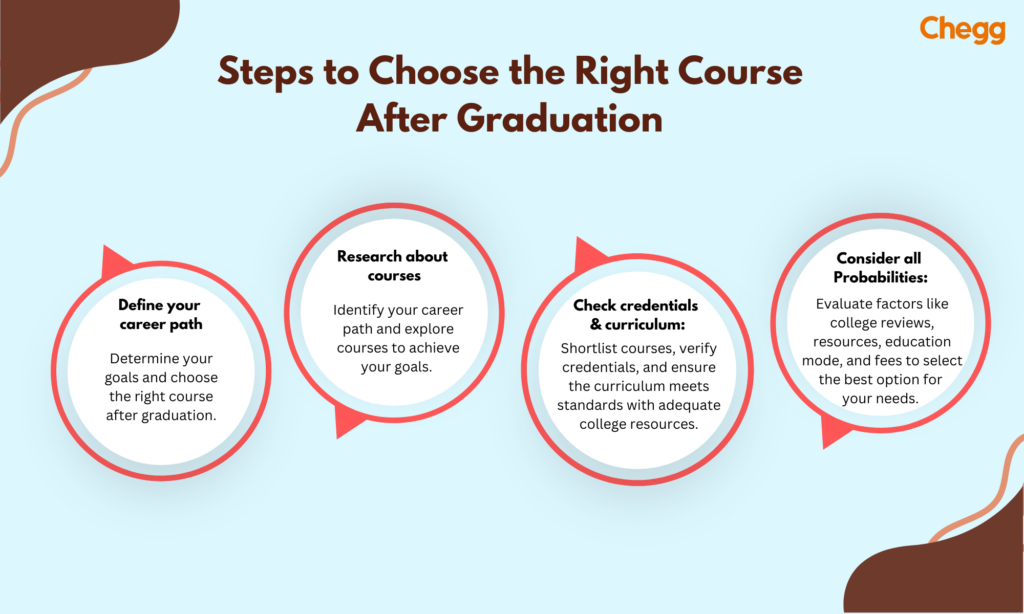
Choosing the right course after graduation is a crucial decision that can significantly influence your future career path. By diving into your interests, grasping what industries are looking for, and considering your long-term aspirations, you can find a direction that’s rewarding and resilient against future changes. Remember that ongoing learning and skill enhancement are essential to remain competitive in today’s ever-evolving job landscape.
As you plan your next steps, leverage the insights and options presented in this guide to make choices that align with your unique strengths and goals. With the right course and a proactive attitude, you’ll be well-prepared to seize exciting opportunities and confidently propel your career forward.
Find the ideal graduation courses after 12th grade that match your passion and lay the foundation for a bright future. Evaluate numerous career choices to choose the right career path for yourself. Dive into our guide on Career Advice.

There are several great one-year courses you can pursue after graduation. Some popular options include diplomas in Human Resource Management, Digital Marketing, Graphic Design, Data Science, and Culinary Arts.
MBA, CA, and digital marketing course are among the best courses after graduation with high salary.
After graduation, you have many paths to choose from. You can continue your education with a master’s degree, gain experience through internships, volunteer to build your resume, learn new skills with certificate courses, or start applying for entry-level jobs in your field.
Yes, you can pursue professional diploma courses after graduation. If you’re interested in a technical field, make sure you have some basic knowledge of the subject. You can use online resources to prepare yourself before enrolling.
The best course after graduation depends on your career goals and interests. Popular options include Master’s degrees, professional certifications, and vocational training in fields like business, technology, healthcare, or education. Consider your passion and job market demand when choosing.
For a future-proof career, consider short-term courses in Data Science, Machine Learning, Robotics, Ethical Hacking, Digital Art, Business Analytics, or Power BI. These fields are rapidly growing and offer excellent career opportunities.
If you’re a science graduate interested in tech, look into short courses in Software Development, Java, Python, Artificial Intelligence, or Cloud Computing (AWS). These skills are in high demand in the IT industry.
Commerce graduates can benefit from short courses in Excel, Financial Modeling and Valuation, Stock Market Trading, and SQL for Data Analytics. These skills are valuable in various business and finance roles.