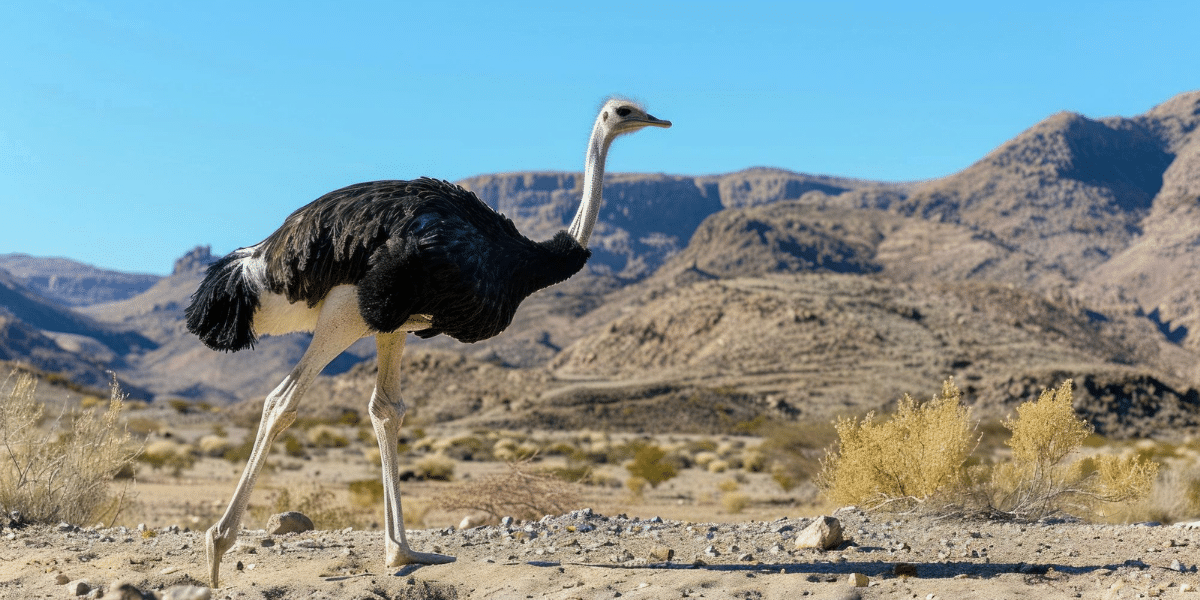
When we ask, “What is the biggest bird in the world?” the answer is more fascinating than a single name. It invites us into a world of evolutionary marvels, where “biggest” can mean tallest, heaviest, or possessing the widest wingspan. From the sun-scorched savannas of Africa to the stormy skies of the Southern Ocean, birds have evolved to colossal sizes in remarkable ways. This comprehensive guide explores the titans of the avian world, crowned by the undisputed champion – the ostrich – and delves into the lives of the other magnificent birds that dominate the skies and lands of our planet.
Before we meet the contenders, it’s crucial to define our terms. In the ornithological world, “biggest” is not a single metric. We measure these magnificent creatures in three primary ways:
Understanding these distinctions allows us to appreciate the diverse strategies evolution has employed to create the largest birds on Earth. We will explore the flightless runners, the soaring gliders, and the heavy flappers, each a champion in its own right.
The common ostrich(Struthio camelus) is the world biggest bird; it is a record-breaking phenomenon that holds the title for both the tallest and heaviest living bird species. A fully grown male ostrich is a breathtaking sight, a feathered giant that embodies the power and harsh beauty of the African plains. They can’t fly, but their running speed on land is fantastic. Their long legs help them run fast on land.
The ostrich’s size is a direct result of an evolutionary trade-off. Millions of years ago, its ancestors traded the ability to fly for the power of speed and endurance on the ground. Their small, useless wings are still used for balance and courtship displays, but their true power lies in their long, muscular legs. These legs are perfectly engineered for running, capable of propelling the ostrich at sustained speeds of 45 miles per hour (72 km/h) with bursts of up to 60 mph (97 km/h) for short distances. A single stride can cover an incredible 10 to 16 feet (3 to 5 meters).
Their diet is primarily herbivorous, consisting of grasses, seeds, shrubs, and the occasional insect or small reptile. They are also famously known for swallowing pebbles and sand (a process called gastrolithiasis) to help grind up food in their gizzard, as they lack teeth.
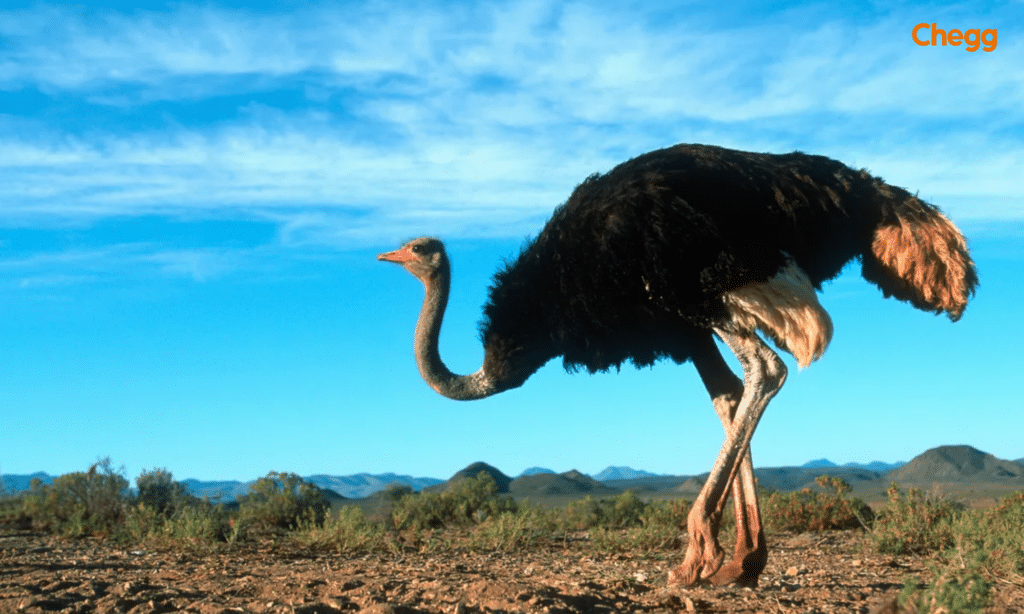
Emu (Dromaius novaehollandiae), native to Australia, are the second-tallest birds alive, with a maximum height of 190 cm. On average, their weight is 33 kg. The rumps of female emus are noticeably broader and typically slightly larger than those of males.
Despite being unable to fly, emus have developed the ability to run quickly and have vestiges of wings that they flap to stabilize themselves. They have fewer bones and muscles in their feet and only three toes. The gastrocnemius muscles, which are located in the rear of the lower legs, are unique to emus.
The common ostrich (Struthio camelus) is the largest bird species still living, closely followed by the Somali ostrich (Struthio Molybdophanes). An adult male ostrich can reach a height of 2.8 meters (9.2 feet) and weigh an incredible 156.8 kg (346 lb). While the ostrich has been reported to weigh 200 kg (440 lb), there are no confirmed examples of this weight in the wild.
The ostrich(the Biggest Bird in the World) has the unique distinction of having the largest eggs of any bird species, with an average weight of 1.4 kg (3.1 lb). The top ten biggest birds in the world are listed below in full:
| S. No. | Birds | Scientific Name | Height | Weight | Flighed |
| 1. | Common Ostrich | Struthio camelus | Up to 2.7 meters | Up to 130 kg | No |
| 2. | Somali Ostrich | Struthio molybdophanes | Up to 2.7 meters | Up to 130 kg | No |
| 3. | Emu | Dromaius novaehollandiae | Up to 2 meters | Up to 70 kg | No |
| 4. | Southern Cassowary | Casuarius casuarius | Up to 2 meters | Up to 76 kg | No |
| 5. | Dalmatian Pelican | Pelecanus crispus | Up to 2 meters | Up to 15 kg | Yes |
| 6. | Northern Cassowary | Casuarius unappendiculatus | Up to 2 meters | Up to 76 kg | No |
| 7. | Mute Swan | Cygnus olor | Up to 1.7 meters | Up to 14 kg | Yes |
| 8. | Trumpeter Swan | Cygnus buccinator | Up to 1.7 meters | Up to 14 kg | Yes |
| 9. | Greater Rhea | Rhea americana | Up to 1.7 meters | Up to 40 kg | No |
| 10. | Marabou Stork | Leptoptilos crumenifer | Up to 1.7 meters | Up to 9 kg | Yes |
The Wandering Albatross is the largest flying bird in terms of wingspan, with a wingspan of 12 feet. However, in terms of weight, the Great Bustard is the largest flying bird, weighing up to 40 pounds.
The second biggest flying bird in the world is the Dalmatian pelican. Dalmatians can spread their large, broad wings up to 8-11.5 feet. They can even reach up to 10,000 feet above sea level.
Dalmatian pelicans also have bigger appetites. An adult pelican can gobble about 4 pounds of fish in just one day. They are also good at fishing.

Many birds have gone extinct, but the ostrich is the largest living bird. The two main factors that make the ostrich the largest living bird are its height and weight. You can find Ostrich in Africa because it is their native place. The Andean Condor is also among the most prominent living birds. Ostriches(the Biggest Bird in the World) can open their wings up to 10.5 ft. and fly to 18,000 feet.
The large wings help Andean condors fly with ease and less effort. According to the San Diego Wildlife Alliance, they can gulp down about 15 pounds of carrion (dead or decaying flesh) during a single feast.
Ostriches(the Biggest Bird in the World) spend a longer duration of their lives in captivity, around 80 years. However, as mentioned by the Wildlife Conservation Society Peru, they can live in the wild for around 50 years. Hence, they are considered to be long-living creatures!
Ruppell’s vulture is the highest-flying bird in the world. Learn some facts about Ruppell’s vulture and why they are considered the highest-flying bird in the world:
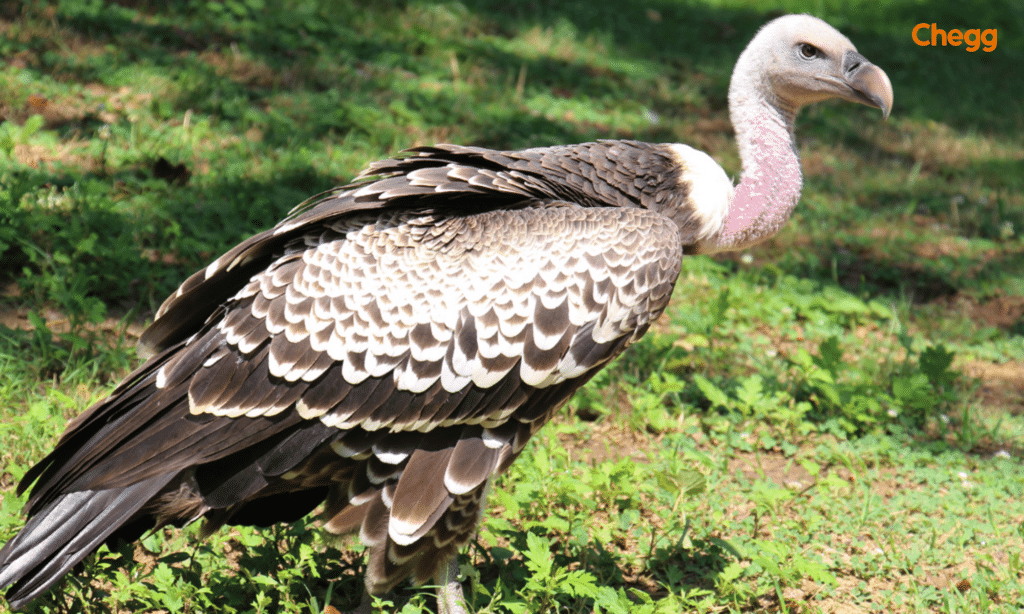
Once again, the Ostrich comes 1st in the category of tallest bird in the world. It is because of its 9 ft height. Now, come to the 2nd position for the tallest bird, the Emus. They live in Australia and can reach up to 6.2 ft. These birds have long necks and legs, which help them to run faster and cover a distance of 50 km per hour.
Shoebills are also one of the tallest birds in the world. These unusual storks reach impressive heights of about 5 feet (roughly as tall as a grown-up). As hunters, shoebills are skilled and have a good chance of making a successful catch. When they spot something tasty in the water, they strike their prey and are pretty successful, catching it about 60% of the time.
Shoebills are independent. They like to go solo and rarely hang out in big groups. Each shoebill has its territory, which is about 1 square mile, or roughly 3 square kilometers in size.
The Wandering Albatross is truly remarkable and is considered the largest wingspan bird. Their average weight of 11.9 kg makes them extremely hefty, and their height is around 135 cm. An albatross’s wings may spread to a maximum of 3.6 meters.
Wandering albatrosses are exceptional flyers. They spend their time flying in the sky and can fly without a break for a long time. These birds are famous for traveling long distances without needing a break. Among all birds, they are known to be some of the best fliers.
There are records of individual wandering albatrosses circling the entire Southern Ocean three times in just one year. That’s like flying around the world three times!
The common Ostrich (Struthio camelus) is again the largest and heaviest bird. Emperor penguins live only in Antarctica and are among the heaviest and largest birds alive. On average, Ostriches weigh about 31.5 kg and stand 114 cm tall.
During breeding season, male Emperor penguins undergo quite a transformation. Ostriches(the Biggest Bird in the World) can lose up to 15 kg because they don’t eat anything while protecting their eggs from the extreme cold for over two months.
Emperor penguins, like all penguins, can’t fly. But they have adapted to cold weather. Their feathers act like a warm coat, providing nearly 90% of their insulation. Also, they can control their body temperature, it’s like they have a built-in heating system! These penguin species have adapted to their cold surroundings, making them true masters of cold weather.

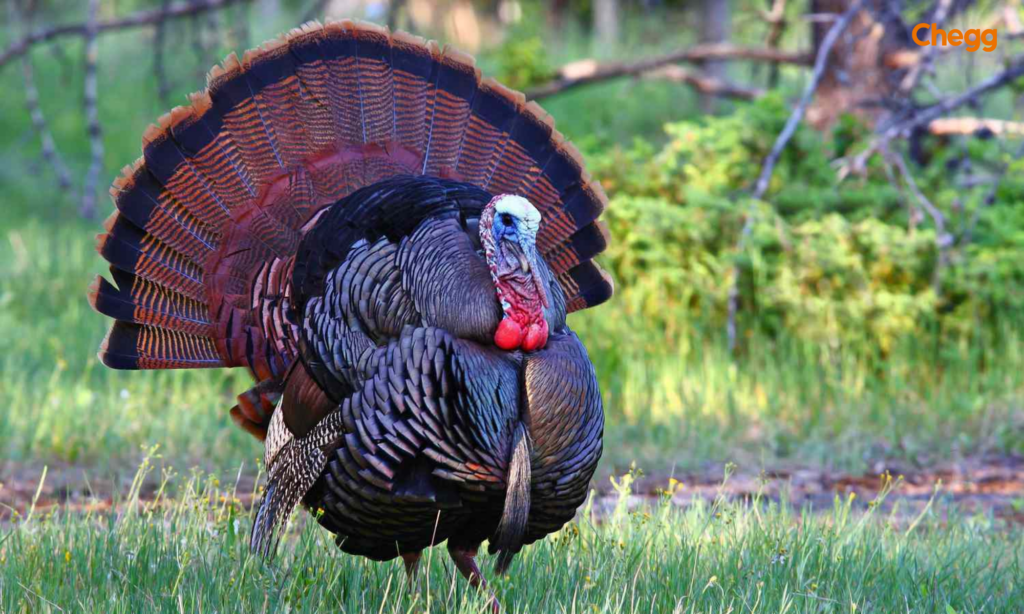
The wild turkey, scientifically known as Meleagris gallopavo, is remarkable. The wild turkey is one of the biggest bird species you will find. On average, it weighs about 13.5 kg and measures around 124 cm long.
They are native to North America but got their name from the domesticated turkey. The domestic turkey was mistakenly considered a completely different bird and was even linked to Turkey because Turkish merchants imported it into Europe.
However, domestic turkeys can not fly because they are a bit plump. They don’t use their breast muscles much, which makes their breast meat white.
The world’s largest birds, from the towering Ostrich to the soaring Wandering Albatross, face significant threats. Highlighting conservation efforts is crucial to underscore their fragile existence and our role in protecting them.
Key threats and corresponding conservation actions are outlined in the table below :
Wildlife has become an essential place for animal species. They provide various ecological services and promote human welfare towards the species. Simply by existing, wildlife has worth as well.
Due to unfavorable impressions around the mere existence of a wild animal, interactions between people and wildlife are frequently referred to as “conflict” situations.
Some tribes have managed to cohabit peacefully with enormous birds. We can get a peaceful coexistence between people and the most enormous birds in the world by respecting them as they are part of our ecosystem.
In ancient times, there was a mythological bird called the Roc(also spelled Rukh). The Roc is a colossal legendary bird from Middle Eastern and South Asian folklore, most famously featured in One Thousand and One Nights. It was said to be powerful enough to carry off elephants. The myth was likely inspired by real giant birds, particularly the extinct elephant bird of Madagascar, whose massive eggs found by sailors and traders fueled the fantastical tales. This legend highlights how encounters with real, oversized wildlife have often sparked enduring myths of gigantic creatures.
The world’s largest birds, from the towering ostrich to the soaring albatross, are more than just record-holders; they are vital architects of their ecosystems. They disperse seeds, scavenge carcasses, and maintain the delicate balance of nature.
However, these magnificent species face profound threats from habitat loss, climate change, and human activity. Their future hinges on our actions. Continued conservation efforts, from protecting vast tracts of land to supporting global anti-poaching laws, are not just beneficial but essential.
By understanding these avian marvels and the challenges they face, we can ensure they continue to thrive not just as subjects of awe, but as active, living pillars of our world’s biodiversity. Their survival is a testament to the health of our planet, and it is a legacy we must work together to protect.
Read More:-
The Andean condor is the largest living land bird capable of flight if measured in terms of average weight and wingspan, although male bustards of the largest species (far more sexually dimorphic in size) can weigh more.
The Sarus crane is the tallest flying bird in the world standing 152-156 cm tall with a wingspan of 240cm. It has a predominantly grey plumage with a naked red head and upper neck and pale red legs. It weighs 6.8-7.8 Kgs.
The largest bird of India is the Great Indian Bustard. It is a ground bird with a height of about 1 metre, and weighs up to 15 kg. The Great Indian Bustard is found in dry grasslands and scrublands in India.
There are two entries for “world’s fastest bird” in the Guinness Book of World Records. The fastest in horizontal flight is the White-throated Needle-tail at 170 km/h, and the other record for fastest speed in a downward dive (called a stoop) is held by the Peregrine Falcon at 389 km/h.
The ostrich (Struthio camelus) is the biggest living bird by both height and mass. Adult males commonly reach up to ~2.7 m (9 ft) tall and can weigh over 100–150 kg, making them the largest extant birds.
The largest flying bird ever was Pelagornis sandersi, an extinct prehistoric seabird with a wingspan estimated between 6.1 and 7.4 meters (20-24 feet). It was more than twice the size of the modern Wandering Albatross and soared over the oceans about 25 million years ago.
The emu (Dromaius novaehollandiae) is generally considered the second-largest living bird by height (after the ostrich). The southern cassowary competes closely in mass and height depending on the source, but for layout and school-level content it’s safe to list emu as second largest.
The 10th largest bird by maximum weight is the Dwarf Cassowary (Casuarius bennetti), which can weigh up to 34 kg (75 lbs). This flightless bird is native to the mountain forests of New Guinea and is the smallest of the three cassowary species.