The Jallianwala Bagh Massacre, or Massacre of Amritsar, occurred on April 13, 1919, and altered India’s history, propelling Gandhi into full commitment to Indian nationalism and independence. It cast a permanent shadow on Indo-British relations, revealing the British inhumanity as General Dyer ordered troops to fire without warning at a banned public meeting. Few events in our subcontinent’s history are as repugnant yet as pivotal as this massacre.
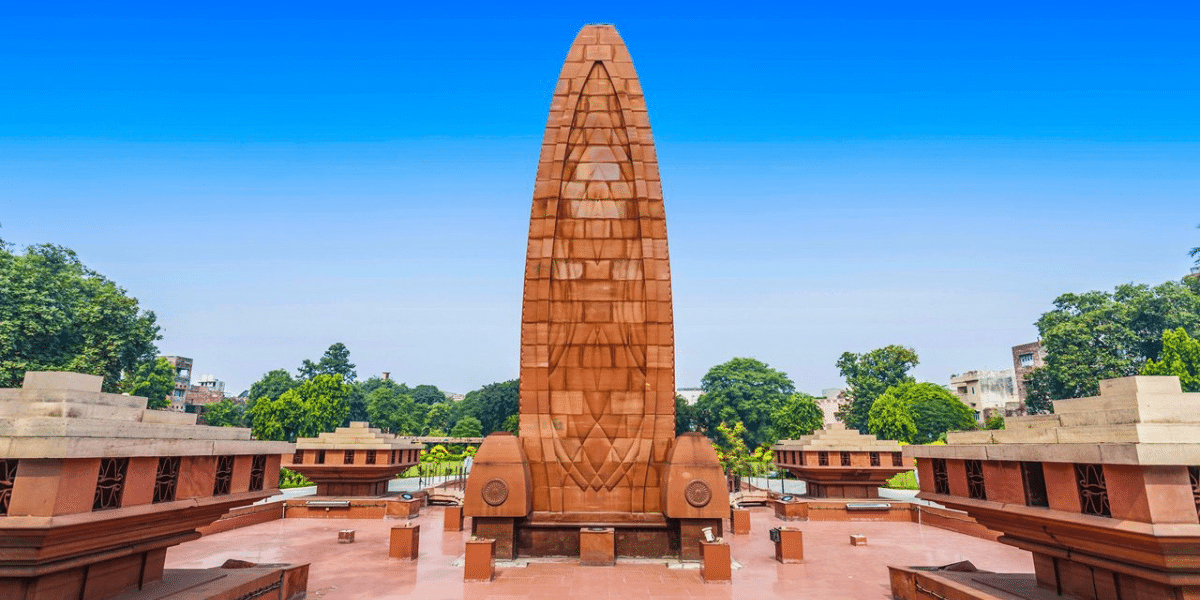
The brutal murder of peaceful protestors by the British rule marked a dark chapter in India’s independence struggle. It occurred in an enclosed park with one exit, leading to a monument erected in their memory by the Government of India in 1951. The Yaad-e-Jallian Museum, which opened in March 2019, stands as a testament to the lives lost, offering an authentic account of the tragedy. This massacre exposed the British’s inhumanity, as General Dyer instructed his troops to open fire without warning on a crowd gathered for a banned public meeting.
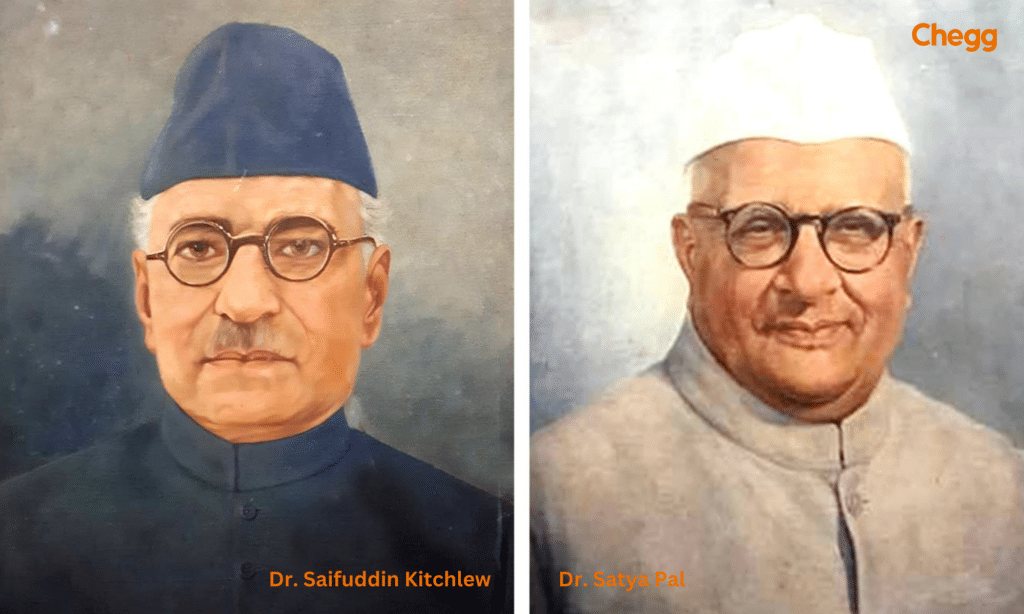
The tragic event remains a symbol of British colonial atrocities in Amritsar, Punjab, in 1919, driving India’s fight for independence. On that fateful day, Indians gathered at Jallianwala Bagh for a peaceful protest against the arrest of nationalist leaders Kitchlew and Satyapal. Surrounded by narrow lanes and houses, the troops fired indiscriminately, killing hundreds. British reports claim around 400 deaths, but Indian historians estimate the toll at 1,000. This article will explore the events leading up to the Jallianwala Bagh Massacre and how many people died in Jallianwala Bagh.
On April 13, 1919, British soldiers shot unarmed Indians in Amritsar’s Jallianwala Bagh, killing many, including children, and injuring hundreds.
After the Rowlett Act was passed, events led to the Punjab freedom fighters Satyapal and Saifuddin Kitchlew. This triggered violent protests across Punjab. British rule imposed Martial Law. On April 13, 1919, people gathered at Amritsar’s Jallianwala Bagh to protest. General Dyer and troops arrived. No warning. They fired on an unarmed crowd for ten minutes.
Jallianwala Bagh’s walls bear bullet marks as a national memorial. The massacre was planned. Dyer proudly admitted it aimed for a ‘moral effect.’ He decided to shoot all the men meeting. No regrets. He went to England. Others were shocked and demanded an inquiry. A UK newspaper called it a terrible massacre. Later, on March 13, 1940, Udham Singh killed O’Dwyer. He was Punjab’s Lt. Governor during the Jallianwala Bagh massacre. Indians were furious. The government reacted brutally. Punjabis were hanged, faced cages, and flogged. Newspapers were banned, and editors were jailed or deported. A reign of terror followed, like after the 1857 revolt.

On April 13, 1919, a large crowd gathered at Jallianwala Bagh in Amritsar to protest the arrest of nationalist leaders Satya Pal and Dr Saifuddin Kitchlew. General Dyer, a British officer, entered with his troops and opened fire on the unarmed civilians without warning. The shooting lasted for ten minutes, killing around 1,000 people and injuring 2,000, according to Congress estimates. After exhausting their ammunition, Dyer and his troops withdrew. Today, the bullet marks on the walls of Jallianwala Bagh serve as a powerful reminder of this horrific event, and the site stands as a national memorial.
General Dyer later justified his actions as deliberate, claiming he intended to create a ‘moral effect’ and would have continued firing if the gathering persisted. He expressed no remorse and returned to England, where some British citizens even raised funds to honour him. However, others were appalled by the brutality and demanded an inquiry. A British newspaper described the incident as one of the bloodiest massacres in modern history.
Decades later, on March 13, 1940, Udham Singh, an Indian revolutionary, assassinated Michael O’Dwyer, the former Lieutenant Governor of Punjab, who was in office during the Jallianwala Bagh massacre. The massacre had ignited widespread outrage across India, which the British authorities met with further oppressive measures. People in Punjab were subjected to extreme humiliations, such as being forced to crawl on the streets, being confined to open cages, and facing public floggings. Newspapers were censored, and editors were imprisoned or deported. A brutal wave of repression, reminiscent of the aftermath of the 1857 revolt, swept through the region.
There were no precise official records of the number of deaths during the Jallianwala Bagh Massacre. However, a British official inquiry reported 379 fatalities, while Congress estimated that over 1,000 people had been killed.
Rabindranath Tagore, who had been knighted by the British, responded to the tragedy by renouncing his knighthood. In a powerful letter to the viceroy, Tagore wrote, “The time has come when the badges of honour make our shame glaring in their incongruous context of humiliation and I for my part wish to stand shorn of all special distinctions, by the side of those of my countrymen, who for their so-called insignificance, are liable to suffer a degradation not fit for human beings.” This massacre became a pivotal moment in India’s freedom struggle.
In December 1919, the Congress session was convened in Amritsar, drawing a massive gathering, including many peasants. It was evident that the brutality of the massacre had only fueled the people’s resolve, strengthening their determination to fight for freedom and resist oppression.
The Defence of India Act, enacted in 1915, was a wartime measure passed by the British government in India.
Background:
The Act and Its Impact:
Key Figures:
Have you ever wondered about what is Rowlatt Act? It’s a historical term that refers to a law from way back in 1919 during British rule in India. The Rowlatt Act, known as the Anarchical and Revolutionary Crimes Act, came into force on March 18, 1919. Approved by British India’s Imperial Legislative Council, it allowed trials for political issues without juries and detained suspects without proper trials. It aimed to replace the strict parts of the Defence of India Act 1915 during World War I.
Responding to fears of post-war plots, the Act granted the British India’s government power to imprison civilians without proper trials. It controlled the country’s workings, allowing arrests, imprisonment, and trials without juries. The law limited the press’s denied to information about convicts and restricted their activities after release.
On February 6, 1919, two proposals emerged in the Central Legislature from Justice Sidney Rowlatt’s committee. These banknotes were named “Black Act.” They gave police significant powers like searching and arresting without warrants. The Rowlatt Act, named after its executive, Sir Sidney Rowlatt, allowed detaining suspects for up to two years without trial. It aimed to suppress nationalist activities. Mahatma Gandhi led protests through satyagraha. This Act pushed Gandhi into India’s freedom struggle spotlight, marking the Gandhian era in political history.
The table below contains an outline of the act.
| Rowlatt Act, 1919 | |
| Title | Anarchical and Revolutionary Crimes Act of 1919 |
| Geographic Range | The whole of British India |
| Implemented by | Imperial Legislative Council |
| Implemented | March 1919 |
| Started | March 1919 |
| Status | Repealed |
Here are the impacts of the Rowlatt Act on India’s political landscape.
The Rowlatt Act ignited a massive anti-British movement akin to the 1857 Revolt. This led to India’s eventual independence. Gandhi opposed the Act, calling for a nationwide hartal and nonviolent agitation. People committed to nonviolence by signing a Satyagraha pledge, leading to the hartal’s start on April 6, 1919, which garnered significant support. Riots occurred in Punjab, halting the movement. Dr. Satya Pal and Dr. Saifuddin Kitchlew’s arrest triggered the Jallianwala Bagh incident on April 13, 1919.
1. Immediate Impact:
2. Political Impact:
3. Social Impact:
4. Cultural and Long-Term Impact:
5. British Reaction and Aftermath:
6. Commemoration and Apology:
The massacre at Jallianwala Bagh was widely condemned both domestically in India and abroad. At the time, a large number of political figures denounced the massacre’s brutality and demanded justice and accountability.
The following are a few prominent political figures:
These are but a handful of the numerous political figures who denounced the massacre at Jallianwala Bagh.
The Jallianwala Bagh Massacre wasn’t just a horrific event; it served as a critical turning point in India’s fight for freedom:
The Jallianwala Bagh Massacre, or Massacre of Amritsar, occurred on April 13, 1919. General Reginald Dyer, a British officer, ordered to fire without warning at a banned public meeting. The people were at a festival and protesting British rules. Dyer aimed to create fear and stop protests against the British. He believed force was needed to control India. New laws limited Indian movement due to British rule. The crowd at Jallianwala Bagh violated the laws. General Dyer saw a chance for revenge. He ordered troops to fire, trapping people. Many died in the chaos. Dyer aimed to terrorize Indians, asserting British control. Some Britons cheered him. Indians gave him money. Rudyard Kipling praised Dyer.
Punjab’s Governor O’Dwyer backed him but was dismissed later. Both had admirers, collecting £26,000. Dyer was called an honorary Sikh. Jallianwala Bagh is remembered due to Britain’s handling of the incident. Brigadier-General Reginald Dyer acted with support from Punjab Governor Sir Michael O’Dwyer and India’s colonial government. Lord Chelmsford led this government. Dyer’s family managed the Dyer-Meakin brewery in Himachal Pradesh. An inquiry led by Lord Hunter followed the massacre in July 1919. The Golden Temple’s management gave Dyer a kirpan and a Siropa. Udham Singh later shot O’Dwyer, who had his fund. Prominent Punjabis like Kunj Bihari Thapar contributed to it.

Understanding the Context:
The Day the Garden Bled:
The Spark That Ignited the Fire:
General Dyer’s Barbarity:
The Scale of the Tragedy:
A Turning Point in the Freedom Struggle:
Beyond India’s Borders:
A Lasting Legacy:
The Jallianwala Bagh Massacre happened on April 13, 1919, in Amritsar, Punjab. Thousands of people had gathered at Jallianwala Bagh to protest peacefully against a new British law called the Rowlatt Act. Without any warning, British officer General Dyer ordered his soldiers to fire on the crowd. The garden had only a few narrow exits, so people could not escape. Hundreds of innocent men, women, and children were killed. This tragic event shocked the country and made many Indians join the fight for freedom from British rule.
The Jallianwala Bagh Massacre stands as a pivotal and tragic turning point in the history of the Indian independence movement. The brutal action, ordered by General Reginald Dyer, exposed the extreme nature of British colonial rule and shattered the faith of Indian moderates in the possibility of justice within the system. In the aftermath, the official Hunter Commission inquiry was established. However, its consequences for General Dyer were minimal; he was removed from his command and forced to retire but faced no criminal trial. This lack of accountability was met with outrage in India, while Dyer was controversially celebrated by some in Britain. This stark division permanently widened the rift between the rulers and the ruled.
The massacre had two direct and powerful consequences. First, it compelled Mahatma Gandhi to launch his first large-scale non-cooperation movement, transforming the freedom struggle into a mass movement. Second, it ignited a surge of nationalist fervor, inspiring a new generation of Indians to join the fight for freedom. The event’s legacy is profound; it is remembered as a symbol of colonial oppression and a crucial catalyst that accelerated India’s journey to becoming an independent nation on August 15, 1947.
Read More:
Around 379 deaths and over 1200 injuries were reported, though other records suggest the toll was higher, marking a pivotal moment in India’s fight for independence.
The last survivor, Shingara Singh, passed away in Amritsar in 2009 at the age of 113.
Moved by the suffering, Gandhi urged non-cooperation with the government as a response to the brutal events.
The non-cooperation movement arose in response to oppressive British policies, including the Rowlatt Act of March 18, 1919, and the tragic events of Jallianwala Bagh on April 13, 1919.
The Viceroy of India during the Jallianwala Bagh massacre in 1919 was Lord Chelmsford. He was in office when General Dyer ordered the firing on unarmed civilians.
Udham Singh took revenge for the Jallianwala Bagh Massacre. In 1940, he shot and killed Michael O’Dwyer, the former British official who supported the massacre.
The statue in Jallianwala Bagh is of Udham Singh, the freedom fighter who avenged the massacre. It honors his bravery and sacrifice for India’s independence.
The hero of the Jallianwala Bagh Massacre is remembered as Udham Singh, the revolutionary who avenged the 1919 tragedy. On April 13, 1919, British troops under General Dyer killed over 1,000 unarmed Indians in Amritsar. Years later, Udham Singh assassinated Michael O’Dwyer, the former Lieutenant Governor of Punjab who endorsed the massacre. His act of sacrifice and bravery made him a national hero and a lasting symbol of India’s fight against British oppression.
The title of “Sir” was renounced by Rabindranath Tagore after the Jallianwala Bagh tragedy in 1919. Deeply disturbed by the massacre in Amritsar, where British troops under General Dyer fired on unarmed civilians, Tagore gave up his knighthood in protest. His act of defiance highlighted the brutality of British colonial rule and expressed solidarity with the Indian freedom struggle.