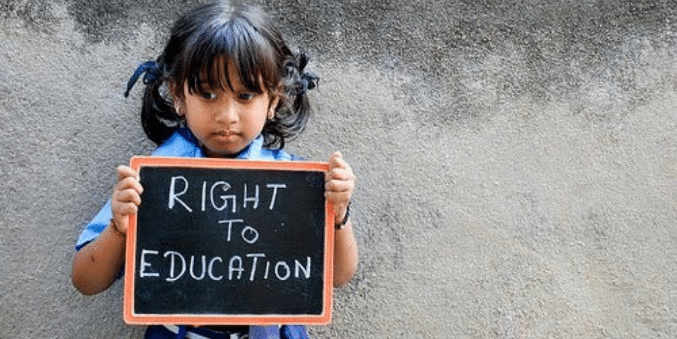
The Right of Children to Free and Compulsory Education Act, 2009 (RTE Act) is a cornerstone of India’s commitment to educating its youth. Effective from April 1, 2010, this pivotal law guarantees every child aged 6 to 14 the fundamental right to quality elementary education. It operationalizes this right by mandating free education, setting basic school standards, and ensuring inclusivity through a 25% reservation in private schools for children from disadvantaged backgrounds, fundamentally changing the landscape of Indian education.
By making education a fundamental right under Article 21A, the Act legally obligated the government to ensure access to quality elementary education for every child, regardless of caste, gender, religion, or socio-economic background. The RTE Act 2009 also laid down detailed norms for infrastructure, teacher quality, evaluation systems, and more, reflecting a rights-based approach toward inclusive education.

| Year | Event |
|---|---|
| 2002 | 86th Amendment Act introduced Article 21A, aiming for free and compulsory education. |
| 2003 | A Free and Compulsory Education for Children Bill draft was posted for feedback. |
| 2004 | Revised bill named “Free and Compulsory Education Bill, 2004.” |
| 2005 | CABE committee drafted the ‘Right to Education’ Bill. |
| 2006 | A draft of the Free and Compulsory Education for Children Bill was posted for feedback. |
| 2009 | Bill faced setbacks due to a lack of funds at the state level. |
| 2010 | Article 21-A and the RTE Act came into effect, ensuring education accessibility for all children. |
The Right of Children to Free and Compulsory Education Act, 2009 (RTE Act 2009) was enacted to fulfill the mandate of Article 21A of the Indian Constitution, which guarantees the right to education as a fundamental right. On April 1, 2010, this landmark law marked a significant shift in India’s education policy by making elementary education a legal entitlement for every child between the ages of 6 and 14.
The RTE Act 2009 ensures that education is both free and compulsory. “Free” means no child is required to pay any fee or expense, while “compulsory” places a legal obligation on the government to admit, retain, and educate every eligible child. This approach ensures universal access, especially for children from marginalized communities.
The Act sets specific school norms and standards to guarantee quality, such as pupil-teacher ratios, classroom infrastructure, working hours, and teacher qualifications. It also prohibits capitation fees, entrance screenings, corporal punishment, and mental harassment, promoting a safe and inclusive learning environment. By translating constitutional intent into enforceable provisions, the right to education in India became a reality, aiming to build an equitable and informed society through universal access to quality schooling.
The Right of Children to Free and Compulsory Education Act, 2009 (RTE Act 2009) introduces a comprehensive, rights-based approach to ensure every child in India receives quality elementary education. The features of the RTE Act 2009 are designed to create an inclusive, equitable, and child-friendly education system. Below are the key highlights:
The cornerstone of the RTE Act 2009 is providing free and compulsory education for all children aged 6 to 14 years. “Free” means no child shall be required to pay any fee or bear expenses for admission, books, uniforms, or learning materials. “Compulsory” implies that the government has to ensure every child is enrolled in a school, attends regularly, and completes their education. This provision targets children from marginalized and economically weaker sections who often lack access to basic schooling.
One of the Act’s most impactful and progressive features is Section 12(1)(c), which mandates 25% reservation in unaided private schools for children belonging to economically weaker sections (EWS) and disadvantaged groups. The government reimburses these schools for the cost incurred per child. This provision aims to bridge the socio-economic gap by enabling underprivileged children to access the same education as their affluent peers. It also promotes social inclusion and diversity in the classroom.
To ensure the delivery of quality education, the RTE Act specifies minimum norms and standards for schools. These include:
The Act stipulates that all teachers must have the minimum qualifications specified by the National Council for Teacher Education (NCTE). Additionally, the Act promotes in-service training, capacity-building programs, and regular performance assessments. These are vital for improving the quality of teaching and ensuring that children are not just in school but also learning effectively.
To safeguard the dignity and rights of children, the Act bans several discriminatory and harmful practices, including:
CCE introduces a holistic, stress-free assessment system by replacing high-stakes exams with continuous academic and co-curricular progress monitoring. It aims to:
Together, these features of the RTE Act 2009 transform the landscape of elementary education in India, ensuring not just access, but equity, quality, and accountability in the school system.
The right to education is profoundly important, particularly in a country like India that is working toward inclusive growth, equity, and social justice. Education is the foundation upon which personal empowerment and national progress are built. The Right to Education (RTE) ensures this powerful tool is accessible to every child, regardless of socio-economic background.
Education enables individuals to acquire the skills, knowledge, and confidence needed to make informed choices and actively participate in civic life. For marginalized communities, such as girls, Dalits, and religious minorities, education acts as a transformative force that breaks the cycle of poverty and discrimination. The RTE Act 2009 empowers these groups to claim their rights, assert their identity, and contribute meaningfully to society by ensuring access to education.
An educated population is essential for the nation’s economic growth and development. Literacy enhances employability, raises income levels, and improves public health, hygiene, and awareness. By investing in education, the country reaps long-term benefits such as increased productivity, reduced inequality, and enhanced civic participation, aligning with India’s development goals.
The RTE Act mandates non-discriminatory access to quality education, thereby challenging entrenched social hierarchies based on caste, class, gender, and religion. Integrated classrooms foster mutual respect, empathy, and cooperation, creating a more inclusive and harmonious society.
Quality education builds a skilled, knowledgeable, and adaptable workforce, essential for competing in a global economy. Educated citizens drive innovation, good governance, and sustainable development, making education a key national strength and resilience pillar.
In sum, the right to education in India is not just a legal provision it is a gateway to empowerment, equality, and progress.
Despite its progressive framework, the RTE Act 2009 faces several implementation challenges that hinder the full realization of the right to education in India.
Many schools, especially in rural and tribal areas, still lack essential facilities such as boundary walls, functional toilets, electricity, and clean drinking water. These deficiencies create an unsafe and uninviting environment for children, particularly girls.
Several states continue to face a shortage of trained teachers. Delays in recruitment, inadequate in-service training, and uneven teacher distribution often result in poor learning outcomes and overburdened staff.
Many parents remain unaware of their children’s entitlements under the RTE Act. Additionally, vague provisions and loopholes in enforcement allow some schools to bypass compliance.
Government spending on education frequently falls short. Delays in reimbursements under Section 12(1)(c) discourage private schools from fulfilling their obligations.
Some private and religious institutions oppose the RTE Act, arguing that its mandates infringe on their constitutional autonomy under Article 30, leading to legal conflicts and non-compliance.
The judiciary has played a crucial role in shaping the scope and enforcement of the Right to Education (RTE) Act 2009, especially when it intersects with other constitutional rights. Key legal interpretations include:
The right to education is recognized globally as a fundamental human right. Article 26 of the Universal Declaration of Human Rights (UDHR) and the International Covenant on Economic, Social and Cultural Rights (ICESCR) affirm that primary education must be free and compulsory. In contrast, secondary and higher education should be accessible based on merit. These frameworks set global standards for education policy and equity.
India has committed to these principles by endorsing Sustainable Development Goal 4 (SDG 4) to ensure inclusive and equitable education for all by 2030. Additionally, India supports the Abidjan Principles, which underscore the state’s obligation to regulate private actors and uphold the public’s right to education.
To fully realize the vision of the RTE Act 2009, several forward-looking measures must be adopted to address existing gaps and ensure universal, quality education for all children.
The current scope of the RTE Act (6–14 years) excludes early childhood and secondary education. Extending its coverage to children aged 3–6 years (pre-primary) and 14–18 years (secondary level) will provide continuity in learning and improve educational outcomes across all stages.
Improving teacher quality is essential. Investing in pre-service and in-service training, introducing digital teaching aids, and ensuring ongoing professional development can significantly enhance teaching effectiveness.
Children with disabilities, migrant children, and those from marginalized communities need tailored interventions, including special educators, transport facilities, and learning aids, to ensure equal educational opportunities.
Raising budgetary allocations for education and integrating technology-driven learning tools like smart classrooms and e-content can help reach underserved regions and enhance access to quality education.
The right to education is not just a legislative promise but a pathway to individual empowerment and national progress. With the enactment of the RTE Act 2009, India made a historic leap by guaranteeing free and compulsory education to every child.
While significant achievements have been made, infrastructure, awareness, and enforcement challenges persist. The road ahead demands greater political will, financial commitment, and collective effort from governments, civil society, and communities. Ultimately, the right to education is important because it has the power to shape an equitable, progressive, and informed society. It is both a duty and a moral obligation to ensure that no child is denied the light of learning.
Read More:-
The RTE Act makes education a fundamental right for children aged 6 to 14 and sets minimum standards for elementary schools. It mandates that private schools reserve 25% of seats for disadvantaged children, with the government providing reimbursement.
The Right to Education Act mandates 25% reservation for only children from disadvantaged groups in Class I. Each year, new admissions occur in Class I, gradually covering all grades over eight years as students progress through elementary education.
The primary objective of the Right to Education Act is to guarantee quality education for every child in India, regardless of caste, creed, gender, or economic background, ensuring equal learning opportunities and promoting inclusive, equitable development across society.
Implementation is a joint responsibility shared by central and state governments, local authorities, and parents. Each school must form a School Management Committee (SMC) to supervise operations, while grievance redressal is available through SCPCR or NCPCR.
Minority educational institutions (religious or linguistic) are exempt from certain provisions, including the 25% reservation rule, as upheld in the Pramati case.
The Right of Children to Free and Compulsory Education (RTE) Act, 2009, was introduced by the Parliament of India under the UPA government, during Prime Minister Dr. Manmohan Singh’s tenure. It was passed by the Rajya Sabha on 20 July 2009 and Lok Sabha on 4 August 2009, receiving presidential assent on 26 August
Inclusive education under the RTE Act 2009 ensures that all children aged 6-14 including those from disadvantaged, socio-economic, linguistic, cultural or disability backgrounds have access to free and compulsory elementary education in regular neighbourhood schools. It mandates non-discrimination, appropriate support, no denying of admission, and age relaxation for children with disabilities.
The RTE Act prohibits corporal punishment and mental harassment of children in all schools (government or private) under its jurisdiction. The idea is to make school safe and child-friendly, ensuring that children are not penalised or humiliated for their performance or mistakes.