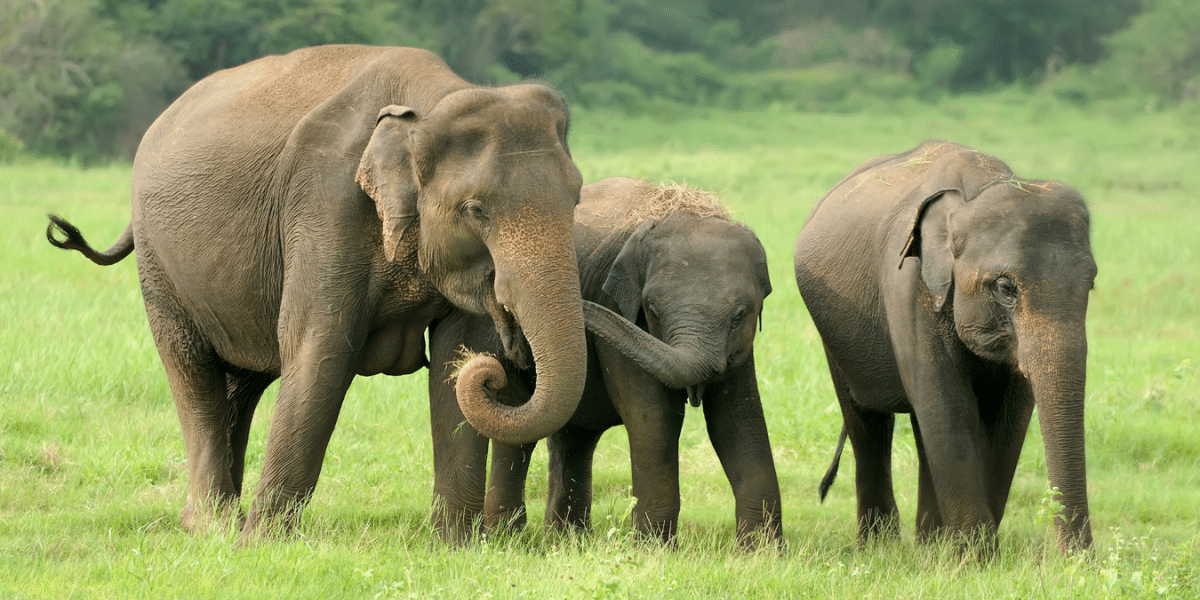
Project Elephant was launched in 1992 by the Government of India under the Ministry of Environment, Forest and Climate Change (MoEFCC) to protect elephants and their habitats. The initiative addresses key challenges such as habitat degradation, human-elephant conflict, and poaching, while ensuring elephants’ welfare in captivity.
Elephants play a crucial role as a keystone species, maintaining forest ecosystems by dispersing seeds and shaping vegetation patterns. Their conservation is essential not only for biodiversity but also for sustaining ecological balance in India’s forests.
Recognizing their cultural and ecological value, the elephant was declared India’s National Heritage Animal in 2010. Revered in mythology, religion, and tradition, elephants symbolize strength, wisdom, and prosperity. Protecting them is therefore a matter of environmental responsibility and cultural pride, making Project Elephant a vital step in India’s conservation journey.
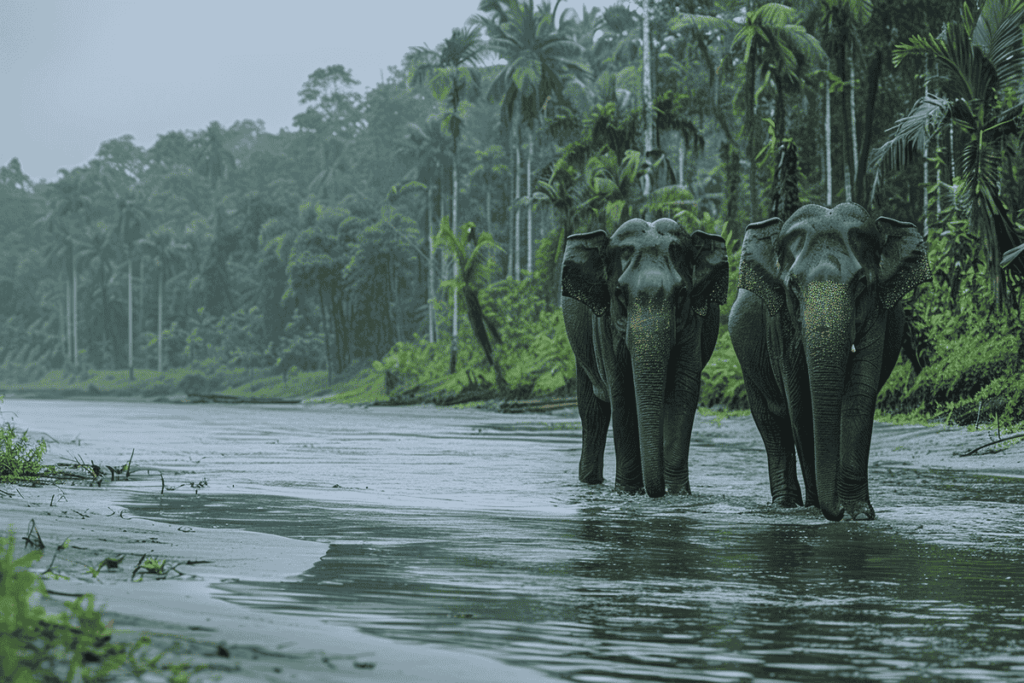
Project Elephant was launched in 1992 by the Government of India under the Ministry of Environment and Forests (now MoEFCC). The program was initiated at a time when India’s elephant population was facing severe threats due to rapid habitat loss, fragmentation of forest corridors, increasing human-elephant conflict, and rampant poaching for ivory.
Both national and global concerns influenced the decision to start a dedicated conservation project. Internationally, the IUCN recognized the Asian elephant as an endangered species, and international conservation bodies stressed the need for urgent measures. In India, which holds nearly 60% of the world’s wild Asian elephants, the decline of these animals poses a major ecological and cultural concern.
Thus, Project Elephant emerged as a comprehensive initiative to ensure scientific management of elephant habitats, protection from poaching, and safeguarding captive elephants, while integrating conservation with local community participation.
Also Read: Forest Conservation Act
Project Elephant was launched with well-defined objectives to ensure the survival, safety, and welfare of elephants in India. These ecological and socio-cultural objectives reflect the species’ importance as a keystone animal and as India’s National Heritage Animal.
The foremost goal is to safeguard elephants in the wild from threats such as poaching, habitat loss, and illegal ivory trade. At the same time, it emphasizes the proper care and management of captive elephants used in tourism, religious functions, and forestry.
The project focuses on conserving viable elephant populations in their natural habitats through scientific management, habitat restoration, and protection of critical forest ranges.
Since elephants are wide-ranging animals, maintaining and restoring traditional migratory corridors is a key objective. This helps reduce habitat fragmentation and prevents elephants from being forced into human settlements.
Conflicts have become a major issue due to growing human encroachment into forests. Project Elephant aims to develop strategies such as early warning systems, barriers, and community-based approaches to reduce such conflicts.
The project encourages scientific research on elephant ecology, behavior, and diseases. It also supports training programs for forest staff and awareness campaigns for local communities to foster coexistence.
Through these objectives, Project Elephant envisions a balanced approach to protecting elephants while involving people in conservation efforts, thus ensuring that India continues to be a haven for its elephant populations.
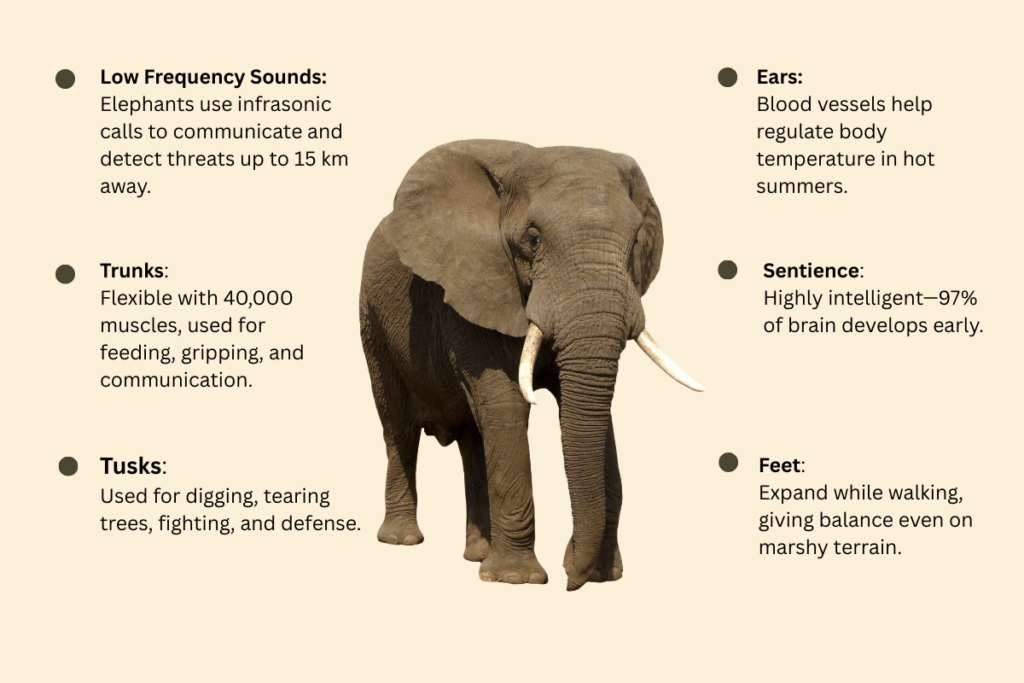
Project Elephant is a flagship initiative of India’s wildlife conservation policy. It is designed with unique features that ensure ecological protection and animal welfare.
The project functions as a Centrally Sponsored Scheme, where the Central Government provides financial and technical support, while the State Governments handle ground-level implementation. This structure allows uniform conservation strategies across elephant-range states.
The scheme covers wild and captive elephants, focusing on their protection from threats such as poaching and habitat loss. It also ensures ethical care and veterinary support for elephants in temples, tourism, and forestry.
The project has established 33 Elephant Reserves across India to secure habitats, covering over 80,000 sq km. Recent additions include the Lemru Elephant Reserve in Chhattisgarh, Agasthyamalai Elephant Reserve in Tamil Nadu, and Terai Elephant Reserve in Uttar Pradesh. These reserves protect migration routes and ecologically sensitive areas vital for elephant survival.
The scheme emphasizes strong anti-poaching networks, intelligence-led patrolling, and mobile veterinary units for treating wild and captive elephants.
Traditional elephant corridors are being re-evaluated and restored to ensure safe movement, reduce habitat fragmentation, and minimize human-elephant conflict.
Recent efforts include Assam’s “Gaja Mitra” program, which deploys rapid-response teams and introduces AI-based monitoring along railways, and Tripura’s upcoming dedicated elephant corridor along NH-8 to reduce crop damage and conflict.
As of 2023–24, India has 33 officially notified Elephant Reserves, covering about 80,778 sq km across 14 states. These reserves safeguard critical habitats and migratory corridors, ensuring the survival of both wild elephants and associated biodiversity.
Recent additions include:
| State / Region | Number of Reserves |
|---|---|
| Andhra Pradesh | 1 |
| Arunachal Pradesh | 2 |
| Assam | 5 |
| Chhattisgarh | 2 |
| Jharkhand | 1 |
| Karnataka | 2 |
| Kerala | 4 |
| Meghalaya | 1 |
| Nagaland | 2 |
| Odisha | 3 |
| Tamil Nadu | 5 |
| Uttar Pradesh | 2 |
| Uttarakhand | 1 |
| West Bengal | 2 |
| Total | 33 |
Elephant Reserves protect habitats, secure migration corridors, and reduce human-elephant conflict. They also highlight India’s global responsibility, as it hosts nearly 60% of its wild Asian elephants.
| S. No. | Elephant Reserve | State(s) | Year of Notification | Area (sq km) |
|---|---|---|---|---|
| 1 | Singhbhum | Jharkhand | 2001 | 13,440 |
| 2 | Mayurbhanj | Odisha | 2001 | 7,043 |
| 3 | Mahanadi | Odisha | 2001 | 4,232 |
| 4 | Sambalpur | Odisha | 2001 | 5,240 |
| 5 | Nilgiri | Tamil Nadu, Kerala | 2003 | 5,663 |
| 6 | Mysore | Karnataka | 2003 | 8,046 |
| 7 | Wayanad | Kerala | 2003 | 1,200 |
| 8 | Periyar | Kerala | 2002 | 3,724 |
| 9 | Nilambur | Kerala | 2002 | 1,419 |
| 10 | Anamalai | Tamil Nadu | 2003 | 4,953 |
| 11 | Coimbatore | Tamil Nadu | 2003 | 4,754 |
| 12 | Srivilliputhur | Tamil Nadu | 2003 | 1,192 |
| 13 | Eastern Dooars | West Bengal | 2002 | 3,088 |
| 14 | Mayurjharna | West Bengal | 2002 | 414 |
| 15 | Kameng | Arunachal Pradesh | 2002 | 1,897 |
| 16 | Sonitpur | Assam | 2003 | 1,420 |
| 17 | Dihing–Patkai | Assam | 2003 | 937 |
| 18 | Kaziranga–Karbi Anglong | Assam | 2003 | 3,270 |
| 19 | Dhansiri–Lungding | Assam | 2003 | 2,740 |
| 20 | Chirang–Ripu | Assam | 2003 | 2,740 |
| 21 | Garo Hills | Meghalaya | 2001 | 3,500 |
| 22 | Intanki | Nagaland | 2005 | 202 |
| 23 | Sonitpur | Assam | 2003 | 1,420 |
| 24 | Dandeli–Anshi | Karnataka | 2012 | 2,572 |
| 25 | Rayala | Andhra Pradesh | 2011 | 5,582 |
| 26 | Shivalik (Rajaji–Corbett) | Uttarakhand | 2002 | 5,405 |
| 27 | Kaziranga–Karbi Anglong | Assam | 2003 | 3,270 |
| 28 | Nagaland ER-II | Nagaland | 2009 | 700 |
| 29 | Kameng–Pakke | Arunachal Pradesh | 2009 | 1,200 |
| 30 | Lemru | Chhattisgarh | 2022 | 1,995 |
| 31 | Badalkhol–Tamor Pingla | Chhattisgarh | 2011 | 1,047 |
| 32 | Agasthyamalai | Tamil Nadu | 2022 | 1,197 |
| 33 | Terai | Uttar Pradesh | 2022 | 3,049 |
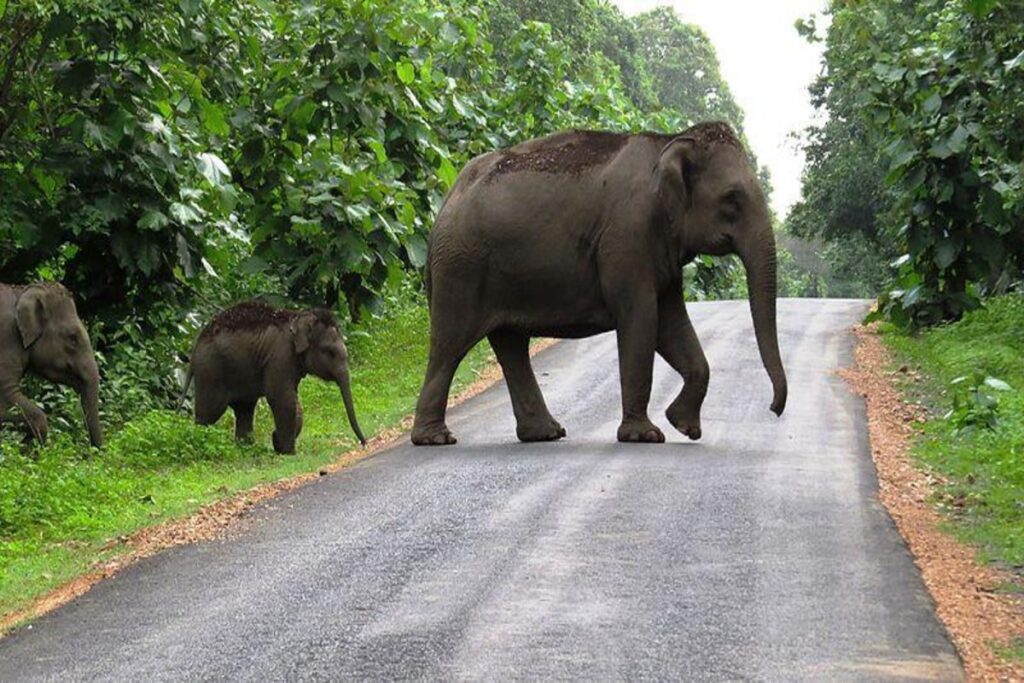
Elephants are wide-ranging, migratory animals that require significant, interconnected habitats to survive. Their seasonal movement between forests in search of food, water, and breeding grounds is facilitated by elephant corridors, narrow strips of land that connect two or more larger habitats. These corridors are crucial to prevent habitat fragmentation, reduce human–elephant conflict, and ensure the long-term survival of wild elephant populations.
According to the Indian Elephant Corridors Report (2023 update) by the Wildlife Trust of India (WTI) and the Ministry of Environment, Forest and Climate Change (MoEFCC), India has identified over 100 elephant corridors in states like Assam, West Bengal, Odisha, Karnataka, Kerala, and Uttarakhand. These corridors are classified based on their ecological importance, legal protection, and present use status.
Project Elephant has evolved into a comprehensive conservation initiative, addressing both ecological and socio-economic dimensions of elephant protection in India. Its major components include:
India is a signatory to the CITES MIKE Programme, which monitors elephant mortality in select sites such as Rajaji, Corbett, and Periyar. The aim is to assess trends in poaching, evaluate enforcement effectiveness, and guide policy decisions for better protection.
Scientific research is a crucial pillar of Project Elephant. Efforts include the development of crop varieties that are less attractive to elephants, the use of natural and chemical repellents, and the deployment of GPS collars, camera traps, and drones to track elephant movement. These innovations help reduce human–elephant conflict and improve corridor management.
India has thousands of elephants in captivity, often used in tourism, temples, or logging. Project Elephant ensures their welfare through veterinary infrastructure, mobile health units, rescue camps, and training for mahouts. The program also emphasizes strict regulations on elephant ownership and care.
Special centers, such as the Rehabilitation Centre in Kaziranga (Assam) and Mudumalai (Tamil Nadu), provide shelter, medical care, and rehabilitation for orphaned or injured elephants. Some are reintegrated into the wild, while others remain under human care.
Local communities play a vital role in elephant conservation. Project Elephant conducts awareness campaigns, eco-tourism initiatives, and training programs, encouraging people to coexist with elephants. By involving panchayats, NGOs, and youth groups, the project builds grassroots support for conservation.
Together, these components ensure that elephant conservation projects in India protect the species, sustain ecosystems, and reduce conflict between humans and wildlife.
The population of Asian elephants in India is assessed every five years through the Elephant Census. According to official estimates, India had about 27,694 elephants in 2007, 29,391 in 2012, and 27,312 in 2017. The latest figures (as per 2022 preliminary data) suggest that the numbers remain relatively stable, though with regional variations.
The highest populations are found in Karnataka, Assam, Kerala, and Tamil Nadu, which account for nearly 60% of India’s elephants. While stable populations in southern states highlight conservation success, concerns remain in the Northeast and Central India due to habitat loss, human–elephant conflict, and poaching threats.
Despite challenges, India continues to support over half of the global Asian elephant population, making its conservation efforts globally significant.
Human–Elephant Conflict (HEC) has become one of India’s biggest conservation challenges. Rapid habitat loss, deforestation, and fragmentation of elephant corridors push elephants into human settlements in search of food and water. This often results in crop raiding, property damage, and even human casualties, particularly in states like Assam, West Bengal, Odisha, Karnataka, and Jharkhand.
Farmers suffer heavy economic losses as elephants target crops such as paddy, sugarcane, and bananas. In retaliation, elephants face electrocution, train accidents, and killings, creating a vicious cycle that threatens both rural livelihoods and elephant survival.
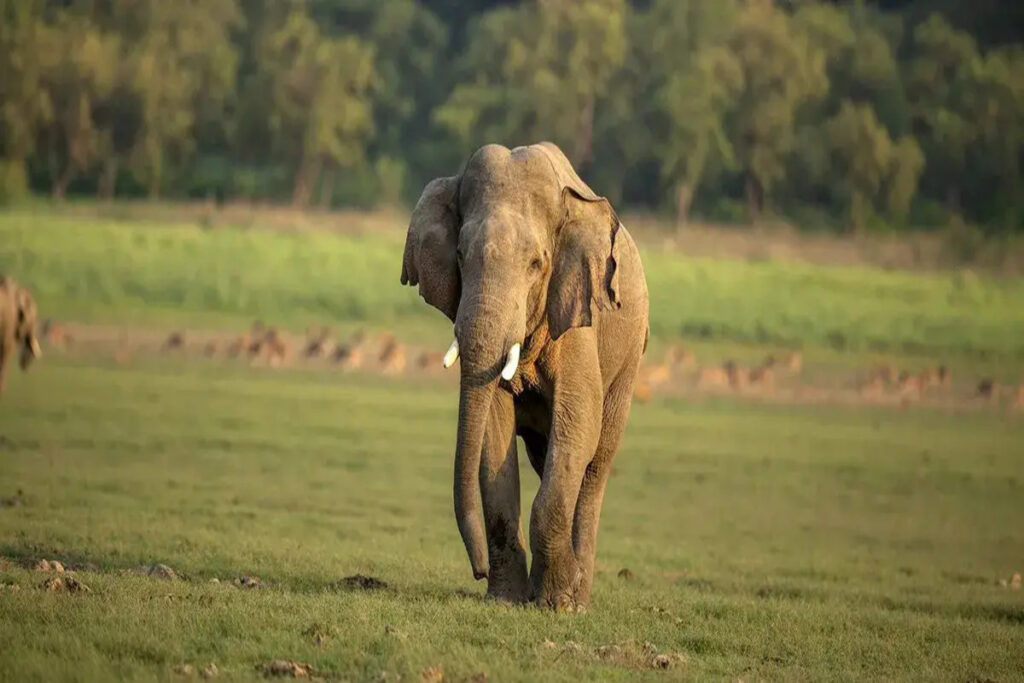
Project Elephant and state governments promote solar fencing, trenches, early warning systems, and railway speed limits to mitigate the conflict. Compensation schemes for farmers and awareness campaigns further reduce hostility. Long-term solutions lie in protecting habitats, securing migration corridors, and involving local communities to ensure peaceful coexistence.
Project Elephant, launched in 1992, has significantly contributed to conserving India’s elephants. The project helped stabilize elephant populations by creating 33 reserves across 14 states, protecting habitats and migration corridors. Stronger anti-poaching laws and participation in the MIKE program curbed illegal killings and the ivory trade.
Community-based initiatives promoted awareness, eco-tourism, and local involvement in conservation, reducing conflicts with humans. Globally, India’s efforts under Project Elephant have earned recognition from forums like IUCN and CITES, highlighting its role as a sustainable elephant protection and long-term survival model.
Project Elephant, launched in 1992, remains a cornerstone of India’s wildlife conservation efforts. It aims to protect elephants in both wild and captive conditions, secure their migration corridors, and reduce human–elephant conflict. Over the years, the initiative has strengthened anti-poaching measures, improved veterinary care, and involved local communities in conservation.
Balancing elephant protection with human needs is vital, especially as habitat loss and urbanization threaten survival. The project adapts to modern challenges with new reserves, technology like drones, and stronger policies.
Elephants, deeply rooted in India’s cultural and natural heritage, represent more than wildlife; they symbolize harmony with nature. Safeguarding their future ensures ecological balance and preserves an irreplaceable part of India’s identity.
Also Read: Wildlife Protection Act
Project Elephant is a wildlife conservation initiative launched in 1992 by the Government of India to protect elephants, their habitats, and migration corridors. It also addresses human-elephant conflict and promotes the welfare of captive elephants through scientific and community-based efforts.
Yes. In 2011, the Integrated Wildlife Division merged Project Tiger and Project Elephant to improve administrative efficiency. While both operate under the MoEFCC, they retain separate objectives: Project Tiger is for tigers, and Project Elephant is for elephant conservation and welfare.
Jim Corbett National Park in Uttarakhand is closely associated with Project Elephant. It serves as an essential habitat and elephant corridor. Under the project’s initiatives, it plays a key role in elephant conservation, population monitoring, and mitigating human-elephant conflict.
Project Elephant was launched in 1991 (officially initiated in 1992) to address rising threats to elephants, including habitat loss, poaching for ivory, and increasing human-elephant conflict, ensuring the long-term conservation of wild and captive elephants across India.
Project Elephant is currently implemented in 16 Indian states and Union Territories, including Andhra Pradesh, Arunachal Pradesh, Assam, Chhattisgarh, Jharkhand, Karnataka, Kerala, Maharashtra, Meghalaya, Nagaland, Odisha, Tamil Nadu, Uttarakhand, Uttar Pradesh, West Bengal, and Tripura, where wild elephant populations exist.