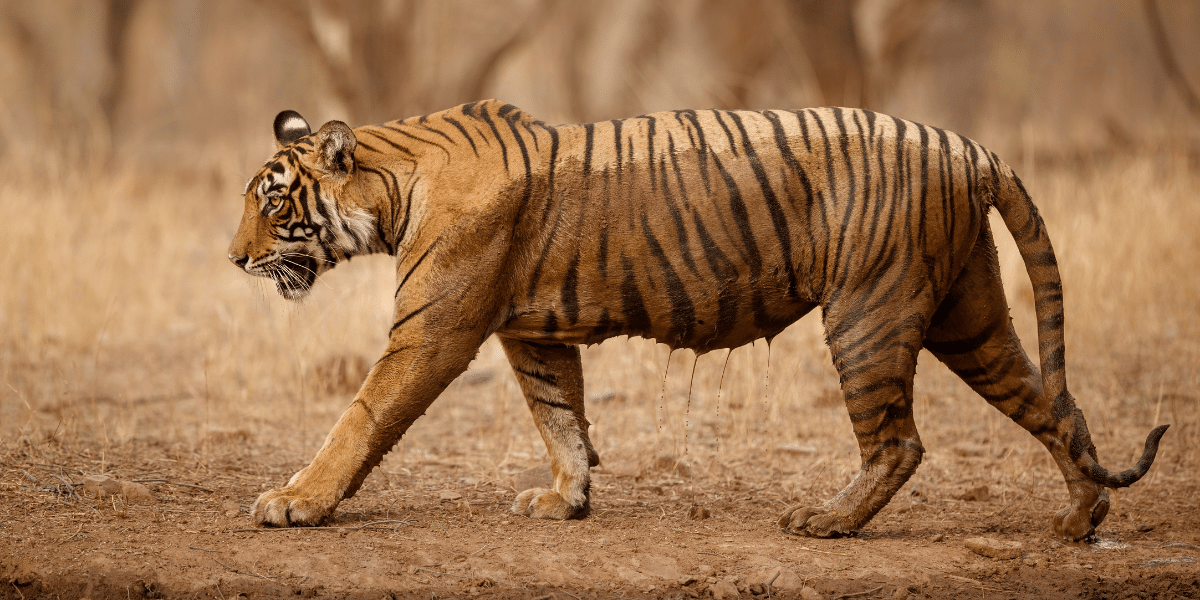
There are 54 tiger reserve in India that play a crucial role in conserving the majestic Bengal tigers and preserving India’s biodiversity. These reserves act as protected habitats where endangered species thrive and diverse flora and fauna coexist. By maintaining ecological balance, they safeguard food chains and ensure the health of ecosystems.
Beyond wildlife protection, tiger reserves also contribute significantly to local communities. They generate revenue through eco-tourism, create employment opportunities, and promote sustainable livelihoods for indigenous populations. Project Tiger, launched in 1973, has been instrumental in increasing tiger populations and strengthening conservation measures nationwide.
Today, India is home to 70% of the global tiger population, showcasing the success of these dedicated efforts. In this blog, discover how the 54 tiger reserve in India protects wildlife and inspires conservation awareness, making them pillars of ecological and cultural heritage for future generations.
Today, many reserved areas in India exist to conserve endangered species, with the “Bengal tiger” being the highlight among them. Project Tiger is a wildlife conservation initiative to ensure the survival and monitoring of the tiger species in natural habitats. Tiger reserves stabilise the food chain, with tigers serving as top predators. Other species, including a diverse range of flora and fauna, also find safe sanctuaries in these reserves.

Tigers are dominant hunters, help control prey populations, and maintain the food chain and ecosystem health. Tiger reserves prevent the extinction of vulnerable species and promote genetic diversity. These reserves help to coexist, fostering harmony between wildlife and local communities, allowing both to flourish.
This is a comprehensive breakdown of the tiger reserves in India, including their specifics, geography, and unique facts of all the 54 tiger reserve in India as of 2024. The list of 54 tiger reserve in India is a pillar of protection and biodiversity.
| Sr.No. | Reserve | Location | Unique Facts |
| 1 | Anamalai Tiger Reserve | Tamil Nadu | UNESCO heritage site, Indigenous tribes, parts of the western ghats |
| 2 | Achanakmar Tiger Reserve | Chhattisgarh | Part of the Achanakmar-Amarkantak Biosphere Reserve |
| 3 | Bandhavgarh Tiger Reserve | Madhya Pradesh | Home for high tiger density and ancient fort ruins |
| 4 | Bandipur Tiger Reserve | Karnataka | A part of the Nilgiri Biosphere and known for elephant populations. |
| 5 | Bhadra Tiger Reserve | Karnataka | Features lush forests and riverine habitats, successful efforts in protecting tigers and wildlife corridors |
| 6 | Bhoramdeo Tiger Reserve | Chhattisgarh | Known for tigers at the Maikal hills and Bhoramdeo temple |
| 7 | Buxa Tiger Reserve | West Bengal | Famous for rare Asiatic wild buffalo |
| 8 | Dampa Tiger Reserve | Mizoram | The last remaining tiger habitats in the far eastern state |
| 9 | Dandeli-Anshi Tiger Reserve | Karnataka | Known for its stunning landscapes and the Kali River |
| 10 | Dudhwa Tiger Reserve | Uttar Pradesh | Known for swamp deer, endangered Bengal Tiger |
| 11 | Kalakad-Mundanthurai Tiger Reserve | Tamil Nadu | Noted for its rugged terrain |
| 12 | Indravati Tiger Reserve | Chhattisgarh | Home to the rare white tiger |
| 13 | Kanha Tiger Reserve | Madhya Pradesh | Inspiration for “The Jungle Book.” |
| 14 | Kaziranga Tiger Reserve | Assam | Successful in the conversation for one-horned rhinoceroses |
| 15 | Manas Tiger Reserve | Assam | A UNESCO World Heritage site |
| 16 | Mudumalai Tiger Reserve | Tamil Nadu | Situated involving three Karnataka, Tamil and Kerala. |
| 17 | Melghat Tiger Reserve | Maharashtra | High tiger reserves and habitat for endangered Indian wild dogs |
| 18 | Nagarhole Tiger Reserve | Karnataka | Known for habitats for tigers and elephants. |
| 19 | Namdapha Tiger Reserve | Arunachal Pradesh | One of the easternmost tiger habitats |
| 20 | Nameri Tiger Reserve | Assam | Situated in the foothills of Assam, a habitat for tigers and diverse bird species |
| 21 | Nauradehi Tiger Reserve | Madhya Pradesh | Wild-life corridor connecting Madhya Pradesh |
| 22 | Panna Tiger Reserve | Madhya Pradesh | Famous for its unique tiger reintroduction project |
| 23 | Pench Tiger Reserve | Madhya Pradesh and Maharashtra | Inspiration for “The Jungle Book.” |
| 24 | Periyar Tiger Reserve | Kerala | Known for the significant elephant population alongside tigers |
| 25 | Pilibhit Tiger Reserve | Uttar Pradesh | Wetland and tigers in the Terai region |
| 26 | Rajaji Tiger Reserve | Uttarakhand | Himalayan habitat for elephants and tigers |
| 27 | Ranthambore Tiger Reserve | Rajasthan | Iconic tiger reserves and the Ranthambore fort |
| 28 | Sariska Tiger Reserve | Rajasthan | Known for historic temples |
| 29 | Satpura Tiger Reserve | Madhya Pradesh | Rugged terrain and rich biodiversity |
| 30 | Sathyamangalam Tiger Reserve | Tamil Nadu | Habitat for both elephants and tigers |
| 31 | Sundarbans Tiger Reserve | West Bengal | Home to mangrove forests and unique water-dwelling tigers |
| 32 | Sanjay-Dubri Tiger Reserve | Madhya Pradesh | Dense forests and grasslands |
| 33 | Similipal Tiger Reserve | Odisha | Known for waterfalls and rich tribal culture |
| 34 | Tadoba-Andhari Tiger Reserve | Maharashtra | Among the oldest in Maharashtra |
| 35 | Valmiki Tiger Reserve | Bihar | Bihar’s only tiger reserve. |
| 36 | Achanakmar-Amarkantak Tiger Reserve | Chhattisgarh | Rich in herbal flora, the origin of the Narmada Rivera and part of the Maikal hills |
| 37 | Orang Tiger Reserve | Assam | Known for tigers and mostly rhinos |
| 38 | Udanti-Sitanadi Tiger Reserve | Chhattisgarh | Known for tiger sightings in remote landscape |
| 39 | Satkosia Tiger Reserve | Odisha | Situated along the Mahanadi River gorge |
| 40 | Bor Tiger Reserve | Maharashtra | A small but important reserve for tiger conservation |
| 41 | Mukandra Hills Tiger Reserve | Rajasthan | Known for scenic landscapes and key tiger conservation area |
| 42 | Kamlang Tiger Reserve | Arunachal Pradesh | Known for rare clouded leopard and the newest tiger reserve |
| 43 | Kawal Tiger Reserve | Telangana | Vital for connecting tiger habitats with the surrounding reserve |
| 44 | Nandhaur Tiger Reserve | Uttarakhand | Close to Himalayan foothills. |
| 45 | Kudremukh Tiger Reserve | Karnataka | Beautiful landscapes and tiger population. |
| 46 | Buxa Tiger Reserve | West Bengal | Diverse mammalian and avian life |
| 47 | Rudraprayag Tiger Reserve | Uttarakhand | Rich in Himalayan flora, rugged terrain |
| 48 | Biligiri Ranganathaswamy Temple (BRT) Tiger Reserve | Karnataka | Diverse vegetation |
| 49 | Rajaji-Corbett Corridor | Uttarakhand | Known for Rajaji and Corbett tiger reserves |
| 50 | Sundarbans Biosphere Reserve | West Bengal | Unique mangroves and tiger conservation |
| 51 | Palamau Tiger Reserve | Jharkhand | India’s oldest and one of the least disturbed habitats. |
| 52 | Singalila Tiger Reserve | West Bengal | Known for red pandas and Himalayan views. |
| 53 | Western Arunachal | includes Tawang region | Rich in biodiversity, unexplored habitat |
| 54 | Kanha Tiger Reserve Extension | Madhya Pradesh | Enhances tiger habitats and conservation efforts |
Madhya Pradesh, renowned as India’s “Tiger State,” has further strengthened its commitment to wildlife conservation by establishing the Veerangana Durgavati Tiger Reserve. This marks a significant milestone, becoming the seventh tiger reserve within the state and the 54th nationally. Named after the legendary warrior queen, Rani Durgavati, the reserve encompasses a core area of approximately 1,414 square kilometers and a buffer zone of around 925.12 square kilometers. This expansion underscores Madhya Pradesh’s leading role in tiger conservation, as the state boasts the highest tiger population in India, with 785 tigers recorded in the 2018 census.
India’s pioneering efforts in tiger conservation began in 1973 with establishing the first tiger reserve. In Uttarakhand, Jim Corbett National Park, initially known as Hailey National Park, was renamed in honor of the renowned conservationist Jim Corbett. This initiative, launched as part of Project Tiger, aimed to safeguard the endangered Bengal tiger and its habitat, setting a crucial precedent for tiger conservation efforts nationwide.
| S. No. | Tiger Reserve | State | Total Area (sq. km.) | Key Features |
|---|---|---|---|---|
| 1 | Nagarjunsagar Srisailam | Andhra Pradesh, Telangana | 3,296.31 | Large reserve across 5 districts; Bengal tigers, leopards, pangolins, Indian rock pythons. |
| 2 | Manas National Park | Assam | 3,150.92 | UNESCO site; tiger, elephant, biosphere reserve; rhinos, tigers, elephants, gibbons, leopards. |
| 3 | Melghat Tiger Reserve | Maharashtra | 2,768.52 | Prime tiger habitat; diverse flora and fauna; important watershed. |
| 4 | Similipal National Park | Odisha | 2,750 | National Park & Tiger Reserve; Royal Bengal tigers; forests and waterfalls. |
| 5 | Amrabad Tiger Reserve | Telangana | 2,611.39 | Nallamala hills; Chenchu tribe; tigers, leopards, pangolins, crocodiles, pythons, birds. |
| 6 | Sunderbans Tiger Reserve | West Bengal | 2,584.89 | Largest delta; UNESCO site; Sundari trees; Royal Bengal tigers; Project Tiger. |
| 7 | Dudhwa Tiger Reserve | Uttar Pradesh | 2,201.77 | Near India-Nepal border; tigers, rhinos, elephants, wetlands. |
| 8 | Satpura Tiger Reserve | Madhya Pradesh | 2,133.30 | South of Narmada River; sambar, leopards, chital, wild boars, nilgai. |
| 9 | Namdapha Tiger Reserve | Arunachal Pradesh | 2,052.82 | Hosts tiger, leopard, snow leopard, clouded leopard; other felines. |
| 10 | Kanha Tiger Reserve | Madhya Pradesh | 2,051.79 | Established 1955; Royal Bengal tigers, leopards, sloth bears, barasingha, wild dogs. |
Project Tiger, established by the Government of India, began in 1973 and continues to run today as a centrally sponsored scheme. Tigers are considered an umbrella species. Since its inception, the project has expanded into a network of 50 tiger reserves across 18 states, covering 72,749 square kilometres.
The first phase protected forests where these tigers dominated in the 1970s. However, poaching caused a decline in tiger numbers in the 1980s. The second phase, 2005, focused on landscape approaches, forest laws, and tiger monitoring technology. The Tiger Census, using the camera-trap method, led to an increase in tiger populations, the establishment of new reserves, and the protection of critical areas. This was an annual increase of 6.1% supported by the Government of India.
Tigers face threats like habitat loss, poaching, and man-animal conflict. Fragmented habitats, encroachment, and climate change also impact populations. An Indian researcher said that saving tigers saves forests and enhances carbon absorption, keeping stored carbon biomass. Since 2015 and 2019, the monetary value of tiger reserves has been emphasised.
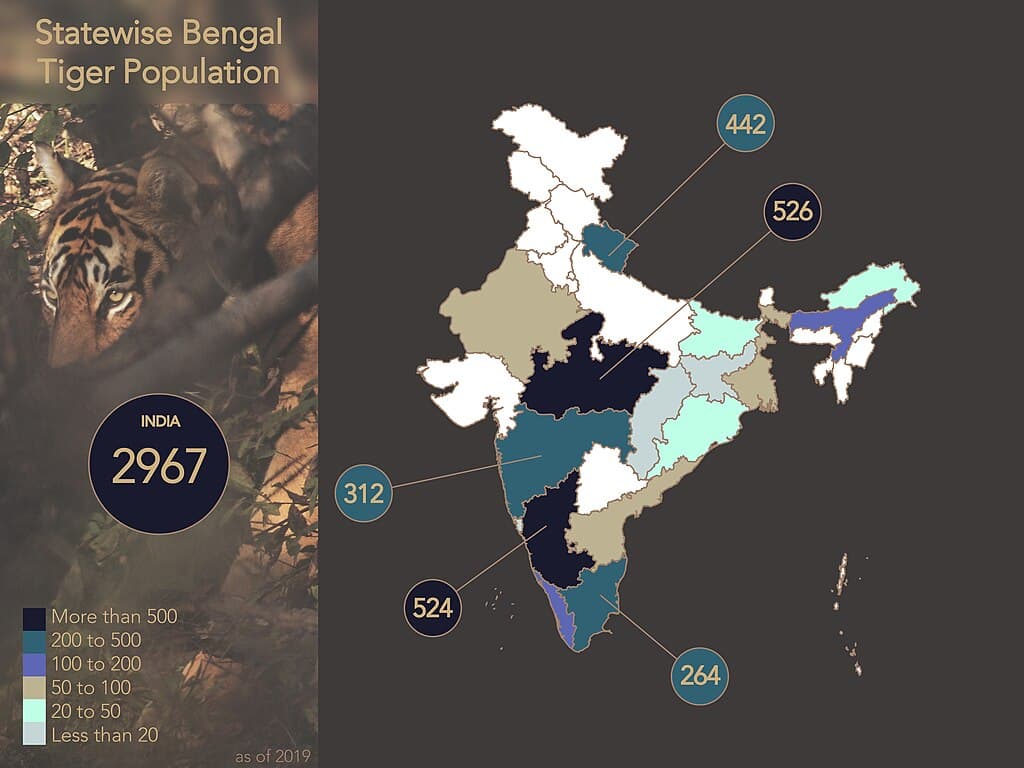
The National Tiger Conservation Authority (NTCA) created 2023 as a special year for the conservation community. India is leading with 70% of the global tiger population, with conservation efforts like the International Big Cats Alliance (IBCA). India also completed 50 years of Project Tiger. Other achievements included management evaluations, reintroduction programs, accreditation, and bilateral cooperation. New tiger reserves have been added, receiving worldwide recognition.
Ranthambore, Bandhavgarh, and Corbett National Park are the top tiger reserves. These are the best picks for tigers and prime sightings, particularly in winter.
To increase the possibilities of tiger sightings, plan safaris during the top seasons from November to June, and opt for early morning or late afternoon safaris when tigers are more active.
The Tiger Reserves of India Map highlights 54 tiger reserve in India across every geographical region, playing a key role in tiger conservation. The Kanha National Park in Madhya Pradesh and the Sundarbans in West Bengal are other notable tiger reserves known for their unique features.
When planning a safari in India’s tiger reserves, prioritise responsible tourism. Choose eco-friendly accommodations and avoid littering to respect wildlife. Opt for parks with sustainable practices to support local communities. The best time for tiger sightings is from November to June. The best time to spot tigers is during the morning and late afternoon safaris. Always book safaris through licensed operators for safety and conservation purposes.
When visiting tiger reserves, pack light breathable clothing. Bring sun protection, binoculars, a hat, sturdy shoes, and warm layers in winter. Carry insect repellent and a camera to prepare for rugged terrain and physical activity. Follow all safety guidelines and respect park rules to ensure a safe visit.
Tiger reserves in India are integral to conserving the country’s ecological health. 54 tiger reserve in India protect prey populations and prevent habitat destruction, benefiting local communities through ecotourism. India’s Project Tiger has successfully increased the wild tiger population by 75% compared to the global average. However, poaching, habitat loss, and human-animal conflict remain significant threats, making ongoing conservation efforts essential.
The public and institutions are crucial for maintaining tiger conservation efforts. It is vital to emphasise that conserving tigers also preserves forests, wildlife, and global biodiversity. Tourists must adopt a responsible and ethical approach to tourism, supporting conservation efforts and sustainable development. Protecting India’s majestic tigers within wildlife sanctuaries is essential for their survival, but critical for preserving the planet’s ecological balance.
Also Read-
Through Project Tiger, the population of tigers has increased, resulting in 54 tiger reserve in India. As of 2024, this number has reached 55 tiger reserves.
The Nagarjunsagar-Srisailam Tiger Reserve, located in Andhra Pradesh and Telangana, is the largest in India as of 2024. It spans 3,568 sq km and is characterised by dense forests, forested hills, and species like tigers and leopards. This reserve is a key part of Project Tiger and holds significant ecological importance.
Launched on 1 April 1973, Project Tiger was an initiative to protect tigers by establishing reserves in various locations. The project has been instrumental in increasing the tiger population, promoting tourism, and ensuring wildlife sustainability. It reduces poaching and other destructive human activities, creating a biome with diverse species to stabilise ecosystems.
Visitors should prioritise booking and obtain the necessary permits. You can pack binoculars, a camera, a hat, light, breathable clothes, and sunscreen. Avoid noisy behaviour to prevent disturbing wildlife. Familiarise yourself with the terrain, safari timings, and eco-friendly practices. It is advisable to undertake the safari under the guidance of a trained naturalist.
The ideal time to visit is in the colder winter months from November to March. The dry weather makes tigers more active and concentrated around waterholes. Avoid the monsoon season (June to September), as the terrain can be dangerous and challenging. April to June is also suitable for sightings, though temperatures are high.
The 55th tiger reserve in India is the Dholpur–Karauli Tiger Reserve in Rajasthan. This new reserve was declared in 2023 and is now recognized as the country’s 55th tiger reserve under Project Tiger. It adds to India’s protected area network to conserve the endangered Bengal tiger and its habitat.
Veerangana Durgavati Tiger Reserve in Madhya Pradesh became India’s 54th designated Tiger Reserve.