


Entrepreneurship in business today is more than just starting a venture it’s about adapting, innovating, and growing in a fast-changing market. For small business & entrepreneurship enthusiasts or aspiring founders, upgrading your skills through the right business courses for entrepreneurs can make all the difference.
Leading global institutions like Harvard, Stanford, and the Indian Institutes of Management (IIMs) now offer online entrepreneurship courses through trusted platforms such as Coursera, edX, and Udemy. These programs cover everything from ideation, business planning, and funding to digital marketing, product research, and growth strategies. For learners on a budget, free online business courses in India are also available on government-backed platforms like Swayam and global initiatives like HP LIFE.
Whether you are an aspiring entrepreneur or a small business owner, this guide highlights the top 10 entrepreneurship courses in India (2025) that can help you build essential skills, gain certifications, and take your venture from idea to successful execution.
To be an entrepreneur, identify a profitable idea, validate it with market research, and create a business plan. Secure funding, launch your venture, and focus on management, customer feedback, and continuous improvement for long-term success.
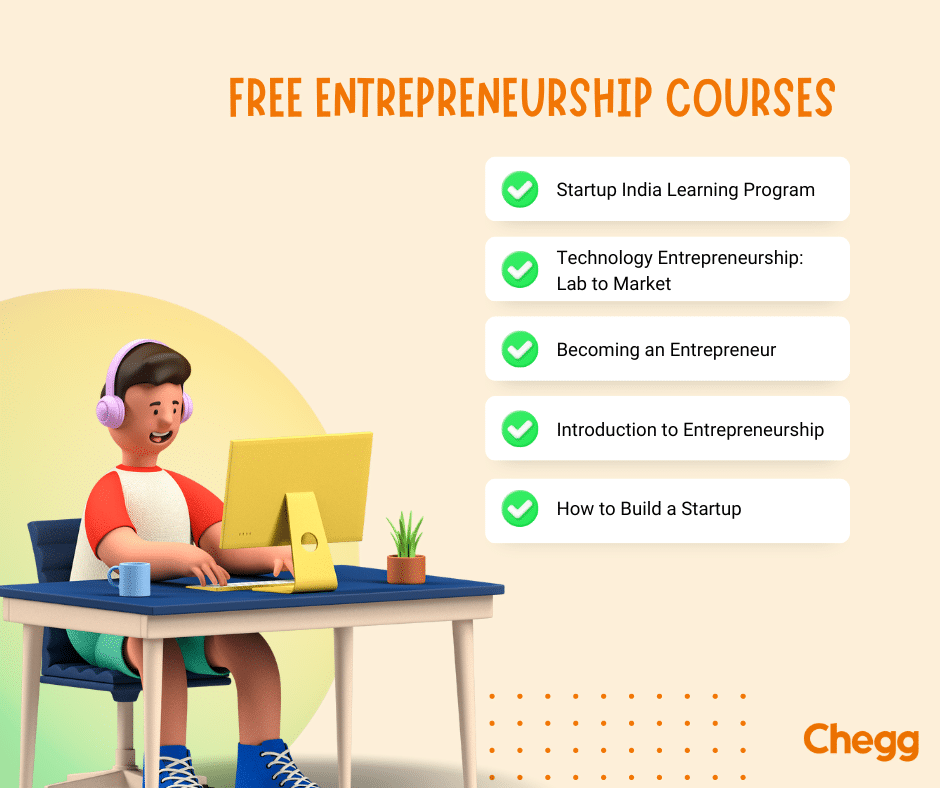
This free online program, an initiative by the Government of India, is designed to guide aspiring entrepreneurs in developing innovative business ideas and mastering essential startup skills. Delivered through structured, step-by-step education, it covers the fundamentals of entrepreneurship while also offering access to some of the best online entrepreneurship certificate programs.
Throughout the course, participants learn directly from India’s leading founders and industry experts, gaining practical knowledge on how to transform an idea into a viable business. The curriculum walks you through the entrepreneurial journey from idea generation and validation to execution and scaling making it especially valuable for those looking to establish a business and achieve sustainable, long-term success.
Highlights of the Course:
Pros:
Cons:
Technology Entrepreneurship: Lab to Market: A Harvard course provided by EdX explains how business people match new technical growth with customer demands to build a thriving enterprise. The course systematically approaches technology entrepreneurship and utilizes real-world situations as case studies.
The course aims to help you learn how to take potentially new technology from the lab to the market. It is only five weeks long and contains many useful videos and mini-lectures from the University of California, San Diego, and Harvard University.
This Entrepreneurship course is for people who are into Technology Entrepreneurship and want to bring technological development from the lab to industry. Time input is minimal. This is an excellent course for those aspiring to work in digital entrepreneurship.
Becoming an entrepreneur is one of EdX’s entrepreneurship courses. It is offered along with M.I.T. Launch. It provides budding founders with motivation and knowledge. You learn to develop a concept before taking operational actions to bring it to reality. It includes a mix of short films and exercises.
This training is perfect for new business owners, providing a strong foundation to understand how to start a business in the real world. It also serves as a valuable review for experienced practitioners. Whether you’re just beginning or refining your skills, these business courses for entrepreneurs offer essential insights for success.

One of the finest entrepreneurship courses, Introduction to Entrepreneurship, provides valuable insights into entrepreneurship with real-world case studies from the IT industry. This course helps learners understand key business concepts, challenges, and opportunities in today’s dynamic market.
After completing the course, you will gain the skills needed to build and manage a business using the latest technology. Whether you’re launching a startup or expanding an existing venture, this program is ideal for those interested in small business and entrepreneurship.
This intermediate-level course is ideal for those looking to develop an entrepreneurial mindset and understand how a business model works. Through real-world case studies, you will learn effective strategies to navigate business constraints. This course is perfect for individuals interested in small business & entrepreneurship, providing practical insights for success.
Read More:
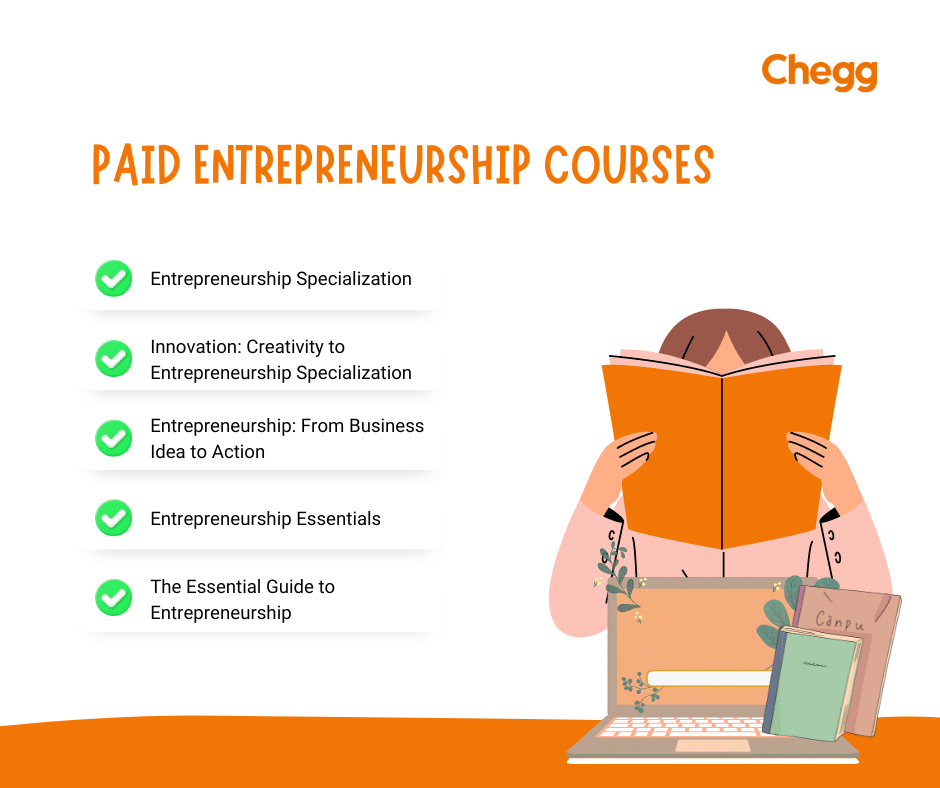
The Wharton School of the University of Pennsylvania offers an entrepreneurship specialization course online through Coursera. It is a five-course package covering various topics, including establishing company potential, starting your own start-up, business development methods, financing, and benefits.
You can enroll in all five or choose the one that best suits your needs. Experts deliver the courses from the country’s leading business school, Wharton. The content is self-paced, so you can complete it according to your schedule.
Coursera Innovation: Creativity to Entrepreneurship Online is a great entrepreneurship course. It is a seven-course program offered by the University of Illinois at Urbana-Champaign. It focuses on giving students a solid foundation in innovation and creativity. You can learn to think like a businessman and use creative business strategy and creativity to your advantage.
You can adjust class dates to fit your schedule, making learning more flexible. This program series is perfect for developing a strong business mindset. You’ll gain the skills to generate innovative ideas and understand the principles of turning them into successful ventures. As a top-rated online business course India, it provides entrepreneurs with practical knowledge and real-world strategies to help you thrive.
In this entrepreneurship course, you will learn how to improve your knowledge of entrepreneurship. You will also find new ways to find, plan, and grow a successful business from scratch. You will also learn how to write a business plan and overcome unseen obstacles.
Entrepreneurship Essentials is an online course from Harvard Business School that helps you bridge the gap between a concept and a successful venture. This entrepreneurship training course is for all those who want to learn how to start and fund their new business in any sector.
This course is designed for those who want to master realistic and practical business activities. It provides essential knowledge to help you build a strong business and overcome challenges effectively. As one of the best online entrepreneurship courses, it equips you with the skills needed to succeed in the competitive business world.
You’ll learn entrepreneurship skills from Guy Kawasaki in “The Essential Guide to Entrepreneurship“. Here you will learn about the aspects of entrepreneurship and the dos and don’ts in business. The best part is that you get to know all the advice that can be applied in real life.
Read More: Food Business Ideas That Work in India (2025)
| Feature | Free Courses (Examples) | Paid Courses (Examples) |
| Cost | ₹0 (no investment required) | ₹1,000 – ₹1,50,000+ depending on institute |
| Duration | Short (2–6 weeks, self-paced) | Longer (2 months – 1 year, structured) |
| Certification | Limited or free certificate (Coursera Free Track, edX, SWAYAM) | Verified, industry-recognized certificates (IIM, ISB, Udemy, Coursera Pro) |
| Best For | Beginners testing entrepreneurship basics | Serious learners & aspiring business owners |
| Examples | Entrepreneurship in Emerging Economies – Harvard (edX)Startup India Learning Program (GOI) | IIM Bangalore Entrepreneurial Mindset ProgramISB Entrepreneurship EssentialsUdemy Startup Masterclass |

Starting your entrepreneurship journey requires careful planning, resilience, and the right mindset. Success takes time, and proper preparation can significantly impact your growth. Enrolling in entrepreneurship courses can help you gain essential skills and insights. Here are five key tips to overcome challenges and build a strong foundation for your business.
Before diving into entrepreneurship, it’s crucial to validate your business idea. Conduct thorough market research, understand customer needs, and test your concept before investing significant time and money. A well-researched idea reduces risks and increases the chances of success.
A well-structured business plan serves as a roadmap for your venture, guiding you toward success. It should define your goals, target audience, revenue model, marketing strategies, and operational structure. A business course for entrepreneurs can help you craft a clear and effective plan, improve decision-making, and attract investors and stakeholders.
Financial management is one of the most critical aspects of entrepreneurship. Understand your startup costs, funding options, and cash flow management. Keeping track of expenses and ensuring a steady cash flow will prevent financial struggles in the early stages of your business.
Successful entrepreneurs continuously learn and improve. Essential skills like leadership, problem-solving, marketing, and networking are necessary to sustain and grow a business. Taking business courses, attending workshops, and learning from mentors can help enhance these skills.
Entrepreneurship in business comes with ups and downs, and setbacks are inevitable. The key to success is staying adaptable, persistent, and open to learning from failures. Enrolling in the entrepreneurship courses or other online entrepreneur courses can equip you with the right skills to navigate challenges. Every obstacle is an opportunity to grow, making resilience and a strong mindset essential for long-term success.
Investing in your business doesn’t always mean spending big on learning. The entrepreneurship courses listed here are either completely free or come with minimal certification fees making them a smart and affordable way to sharpen your skills. From shaping a raw idea into a profitable business to pitching investors and managing long-term growth, these programs cover everything you need to succeed. Enroll today in the right entrepreneurship course and take the next confident step toward becoming a successful entrepreneur in India’s thriving startup ecosystem.
Recommended Read:
The “best” course for entrepreneurship depends on your goals, but strong options include a Bachelor of Business Administration (BBA) in Entrepreneurship for undergraduates, an MBA in Entrepreneurship for postgraduate-level knowledge, or a specialized online course in areas like digital marketing or technology entrepreneurship for targeted skills.
The four main types of entrepreneurship are: Small Business (local, modest profits), Scalable Startup (growth-focused, seeking investment), Large Company (established businesses that innovate), and Social Entrepreneurship (business for social or environmental good).
Yes, you can earn a degree completely online from accredited universities. Many institutions offer full undergraduate and postgraduate programs through virtual classes, allowing flexible learning from home without attending on-campus sessions.
The Bachelor of Science in Entrepreneurship (BSEntrep.) is a four-year course offered in the College of Business, designed to provide undergraduate students an in-depth understanding and appreciation of new venture operations in small business enterprises.
Entrepreneurship can be a good career choice, but it depends on an individual’s risk tolerance, passion, and skills, as it offers high potential for financial success, personal fulfillment, and autonomy in exchange for significant risks, hard work, and uncertainty.
An entrepreneur’s “salary” isn’t a fixed wage; it’s the surplus the business generates, which can vary dramatically from nothing to substantial amounts, depending entirely on the company’s success.
The economist Joseph Schumpeter (1883–1950) is widely considered the “father of entrepreneurship” for popularizing the concept of “creative destruction,” which describes how entrepreneurs drive innovation and economic growth by introducing new products, processes, and business models that replace existing ones.
Business refers to an existing organization engaged in commercial activities, while entrepreneurship is the act of creating, innovating, and taking significant risks to launch a new venture.


