

A CV isn’t just about your marks or internships—it’s a snapshot of who you are.
In today’s competitive job market, one of the best ways to stand out is by showcasing your extra curricular activities in CV. These aren’t just “add-ons”—they reflect the real-world skills, personality, and initiative that recruiters actively look for. Whether you’ve led a student club, volunteered at an NGO, participated in national-level sports, or participated in cultural festivals, adding extracurricular activities in your CV shows that you’re more than just your academic record.
In this blog, you’ll discover how to boost your profile by showcasing the right extra curricular activities in CV. Learn which activities matter most, how to present them effectively, and the key mistakes to avoid for a standout resume. Get ready to transform your resume into a powerful story. When done right, your extracurricular activities in your CV can make a lasting first impression.

Extracurricular activities, commonly called ECs, encompass many pursuits beyond regular academic studies. They play a significant role in fostering both personal growth and professional skills. These activities can range from joining clubs and participating in sports to volunteering and taking on internships.
Getting involved in extracurriculars broadens your skill set and showcases your dedication, leadership qualities, and time management abilities.

Learning how to write about extracurricular activities in a CV is essential. It can help you strengthen your application. It can also compensate for the work experience you might lack.
Extracurricular activities in CV refer to programs outside of educational and workplace qualifications. These activities are essential for personal development because they showcase your interests. They also enable your professional development by highlighting your personality. It means they showcase your ability to contribute. You can also stick to commitments and manage your time and priorities. Examples include:
There is a significant difference between curricular and co-curricular activities. The former relates to the academic curriculum. You can even grade or assess these activities. However, co-curricular activities are supplementary to the formal curriculum. They include activities such as sports, clubs, or community service.
Extracurricular activities in a CV refer to non-academic pursuits that demonstrate a candidate’s skills, interests, and personality outside of formal education. These activities can showcase leadership, teamwork, creativity, and commitment. Extra-curricular activities in CV for freshers serve as an extension of your curriculum. It relates to your achievements in the CV in academic high school, college, or other institutions.
Including extracurricular activities in a CV, in India, is crucial for several reasons. These include:
Hence, extracurricular activities in your CV enrich your personal development and strengthen your professional appeal, making you an ideal candidate in the job market.
Some extracurricular activities, such as leadership roles in clubs, volunteer work, or involvement in sports teams, can make your CV stand out.
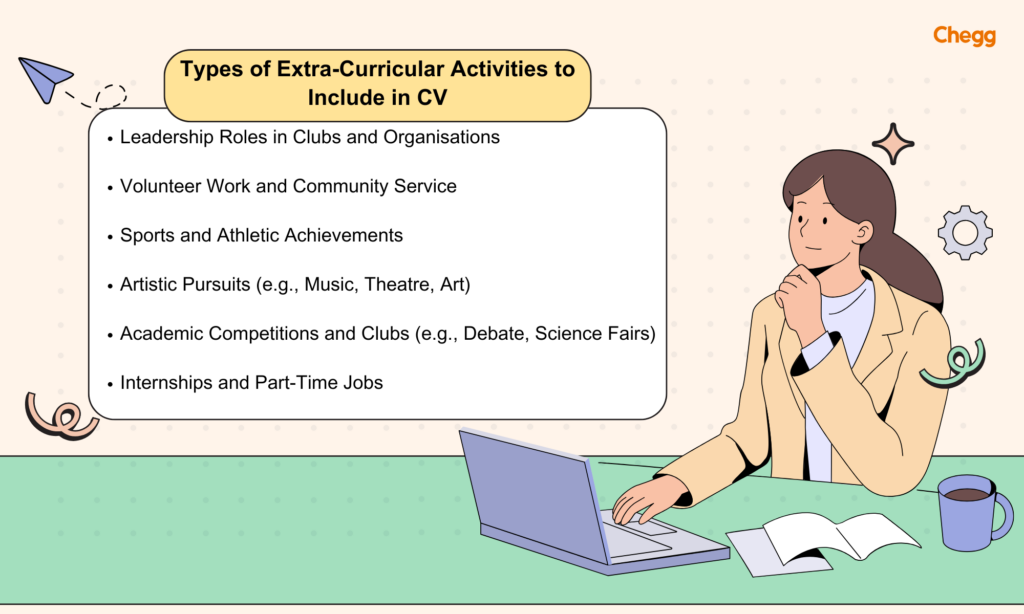
Highlight positions where you led a team or organized activities. It must be within a club or organization. This shows your ability to take initiative, manage others, and contribute to success.
Include volunteer experiences. In these, you dedicated time to helping others or to community projects. This demonstrates your commitment to social responsibility and willingness to help society.
Mention sports you take part in or achievements you’ve attained. This shows teamwork, discipline, and perseverance. It also indicates physical fitness. These qualities can be valuable in many jobs.
If you have skills or achievements in areas like music, theatre, or visual arts, include them. These activities showcase creativity, dedication, and the ability to work in creative environments.
Joining academic clubs or competitions shows curiosity. It also shows critical thinking and a passion for learning outside the classroom. It also demonstrates your ability to apply knowledge in practical contexts.
Internships and part-time jobs outside your academic focus can show practical skills. They show industry knowledge and professional experience relevant to your career goals.
India-specific examples you can include:
Global/Online-friendly examples:
Recruiters look for specific extracurricular activities that reflect transferable skills and real-world engagement. To help you structure them better, here are categorized examples:
1. Sports & Athletics
- Football, Cricket, Basketball (Teamwork, Discipline)
- Marathon Running (Perseverance, Goal Orientation)
2. Volunteering & Social Work
- NGO Participation (Empathy, Initiative)
- Blood Donation Camps (Social Responsibility)
3. Leadership Roles
- School/College President or Prefect (Leadership, Public Speaking)
- Head of College Fest or Club (Team Management)
4. Creative Arts
- Theatre, Music, Dance (Creativity, Confidence)
- Content Creation (YouTube, Podcasts – Storytelling, Branding)
5. Academic Societies & Clubs
- Debate or MUN (Critical Thinking, Communication)
- Science/Tech Clubs (Research, Innovation)
6. Community Engagement & Fundraising
- Organizing charity drives (Organizational Skills, Outreach)
- Local environment initiatives (Responsibility, Advocacy)
Let us look at the steps that teach you what to write in extracurricular activities in a CV. These include:
Extracurricular Activities
You can include extracurriculars either:
Examples:
Vice President, Rotaract Club – Delhi University | 2022–2023
Winner, National Debate Competition | 2021
Learning to add extracurricular activities to a resume is essential, especially for freshers. Including these activities can enhance your profile significantly. Here’s how to showcase these experiences effectively:
For experienced candidates, integrating extracurricular activities in a CV can enrich your professional narrative and highlight critical competencies. Here’s how to present these activities effectively:
Find activities outside of work. They should match the skills needed in your industry or desired job. For example, highlight leadership roles in clubs or volunteer organizations. Do this if you are applying for a managerial role. It will show your ability to lead and motivate teams.
Include activities that reflect development and learning outside your professional career. You could attend workshops, get certifications, or join industry associations. This would show your commitment to staying current and growing your knowledge.
Focus on activities that have significantly impacted your career progression. Highlight achievements or initiatives. You made measurable contributions. For example, in fundraising, projects, or community impact.
Customise descriptions of your extracurricular activities in your CV. Ensure to emphasize skills or experiences relevant to the job you are applying for. This alignment helps recruiters understand how your diverse experiences contribute. It also shows your professional capabilities and suitability for the role.
You must learn how to write about extracurricular activities in your CV to guide your interviewer about your achievements. The following examples will teach you how to add such activities for a marketing, technical, and management position.
Example 1: For a Marketing Position
The following example shows how you can highlight your activities as formal responsibilities in your resume. This assures the interviewer that your activities also have a bigger role in your professional development.
Extra Curricular Activities:
Example 2: For a Technical Position
You may have worked in numerous technical fields before applying for a job. The best way to showcase these extra activities is to highlight them in a particular CV section.
Extra Curricular Activities
Example 3: For a Management Position
A management position also requires behavioral and soft skills expertise. You can showcase these in your activities section, as follows.
ExtraCurricular Activities
Here are some popular ways to include extracurricular activities on a resume for fresh graduates:
Extracurricular activities listed on a CV encompass interests, hobbies, or pursuits outside of academic or work obligations. Showcasing these activities can highlight important traits like leadership, teamwork, and dedication, all highly regarded by potential employers.
These activities showcase essential traits such as leadership, collaboration, and dedication, which are highly sought after by employers. When incorporating them, keep in mind:
Examples for Job Applications
Here’s are the extracurricular activities:
Each activity adds more than just a line on your resume — it represents a skill. Here’s how you can map activities to employable skills:
Activity Skills Gained Sports (Team) Teamwork, Discipline, Goal-setting Debate/MUN Communication, Persuasion, Critical Thinking Volunteering Empathy, Social Skills, Responsibility Event Organization Planning, Budgeting, Coordination Theatre/Performing Arts Creativity, Confidence, Public Presence Academic Clubs Subject Interest, Research, Peer Collaboration
Your extra curricular activities in CV aren’t just space-fillers—they’re powerful proof of the skills, passion, and personality you bring beyond academics. They reflect that you’re adaptable, proactive, and ready to take initiative—traits every employer looks for in fresh talent. Whether you’ve led a college club, volunteered for a cause, or represented your school in competitions, these experiences deserve a spot on your resume.
So don’t underestimate their impact. Highlight your involvement, structure it well, and let your real-world strengths shine through. Because at the end of the day, marks may get your resume noticed, but your extra curricular activities can get you hired. Start reflecting, listing, and rewriting—your best CV is just a few edits away.
There is no strict rule on the number of extracurricular activities in CV. Focus on activities compensating for limited work experience, especially entry-level positions. Ensure these activities showcase your proactive attitude, transferable skills, and personal initiatives. Analyze how these activities provide skills or experiences that help potential employers understand your worth.
Hobbies can qualify as extracurricular activities in a CV. This applies primarily if performed in an organized setting or as a club or team member. Include only those hobbies you regularly engage in and that contribute to your skills or personal development.
You can list activities from high school if they showcase valuable skills or achievements related to the job you are applying for. However, focus on more recent and significant activities if you have advanced experience. Align these experiences with the specific sections of your resume.
Sports
Arts and Crafts
Music and Performing Arts
Debate and Public Speaking
Community Service
Create a section titled Extracurricular Activities or Additional Activities.
List activities in reverse chronological order.
Include the name of the activity, your role (if applicable), and the dates you participated.
Briefly describe your responsibilities and achievements for each activity.
Use bullet points for clarity and conciseness.
– Leadership roles in clubs or societies
– Volunteer work and community service
– Sports teams’ participation
– Artistic pursuits (e.g., music, drama, art)
– Academic competitions or achievements
– Certifications (e.g., first aid, languages)
– Workshops or courses attended
– Part-time jobs or internships
– Relevant hobbies that showcase skills
Leadership roles in clubs or societies
Volunteering experience
Sports teams or competitions
Creative arts (e.g., music, drama)
Academic competitions (e.g., debating, maths challenges)
Part-time work or internships
Student government involvement
Workshops or additional courses
Fundraising or charity events
Mentorship or tutoring experience
Consider the following options to boost your profile:
1. Volunteer for local charities or community projects.
2. Start a blog or YouTube channel on a topic of interest.
3. Join clubs or societies related to your hobbies or career aspirations.
4. Participate in online courses or workshops to gain new skills.
5. Engage in freelance work or internships in your field.
6. Attend networking events or conferences to meet professionals.
7. Undertake personal projects that showcase your skills.
Choose activities that align with your interests and goals.
Yes, school activities can still be valid in college CVs, especially if they demonstrate skills, leadership, or relevant experience.