A widespread misconception persists that Hindi is the national language of India. Many students, competitive exam aspirants, and even casual learners assume this to be true, but India does not have a national language. Instead, the country recognizes many official languages to reflect its incredible linguistic and cultural diversity. This myth often confuses India’s language policies and constitutional provisions.
This article aims to clarify these common misunderstandings and provide accurate information about India’s language framework. We will explore what the Constitution of India states regarding languages, distinguish between national and official languages, and present a detailed list of the official languages recognized by the government. By reading this guide, learners and readers will understand India’s multilingual landscape and the legal and cultural significance of its official languages, helping to debunk persistent myths.

A common misconception is that Hindi is the national language of India. Many people, including students and competitive exam aspirants, assume that Hindi holds this status because it is widely spoken and used in government communications. However, this is not accurate. India does not have a national language. Instead, the country recognizes multiple official languages, reflecting its rich cultural and linguistic diversity.
The legal framework for India’s languages is laid out in Articles 343 to 351 of the Indian Constitution. Article 343 specifies that Hindi in the Devanagari script is the official language of the Union, along with English as a subsidiary official language. Subsequent articles provide provisions for using other regional languages in official communication, legislative work, and education. Article 351 even emphasizes the development of Hindi while respecting other languages.
Despite this clear legal position, public perception often differs. Many people believe that Hindi is the national language, primarily due to its widespread usage in media, education, and government offices. This misunderstanding highlights the difference between popular belief and constitutional reality.
In summary, India’s linguistic policy does not designate any language as “national.” Instead, it promotes multilingualism, ensuring that different languages coexist legally and culturally. Understanding this distinction is essential to dispel myths and appreciate India’s inclusive approach to language.
India is a linguistically diverse country with hundreds of languages and dialects. To manage governance effectively while respecting this diversity, the Constitution of India recognizes multiple official languages. Centrally, Hindi in the Devanagari script is the primary official language, while English is a subsidiary official language. Both languages are used for central government communication, parliamentary proceedings, judiciary matters, and official documentation. This bilingual framework ensures smooth administration across regions with varying linguistic preferences.
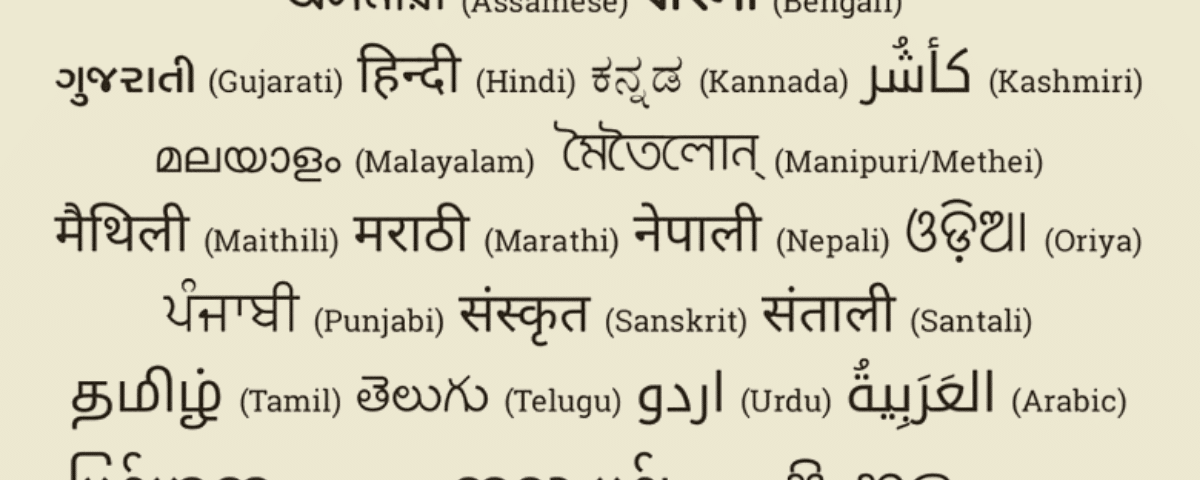
Beyond Hindi and English, the Constitution also recognizes the importance of regional languages. The Eighth Schedule of the Indian Constitution lists 22 officially recognized languages that can be used in education, government work, and cultural promotion. These languages include Assamese, Bengali, Gujarati, Kannada, Kashmiri, Konkani, Malayalam, Manipuri, Marathi, Nepali, Odia, Punjabi, Sanskrit, Sindhi, Tamil, Telugu, Urdu, Bodo, Santhali, Maithili, Dogri, and Santali.
India is a linguistically diverse country. The Constitution recognizes 22 languages under the Eighth Schedule, and these languages are granted official cultural, educational, and administrative status. Each language represents a unique regional identity, heritage, and literary tradition, highlighting the richness of India’s multilingual framework.
Here’s a simple table showing these 22 languages and the states where they are primarily spoken:
| Language | Primary States/Regions |
|---|---|
| Assamese | Assam |
| Bengali | West Bengal, Tripura |
| Gujarati | Gujarat |
| Hindi | Hindi-speaking belt (UP, MP, Bihar, etc.) |
| Kannada | Karnataka |
| Kashmiri | Jammu & Kashmir |
| Konkani | Goa, Karnataka |
| Malayalam | Kerala |
| Manipuri | Manipur |
| Marathi | Maharashtra |
| Nepali | Sikkim, West Bengal |
| Odia | Odisha |
| Punjabi | Punjab |
| Sanskrit | Pan-India (cultural, educational use) |
| Sindhi | Sindhi community across India |
| Tamil | Tamil Nadu |
| Telugu | Andhra Pradesh, Telangana |
| Urdu | Telangana, UP, Bihar, Jammu & Kashmir |
| Bodo | Assam |
| Santhali | Jharkhand, West Bengal, Odisha |
| Maithili | Bihar, Jharkhand |
| Dogri | Jammu & Kashmir |
Having multiple official languages is essential in a diverse country like India. It ensures inclusive governance, preserves cultural heritage, and allows citizens to engage with the government in their native languages. This multilingual approach strengthens national unity while respecting regional identities.
India’s language policy has deep roots in pre- and post-independence history, shaped by cultural, political, and administrative factors. Key points include:
This historical context explains why India’s language policy remains flexible, inclusive, and sensitive to its diverse linguistic heritage. It allows the country to manage governance while celebrating its multilingual identity.
Many people in India and some outside the country assume that Hindi is the national language of India, but this is a misconception. The confusion arises from historical, administrative, and cultural factors.
Recognizing that Hindi is an official language, not the national language of India, clarifies legal realities versus public perception and helps promote accurate knowledge about the country’s language policy. Understanding the difference between the national and official languages helps dispel misconceptions. India’s multilingual framework respects regional languages while maintaining administrative efficiency.
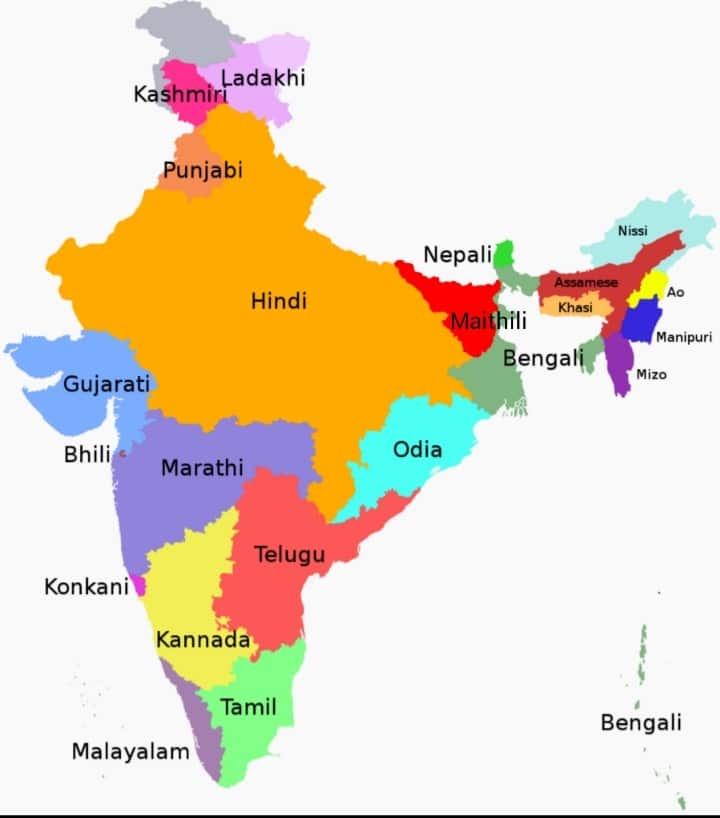
India is a multilingual country where each state recognizes its official language(s) for administration, education, and cultural identity. Regional policies promote and preserve local languages, balancing national governance with linguistic diversity. This system highlights India’s commitment to respecting local and national communication needs.
India’s linguistic diversity extends to its states and union territories, each of which can designate its official language(s) for governance and administration. For example, Tamil is the official language of Tamil Nadu, Bengali serves West Bengal, Marathi is in Maharashtra, and Kannada is in Karnataka. These languages are used in government offices, courts, and official documentation, ensuring citizens can engage with the state in a familiar language.
Regional languages play a central role in education. Most states conduct school curricula, textbooks, and examinations in their official language, enabling students to learn in their mother tongue. This approach improves comprehension and fosters cultural awareness and pride in local heritage.
State governments also use regional languages extensively in administration. Official notifications, public awareness campaigns, and local laws are often published in the state language to reach a wider audience effectively. This practice ensures inclusivity, making governance accessible to all citizens, especially those who may not be fluent in Hindi or English.
India’s recognition of state languages alongside national and official languages strikes a balance between unity and diversity. It allows citizens to connect with governance, education, and culture in their native language while maintaining national integration. This multilingual framework strengthens local identity, preserves cultural heritage, and supports a more participatory democracy.
The Indian Constitution provides a clear framework for using languages in governance, education, and communication. Articles 343–351 specifically deal with official languages, ensuring a balance between national integration and linguistic diversity. Here’s a simple breakdown:
These constitutional provisions strengthen unity in diversity and safeguard the linguistic rights of all Indians by balancing the use of Hindi, English, and regional languages.

India is a treasure trove of languages, offering fascinating insights for students and general readers. Here are some interesting facts:
These fun facts highlight India’s linguistic richness, showing how it celebrates diversity through its multilingual framework while maintaining unity.
The idea that Hindi is the national language of India is a widespread misconception. In reality, India does not have a national language. Instead, the Indian Constitution recognizes multiple official languages to ensure administrative efficiency and respect the country’s linguistic diversity. At the central level, Hindi and English are official languages for government communication, parliamentary proceedings, and official documentation. The Constitution’s Eighth Schedule lists 22 recognized languages, highlighting the nation’s rich cultural and linguistic heritage.
States can adopt official languages for administration, education, and local governance, reflecting regional identities and cultural traditions. Constitutional provisions also protect the rights of linguistic minorities, ensuring children can receive education in their mother tongue and communities can preserve and promote their languages and culture. This system allows effective governance, inclusive education, and smooth communication across India’s diverse regions.
Understanding these facts helps dispel myths about a national language of India while showcasing India’s inclusive, multilingual framework. Sharing this information spreads accurate knowledge, clarifies the difference between national and official languages, and benefits students, aspirants, and general readers interested in India’s unique linguistic landscape.
Read More:
India does not have a national language (Rashtra Bhasha). Hindi is the official language of the Union government, with English as an associate official language. The Constitution recognizes the country’s linguistic diversity without granting any language national status.
India has no national language, as the Constitution does not confer such status on any language. Hindi serves as the official language of the Union, with English as the official language of associates. The Constitution recognizes 22 languages under the Eighth Schedule, reflecting India’s linguistic diversity and pluralism.
A government legally designates an official language for administration, courts, and legislation. It provides a common framework for citizens to access public services and legal processes, often reflecting a nation’s historical, cultural, or political significance.
India has no national language according to the Constitution. Hindi and English are the Union government’s official languages, while 22 languages listed in the Eighth Schedule enable states to adopt official languages, reflecting the country’s rich linguistic diversity.
The Indian Constitution does not recognise any national language. However, Hindi in the Devanagari script and English are the official languages of India. States are free to adopt their official languages based on regional preferences.
No, Hindi is not the national language of India. The Constitution does not recognize any language as a national language. Hindi serves as an official language of the Union government alongside English, and 22 other languages are officially recognized.