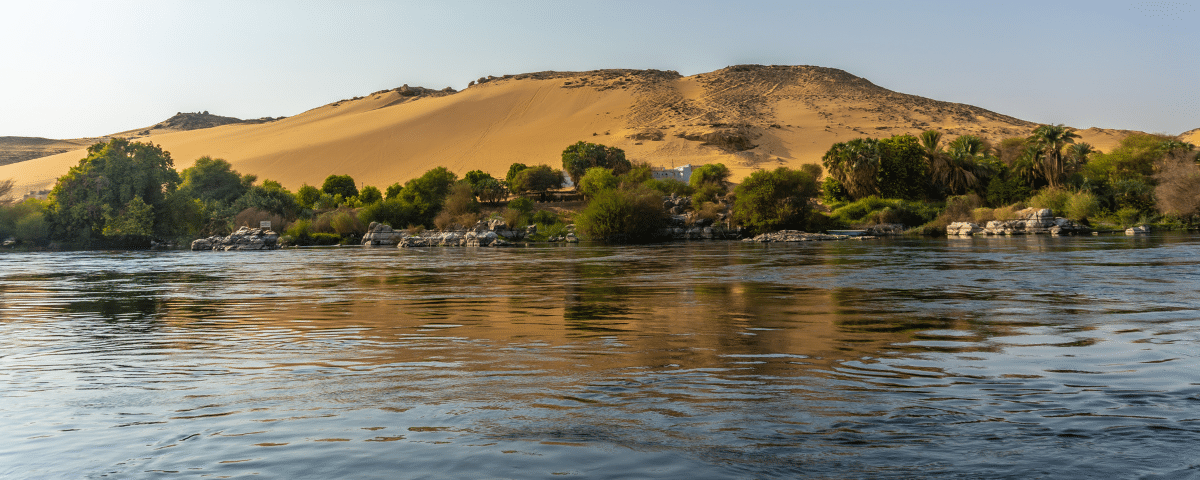
The Nile River is recognized as the longest river in the world, stretching approximately 6,650 kilometers (4,130 miles) across northeastern Africa.
Rivers have shaped human civilization for centuries, supporting agriculture, trade, transportation, and culture. From the life-giving Nile in Egypt to the Amazon’s vast rainforest basin, rivers are more than just flowing water; they are arteries of life. But the answer sparks global debate regarding the question, “Which is the longest river in the world?”.
While the Nile has long held the title, modern research suggests that the Amazon River may be longer, depending on how its source is measured. This ongoing dispute highlights the complexities in river measurement, ranging from source identification to seasonal variations and evolving satellite data.
In this article, we’ll explore how experts determine river lengths, compare the Nile vs. the Amazon, and present the top 10 longest rivers in the world with precise data. We’ll also address common questions like “Which is the largest river in India?” and “What is the 2nd longest river in the world?” all supported by scientific insight and visual comparisons.
| Rank | River Name | Approx. Length (km) | Countries Covered | Source (Origin) | Mouth (Where It Ends) | Notable Fact |
|---|---|---|---|---|---|---|
| 1 | Nile | ~6,650 km | Uganda, Sudan, Egypt | Lake Victoria (debated) | Mediterranean Sea | Longest river per most sources; supports Egyptian agriculture |
| 2 | Amazon | ~6,400–7,062 km | Peru, Colombia, Brazil | Nevado Mismi (Peru) | Atlantic Ocean | Largest discharge volume; Amazon rainforest lifeline |
| 3 | Yangtze | ~6,300 km | China | Tanggula Mountains | East China Sea | Longest river in Asia; Three Gorges Dam built here |
| 4 | Mississippi–Missouri | ~6,275 km | USA | Lake Itasca (Minnesota) | Gulf of Mexico | Key trade & transport route in the US |
| 5 | Yenisei–Angara | ~5,539 km | Mongolia, Russia | Mungaragiyn-Gol (Mongolia) | Kara Sea (Arctic Ocean) | Drains into Arctic; one of the coldest river systems |
| 6 | Yellow River (Huang He) | ~5,464 km | China | Bayan Har Mountains | Bohai Sea (China) | Cradle of Chinese civilization; prone to flooding |
| 7 | Ob–Irtysh | ~5,410 km | Russia, Kazakhstan, China | Altai Mountains | Gulf of Ob (Arctic Ocean) | Important for Siberian water transport |
| 8 | Río de la Plata–Paraná | ~4,880 km | Brazil, Argentina, Paraguay | Rio Grande (Brazil) | Atlantic Ocean | Major South American river system |
| 9 | Congo–Chambeshi | ~4,700 km | DRC, Angola, Republic of Congo | Chambeshi River | Atlantic Ocean | Deepest river in the world; 2nd by discharge |
| 10 | Amur | ~4,444 km | Russia, China | Onon River | Sea of Okhotsk | Natural boundary between Russia & China |
Determining a river’s exact length might seem straightforward initially, but it presents several complex challenges. Rivers often have multiple tributaries, seasonal variations, and shifting courses, making precise measurement tricky.

When we talk about the longest river in the world, it might seem like a straightforward fact, but it’s more complicated than you’d think. The top contenders, the Nile and the Amazon rivers, have been central to an ongoing debate for decades.
The total length of a river depends on identifying:
Some studies of the Amazon River include its farthest tributary, the Apurímac River in Peru, as the starting point. This gives Amazon a total length of over 6,800 km, surpassing the Nile’s commonly accepted 6,650 km. However, others dispute this, citing measurement inconsistencies and seasonal shifts in the riverbed.
A 2007 Brazilian-led expedition and a 2009 remote sensing study suggested that the Amazon might be longer than the Nile, but these findings are not universally accepted. Geographic agencies like National Geographic and Britannica still list the Nile as the longest, mainly due to historical data and more universally agreed-upon source points.
The Amazon River carries the largest volume of water of any river in the world more than 5 times that of the Congo or Ganga!

Regarding the title of the world’s longest river, two colossal waterways dominate the conversation: the Nile and the Amazon. Both rivers are monumental in scale and significance, yet which truly holds the crown remains a subject of lively debate among geographers, scientists, and explorers.
The Nile River has long been recognized as the traditional longest river in the world, stretching approximately 6,650 kilometers (4,130 miles). Though recent debates challenge its top spot, the Nile remains a historically and geographically significant symbol.
The Nile River is located in northeastern Africa. It originates from Lake Victoria, which lies at the intersection of Uganda, Kenya, and Tanzania. It flows northward through Uganda, South Sudan, Sudan, and finally into Egypt, emptying into the Mediterranean Sea. Unlike most rivers, the Nile flows from the tropical south to the temperate north, crossing diverse terrains and climates.
In modern times, the Nile remains equally vital. The river supports millions of people who depend on its waters for agriculture, drinking, and industry. Major engineering projects like the Aswan High Dam in Egypt and the Grand Ethiopian Renaissance Dam in Ethiopia have made international headlines due to their impacts on regional water sharing, energy production, and ecological balance. These projects highlight the Nile’s continuing geopolitical and economic significance.

The Amazon River in South America is often described as the most voluminous river in the world. Its length is between 6,400 and 6,575 kilometers (3,980 to 4,086 miles), depending on which tributary is considered the source. The river flows through Peru, Colombia, and Brazil, coursing eastward into the Atlantic Ocean.
Though traditional measurements suggest it is slightly shorter than the Nile, the Amazon dwarfs all other rivers in terms of water volume. It discharges more water than the following seven largest rivers combined, making it the world’s largest river by discharge volume. The Amazon Basin encompasses the vast Amazon rainforest, often called the “lungs of the Earth” for its crucial role in absorbing carbon dioxide and producing oxygen.
The biodiversity of the Amazon River and its surrounding rainforest is unparalleled. It is home to thousands of species, including unique fish such as the Amazon river dolphin, piranhas, and an immense variety of plants and insects. The river system regulates global weather patterns and maintains the Earth’s climate balance.

The debate over which river is the longest river in the world has intensified in recent decades, fueled by advances in satellite technology, hydrological research, and exploratory expeditions.
In 2007, a Brazilian scientific expedition made headlines when it identified the Mantaro River in Peru as a possible new source of the Amazon. This finding extended the river’s length by several hundred kilometers, suggesting that the Amazon might be longer than the Nile.
Tools like Google Earth and other satellite-based mapping systems have added new perspectives, enabling researchers to measure river lengths with unprecedented detail. These technological advances have sometimes challenged previously accepted figures, underscoring the difficulty in definitively answering the question of the longest river in the world.
| Continent | River Name | Length (Approx.) | Notable Countries |
|---|---|---|---|
| Africa | Nile | ~6,650 km | Egypt, Sudan |
| South America | Amazon | ~6,400–7,062 km | Brazil, Peru |
| Asia | Yangtze | ~6,300 km | China |
| North America | Mississippi–Missouri | ~6,275 km | USA |
| Europe | Volga | ~3,530 km | Russia |
| Australia/Oceania | Murray–Darling | ~3,672 km | Australia |
| Antarctica | Onyx River | ~32 km | Antarctica (seasonal) |
Read More: Continents of the World
Beyond the Nile and Amazon, many other rivers rank among the longest river in the world, stretching vast distances and playing vital roles in their regions. These rivers support rich ecosystems, provide water for agriculture, and serve as key transportation routes. They also hold cultural and historical significance for local communities. Rivers like the Yangtze, Mississippi, and Brahmaputra contribute significantly to the economy and environment, highlighting the essential role of the longest rivers in the world in sustaining nature and human life.
The Yangtze River, stretching about 6,300 kilometers (3,917 miles), is Asia’s longest river and ranks third longest worldwide. It flows entirely within China, supporting over 400 million people. This mighty river is essential for agriculture, providing irrigation for vast farmlands and serving as a significant transportation route for goods and people. The Yangtze also supports numerous industries, fueling economic growth in the region. Notably, it is home to the Three Gorges Dam, the largest hydroelectric power station in the world, which generates significant renewable energy and helps control flooding.
The Mississippi-Missouri River system, stretching approximately 6,275 kilometers (3,902 miles), is the longest in North America. It begins in Montana as the Missouri River and flows southward, merging with the Mississippi River at St. Louis before emptying into the Gulf of Mexico. This vast river system is crucial to the United States’ economy, serving as a significant commercial shipping and transportation route. It supports extensive agricultural regions by providing irrigation and fertile soil through periodic flooding. The river system is also vital for navigation, linking inland areas to international markets and sustaining diverse ecosystems.
The Yenisei–Angara–Selenga river system, stretching about 5,539 kilometers (3,445 miles), flows through Siberia, Russia, and Mongolia before draining into the Arctic Ocean. This vast river network traverses some of Earth’s most remote and pristine wilderness areas. It supports unique and diverse ecosystems, including rare flora and fauna adapted to the harsh Siberian climate. The river system is crucial for local communities, providing water resources and sustaining traditional livelihoods. Additionally, it plays a significant role in regulating regional climate patterns and transporting nutrients across its extensive basin, making it an essential natural feature of northern Asia’s environment.
While debates about the longest river attract interest, a river’s true importance goes far beyond length. Rivers are vital lifelines that support diverse ecosystems, providing habitats for countless species. They nurture cultures, shaping traditions and religions for millions of people worldwide. Economically, rivers enable agriculture, transportation, and energy production. Ultimately, rivers sustain life on Earth, connecting nature and humanity, making their preservation essential for our planet’s and future generations’ health.
Rivers play a critical role in maintaining diverse ecosystems. They support wetlands, forests, and rich biodiversity hotspots home to countless aquatic and terrestrial species. Wetlands nourished by rivers act as natural water filters and flood buffers, while riverine forests provide habitats for wildlife and contribute to climate regulation. The river’s flow connects landscapes, enabling the migration of fish and other animals, and sustaining the intricate balance of ecosystems.
Many rivers hold deep spiritual and cultural meaning for the people along their banks. For example, the Ganges River in India is considered sacred in Hinduism, with millions relying on its waters for religious rituals, purification, and daily life. Similarly, the Nile River has been central to Egyptian mythology and civilization for centuries, shaping its history and culture. In South America, the Amazon River is integral to indigenous communities, supporting their traditions and ways of life and symbolizing a vital natural heritage.
Rivers also serve as essential arteries for human economies. They facilitate transport, allowing goods and people to move efficiently, especially in regions with limited road infrastructure. Hydropower dams built on rivers generate electricity, powering cities and industries. Agriculture depends heavily on rivers for irrigation, enabling the cultivation of crops and sustaining livestock. Many river basins are agricultural hubs that feed millions.
Rivers, therefore, are vital not only as geographical features but as essential sources of life, culture, and economic activity worldwide. Their importance transcends mere measurements and reflects their irreplaceable role in sustaining nature and humanity.
The question of which is the largest river in India is often debated. The Ganges (Ganga) is the country’s most famous and culturally significant river, revered in Hinduism and central to countless religious rituals. It flows through the northern plains, supporting a massive population that relies on its waters for agriculture, drinking, and daily needs. The fertile plains around the Ganges have sustained Indian civilization for thousands of years, making it a lifeline for millions.
However, the Brahmaputra River is longer if its entire course is considered, including the upper stretch known as the Yarlung Tsangpo in Tibet. The Brahmaputra flows through northeastern India and Bangladesh, carrying enormous amounts of water and draining a vast basin. It is crucial in the region’s ecology, economy, and hydrology. The river is also known for its powerful floods and rich biodiversity.
While both rivers are essential to India’s environment and culture, their importance varies depending on whether the focus is on length, water volume, or cultural significance. Together, they are indispensable to the country’s life and heritage.
Read More:
Q: Which of the following is the longest river in the world by most sources?
The Nile River has traditionally been recognized as the longest river in the world, stretching about 6,650 kilometers (4,130 miles) across northeastern Africa. However, modern research, including satellite data and expeditions, suggests that South America’s Amazon River might be longer. The exact length of the Amazon depends on which tributary is considered its primary source, with estimates ranging between 6,400 and 6,575 kilometers (3,980 and 4,086 miles).
This ongoing debate highlights the complexities of measuring the longest river in the world, influenced by different methodologies, shifting river courses, and environmental factors. Beyond length, rivers are vital lifelines supporting rich ecosystems, sustaining millions, and regulating the global climate. Amazon is renowned for its unparalleled biodiversity and crucial role in climate regulation, while the Nile has nurtured human civilization for thousands of years.
The Nile River is traditionally considered the longest at ~6,650 km. However, some studies argue the Amazon River may be slightly longer.
The Amazon River carries the most water, about 20% of the world’s total river flow.
The world’s shortest river is the Roe River, measuring just 201 feet in length. It flows from Giant Springs into the Missouri River. Tyler Hansen, President of the Montana Association of the Deaf, shared this interesting fact.
The Ganga is India’s longest river, stretching 2,525 km from the Gangotri Glacier in Uttarakhand to the Bay of Bengal. It flows through several states, including Uttar Pradesh, Bihar, Jharkhand, and West Bengal, playing a vital role in the region’s culture, agriculture, and daily life.
Differences in measurement techniques, seasonal changes, and disagreement over source points cause reported river length variations.