
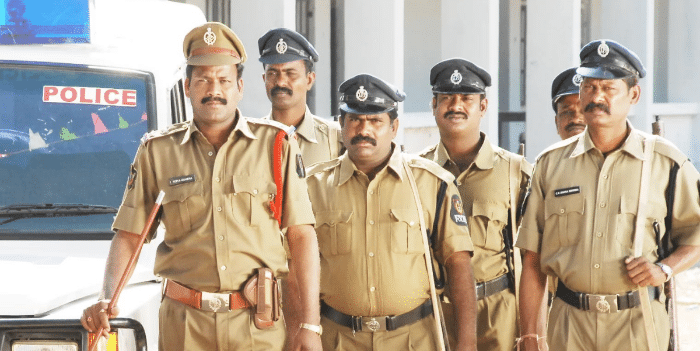
India’s police hierarchy is structured under the guidance of the Indian Police Service (IPS) and State Police Services, with a clear chain of command from Constable to Director General of Police (DGP). In Commissionerate systems like Delhi and Mumbai, roles such as Deputy Commissioner of Police (DCP) equate to SP rank, while in divisional systems, the Superintendent of Police (SP) holds equivalent status. Each rank carries distinct responsibilities, insignia, and functional authority across urban and rural law enforcement contexts
This structured hierarchy ensures smooth functioning and coordination across all levels. It allows for proper delegation of authority, faster decision-making in critical situations, and a transparent chain of command. Understanding the police rank list in India also helps citizens identify the right contact points in various situations requiring police assistance.
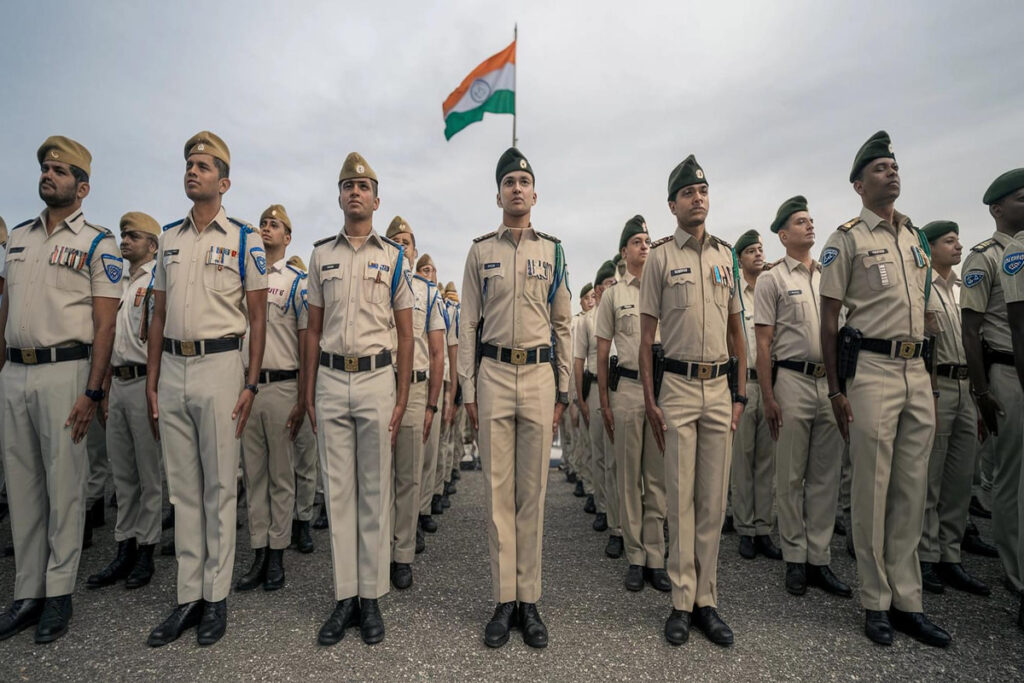
In this blog, we’ll cover the complete hierarchy within the police forces and the overall police rank list in India, from the highest to the lowest.
The first thing to point out about the police rank list in India is that its organizational structure varies across states, as maintaining law and order is primarily a state subject. The table below presents the most recent and widely accepted police ranks in India, reflecting the standardized hierarchy that governs police forces across various states.
| Rank | Category | Key Responsibilities | Reports To | Duties |
| Constable | Entry-Level | Patrolling, law enforcement, and addressing minor complaints. | Head Constable | Limited authority, under supervision. |
| Head Constable | Entry-Level | Supervises constables, assists with investigations, and maintains records. | Assistant Sub-Inspector (ASI) | Supervisory authority over constables. |
| Assistant Sub-Inspector (ASI) | Middle-Level | Investigate minor cases, record statements, and gather evidence. | Sub-Inspector (SI) | Limited investigative authority. |
| Sub-Inspector (SI) | Middle-Level | Leads investigations and supervises police station staff and cases. | Inspector | High authority within a police station. |
| Inspector | Middle-Level | Commands police stations and oversees all operations and investigations. | Deputy Superintendent of Police | Full authority within a station’s jurisdiction. |
| Deputy Superintendent of Police (DSP)/Assistant Commissioner of Police (ACP) | Senior-Level | Supervises multiple stations, plans operations, and handles critical cases. | Superintendent of Police (SP) | Executive authority in sub-district areas. |
| Superintendent of Police (SP)/Deputy Commissioner of Police (DCP) | Senior-Level | Manages district operations, resource allocation, and crisis management. | Senior Superintendent of Police | Full command over the district police force. |
| Senior Superintendent of Police (SSP) | Senior-Level | Oversees large districts or urban police operations and manages high-level cases. | Deputy Inspector General (DIG) | Authority over complex or urban jurisdictions. |
| Deputy Inspector General (DIG) | Top-Level | Leads zones or ranges, formulates strategies, and manages high-priority cases. | Inspector General (IG) | Regional authority across several districts. |
| Inspector General (IG) | Top-Level | Leads zones or ranges, formulate strategies, and manages high-priority cases. | Additional Director General (ADG) | Administrative and operational authority. |
| Additional Director General (ADG) | Top-Level | Handles statewide jurisdiction and oversees large-scale operations. | Director General of Police (DGP) | Statewide executive authority. |
| Director General of Police (DGP) | Top-Level | Heads the state police force, responsible for overall policy and strategy. | State Government or Home Minister | Highest-ranking officer, ultimate authority. |
Understanding the structure of police ranks is easier when paired with visual cues like insignia and uniforms. Each rank in the Indian police force is identified by title and unique symbols worn on the shoulder epaulettes, caps, and sleeves. These insignia typically include stars, stripes, national emblems, and specific badges, making the police rank list in India more recognizable and easier to understand.

Here’s a quick overview of rank insignia and uniform features across the key police posts list:
| Rank | Insignia | Khaki shirt with a shoulder star and a police cap |
|---|---|---|
| Director General of Police (DGP) | National Emblem over a crossed sword and baton | Khaki uniform with a dark blue cap and golden embellishments on epaulettes |
| Additional DGP | Same as DGP, with minor distinctions in badge placement | One star below the crossed sword and baton with the National Emblem |
| Inspector General (IG) | Three stars in a vertical line beneath a crossed sword and baton | Khaki uniform, standard police cap, and IG-specific shoulder badge |
| Deputy Inspector General (DIG) | Khaki shirt with a shoulder star and police cap | Similar to the G uniform with insignia differences |
| Superintendent of Police (SP) | One star below the National Emblem | Khaki shirt with a shoulder star and a police cap |
| Deputy SP / Assistant SP | Three stars in a vertical line | Wears a police cap with three silver stars on the shoulder |
| Inspector | Three stars in a triangle pattern | Khaki uniform with no national emblem; triangle star pattern on shoulders |
| Sub-Inspector (SI) | Two stars | Khaki uniform with two silver shoulder stars |
| Assistant Sub-Inspector (ASI) | One star | Wears a single star on the shoulder strap |
| Head Constable | Three chevrons (V-shaped stripes) | Khaki uniform with arm patch indicating rank |
| Constable | No insignia | Standard khaki dress; no stars or emblems |
Note: While the basic color and design of the khaki uniform remain standard across states, some elements like badges, belt style, and headgear may vary slightly depending on the state police department.
The police rank list in India outlines varying roles and responsibilities, highlighting a progression from fieldwork to administrative leadership. Here’s how duties evolve within the police rank list in India, reflecting the increasing levels of authority and management across the hierarchy:
This hierarchy ensures efficient functioning within the Indian police structure, balancing field duties with policy leadership, as outlined in the comprehensive police rank list in India.
The Indian police structure is said to be organized into three tiers, in which law enforcement is primarily done by ‘state police’ and the law and order is managed by the officers of the Indian Police Service (IPS). While they work in the same sphere, their recruitment, mission, and scope of duty differ. A more comprehensive exposition is presented below:
| Aspect | State Police | Indian Police Service (IPS) |
| Recruitment Process | Recruited by state governments through state-level Public Service Commissions or direct recruitment exams. | Leadership: supervising state police, implementing policy, and managing strategic operations. |
| Starting Rank | Constable (entry-level), Sub-Inspector (direct entry), or Assistant Sub-Inspector (for promoted candidates). | Deputy Superintendent of Police (DSP) or Assistant Commissioner of Police (ACP). |
| Primary Responsibilities | Grassroots-level policing: patrolling, crime prevention, managing local disputes, and enforcing state laws. | Leadership: supervising state police, implementing policy, and managing strategic operations. |
| Training | Training conducted at state police academies, focusing on local laws and on-ground operations. | Centralized training at Sardar Vallabhbhai Patel National Police Academy, Hyderabad, covering national and state laws, leadership, and inter-agency coordination. |
| Scope of Work | Primarily limited to state-level jurisdictions. | State-level leadership with the potential for national and international assignments. |
| Examples of Positions | Constable, Sub-Inspector, Inspector, Superintendent of Police (SP), Deputy Superintendent of Police (DSP). | Deputy Inspector General (DIG), Inspector General (IG), Additional Director General (ADG), Director General of Police (DGP). |
| Reporting Structure | Reports to state-appointed senior officers, typically under the jurisdiction of the Superintendent of Police (SP) or DGP. | Dual reporting structure: accountable to the state government for law enforcement and the central government for national-level duties. |
| Role in National Security | Limited or indirect involvement, mainly supporting roles. | Direct involvement: collaborating with central agencies like CBI, RAW, and IB for intelligence and national security. |
| Policymaking Authority | No direct policymaking authority focused on operational execution. | Significant role in formulating policies, implementing reforms, and liaising with central authorities. |
This is a basic overview of the police rank list in India and the structure of state police departments. Here’s a slightly refined version with more specific terms and a more transparent organizational structure:

Salaries for Indian Police Service (IPS) Officers:
Important Note:
Becoming a police officer in India involves different recruitment paths depending on the entry level, ranging from constables to the prestigious Indian Police Service (IPS). Here’s a breakdown of the major routes to join the Indian police force and navigate the police rank list in India:
Preparation for UPSC and SSC exams requires strong general knowledge, current affairs, aptitude, and physical endurance. Choose the right path based on your qualifications and career goals.
While the police ranking hierarchy in India generally follows a standardized structure, there are subtle differences across states in terms of titles, responsibilities, and organizational authority. These variations often arise due to administrative needs, state-specific policing laws, and the internal structure of the respective police departments within the broader police rank list in India.
For example:
- The Director General of Police (DGP) is the highest-ranking officer in all states, but in some states, the DGP may also hold dual charges, such as heading both the state police force and a specialized agency like Vigilance or Prisons.
- Titles like Commissioner of Police (CP) are used in metro cities like Mumbai, Delhi, and Hyderabad, but not all states follow the commissionerate system.
- In states like Tamil Nadu, the rank of Additional Superintendent of Police (Addl. SP) may be more prominent in rural policing compared to states where the hierarchy is more urban-centric.
- Some northeastern states follow a slightly flatter command structure due to smaller administrative areas and lower population densities.
Understanding these nuances is especially important for aspirants targeting state-level police exams, as job roles and jurisdiction may vary even for the same rank title within the Indian police ranks.

For the police force to operate effectively, it must have an effective chain of command, control, and coordination. The hierarchies within the police reflect the government’s structures. Officers with different ranks in the police, starting with a constable and ending with a commissioner, all carry out specific functions that make the organization effective.
Thus, a police officer ranks cannot be fully trusted owing to their position. Perhaps he cannot restrain himself because of the pressure and does not respect his position within the police rank list in India, therefore, disobeying the law. Or maybe it should indeed be argued the other way. One must appreciate that it is the policeman, and through his complex and sometimes challenging work and dedication, people feel confident in enforcing the law. Policemen work very hard and often work under strenuous conditions, and we thank them for that.
India’s police rank structure, from Constable at the grassroots to the Director General of Police (DGP) at the top, forms the backbone of law enforcement and public safety. This hierarchy ensures clear accountability, efficient command, and career progression, while connecting state policing with national leadership through the Indian Police Service (IPS). The DGP, appointed by the state cabinet, leads policy, administration, and interagency coordination to maintain public order.Post-independence reforms introduced the IPS to modernize the system, embed democratic values, and expand specialized units such as intelligence, cybercrime, and community policing.
Each rank, including Constable, Head Constable, Sub-Inspector, Inspector, DSP, SP, IGP, and ADGP, has a defined role that strengthens discipline, transparency, and effective law enforcement across India.
Also Read :
The Director General of Police (DGP) is the apex in command of the state police force. The DGP is in charge of law enforcement across the state and is principally involved in developing policies and enforcing law and order. They have a direct, unmediated link with the regional executive and contribute immensely to the state’s peace.
The highest rank in the Indian police is Director General of Police (DGP).
Across India, the police structure, including the Inspector, DCP, and Commissioner, remains unchanged. Only the terms for some ranks change according to the region and metropolitan areas. For example, the designation of the additional communist officer of police depends on the city or state, according to the needs of management and the organization of the locality.
The qualifications for joining the Indian Police vary by rank. If someone wants to be part of the IPS, they must clear the Civil Services Examination, which the UPSC conducts. The educational qualifications for other ranks, such as Constable or Sub-Inspector, vary. Still, depending on the role, they generally require at least a class 10 or 12 or a bachelor’s degree.
Police Ranks or Police Position List in India:
Director General of Police (DGP)
Additional Director General of Police (Addl. DGP)
Inspector General of Police (IGP)
Deputy Inspector General of Police (DIG)
Superintendent of Police (SP)
Additional Superintendent of Police (Addl. SP)
Deputy Superintendent of Police (DSP)
Inspector of Police (Insp)
The Delhi Police follows a Commissionerate system. Below is the rank-wise order from highest to lowest:
Gazetted Officer Ranks (Group A)
Commissioner of Police (CP) – Equivalent to DGP
Special Commissioner of Police (Spl. CP) – Equivalent to ADGP
Joint Commissioner of Police (Jt. CP) – Equivalent to IG
Additional Commissioner of Police (Addl. CP) – Equivalent to DIG
Deputy Commissioner of Police (DCP) – Equivalent to SP
Additional DCP (Addl. DCP) – Equivalent to Additional SP
Assistant Commissioner of Police (ACP) – Equivalent to DSP / ASP
Non-Gazetted Officer Ranks
Inspector of Police – Officer-in-Charge (OC) of police stations
Sub-Inspector (SI) – Investigating officer
Assistant Sub-Inspector (ASI) – Assists SI, records FIRs
Head Constable – Supervisory Constable
Constable – Entry-level officer, handles basic field duties
These ranks ensure the structured and hierarchical functioning of the Delhi Police under the Ministry of Home Affairs.
In India, a 3-star police officer holds the rank of Director General of Police (DGP) at the state level or Commissioner of Police in metropolitan cities. The DGP is the highest-ranking police officer in a state and is appointed by the state government. This rank is symbolized by a national emblem and three stars on the shoulder badge, representing top-level leadership, policy-making, and overall command of the police force.
No, a Deputy Superintendent of Police (DSP) is not higher than an Indian Police Service (IPS) officer. DSP is a state police rank, while IPS officers are part of the all-India civil service recruited through the UPSC exam. An IPS officer usually starts training at the rank of Assistant Superintendent of Police (ASP), which is above a DSP. Over time, IPS officers can rise to senior positions like SP, DIG, IG, and DGP, making them higher in authority and career scope than state cadre DSPs.
The police ranks in India follow a structured hierarchy from lowest to highest. The main ranks are: Constable, Head Constable, Assistant Sub-Inspector (ASI), Sub-Inspector (SI), Inspector, Deputy Superintendent of Police (DSP)/Assistant Commissioner of Police (ACP), Superintendent of Police (SP)/Deputy Commissioner of Police (DCP), Deputy Inspector General of Police (DIG), Inspector General of Police (IGP), Additional Director General of Police (ADGP), and Director General of Police (DGP). This system ensures discipline, accountability, and smooth functioning of law enforcement across the country.