Oceans are salty because of weathering of rocks, river inflow, volcanic activity, and seafloor vents, which deliver dissolved minerals over millions of years, while evaporation leaves salts behind.
Despite constant inputs, ocean salinity remains stable (~35 ppt) due to balancing processes like mineral deposition, seafloor subduction, and marine organism uptake.
Ocean salinity is vital for climate regulation, ocean circulation, marine ecosystems, and human life, influencing biodiversity, salt extraction, and freshwater availability through desalination.
Table of Contents
Have you ever wondered why is the ocean salty while rivers and lakes usually contain fresh water? This simple question hides a fascinating story about Earth’s natural processes, from the weathering of rocks to the movement of water through the hydrological cycle.
Ocean salinity refers to the concentration of dissolved saltsbmainly sodium chloride in seawater. On average, the world’s oceans have a salinity of about 35 parts per thousand (ppt), or roughly 3.5% salt by weight. This means that for every liter of seawater, around 35 grams of salt are dissolved.
Understanding ocean salinity is more than just a matter of curiosity. It plays a vital role in marine ecosystems, influences global climate and ocean circulation, and directly affects human activities such as fishing, shipping, and even the availability of drinking water through desalination.
The Science Behind Ocean Salinity
The saltiness of oceans is not a sudden phenomenon but the outcome of geological and chemical processes operating over billions of years. While rivers and lakes constantly cycle through land surfaces, the oceans act as the end-point reservoirs, collecting dissolved salts that rarely escape.
1. How salt gets into oceans
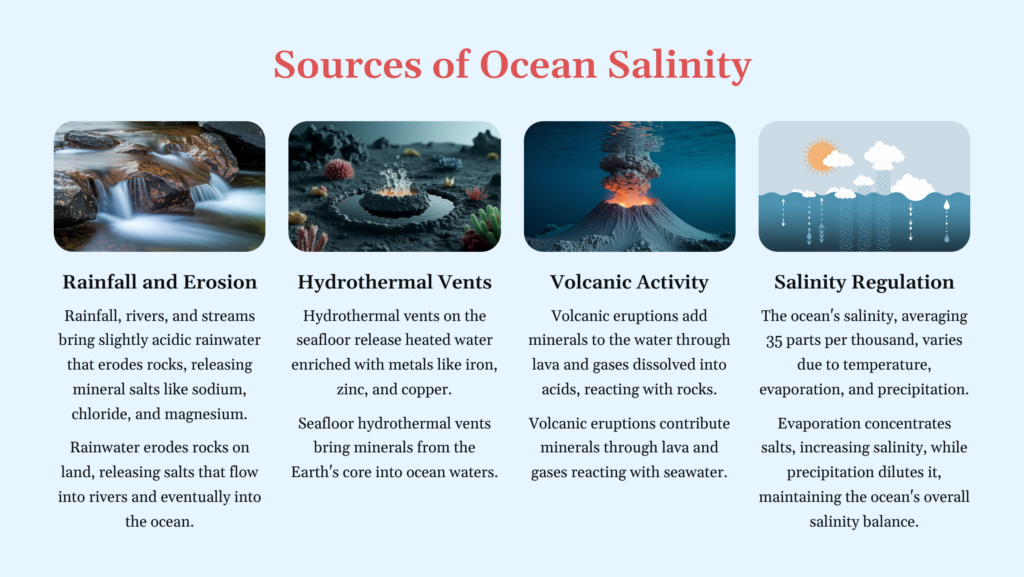
Weathering of rocks: Rainwater, slightly acidic due to dissolved carbon dioxide (H₂O + CO₂ → H₂CO₃), reacts with rocks on land. This weak carbonic acid dissolves minerals, releasing ions like Na⁺ (sodium), Cl⁻ (chloride), Ca²⁺ (calcium), K⁺ (potassium), and Mg²⁺ (magnesium).
Transport by rivers: Rivers act as conveyors, carrying these ions into seas and oceans. Although river water is not very salty (average ~0.012% salt), the continuous supply over millions of years accumulates in the ocean.
Volcanic and hydrothermal sources: Seafloor hydrothermal vents and undersea volcanoes also add salts by releasing minerals directly into the ocean.
2. Why salt doesn’t leave with evaporation
When ocean water evaporates under solar heat, only H₂O molecules rise as vapor. The dissolved salts, being non-volatile, are left behind. This is why rainwater is fresh even though it originates from salty seas. Over geological time, this unidirectional process has concentrated salts in oceans while keeping rivers and rainfall fresh.
Evaporation removes pure water, leaving salts behind.
Condensation & precipitation return fresh water to land and sea.
Runoff and erosion carry more dissolved minerals into the oceans.
Ocean circulation helps distribute salinity, preventing localized salt accumulation.
Scientists estimate that the average ocean salinity has stabilized at around 35 ppt (3.5%) because the rate of salt input (from rocks, rivers, and vents) is balanced by the rate of removal (through processes like mineral deposition, biological uptake, and seafloor sedimentation).
Historical Theories of Ocean Salinity
The question of why oceans are salty has fascinated scientists and philosophers for centuries. Before modern oceanography and geochemistry provided detailed explanations, several early theories attempted to answer this mystery.
1. Edmond Halley’s Hypothesis (1715)
The English astronomer Edmond Halley famous for Halley’s Comet was among the first to suggest a scientific explanation. In 1715, he proposed that the salts in the ocean come from rivers. According to his view:
Rain erodes rocks on land.
Rivers carry dissolved salts and minerals to the seas.
Since evaporation removes only pure water, the salts gradually accumulate.
Halley’s idea was groundbreaking because it shifted the explanation from religious or mythological beliefs to natural scientific processes.
2. John Joly’s Ocean Age Estimate (1899)
In the late 19th century, the Irish scientist John Joly expanded on Halley’s hypothesis. He argued that if rivers continuously add salts to the ocean, then the age of the ocean could be calculated from its salt content. In 1899, Joly estimated that the oceans must be about 80 to 90 million years old.
While his estimate was far younger than the true age of Earth (~4.5 billion years), it was a pioneering attempt to use ocean salinity as a geological clock.
3. Modern Understanding (20th Century onwards)
With the rise of oceanography, geochemistry, and plate tectonics, scientists gained a more accurate understanding of salinity:
Ocean salinity is not simply increasing—it is in a dynamic balance.
Inputs (river runoff, volcanic activity, hydrothermal vents) are balanced by outputs (mineral deposition, formation of evaporite rocks, biological uptake).
Modern research shows that the ocean’s average salinity of 35 ppt has remained relatively stable for hundreds of millions of years.
Comparison of Theories on Ocean Salinity
Scientist / Period
Main Idea
Strengths
Limitations
Edmond Halley (1715)
Rivers carry salts to oceans; evaporation leaves salt behind
First natural scientific explanation
Didn’t explain long-term balance of salinity
John Joly (1899)
Ocean age can be estimated using salinity
Early attempt at using geochemistry to date Earth
Gave an incorrect age (~90 million years)
Modern View (20th C. →)
Salinity is in dynamic equilibrium (inputs = outputs)
Supported by oceanography, chemistry, and plate tectonics
More complex, requires advanced data
Major Sources of Ocean Salts
The oceans are salty because of a continuous supply of minerals and ions from multiple natural sources. While rivers remain the primary contributors, other processes like volcanic activity and atmospheric inputs also play a role in maintaining ocean salinity.
1. River Runoff
Process: Rainwater erodes rocks and soils on land, dissolving minerals such as sodium, chloride, magnesium, potassium, and calcium.
Transport: Rivers act as carriers, transporting these dissolved ions into seas and oceans.
Impact: Though river water itself is not very salty, the long-term accumulation of these minerals makes oceans the largest salt reservoir on Earth.
2. Seafloor Vents and Volcanoes
Hydrothermal Vents: At mid-ocean ridges, seawater seeps into the crust, gets superheated, and re-emerges carrying dissolved metals and minerals.
Volcanic Eruptions: Submarine volcanoes release gases like sulfur dioxide and hydrogen chloride, which react with seawater and contribute to its salinity.
Significance: These processes continuously enrich seawater with salts, especially chloride and sulfate ions.
3. Atmospheric and Land-Based Contributions
Dust and Aerosols: Winds carry fine dust and salts from deserts, volcanic ash, and coastal areas into the ocean.
Rainwater Chemistry: Rain is slightly acidic due to dissolved CO₂ and other gases (like SO₂, NOx), which help break down rocks and release minerals.
Contribution: Though smaller compared to rivers, these sources help maintain the chemical diversity of seawater salts.
Together, these sources explain why ocean salinity has remained stable at an average of 35 ppt (3.5%), despite constant water movement through the hydrological cycle.
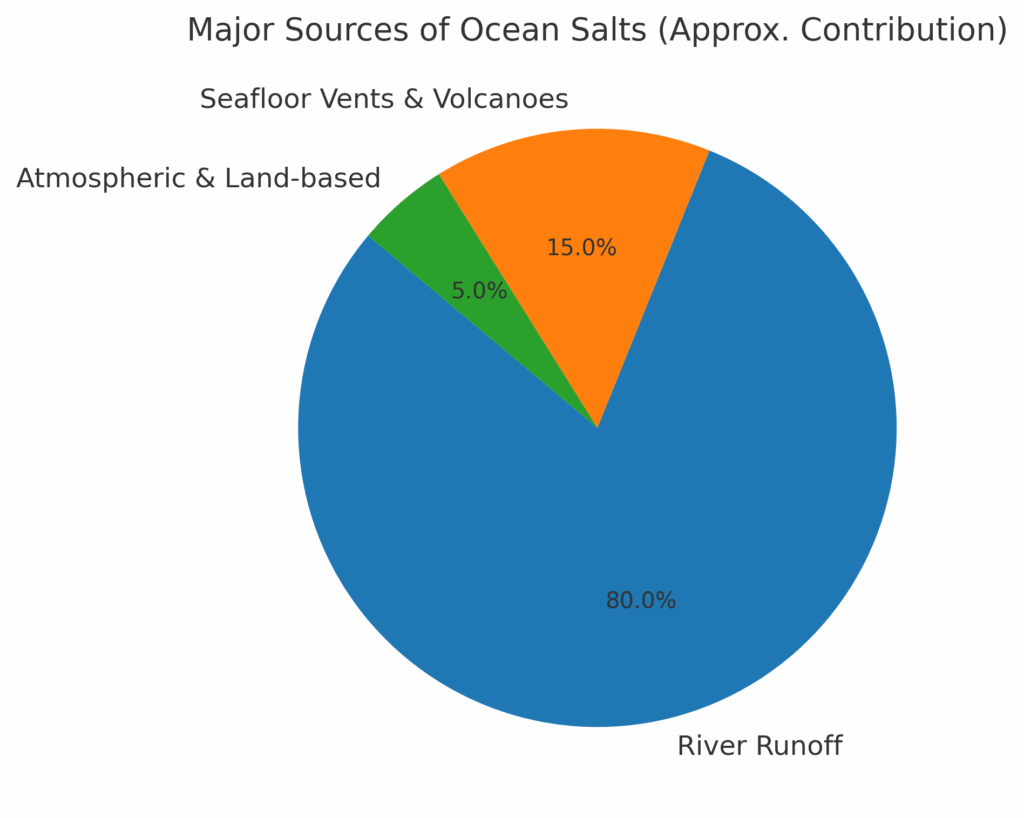
Here’s the pie chart showing the approximate contributions of different sources to ocean salts:
Atmospheric & Land-based – 5%
River Runoff – 80%
Seafloor Vents & Volcanoes – 15%
Factors Affecting Ocean Salinity Levels
Ocean salinity is not uniform across the globe. It varies depending on climate, geography, and ocean circulation. These variations explain why some seas are saltier than others and why polar waters differ from tropical regions.
1. Evaporation and Precipitation
High Evaporation: In tropical and subtropical regions, intense heat causes high rates of evaporation, leaving salts behind and increasing salinity.
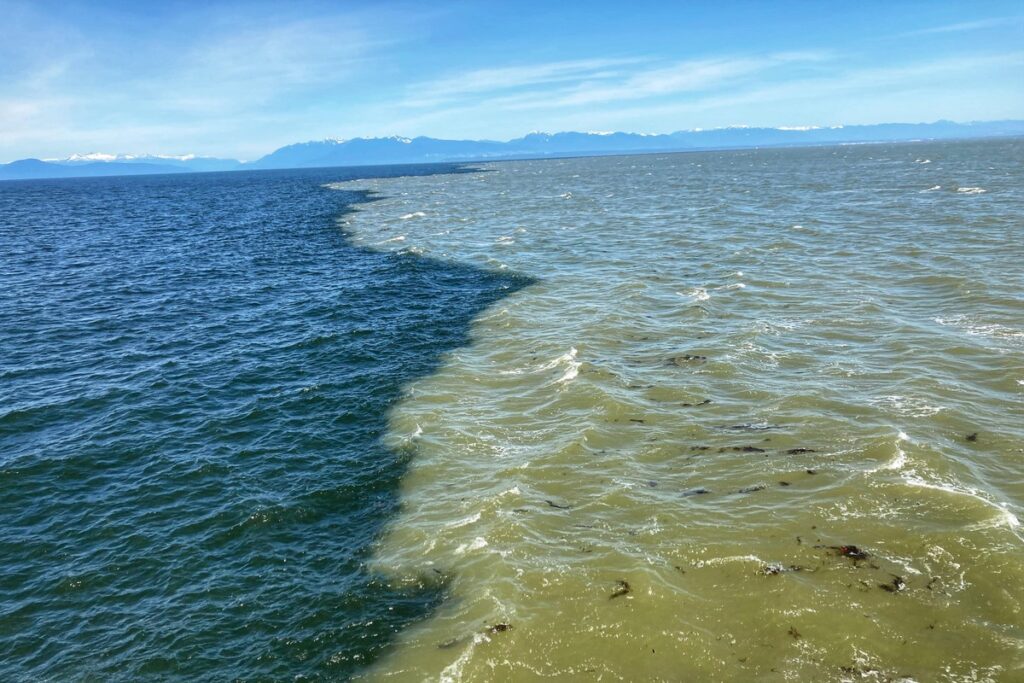
Heavy Rainfall: Areas with frequent rainfall or river inflow have lower salinity because fresh water dilutes the salt content.
Example: The Atlantic Ocean generally has higher salinity than the Pacific because it loses more water through evaporation than it gains from rainfall and rivers.
2. Ice Formation and Melting
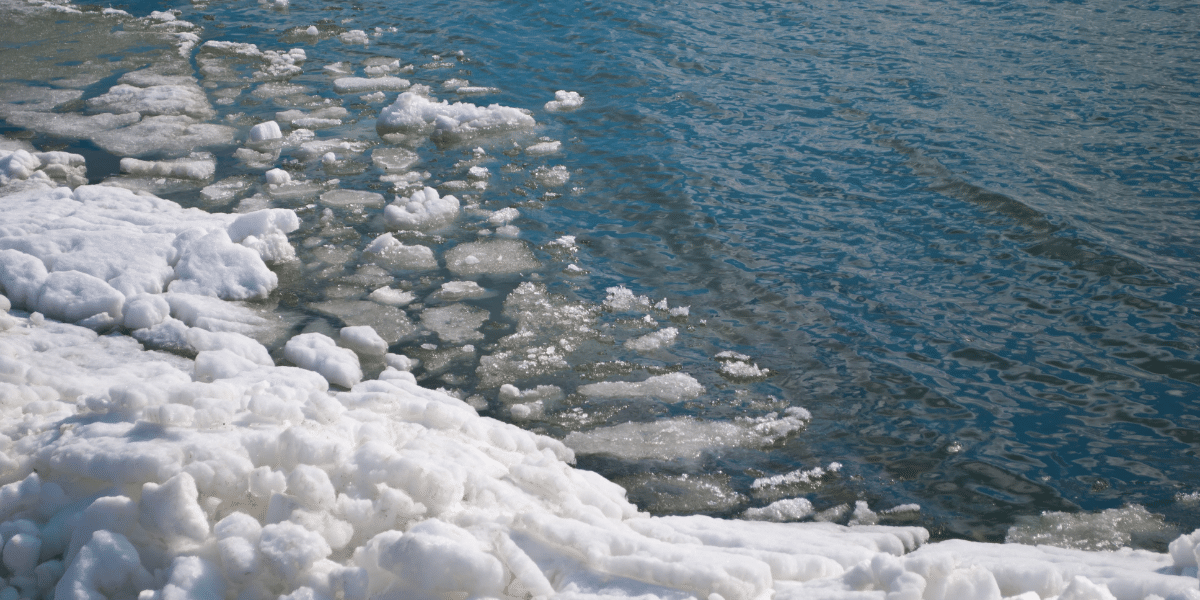
Formation of Sea Ice: When seawater freezes in polar regions, the ice formed is nearly fresh, as most salts are excluded. This process increases the salinity of the surrounding seawater.
Melting of Ice: Conversely, when ice melts during warmer months, it releases fresh water back into the sea, reducing salinity.
Example: The Arctic Ocean experiences seasonal salinity fluctuations due to melting and refreezing cycles.
3. Geography of Basins
Enclosed and Semi-Enclosed Seas: Seas with restricted connections to the open ocean often experience high salinity due to limited circulation and high evaporation.
Examples:
The Mediterranean Sea and Red Sea are saltier than average oceans.
The Dead Sea is extremely salty (~30% salinity), much higher than the global ocean average (3.5%), due to high evaporation and no outlet.
4. Mixing and Currents
Ocean Circulation: Large-scale currents and waves constantly mix surface and deep waters, distributing salinity across regions.
Upwelling and Downwelling: These processes bring nutrient-rich, slightly different salinity waters from deeper layers to the surface and vice versa.
Balancing Effect: Currents prevent extreme local salinity imbalances by spreading salt concentrations more evenly.
In short, climate, ice processes, basin geography, and circulation patterns together regulate how salty different parts of the ocean are.
Balance of Salt in the Ocean
A common question arises: if rivers and other sources are constantly adding salts to the oceans, why aren’t the oceans getting saltier over time? The answer lies in the dynamic balance between salt input and removal processes.
1. Mineral Deposition (Evaporites)
In hot, arid regions, when seawater evaporates rapidly, salts crystallize and settle at the bottom as evaporite deposits (e.g., halite and gypsum).
Over millions of years, these deposits become buried under sediments, effectively removing large amounts of salt from the seawater system.
2. Subduction of Seafloor
At tectonic plate boundaries, parts of the ocean floor get pulled down into Earth’s mantle through subduction zones.
Along with sediments, trapped salts and minerals are carried deep into the Earth, recycling them away from the ocean system.
3. Marine Organism Uptake
Many marine organisms use dissolved ions to build shells, skeletons, and reefs.
For example:
Corals and shellfish use calcium and carbonate to make calcium carbonate structures.
Some plankton species incorporate magnesium and silica.
When these organisms die, their remains sink and become part of seafloor sediments, permanently locking salts away.
Together, these removal processes balance the continuous input of salts from rivers, volcanoes, and the atmosphere. This balance has kept the average ocean salinity stable at around 35 ppt (3.5%) for millions of years, making Earth’s oceans a remarkably steady environment for life.
Interesting Facts About Salinity
Salinity not only shapes marine ecosystems but also reveals fascinating insights into Earth’s water systems. Here are some intriguing facts about ocean salt levels:
1. Ocean Salinity Variation
The average salinity of the world’s oceans is about 35 ppt (3.5%).
However, it varies regionally:
High salinity zones: Enclosed warm seas such as the Red Sea (40 ppt) and the Mediterranean Sea (38 ppt) due to high evaporation.
Low salinity zones: Near the Baltic Sea (~10 ppt) and the Bay of Bengal (~32 ppt) where rivers and rainfall dilute seawater.
2. The Saltiest Water Bodies on Earth
Dead Sea (Middle East): Around 300 ppt (30%), nearly 10 times saltier than ocean water. Its extreme salinity makes it impossible for most organisms to survive and allows humans to float effortlessly.
Great Salt Lake (Utah, USA): Can reach 50–270 ppt depending on rainfall and evaporation cycles.
These closed basins have no outlets, so salts keep accumulating over time.
3. Why Rivers Are Not Salty but Oceans Are
Rivers constantly pick up dissolved salts from rocks, but their flow into oceans prevents accumulation in one place.
Oceans, on the other hand, act as the final sink for salts since evaporation leaves minerals behind, making them progressively saltier over millions of years.
4. Can Humans Drink Seawater?
Drinking seawater is dangerous because the salt concentration is far higher than what human kidneys can process.
To excrete the excess salt, the body needs more fresh water than seawater provides, leading to dehydration instead of relief.
This is why sailors historically suffered from thirst at sea despite being surrounded by water.
Importance of Ocean Salinity
Ocean salinity is not just a measure of how salty seawater is it plays a critical role in shaping Earth’s climate, regulating marine ecosystems, and supporting human life. Understanding salinity helps scientists predict weather patterns, track climate change, and manage freshwater resources.
Role in Ocean Circulation and Global Climate
Salinity, together with temperature, drives the thermohaline circulation, also known as the “global conveyor belt” of ocean currents. Salty water is denser than fresh water; when combined with cooling in polar regions, it sinks and pushes deep-sea currents. These currents transport heat, nutrients, and gases around the planet, influencing:
Climate regulation – Warm ocean currents like the Gulf Stream keep Western Europe mild, while disruptions can trigger extreme winters.
Monsoon systems – Variations in salinity affect rainfall patterns in South Asia and Africa.
Climate change studies – Scientists use salinity data from satellites (like NASA’s Aquarius mission) to monitor freshwater flow from melting ice caps and rivers, which may alter global circulation in the future.
Influence on Marine Ecosystems and Biodiversity
Salinity levels directly shape marine habitats. Most open oceans maintain a range of 34–37 parts per thousand (ppt), but estuaries, polar seas, and enclosed basins can vary widely. These differences impact:
Coral reefs – Thrive only in stable salinity ranges (around 35 ppt). Even small changes can cause bleaching and biodiversity loss.
Brackish ecosystems – Estuaries like the Sundarbans in India support unique species adapted to fluctuating salinity.
Plankton productivity – Changes in salinity influence phytoplankton growth, which affects the entire marine food chain, including fish stocks vital for human consumption.
Migration and distribution – Species like salmon and eels migrate between freshwater and seawater, relying on their ability to adapt to salinity shifts.
Impact on Human Life
Ocean salinity also touches human civilization in practical ways:
Desalination – With freshwater scarcity increasing, desalination plants in countries like Saudi Arabia, UAE, and India convert seawater into drinkable water using reverse osmosis and distillation.
Salt extraction – Oceans are the world’s largest source of common salt (sodium chloride), harvested from seawater through evaporation in salt pans.
Shipping and navigation – Salinity affects seawater density, which influences buoyancy and ship stability. Naval architects and shipping companies account for this in vessel design and fuel efficiency.
Climate resilience – By studying salinity changes, scientists can forecast droughts, floods, and even long-term climate trends, helping communities prepare for extreme events.
Conclusion
The ocean is salty because of the continuous weathering of rocks, river inflow, and volcanic activity, processes that have been shaping Earth for billions of years. While rivers carry dissolved minerals into the sea, removal mechanisms like mineral deposition, subduction, and biological uptake ensure that the ocean’s saltiness remains relatively balanced over time.
This sea water salinity is not just a chemical property it is a driver of global climate, ocean circulation, marine ecosystems, and even human survival through resources like desalination and salt extraction. Without salinity, the ocean as we know it would not regulate Earth’s temperature or sustain the vast diversity of life it harbors.
The ocean’s saltiness is not just a mystery it’s a story of Earth’s history written in every drop.
Ocean water is salty because rainwater erodes rocks, carrying dissolved salts and minerals through rivers into the sea. Over millions of years, these ions have accumulated in the ocean. While marine organisms use some, most remain, giving seawater its salinity.
Why is the ocean salty but not great lakes?
In smaller lakes, ions circulate and exit more quickly, preventing significant salt buildup. Unlike oceans, where salts accumulate over millions of years, lakes usually lack enough time for such accumulation, which is why their waters remain fresh rather than salty.
Which sea has no salt?
No sea is entirely freshwater; all contain some salt. The Baltic Sea, the least salty, owes its low salinity to limited evaporation, cold climate, and abundant river inflow, yet it still remains a saltwater body rather than freshwater.
Which ocean is the saltiest?
The Atlantic Ocean is the saltiest major ocean, with an average salinity of about 37 parts per thousand. High evaporation, warm temperatures, and lower river inflow compared to other oceans contribute to its greater salt concentration and overall salinity.
Is ocean water safe to drink?
Ocean water is not safe to drink because its high salt content dehydrates the body instead of quenching thirst. Drinking seawater forces the kidneys to expel excess salt, leading to dehydration, organ strain, and potentially life-threatening health complications.
How salty is the ocean?
The average salinity of ocean water is about 35 parts per thousand (ppt), meaning 35 grams of dissolved salts per liter of seawater. Salinity varies across regions, with higher levels in warm, dry areas and lower levels near polar regions.
How salt is formed in sea water?
Salt in seawater forms mainly from the weathering of rocks on land. Rainwater dissolves minerals like sodium and chloride, carrying them through rivers into the ocean. Volcanic activity, seafloor vents, and atmospheric inputs also add salts, creating seawater’s characteristic salinity.
Authored by, Muskan Gupta Content Curator
Muskan believes learning should feel like an adventure, not a chore. With years of experience in content creation and strategy, she specializes in educational topics, online earning opportunities, and general knowledge. She enjoys sharing her insights through blogs and articles that inform and inspire her readers. When she’s not writing, you’ll likely find her hopping between bookstores and bakeries, always in search of her next favorite read or treat.