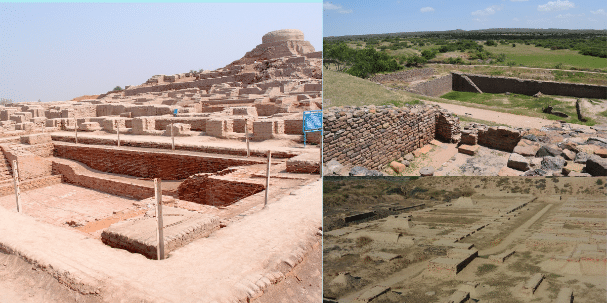
The Town Planning of Indus Valley Civilization is a remarkable example of early urban development, showcasing organized city layouts, drainage systems, and public infrastructure far ahead of their time. As one of the world’s earliest civilizations, it proves that humans, even in the Bronze Age, could build structured societies beyond basic survival.
Emerging near the Indus River, this civilization developed due to agriculture and trade, forming some of the most advanced urban centers of the ancient world. Archaeological findings reveal that the Indus Valley’s town planning outshone many later civilizations regarding design and efficiency.
Indus Valley urban planning exemplifies extraordinary foresight, with its meticulous grid layouts, advanced drainage systems, and standardized brick construction. This blog explores the revolutionary features of Indus Valley town planning, why it was ahead of its time and how it continues to inspire modern urban development.
Despite its widespread existence, little remains of the Indus Valley Civilization today. Fortunately, the remains include two key archaeological sites: Harappa and Mohenjo-Daro. We deduced that the Indus Valley Civilization had grid-based systematic town planning by excavating these two sites.
Additionally, the Indus Valley Civilization had urban planned cities beyond Harappa and Mohenjo-Daro, namely Chanhudaro, Kalibanga, Dholavira, Surkotada, and Lothal. These centers had towns with sophisticated urban planning, such as efficient drainage systems and right-angle street turns.
Comparative analysis of urban layouts in these sites indicates that the towns in this civilization were far more advanced for their time. Thus, the town planning of the Indus Valley Civilization is a significant characteristic that implies advanced development.
We have inferred that settlements in the Indus civilization prevailed over modern civilizations. To consolidate this inference, we must divulge the infrastructures that made the town planning of the Indus Valley civilization ahead of its time. As with any civilization, the Indus Valley Civilization focused on maintaining the quality of life.
To ensure a better life, the town planning of the Indus Valley Civilization had public infrastructures like roads, streets, and sewers. By analyzing the urban layouts, we can also conclude the evidence for the civilization’s political and administrative regional areas.
Such regional areas include public granaries, dams, canals, and the great bath. They significantly showcase the advanced development of the Indus Valley civilisation. Let’s untangle the town planning of the Indus Valley Civilisation.

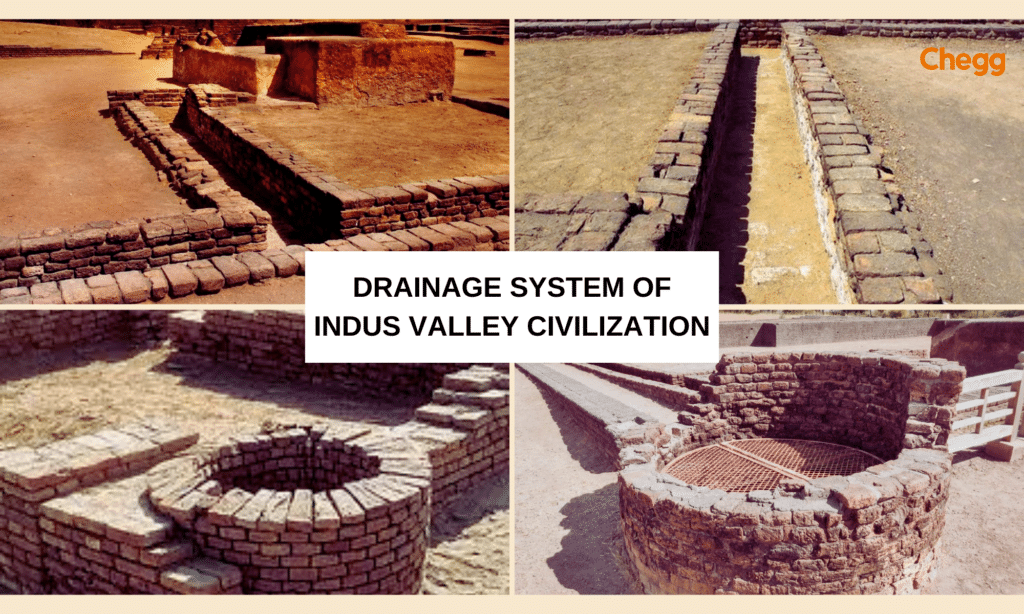
Closed Drainage System:
Brick Channels in Every Street:
Manholes for Maintenance:
Brick Culverts with Corbelled Roofs:

The Indus Valley civilization is also known as the Harappan civilization because distinctive evidence for its existence was first found in the ‘Harappa’ archaeological site. It had massively populated independent administrative districts called urban centers. Small communities became large urban centers during the mature Harappan phase (2600 BCE). Some famous urban centers are the Harappa, Mohenjo-Daro, and Ganeriwala, situated in modern-day Pakistan, and Kalibangan, Rakhigarhi, and Lothal, located in modern-day India.
The discovery of the cities of Harappa and Mohenjo-Daro enhanced the excavation of the Indus Valley Civilization. The ruins of these cities provide evidence of civilization houses and drainage systems, such as channels, brick culverts, and house storeys.
Archaeologists worldwide have been astonished by the evidence of urban settlements and civilization construction. These cities were well-known for their multi-tiered settlements, such as houses and buildings with more than two storeys.
The Harappan Civilization, flourishing around 3300-1300 BCE, is renowned for its remarkable town planning. Here are some of the hallmarks of the town planning of the Harappan Civilization:
The Indus Civilization map shows many cities in modern-day India, Pakistan, and Afghanistan. The Indus Valley Civilization’s town planning stands out as one of the most widespread among the four earliest civilizations.
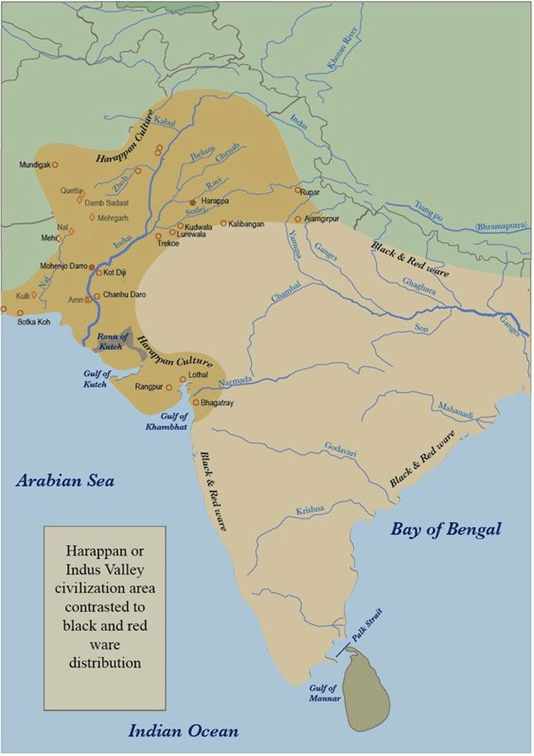
As per the Indus civilization map, the civilization extended from Pakistan in the west to Uttar Pradesh in the east. Similarly, it expanded from Afghanistan in the north to Gujarat in the south. The states of Punjab, Gujarat, Haryana, Jammu and Kashmir, and Uttar Pradesh in India host the cities of the Indus Valley Civilization. Likewise, the ‘Harappa’ and ‘Mohenjo-daro’ are located in the Sindh region of Pakistan. Additionally, the cities in Afghanistan with Indus Valley civilization are Shortugai and Mundigak. The Rakhigarhi, the largest settlement of the Harappan site, is a key archaeological site located in the Indian State of Haryana.
The Indus Valley Civilisation people had massively excellent skills in arts and crafts. They made highly realistic human and animal figures. The artifacts of town planning of the Indus Valley Civilization became apparent during the second half of the third millennium, known as the Bronze Age.
Archaeologists document the artifacts they find using pictures with names from the Indus Valley Civilization. The artifacts include seals, pottery, sculptures, ornaments, and terracotta figures made by the people of the civilization.
How people made these artifacts establishes a connection to the daily life and culture of the Harappa Civilization. In the future, we will use pictures of the Indus Valley Civilization with names to identify the found artifacts.
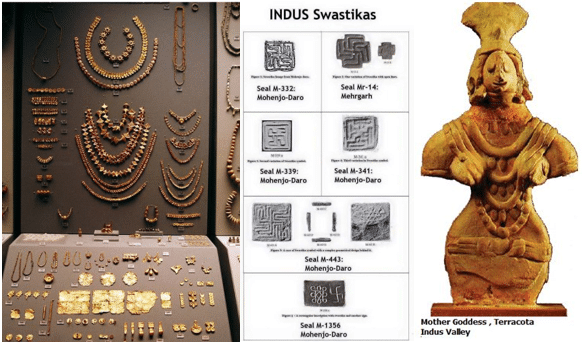

Researchers discovered a jewellery-making factory at the Rakhigarhi archaeological site, for instance. This shows that the people wore complex gold jewellery daily and used metal and terracotta decorations in their houses.
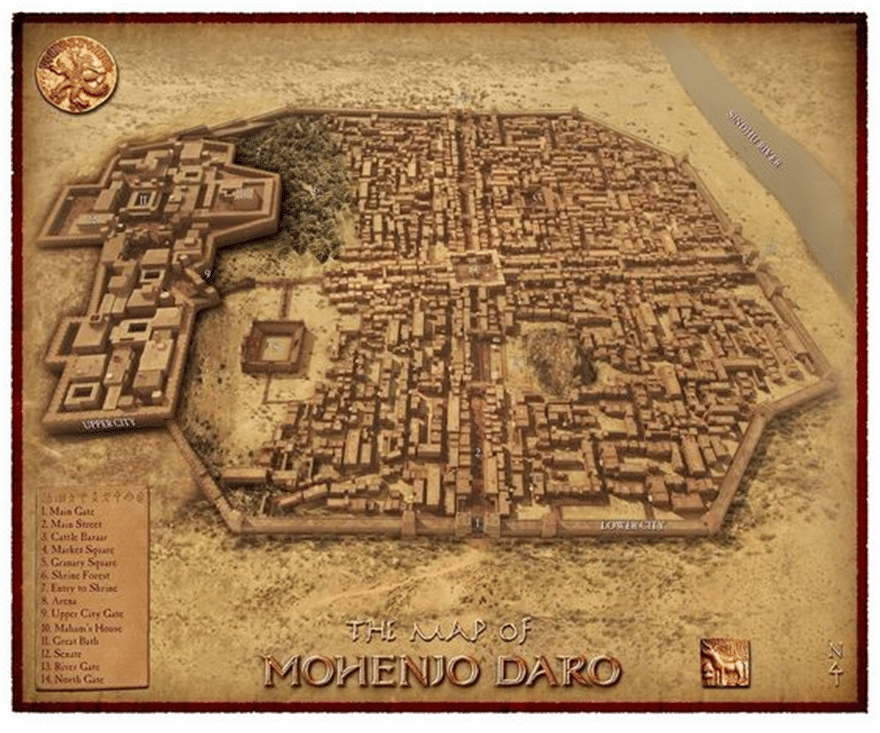
The Indus Valley Civilization (3300-1300 BCE) astounded archaeologists with its remarkably advanced urban and town planning of this civilization. Here’s a glimpse into their sophisticated approach:
The town planning of the Indus Valley Civilization is an essential topic in the UPSC IAS exam. This topic covers the prominent part of the art & culture subject in the General Studies Paper-1 syllabus. It also covers a significant part of the UPSC Prelims Syllabus – General Studies Paper-1.
The key aspects of the town planning of the Indus Valley Civilization emphasised in UPSC exams include:
The ruins of the Indus Valley Civilization town planning represent the attempts of our ancestors to develop a civilized society. One such striking attempt that showcases the brilliance of the Indus Valley urban planning. Furthermore, it represents the origin of our culture and heritage.
The Indus Valley Civilization prospered for over 4,000 years and has now evolved into metropolitan cities in India, Pakistan, and Afghanistan. The Indus Valley Civilization’s houses and drainage systems led to the construction of sophisticated cities and the invention of sewage systems.
Additionally, using burnt bricks in houses instead of stone paved the path for modern-age constructions using bricks. Cities now incorporate well-organized establishments and regular layouts, drawing from the base concept of the town planning of the Harappan Civilization.
Read More:-
The town planning system of the Indus Valley Civilization has captivated many archaeologists. They meticulously designed residential houses, public buildings, and streets, ensuring an efficient and organized layout. Every home was seamlessly connected to the drainage systems running along the roads, reflecting a high level of urban planning.
The two main planned cities of the Indus Valley Civilization were Harappa and Mohenjo-Daro. Cities like Chanhudaro, Kalibanga, Dholavira, Surkotada, and Lothal were also a part of the urban planned cities.
The most significant feature of the Indus Valley Civilization that indicates advanced development is the closed drainage system. Other features of this Civilization town planning include brick construction, public granaries and baths, city walls, and grid patterns.
The decline of the Harappan Civilization is attributed to multiple factors, including climate change, shifting river courses, droughts, declining trade, and possible invasions. These factors gradually weakened the urban centers, leading to their eventual abandonment.
The drainage system of the Harappan Civilization was highly advanced, featuring covered brick drains along streets, connected to soak pits and household bathrooms. This system ensured efficient waste disposal, reflecting remarkable urban planning and hygiene concerns in ancient times.
The Indus Valley Civilization, also called the Harappan Civilization, is most famous for its advanced town planning. Flourishing around 2500 BCE, it featured well-planned cities like Harappa and Mohenjo-Daro with grid-based layouts, efficient drainage systems, standardized bricks, and organized public spaces. This systematic urban design makes it one of the earliest and most remarkable examples of planned urban development in the world.