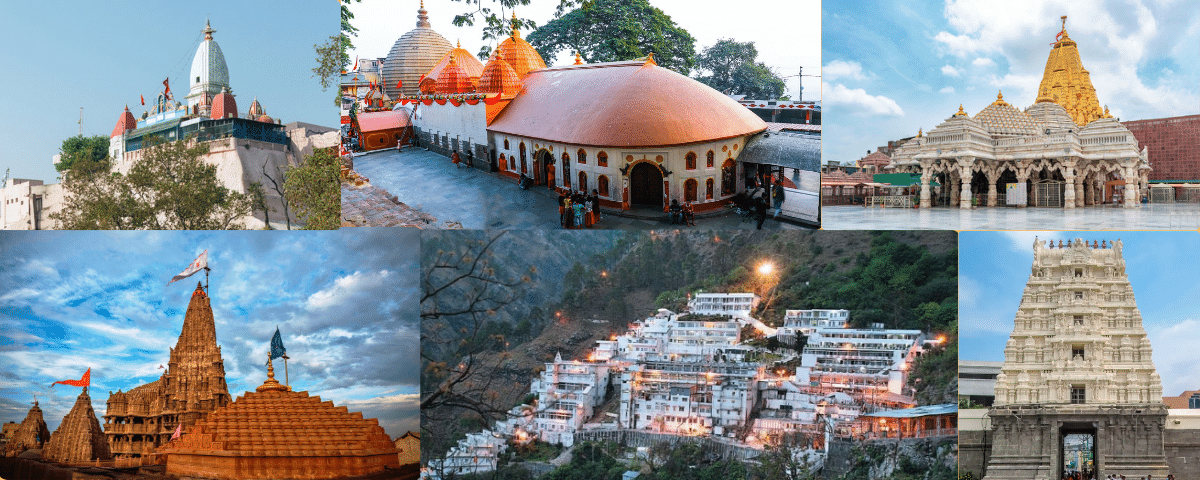
Shakti Peethas in India are sacred shrines dedicated to Goddess Shakti, the divine feminine energy in Hinduism. Deeply rooted in Hindu mythology, their origin is linked to the poignant tale of Goddess Sati, consort of Lord Shiva. As per legend, when Sati immolated herself in grief over her father Daksha’s insult to Shiva, the enraged Lord Shiva carried her body across the universe in sorrow. Lord Vishnu released his Sudarshana Chakra to calm him, dismembering Sati’s body. The spots where her body parts, ornaments, or garments fell became revered as Shakti Peethas.
For devotees, these sites are not just temples but powerful energy centers where divine blessings are believed to flow abundantly. Spread across India and neighboring countries like Nepal, Bangladesh, and Sri Lanka, each Shakti Peetha has a unique legend, presiding deity, and spiritual aura. Pilgrims visit them seeking strength, protection, and liberation, making the Shakti Peethas an enduring symbol of devotion, mythology, and India’s rich spiritual heritage.
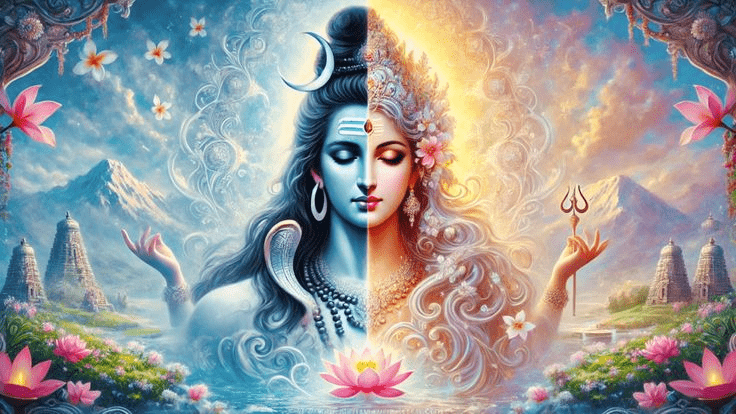
The story of the Shakti Peethas originates from the Devi Purana and other ancient Hindu scriptures, narrating the deep bond between Goddess Sati and Lord Shiva. Sati, the daughter of King Daksha, married Shiva against her father’s wishes. When Daksha organized a grand yajna (sacrificial ritual) and deliberately chose not to invite Shiva, Sati attended despite his disapproval. There, she was humiliated by her father’s insults toward her husband. Overcome by grief and rage, Sati immolated herself in the sacred fire, unable to bear the dishonor.
Distraught, Lord Shiva lifted Sati’s lifeless body and wandered across the universe in sorrow, performing the fearsome Tandava, a cosmic dance of destruction. Lord Vishnu used his Sudarshana Chakra to prevent the world’s annihilation and dismember Sati’s body. Each part, limbs, ornaments, even strands of hair, fell at different locations, sanctifying them as Shakti Peethas.
Each Peetha is associated with a specific part of Sati’s body or ornament, along with a unique form of Goddess Shakti (the Shakti aspect) and Lord Shiva (the Bhairava aspect). This pairing symbolizes the inseparable union of divine feminine and masculine energies, representing creation, preservation, and transformation.
The Shakti Peethas are not just geographical points but spiritual power centers. Each site holds symbolic meaning; some represent fertility, others protection, wisdom, or courage. Visiting them is believed to purify the soul, remove obstacles, and bestow divine grace, making them integral to Hindu devotional traditions and pilgrimage routes.
The Shakti Peethas hold immense significance in Shaktism, a major tradition of Hinduism that venerates the Divine Mother as the supreme reality. These sacred sites are also deeply rooted in Tantric practices, where each Peetha is believed to radiate specific spiritual energies harnessed through rituals, meditation, and chanting. Pilgrimages to the Peethas have been a cornerstone of devotional life for centuries, often undertaken as acts of penance or spiritual renewal.
Ancient scriptures like the Kalika Purana, Devi Bhagavata Purana, and Shiva Purana describe the locations and spiritual importance of the Shakti Peethas, often listing the specific body part of Sati that sanctified each place. These texts also outline the associated Bhairava (male guardian deity) and the unique blessings each Peetha bestows.
Architecturally, many Peethas are home to magnificent temples, reflecting diverse regional styles—from Nagara spires in the north to Dravidian gopurams in the south. They are also vibrant centers of cultural expression, hosting grand festivals such as Navratri and Durga Puja and regional fairs that draw millions of devotees. These celebrations merge spiritual devotion with music, dance, art, and local traditions, making the Shakti Peethas sacred and cultural landmarks of India.
According to the Devi Bhagavata Purana, there are 51 primary Shakti Peethas, each linked to a body part, ornament, or garment of Goddess Sati that fell to Earth after her self-immolation. Spread across India, Nepal, Bangladesh, Pakistan, Sri Lanka, and Tibet, they symbolize the Divine Mother’s presence everywhere.
Among them, Maha Shakti Peethas like Kamakhya (Assam), Kalighat (West Bengal), Vaishno Devi (Jammu & Kashmir), and Vimala (Odisha) are considered the most powerful, believed to grant specific spiritual or worldly blessings.
Beyond the 51, many regional traditions identify additional Peethas based on local legends. Some locations are disputed, with multiple sites claiming authenticity due to differing scriptural interpretations, reflecting Hinduism’s inclusive and diverse devotional geography.
| S. No. | Shakti Peetha | Location | Shakti | Bhairava | Body Part | Notable Fact |
|---|---|---|---|---|---|---|
| 1 | Kamakhya Temple | Guwahati, Assam | Kamakhya Devi | Umananda | Yoni | Famous for Ambubachi Mela. |
| 2 | Kalighat Kali Temple | Kolkata, WB | Kalika | Nakuleshwar | Right Toe | Major Kolkata pilgrimage. |
| 3 | Jwalamukhi Temple | Kangra, HP | Sidhidatri | Unmatta Bhairav | Tongue | Eternal flame worshipped. |
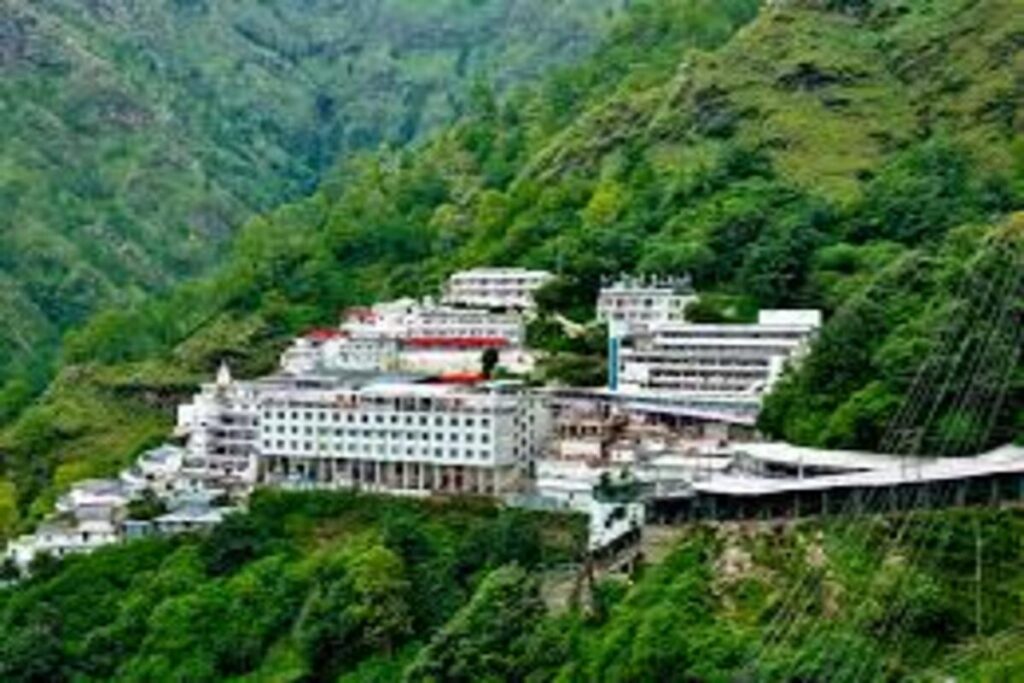
| 4 | Vaishno Devi Temple | Katra, J\&K | Vaishno Devi | Kalabhairav | Skull Top | Major Hindu pilgrimage. |
| 5 | Kanyakumari Temple | Kanyakumari, TN | Kanyakumari | Nirvik | Back | Southernmost Shakti Peetha. |
| 6 | Chamundeshwari Temple | Mysuru, KA | Chamundeshwari | Krodhish | Hair | On Chamundi Hills. |
| 7 | Vishalakshi Temple | Varanasi, UP | Vishalakshi | Kalabhairav | Earrings | In Kashi Vishwanath area. |
| 8 | Naina Devi Temple | Bilaspur, HP | Naina Devi | Kalabhairav | Eyes | Associated with Sati’s eyes. |
| 9 | Mangalagiri Temple | Guntur, AP | Mangalamba | Kapala Bhairav | Chin | Known for ghee offerings. |
| 10 | Ambaji Temple | Banaskantha, GJ | Amba | Batuk Bhairav | Heart | Pilgrimage in Gujarat. |
| 11 | Srisailam Temple | Kurnool, AP | Bhramaramba | Mallikarjuna | Neck | Jyotirlinga site. |
| 12 | Tara Tarini Temple | Ganjam, Odisha | Tara Tarini | Kameshwar | Breasts | On Kumari Hills. |
| 13 | Sarvamangala Temple | Bilaspur, CG | Sarvamangala | Kapileshwar | Right Breast | Ancient shrine. |
| 14 | Jogulamba Temple | Alampur, TG | Jogulamba | Balabhairav | Teeth | One of 18 Maha Peethas. |
| 15 | Patan Devi Temple | Patna, BR | Patneshwari | Vighnesh | Right Thigh | Main Patna temple. |
| 16 | Jateshwari Temple | Amta, WB | Jateshwari | Chandranath | Forehead | Ancient Bengal temple. |
| 17 | Hinglaj Mata Temple | Balochistan, Pak | Hinglaj Mata | Bhimalochan | Head | Famous desert shrine. |
| 18 | Manikarnika Ghat | Varanasi, UP | Vishalakshi | Kalabhairav | Earrings | Holy cremation ghat. |
| 19 | Bahula Temple | Bardhaman, WB | Bahula | Bhiruk | Left Arm | Bengal pilgrimage site. |
| 20 | Kireet Kona | Murshidabad, WB | Vimala | Samvaranand | Crown | Linked to Sati’s crown. |
| 21 | Ratnavali Temple | Khanakul, WB | Kumari | Shiv | Right Shoulder | Small rural shrine. |
| 22 | Attahas Temple | Birbhum, WB | Phullara | Vishvesh | Lips | Name means great laughter. |
| 23 | Nalhati Temple | Nalhati, WB | Kalika | Yogesh | Rib Cage | Name from “Nalahat.” |
| 24 | Vibhash Temple | Tamluk, WB | Kapalini | Sarvanand | Left Ankle | Coastal shrine. |
| 25 | Jogadya Temple | Khirgram, WB | Jogadya | Krodhish | Great Toe | Village deity. |
| 26 | Ujjaini Mahakali | Ujjain, MP | Mahakali | Mahakal | Upper Lip | Jyotirlinga city. |
| 27 | Guhyeshwari Temple | Kathmandu, Nepal | Guhyeshwari | Kankal Bhairav | Hips | Near Pashupatinath. |
| 28 | Chandranath Temple | Sitakunda, BD | Bhawani | Chandranath | Right Arm | Hilltop temple. |
| 29 | Shondesh Temple | Jessore, BD | Jashoreshwari | Chanda Bhairav | Palms | Ancient Bangladesh shrine. |
| 30 | Sugandha Temple | Barisal, BD | Sunanda | Traimbak | Nose | Small riverside temple. |
| 31 | Karveer Nivasini | Kolhapur, MH | Mahalakshmi | Krodhish | Three Eyes | Wealth goddess temple. |
| 32 | Renuka Temple | Mahur, MH | Renuka | Ekaveer | Right Hand | Associated with Parashurama. |
| 33 | Tulja Bhavani | Tuljapur, MH | Bhavani | Amritesh | Right Arm | Chhatrapati Shivaji’s deity. |
| 34 | Mahur Ekaveer | Nanded, MH | Ekaveerika | Yogesh | Left Hand | Forest temple. |
| 35 | Avanti Temple | Ujjain, MP | Avanti | Lambkarna | Upper Lip | One of 7 Moksha Puris. |
| 36 | Shriparvata | Ladakh | Shriparvata | Bhuvanesh | Stomach | Himalayan shrine. |
| 37 | Jalandhar Peeth | Kangra, HP | Tripurmalini | Bhishan | Left Breast | Scenic hill location. |
| 38 | Panchsagar | Varanasi, UP | Varahi | Maharudra | Teeth | Small temple near Ganga. |
| 39 | Mithila Shakti Peeth | Janakpur, Nepal | Uma | Mahodar | Left Shoulder | Sita’s birthplace. |
| 40 | Gandaki Chandi | Muktinath, Nepal | Gandaki Chandi | Chakrapani | Cheek | Near sacred river. |
| 41 | Bhairavi Temple | Chhatarpur, MP | Bhairavi | Amriteshwar | Ankles | Small central India shrine. |
| 42 | Kankalitala Temple | Birbhum, WB | Devgarbha | Ruru Bhairav | Waist | Name from “spine bone.” |
| 43 | Shriparvata | Andhra, AP | Shriparvata | Bhuvanesh | Stomach | Ancient Buddhist link. |
| 44 | Amarnath Cave | J\&K | Mahamaya | Amar | Throat | Ice Shiva Lingam. |
| 45 | Ratnavali Peeth | Tamil Nadu | Kumari | Shiv | Right Shoulder | Coastal TN temple. |
| 46 | Surkanda Devi | Tehri, UK | Surkanda Devi | Chand Bhairav | Head | Scenic hilltop site. |
| 47 | Baidyanath Temple | Deoghar, JH | Jayadurga | Baidyanath | Heart | Jyotirlinga site. |
| 48 | Kamgiri Temple | Assam | Kamgiri | Umananda | Hair | Local pilgrimage. |
| 49 | Ramgiri Temple | Tripura | Tripurasundari | Rameshwar | Right Foot | Famous lake nearby. |
| 50 | Manibandh | Pushkar, RJ | Gayatri | Sarvanand | Wrist | Near Brahma Temple. |
| 51 | Pavagadh Temple | Panchmahal, GJ | Mahakali | Kapil | Toe | UNESCO heritage site. |
Among the 51 Shakti Peethas, certain temples hold exceptional religious, cultural, and tourist significance due to their scale, rituals, and accessibility.


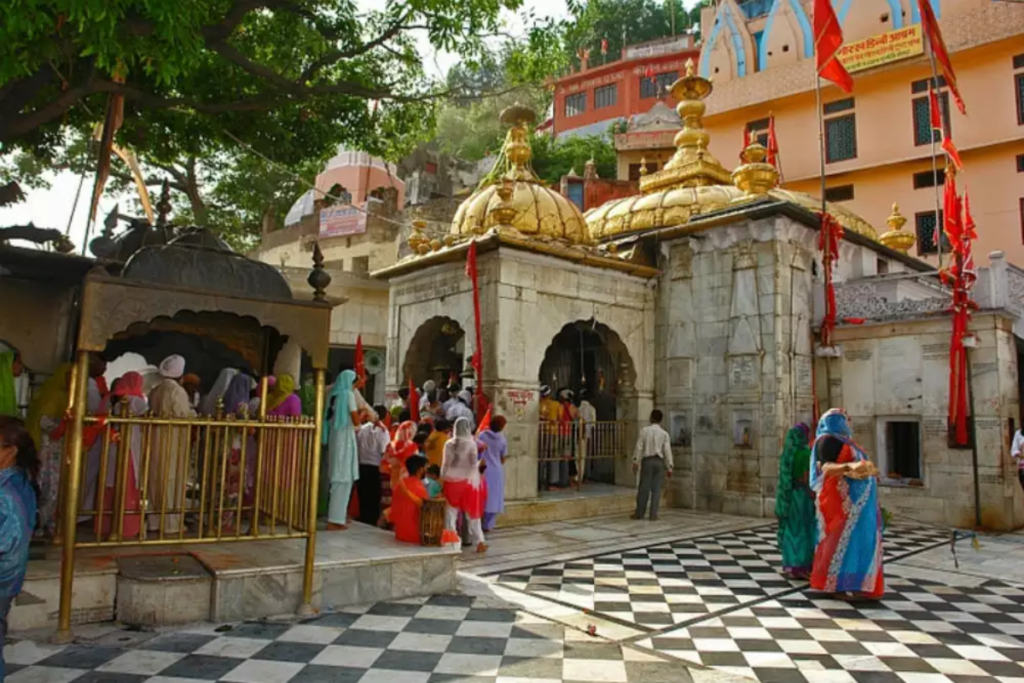

For devotees, visiting these major Shakti Peethas is a spiritual act and an immersion into India’s vibrant religious traditions.
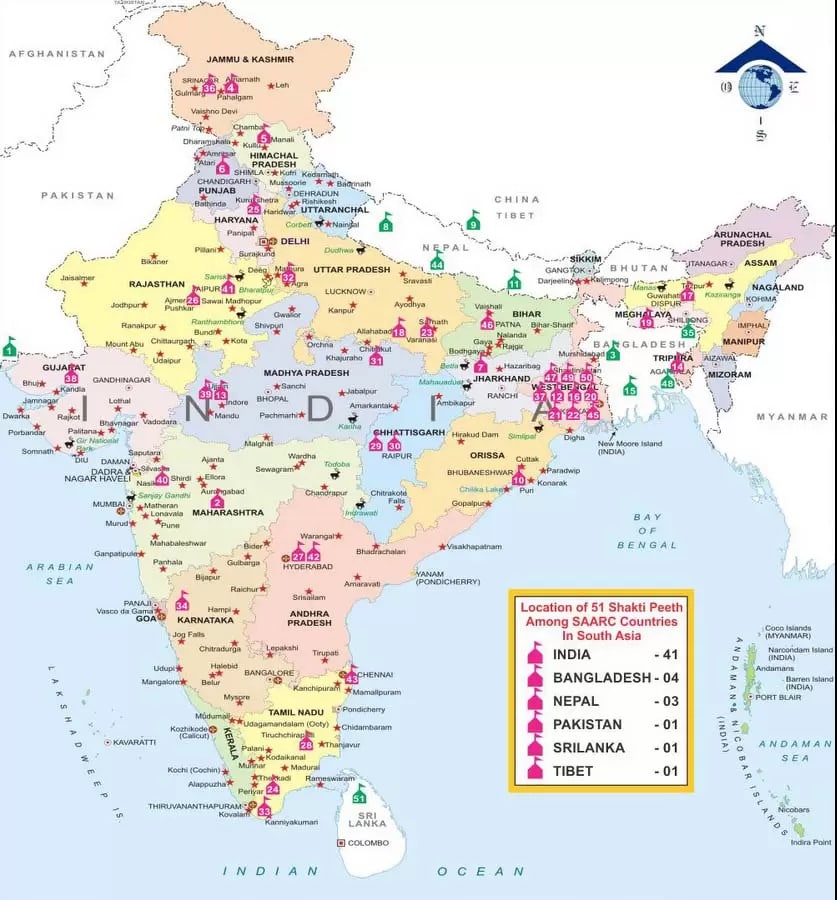
The reverence for Shakti extends beyond India, with several prominent Shakti Peethas in neighboring countries, reflecting shared cultural and spiritual heritage.
These sacred sites illustrate how devotion to the Goddess transcends political borders. Pilgrims from across the world visit to honor Shakti, reinforcing unity across South Asia’s spiritual landscape. with ancient traditions.
Visiting Shakti Peethas is both a spiritual and cultural journey. The best time is during Navratri (March–April, September–October) or major festivals like Kali Puja and Durga Puja, when temples are beautifully adorned and devotional fervor peaks. Winter (October–February) offers pleasant weather, especially in northern India.
For multiple Peetha visits, plan by region for example, the West Bengal–Assam circuit (Tarapith, Kalighat, Kamakhya), Maharashtra–Gujarat circuit (Mahur, Tuljapur, Ambaji), or South Indian circuit (Kanchi Kamakshi, Meenakshi Amman, Chamundeshwari). Allow buffer days for temple timings and customs.
Follow spiritual etiquette: dress modestly, remove footwear before sanctums, and respect local traditions, such as head coverings or specific offerings. Photography may be restricted inside. Maintain silence, avoid queue cutting, and refrain from non-vegetarian food or alcohol during the pilgrimage, ensuring both respect and a deeper spiritual experience.
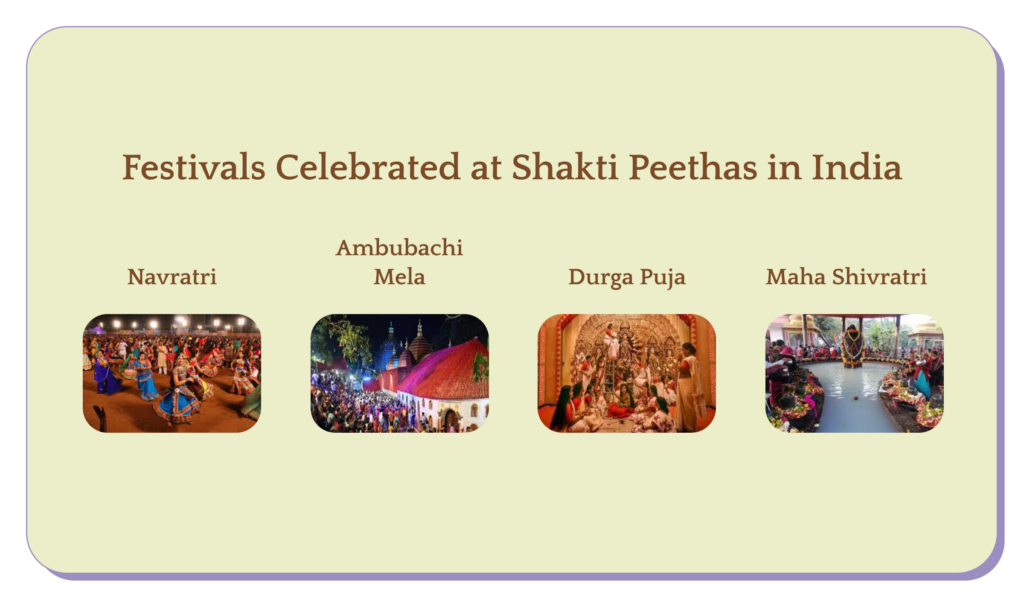
Shakti Peethas are sacred temples and dynamic centers of celebration and devotion. These festivals reflect the powerful presence of the Goddess and the rich traditions surrounding her worship.
Lord Shiva plays a central role in the origin and significance of the Shakti Peethas. After Goddess Sati’s self-immolation, his grief turned into a cosmic Tandava as he carried her body across the universe. To pacify him and restore balance, Lord Vishnu dismembered Sati’s body, and the places where her parts fell became Shakti Peethas.
At every Peeth, Shakti is worshipped alongside Lord Shiva in the form of Bhairava, the fierce guardian. Bhairava symbolizes vigilance, strength, and divine protection, safeguarding the sanctity of each shrine. This joint worship reflects the eternal balance between Shakti and Shiva feminine and masculine energies embodying creation, destruction, and harmony. Devotees revere both together, experiencing the complete union of cosmic power and spiritual devotion.
Shakti Peethas are timeless symbols of the divine feminine, embodying the spiritual essence of Shakti in Hindu tradition. Each site holds unique legends, rituals, and cultural importance, yet all are bound by the shared reverence for the Mother Goddess. Spread across India and beyond, they serve as unifying threads that connect regions, communities, and generations through devotion.
Pilgrimages to these sacred sites not only deepen one’s spiritual connection but also celebrate the rich diversity of Hindu culture. Preserving their sanctity through responsible tourism, respect for local customs, and heritage conservation is essential to ensure their legacy endures. Visiting a Shakti Peetha is more than a journey across geography; it is a journey within, offering peace, inspiration, and the blessings of the Divine Mother.
Read More:
Traditionally, 51 Shakti Peethas in India are sacred temples dedicated to Goddess Sati’s body parts. Some texts mention up to 52 or even 108 across regions.
The 18 primary Shakti Peethas, sacred sites dedicated to Goddess Shakti, are spread across India and beyond, including Sri Lanka and Tibet. Notable locations include Kanchipuram (Tamil Nadu), Mysore (Karnataka), Srisailam (Andhra Pradesh), Kolhapur (Maharashtra), Kamakhya (Assam), and Jwalamukhi (Himachal Pradesh).
The 51 Shakti Peethas, sacred Hindu sites, are spread across South Asia, mainly in India, Bangladesh, Nepal, and neighboring countries. These locations are believed to mark where the body parts of Goddess Sati fell after her self-immolation, during Lord Shiva’s grieving and destructive dance.
The Shakti Peethas uniquely symbolize India in its unified form, extending beyond its borders to regions like Pakistan, Nepal, Tibet, Bangladesh, and Sri Lanka. They also reflect the diversity within Hinduism, as many of the Devi forms at the 51 Shakti Peethas hold local significance.
Yes, Vaishno Devi is a Shakti Peetha. Located in Jammu and Kashmir, it represents Goddess Durga. The temple marks where the goddess meditated and merged with her divine form after defeating demons, drawing millions of devotees annually.