
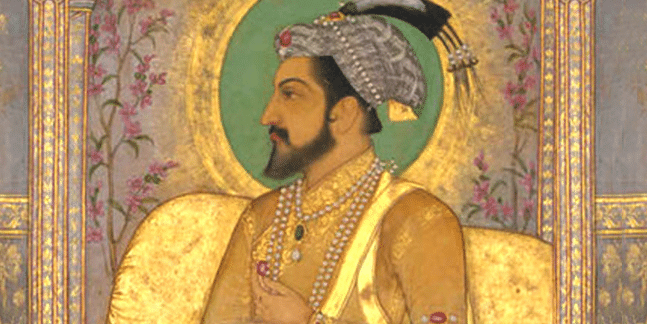
Shah Jahan, the fifth emperor of the Mughal dynasty, reigned over India from 1628 to 1658. Renowned for his exceptional administrative skills, military campaigns, and patronage of art and architecture, he left an indelible mark on Indian history. His reign is often regarded as the golden era of Mughal architecture, characterized by grandeur, symmetry, and intricate craftsmanship. Beyond politics and governance, he played a pivotal role in shaping the cultural and artistic heritage of the subcontinent, blending Persian, Islamic, and Indian influences.
Among his most iconic legacies is the Taj Mahal, a UNESCO World Heritage Site and one of the world’s most celebrated monuments of love. Commissioned in memory of his beloved wife Mumtaz Mahal, the Taj Mahal stands as a symbol of eternal love and Mughal architectural brilliance. His vision and passion for monumental architecture continue to inspire generations, making him one of the most remembered and admired figures in India’s rich history. His reign not only consolidated Mughal power but also enriched the cultural and artistic tapestry of the era.
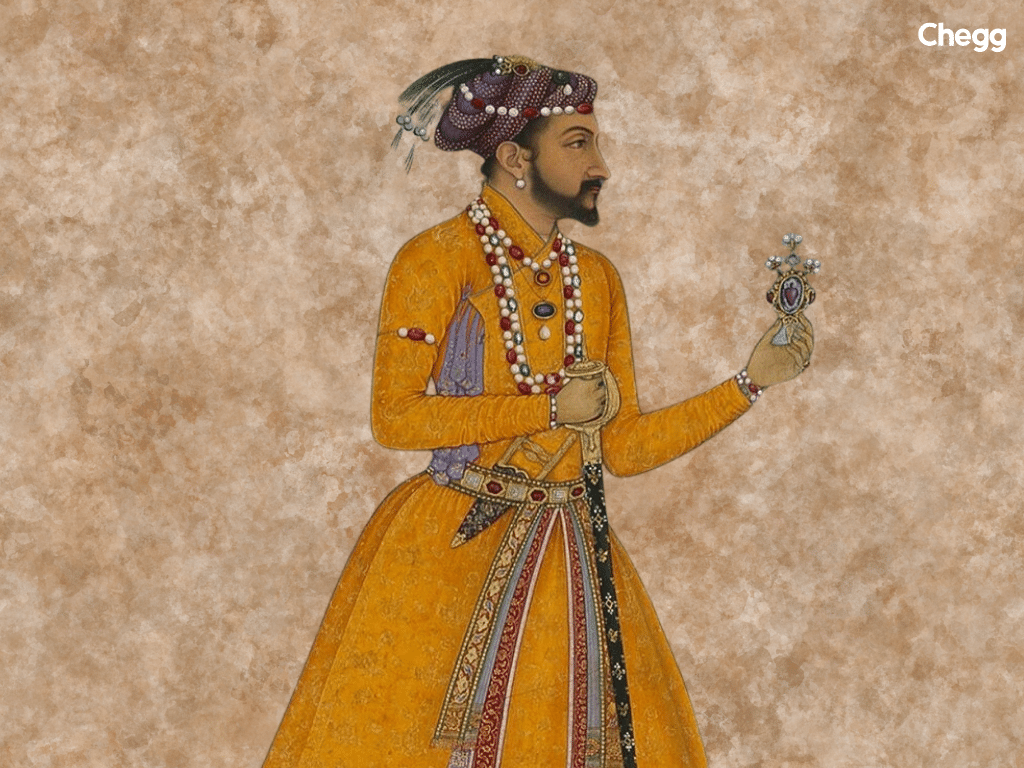
Shah Jahan was born as Prince Khurram in Lahore on January 5, 1592, into the illustrious Mughal royal family. He was the third son of Emperor Jahangir and his Rajput mother, Mariam-uz-Zamani, though he also had strong maternal ties to Persian nobility through his maternal grandmother. Growing up in the opulent Mughal court, he was surrounded by art, culture, and politics from a young age. His siblings included several brothers and sisters, among whom Prince Khurram was known for his intelligence, charm, and discipline.
From childhood, he received a comprehensive education befitting a Mughal prince, which included Persian and Arabic literature, Islamic studies, history, and the arts of warfare and governance. Under the guidance of court scholars and mentors, he developed a deep appreciation for poetry, architecture, and statecraft, laying the foundation for his later achievements as an emperor.
In 1612, he married Mumtaz Mahal, his beloved wife, who would become his lifelong companion and inspiration. Mumtaz Mahal’s influence was profound, shaping his personal life and vision for monumental architecture, most famously the Taj Mahal. The combination of royal upbringing, rigorous education, and early exposure to the Mughal court’s cultural richness greatly influenced his later reign, where he prioritized governance and the arts, leaving an enduring legacy on India’s history.

Intense succession politics often marked the path to the Mughal throne, and his rise was no exception. Born Prince Khurram, he was a prominent contender in the fierce rivalry among Jahangir’s sons. During Jahangir’s later years, court intrigues and alliances were decisive in determining the next emperor. He is known for his political acumen and military prowess, and successfully navigated these challenges, securing loyalty from key nobles and military commanders.
Following Emperor Jahangir’s death in 1627, he swiftly consolidated power. He defeated rival claimants, including his brothers, through diplomacy and strategic military action, ensuring a smooth coronation in 1628. His ascension marked the beginning of a reign characterized by the consolidation of Mughal authority and patronage of culture and architecture.
Early in his rule, he implemented policies to strengthen central administration and stabilize the empire. He reformed revenue systems, reinforced law and order, and emphasized justice to maintain public confidence. At the same time, he continued the Mughal tradition of promoting art, literature, and architecture, setting the stage for an era often regarded as the golden age of Mughal culture. His early policies reflected a balance of political shrewdness and cultural vision, traits that would define his long and impactful reign.
Shah Jahan’s reign (1628–1658) combined military skill, administrative efficiency, and diplomatic foresight, making the Mughal Empire stronger and more stable.
Through campaigns in Deccan, Rajputana and the Afghan regions, he brought rebellious states under Mughal control. Strategic fortifications and disciplined armies secured newly acquired territories and strengthened frontier defenses.
He focused on efficient governance, streamlining provincial administration, and appointing capable governors. Improved tax collection systems ensured financial stability, while policies balanced central authority with local traditions, maintaining law and order across the empire.
Key conflicts against regional rivals showcased his military strategy and planning. He maintained Mughal dominance and minimized prolonged instability by emphasizing discipline, logistics, and fortification rather than sheer force.
He maintained cordial relations with neighboring powers like Persia and the Uzbeks, using alliances, tributes, and political marriages to expand influence without unnecessary warfare.
Through this blend of conquest, governance, and diplomacy, he secured the empire’s political and military foundations. He also created a stable environment for cultural and architectural achievements, setting the stage for one of the most celebrated eras in Mughal history.
Shah Jahan is often remembered as the “Architect of the Mughal Golden Age” due to his unmatched contributions to Indian architecture. His reign (1628–1658) saw the creation of monumental structures that combined Persian, Islamic, and Indian design elements, leaving a legacy that continues to captivate the world.

The most iconic of his creations, the Taj Mahal in Agra, was built as a mausoleum for his beloved wife Mumtaz Mahal. Construction began in 1632 and took over 20 years to complete. Crafted with pristine white marble, intricate inlay work, and perfectly symmetrical gardens, it symbolizes eternal love. The monument’s architectural style blends Persian, Islamic, and Indian influences, featuring minarets, a grand dome, and ornamental calligraphy that reflect his vision of beauty and devotion.

Another masterpiece of Shah Jahan’s reign is the Red Fort, built between 1638 and 1648. Serving as the Mughal capital’s palace and administrative center, it showcases massive red sandstone walls, ornate gates, and elegant halls such as the Diwan-i-Aam and Diwan-i-Khas. Its design influenced Mughal forts and palaces across India later.
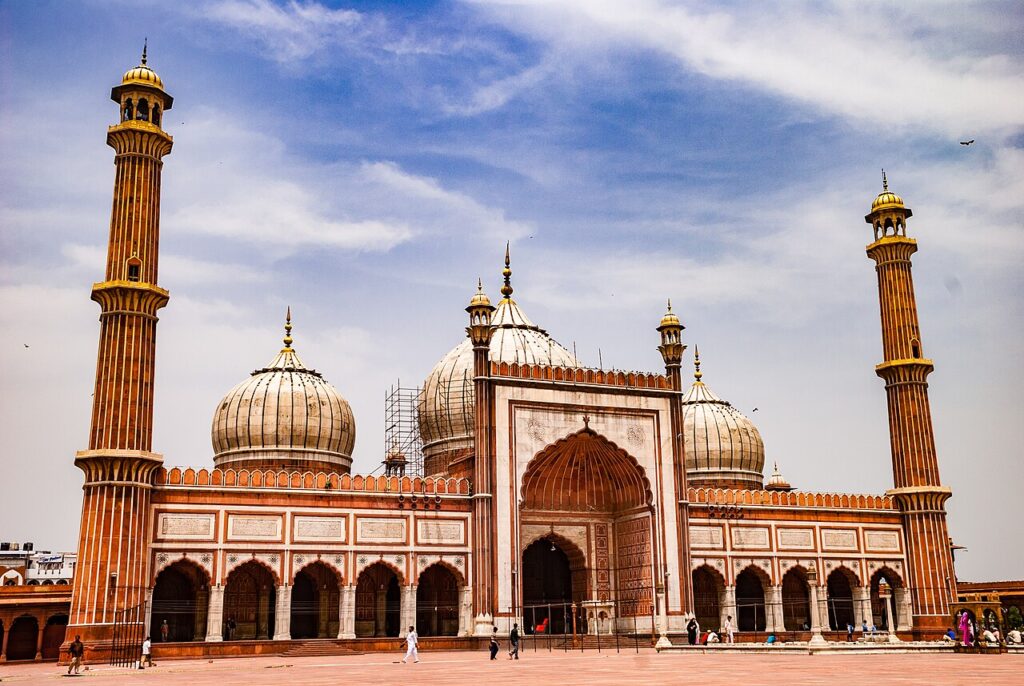
Shah Jahan also commissioned the Jama Masjid in Delhi, one of the largest mosques in India, which was completed in 1656. Its grand courtyard, imposing domes, and symmetrical minarets demonstrate the emperor’s devotion and architectural vision. Other notable constructions include Shahjahanabad (the walled city of Delhi), the Shalimar Gardens in Lahore, and several tombs and mosques across the empire, consistently emphasizing grandeur, symmetry, and ornamental detailing.
Shah Jahan’s architectural innovations include perfect symmetry, extensive use of white marble, intricate pietra dura inlays, and harmonious integration of gardens with structures. His buildings were functional and aesthetic masterpieces, emphasizing light, proportion, and detailed craftsmanship.
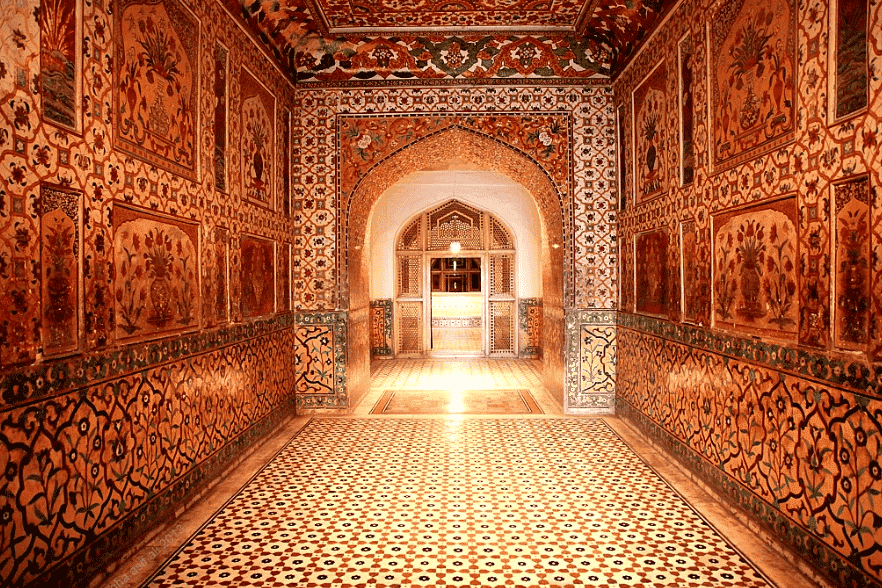
Through these monumental projects, he elevated Mughal architecture to unprecedented heights. His structures remain timeless symbols of love, power, and artistic excellence, defining the cultural identity of the Mughal era and influencing generations of architects worldwide.
He was more than just a powerful emperor; he was a husband, father, and patron of culture, whose personal life profoundly influenced his reign.
His passions for family, art, and architecture shaped his life and the cultural legacy of the Mughal Empire, leaving a lasting impression on Indian history.
The later years of Shah Jahan’s life were marked by illness, political turmoil, and family conflict. As he aged, his health began to decline, and tensions within the royal family escalated. The succession struggle among his sons intensified, with Aurangzeb emerging as a determined contender for the Mughal throne.
In 1658, after a fierce war of succession, Aurangzeb defeated his brothers and imprisoned Shah Jahan in the Agra Fort. Confined to a small chamber overlooking the Taj Mahal, the emperor spent his remaining years reflecting on his reign and the monumental legacy he had created. Despite the harsh circumstances, Shah Jahan remained dignified, reportedly spending hours gazing at the mausoleum of his beloved wife Mumtaz Mahal, a symbol of love and devotion that had defined his personal and cultural life.
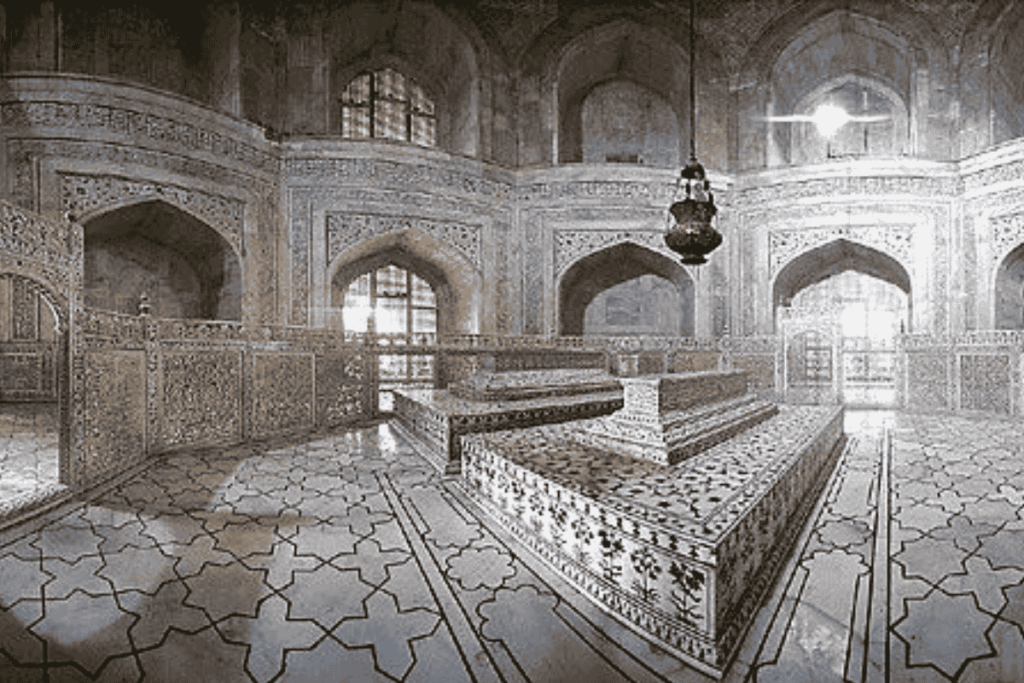
Shah Jahan passed away on January 22, 1666, at 74. Per his wishes, he was buried alongside Mumtaz Mahal in the Taj Mahal, uniting the emperor and his queen in eternal rest. His death marked the end of an era of artistic brilliance, architectural grandeur, and Mughal supremacy at its zenith.
Though his final years were overshadowed by political defeat, his legacy endures through the monuments, cultural achievements, and architectural masterpieces that continue to define the Mughal era. The story of his decline and imprisonment adds a human dimension to a ruler celebrated for power, vision, and artistry.
His legacy extends far beyond his political and military achievements. He is celebrated as a visionary ruler whose reign marked the pinnacle of Mughal architecture, art, and culture. His projects, notably the Taj Mahal, the Red Fort, and the Jama Masjid, set new grandeur, symmetry, and craftsmanship standards, influencing generations of architects and artisans across India. These structures symbolized imperial power and reflected a sophisticated blend of Persian, Islamic, and Indian design traditions.
His cultural contributions created a flourishing environment for poetry, painting, literature, and courtly arts, reinforcing the Mughal Empire as a center of artistic excellence. His emphasis on aesthetics and refinement left an enduring imprint on the Mughal court, inspiring successors to continue supporting cultural and architectural endeavors.
Even after his death, his reign shaped Mughal politics and governance. His architectural vision and centralized administrative practices influenced his successors in governance and cultural patronage, including Aurangzeb and later Mughal rulers.
In modern times, his legacy is celebrated globally. The Taj Mahal attracts millions of tourists annually and is recognized as a UNESCO World Heritage Site, symbolizing eternal love and India’s rich historical heritage. His monuments serve as a lasting reminder of the Mughal Empire’s grandeur and the cultural sophistication of 17th-century India.
His reign left a timeless legacy. His architectural marvels, cultural patronage, and artistic vision continue to define India’s historical and cultural identity, making him one of the most revered emperors in Indian history.
| Myth | Fact |
|---|---|
| Shah Jahan planned a black Taj Mahal opposite the white Taj Mahal. | There is no historical evidence for a black Taj Mahal; this is a popular legend. |
| He was blind in his later years. | His health declined with age, but he was not blind. |
| The Taj Mahal was built entirely by enslaved workers. | Over 20,000 artisans, craftsmen, and laborers worked voluntarily and with state support for over 20 years. |
| Spent extravagantly without concern for finances. | He managed his empire’s wealth carefully and combined grandeur with administrative prudence. |
| He never left the Taj Mahal once Mumtaz Mahal died. | He often oversaw other projects and governance, though he visited the Taj Mahal regularly. |
Shahjahan’s reign is a golden era of the Mughal Empire, marked by political stability, military campaigns, and unprecedented architectural brilliance. His vision transformed the Indian landscape with iconic monuments such as the Taj Mahal, Agra Fort, and Jama Masjid, reflecting grandeur and intricate artistry. Beyond his architectural legacy, his strengthened imperial administration left a lasting imprint on cultural and artistic traditions.
His life story, blending power, love, and devotion, remains integral to India’s rich history. Exploring his achievements offers a window into the sophistication of Mughal architecture and the empire’s cultural zenith. For history enthusiasts and travelers alike, his era is an enduring inspiration to delve deeper into India’s remarkable Mughal heritage.
Read More:-
From 1628 to 1658, the Mughal emperor is most renowned for the magnificent monuments built under his reign, notably the Taj Mahal and the Moti Masjid (Pearl Mosque) in Agra, along with the Jama Masjid and the Red Fort in Delhi.
After he fell ill in 1658, his daughter Jahanara Begum assumed a significant role in Mughal administration. Her close involvement with her father gave rise to widespread rumors and allegations of an improper relationship, though these claims were primarily fueled by political rivalry and lack historical evidence.
He had four sons: Dara Shikoh, Aurangzeb, Murad Baksh, and Shah Shuja. In 1657, when he fell gravely ill, a bitter war of succession broke out among them. Aurangzeb eventually emerged victorious, defeated his brothers, and imprisoned Shah Jahan. He then seized the Mughal throne and ruled the empire thereafter.
Akbar, the great Mughal emperor, had several sons. Prince Salim was the most notable among them, who later became Emperor Jahangir. Other sons included Murad Mirza and Daniyal Mirza, but both died young. Jahangir succeeded Akbar after his death in 1605, carrying the Mughal legacy forward.
Shah Jahan’s most beloved wife was Mumtaz Mahal, in whose memory he built the Taj Mahal. He also had other wives, including Kandahari Begum and Akbarabadi Mahal, but none held the same place in his life and legacy as Mumtaz Mahal.
He was not killed; he died a natural death in January 1666 at the age of 74. After being deposed and imprisoned by his son Aurangzeb in 1658, he spent his final years in Agra Fort. He was later buried beside Mumtaz Mahal in the Taj Mahal.