
Quick Summary
Table of Contents
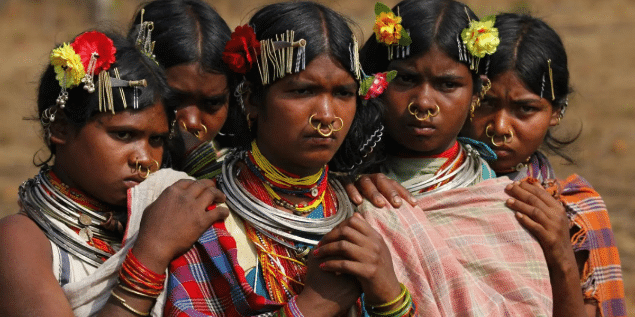
Scheduled Tribes (ST) represent one of the most distinctive and culturally rich sections of India, embodying the country’s incredible diversity and resilience. According to the 2011 Census, Scheduled Tribes account for 8.6% of the national population—a community of 10.43 crore people spread across 30 states and Union Territories (UTs). The concept of Scheduled Tribes is embedded in the Indian Constitution, ensuring protection, upliftment, and social justice for these historically marginalized groups.
Scheduled Tribes (ST) are indigenous communities identified by the Indian Constitution as needing special social, economic, and educational protection. As per Article 366(25) of the Constitution of India, a “Scheduled Tribe” means such tribes or tribal communities as are deemed under Article 342 to be Scheduled Tribes with respect to any state or UT.
Article 342 empowers the President, after consultation with the relevant state governors, to specify the tribes or tribal communities considered as Scheduled Tribes by public notification. This dynamic list can be amended over time, reflecting changes in the social status and needs of these communities. Scheduled Tribes are thus “scheduled”—they are included in the schedule attached to the Constitution.
The process for identifying a Scheduled Tribe in India follows five key criteria, most notably shaped by the Lokur Committee (1965):
The President uses these criteria (with the help of the Registrar General and state governments) when updating or revising the official list of STs for each state.
PVTGs—or Particularly Vulnerable Tribal Groups—are the most marginalized subset among Scheduled Tribes. Originally classified as Primitive Tribal Groups (PTGs) by the Dhebar Commission in 1973 and renamed in 2006, there are 75 PVTGs in India. These groups display pre-agricultural technological levels, stagnant or declining populations, extremely low literacy, and are largely dependent on subsistence economy.
The government runs targeted schemes for PVTGs focusing on health, housing, education, and preservation of traditional livelihoods. Funds and special development projects aim to ensure that these groups benefit directly and preserve their unique cultural and environmental relations.
| Aspect | Fifth Schedule | Sixth Schedule |
|---|---|---|
| Scope | Scheduled areas elsewhere in India | Tribal areas (Assam, Meghalaya, Tripura, Mizoram) |
| Governance | Governor’s direct powers with Tribal Advisory Councils | Autonomous District and Regional Councils with significant authority |
The process for adding or removing a community from the Scheduled Tribes list is:
STs are geographically dispersed across India, but most are concentrated in forested, hilly, and rural parts of Central, Eastern, and Northeastern India. The highest concentrations are in states like Madhya Pradesh, Maharashtra, Chhattisgarh, Jharkhand, Odisha, and in the northeastern states. Less dense but culturally significant populations exist in Kerala, Tamil Nadu, and even in the Andaman and Nicobar Island.
| State/UT | Number of Notified STs | Notable Tribes |
|---|---|---|
| Andhra Pradesh | 34 | Andh, Bhil, Gond, Kolam, Thoti, Chenchu, Konda, Savara, Yerukula |
| Arunachal Pradesh | 16 | Adi, Apatani, Monpa, Tangsa, Nishi, Mishmi, Galo, Wancho, Sherdukpen |
| Assam | 14 | Bodo, Mishing, Karbi, Rabha, Dimasa, Deori, Sonowal Kachari, Lalung |
| Bihar | 33 | Santhal, Oraon, Munda, Birhor, Asur, Chero, Birjia, Parhaiya |
| Chhattisgarh | 42 | Halba, Bhaina, Gond, Kanwar, Korwa, Baiga, Bison Horn Maria, Sahariya |
| Goa | 8 | Gouli, Naikda, Kunbi, Velip, Dhangar, Siddi, Varli, Dhodia |
| Gujarat | 32 | Bhil, Dhodia, Rathawa, Naikda, Warli, Chaudhari, Gamit, Vasava |
| Himachal Pradesh | 10 | Gaddi, Gujjar, Lahaula, Pangwala, Khasa, Swangla |
| Jammu & Kashmir | 12 | Gujjar, Bakarwal, Brokpa, Changpa, Gaddi, Balti, Purigpa, Mon |
| Jharkhand | 32 | Santhal, Munda, Ho, Oraon, Kharia, Birhor, Asur, Bhumij, Chero |
| Karnataka | 50 | Gond, Koraga, Iruliga, Adiyan, Kadu Kuruba, Bettakuruba, Halakki |
| Kerala | 43 | Kuruba, Malai Arayan, Arunadan, Uralis, Mannan, Kurumbas, Paniyan |
| Madhya Pradesh | 46 | Bhil, Baiga, Gond, Korku, Sahariya, Kol, Bison Horn Maria |
| Maharashtra | 47 | Warli, Gond, Katkari, Bhil, Rathawa, Thakur, Halba, Koli, Mahadeo Koli |
| Manipur | 34 | Thadou, Paite, Rongmei, Aimol, Kom, Maram, Kuki, Hmar, Chiru |
| Meghalaya | 17 | Khasi, Garo, Jaintia, Hajong, Bhoi, Rabha, Koch |
| Mizoram | 15 | Mizo, Chakma, Mara, Lai, Hmar, Ralte, Paite, Lushei |
| Nagaland | 5 | Ao, Angami, Sema, Lotha, Konyak |
| Odisha | 62 | Kharia, Munda, Santhal, Bhunjia, Kandha, Saora, Bonda, Juang, Soura |
| Punjab | 0 | — |
| Rajasthan | 12 | Bhil, Damaria, Garasia, Mina, Kathodi, Kolcha, Patelia, Sahariya |
| Sikkim | 4 | Bhutia, Lepcha, Limboo, Tamang |
| Tamil Nadu | 36 | Irular, Kadar, Kanikkar, Toda, Kota, Kurumba, Malaikuravar, Paniyan |
| Telangana | 32 | Chenchu, Gond, Kolam, Thoti, Yerukula, Naikpod, Pardhan |
| Tripura | 19 | Tripuri, Reang, Jamatia, Halam, Chakma, Aimol, Kuki, Mog, Mizo |
| Uttarakhand | 5 | Bhotia, Buksa, Jaunsari, Kol, Raji, Tharu |
| Uttar Pradesh | 16 | Bhotia, Buksa, Jaunsari, Kol, Raji, Tharu |
| West Bengal | 40 | Santhal, Munda, Oraon, Bhumij, Kora, Lodha, Lepcha, Bhutia |
| Andaman & Nicobar | 6 | Great Andamanese, Onge, Jarawa, Nicobarese, Shompen, Sentinelese |
| Dadra & Nagar Haveli and Daman & Diu | 12 | Dhodia, Varli, Kokna, Kathodi, Naikda, Dubla, Bhil, Patelia |
| Delhi (NCT), Chandigarh, Haryana, Puducherry | 0 | — |
The Bhil tribe is the largest Scheduled Tribe in India, comprising about 4.6 million people, which is nearly 38% of the country’s total tribal population. They are spread across Madhya Pradesh, Rajasthan, Gujarat, Maharashtra, Andhra Pradesh, and Telangana. Known historically for their archery skills ‘Bhil’ itself derives from the Dravidian word for bow they are also celebrated for Bhil Art, a folk painting style that uses natural dyes and dot motifs to depict daily life, deities, and festivals such as Ghoomar and the Gair sword dance.
The NCST is a constitutional body dedicated to the protection and development of Scheduled Tribes. Its functions include:
The Chairman of the National Commission for Scheduled Tribes holds significant responsibility for steering these efforts, supported by government staff and subject matter experts.
The Scheduled Castes and Scheduled Tribes (Prevention of Atrocities) Act, commonly known as the Atrocities Act, was enacted in 1989 to safeguard these historically marginalized communities from discrimination, violence, and social injustice.
The Act addresses the grave issue of atrocities that Scheduled Castes (SCs) and Scheduled Tribes (STs) have faced for centuries, including physical violence, social ostracism, economic exploitation, and denial of fundamental rights. This law is a critical tool for ensuring their safety, dignity, and equal access to social and legal justice.
In recent years, the Atrocities Act has undergone amendments to close loopholes and strengthen safeguards. Notably,
While the Act has been pivotal in providing legal recourse and deterring crimes against SC/ST individuals, challenges remain:
Apart from legal provisions, various government schemes aim to support atrocity victims, including financial assistance, rehabilitation, and skill development. NGOs and human rights organizations also play a key role in advocacy, monitoring, and victim support.
Tribal culture is an invaluable component of India’s pluralism. Successful tribal development means not just economic upliftment but also respect and protection of tribal customs, Dikus’ traditional knowledge, language, and ecological wisdom. The way forward lies in:
Scheduled Castes (SC) and Scheduled Tribes (ST) in India represent historically marginalized communities, each facing distinct yet interconnected struggles for social justice. SCs, also known as Dalits, are communities traditionally subjected to untouchability, while STs are indigenous groups facing historical disadvantage.
Both groups endure social discrimination, economic disparities, and limited resource access. The Constitution of India recognizes their plight, providing affirmative action through reservations in education, employment, and political representation.
Indian Polity, Governance, and History sections of UPSC Prelims and Mains frequently include direct and conceptual questions on Scheduled Tribes. For maximum exam relevance, here are some examples and tips:
Empowering the tribal communities of 21st-century India is vital to building an inclusive and progressive society. The future of tribes in India depends on sustained efforts to reduce economic inequality, enhance access to education, and preserve their rich cultural heritage. With over 700 recognized tribes, inclusive policies, tribal representation, and participatory governance are essential for ensuring development that truly reaches the grassroots. By recognizing the unique identity and contributions of these communities, India can create a future where every tribal individual thrives and actively shapes the nation’s diverse cultural fabric
Read More:
Scheduled Tribes (STs) are indigenous communities in India identified under Article 342 of the Constitution as historically disadvantaged in terms of social, economic, and educational status. They receive special protection and benefits from the government to promote their development and inclusion.
President Droupadi Murmu belongs to the Santhal tribe, one of India’s largest Scheduled Tribes, predominantly found in Odisha, Jharkhand, and West Bengal.
In the traditional Indian caste hierarchy, Scheduled Castes (SCs) are generally viewed as lower than Scheduled Tribes (STs). While both communities have faced social and economic marginalization, SCs were historically subjected to untouchability, placing them at the lowest level of the caste system. Scheduled Tribes, on the other hand, have largely remained outside the caste structure, with distinct cultural identities.
Article 342 of the Indian Constitution empowers the President to specify the tribes or tribal communities that shall be recognized as Scheduled Tribes in a particular State or Union Territory. This official list is created through a Presidential notification and can only be modified by Parliament, ensuring legal recognition and constitutional safeguards for these communities.
The term “21 Scheduled Tribes” usually refers to the major tribal groups officially recognized under the Constitution of India in certain states and union territories. These include communities such as Gonds, Bhils, Santhals, Todas, Angami Nagas, Bhutia, Khasi, Mizo, Bodo, Oraon, Munda, Khasi, Nicobarese, Jarwas, Lepcha, Garos, Chakmas, Koli Dhor, Sherdukpens, Hajongs, and Angarias.
Scheduled Tribes, they are indigenous groups recognized by the Indian Constitution for their social, economic, and educational disadvantages. These communities receive special legal protection and government benefits, aiming for inclusive development while honoring their unique cultural identities and traditions. They are officially notified under Article 342 for each state and union territory.
Both Scheduled Castes (SC) and Scheduled Tribes (ST) are historically disadvantaged groups in India recognized for affirmative action. “Lower” isn’t officially used—SC refers to formerly untouchable castes, while ST refers to indigenous tribal groups. Each faces unique social challenges, with benefits provided specifically to uplift their communities.
SC (Scheduled Caste), ST (Scheduled Tribe), and OBC (Other Backward Class) are three social categories defined in India’s Constitution. SCs are historically oppressed castes, STs are indigenous tribal communities, and OBCs are other socially and educationally disadvantaged groups. All benefit from reservation policies in education, employment, and government schemes.


Authored by, Muskan Gupta
Content Curator
Muskan believes learning should feel like an adventure, not a chore. With years of experience in content creation and strategy, she specializes in educational topics, online earning opportunities, and general knowledge. She enjoys sharing her insights through blogs and articles that inform and inspire her readers. When she’s not writing, you’ll likely find her hopping between bookstores and bakeries, always in search of her next favorite read or treat.
Editor's Recommendations
Chegg India does not ask for money to offer any opportunity with the company. We request you to be vigilant before sharing your personal and financial information with any third party. Beware of fraudulent activities claiming affiliation with our company and promising monetary rewards or benefits. Chegg India shall not be responsible for any losses resulting from such activities.
Chegg India does not ask for money to offer any opportunity with the company. We request you to be vigilant before sharing your personal and financial information with any third party. Beware of fraudulent activities claiming affiliation with our company and promising monetary rewards or benefits. Chegg India shall not be responsible for any losses resulting from such activities.
